Key Takeaways
- Most cooling bedding products treat the symptom—a warm surface—rather than the cause, which is heat and moisture with nowhere to go.
- Wool is an active thermoregulator, not a passive one. Its crimped fiber structure manages airflow and moisture in real time, in both directions.
- Wool can absorb up to 30% of its own weight in moisture without feeling damp, keeping you drier and cooler through the night.
- You don't have to overhaul your entire sleep setup to test it—a wool pillow or mattress pad is a low-commitment starting point.
Hot sleepers know the struggle is real—waking up to kick off the covers, flipping the pillow in an effort to find the cool spot, and stretching out so that not a single body part is touching. It makes for a long, uncomfortable, restless night. The worst part is that you’ve probably tried everything to fix it. Maybe you bought that gel-infused topper, invested in “cooling sheets” or went all-in on that pricey mattress with the fancy phase-change material in the cover. Maybe you did all three, and you’re still waking up hot and irritated.
So what’s the solution? Wool probably isn’t the first thing to spring to mind, if it even comes to mind at all. But the fiber that has a well-deserved reputation for keeping people cozy in the winter is actually one of the most effective natural fibers for sleep support even during the hottest summer nights. Here’s why, and more importantly, how to put wool bedding to work for you.
The Hot Sleeper Trap
Cooling bedding is a catchy marketing angle, but the results rarely match the claims. Most cooling bedding products try to treat the symptom—the warm surface—instead of the actual cause, which is the heat and moisture that build up and have nowhere to go. Those cool-to-the-touch products may work temporarily, but the heat inevitably creeps back in as the hours pass. Managing surface temperature isn’t the answer, but that’s what cooling fibers and infusions aim to do.
Body temperature fluctuations are a normal part of the sleep cycle. The body generates both heat and moisture as you sleep, which is why breathability is such an important part of bedding. Materials that hold onto heat and moisture create a nasty cycle—you get warmer and wetter until it actively wakes you up.
That creates a cycle most hot sleepers will recognize. The gel topper didn’t work, so you buy bamboo sheets. The bamboo sheets are soft but you’re still waking up hot. You add a fan, crack a window or run the A/C all night long, and you find yourself too cold. Maybe you sleep on top of the covers. All of these accommodations probably help a little, but they still aren’t addressing the main issue of what's happening at the material level while you sleep.
That brings us to wool—a truly remarkable fiber for sleep.
What You’ve Probably Already Tried (And Why It Didn't Work)
Hot sleepers usually try the same handful of products. Here’s why they probably didn’t work as well as you might have hoped.
- Gel-infused mattress toppers. Foams infused with cooling gels seem so promising at first, because the surface tends to feel noticeably cool. These gel infusions are designed to absorb heat, which makes you feel cooler and more comfortable. But foam isn’t breathable. It’s actually quite dense, which means there’s nowhere for that absorbed heat to go. The longer you lie there, the more heat the topper absorbs. That’s where there’s a noticeable warming sensation as time passes. At best, this is a short-term fix.
- Bamboo sheets. Bamboo-based bedding, either viscose or rayon, is definitely a better option than polyester, which is a synthetic that traps heat. But it’s limited in its efficacy because it can’t adapt to fluctuating temperatures. In other words, it’s a passive material.
- Down alternative comforters. Down alternative is usually a polyester fiber that’s designed to mimic the loft of down. The problem is that polyester, as we’ve covered, traps heat. Polyester fill is also denser, which means airflow is really limited.
- Phase change materials and other “cooling tech.” This is the most advanced cooling option, according to the marketing claims, and you’ll often find it used in mattress covers and toppers. Phase-change materials do indeed absorb heat, but there’s a saturation point. Once the material has absorbed all the heat it can hold, it stops feeling cool. If that happens in the middle of the night, you’re at risk of waking up feeling too hot.
Why Wool Is Different — And Why It Actually Works
Passive bedding materials don’t respond to your body’s changing temperature. And that’s the distinction that sets wool apart. It’s truly unrivaled as a fiber for bedding.
Breathability and temperature regulation
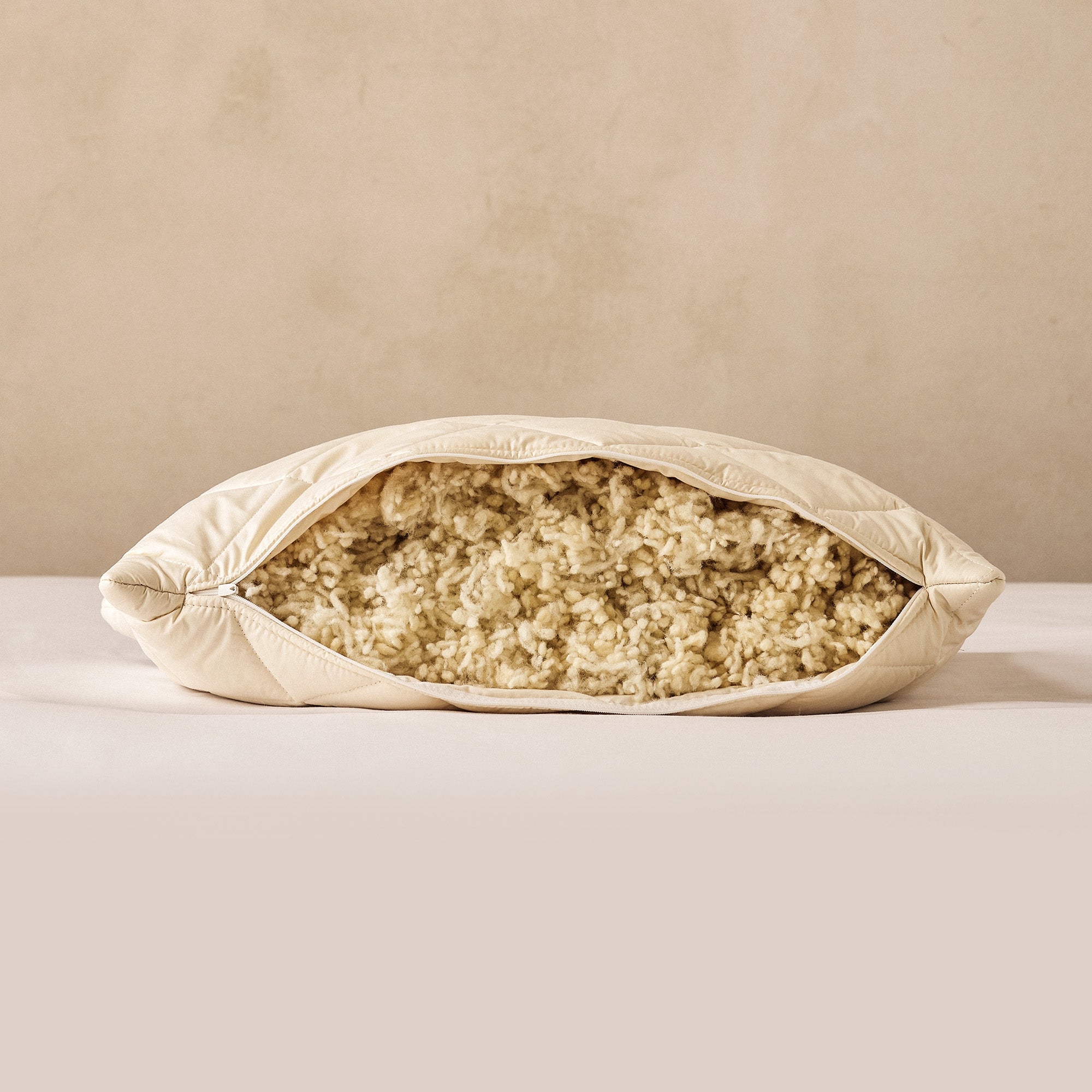
Wool fibers are crimped—picture a teeny tiny spring. That structure creates thousands of miniscule air pockets that can either hold onto heat or allow air to circulate. Your body generates warmth when it’s cold out, which fills the air pockets. But when it’s hot, wool fibers release heat and moisture through those same channels, cooling you down. By managing air movement so effectively, wool naturally regulates temperature in real time.
Moisture management
Wool fibers are made of keratin, a porous protein, and they can absorb up to 30% of their own weight in moisture without feeling damp or heavy. By the time you feel clammy in bed, moisture has already accumulated. Wool addresses this much earlier, actively pulling away moisture vapor and releasing it into the air. That means you feel drier for longer.
These traits work in tandem. When moisture moves through the fiber and evaporates, it pulls away heat as it goes. Meanwhile, the same structure that allows air to circulate also facilitates moisture evaporation. These are just natural traits of the wool fiber, and synthetics simply can’t replicate it effectively.

What to Start With (If You're Skeptical)
If you’re skeptical of wool because it’s firmly associated with cozy winter sweaters or because nothing has worked for you before, that’s understandable. It’s also not unusual to be surprised that wool really is the best bedding for hot weather. Fortunately, it’s easy to put to the test without completely upgrading your sleep setup.
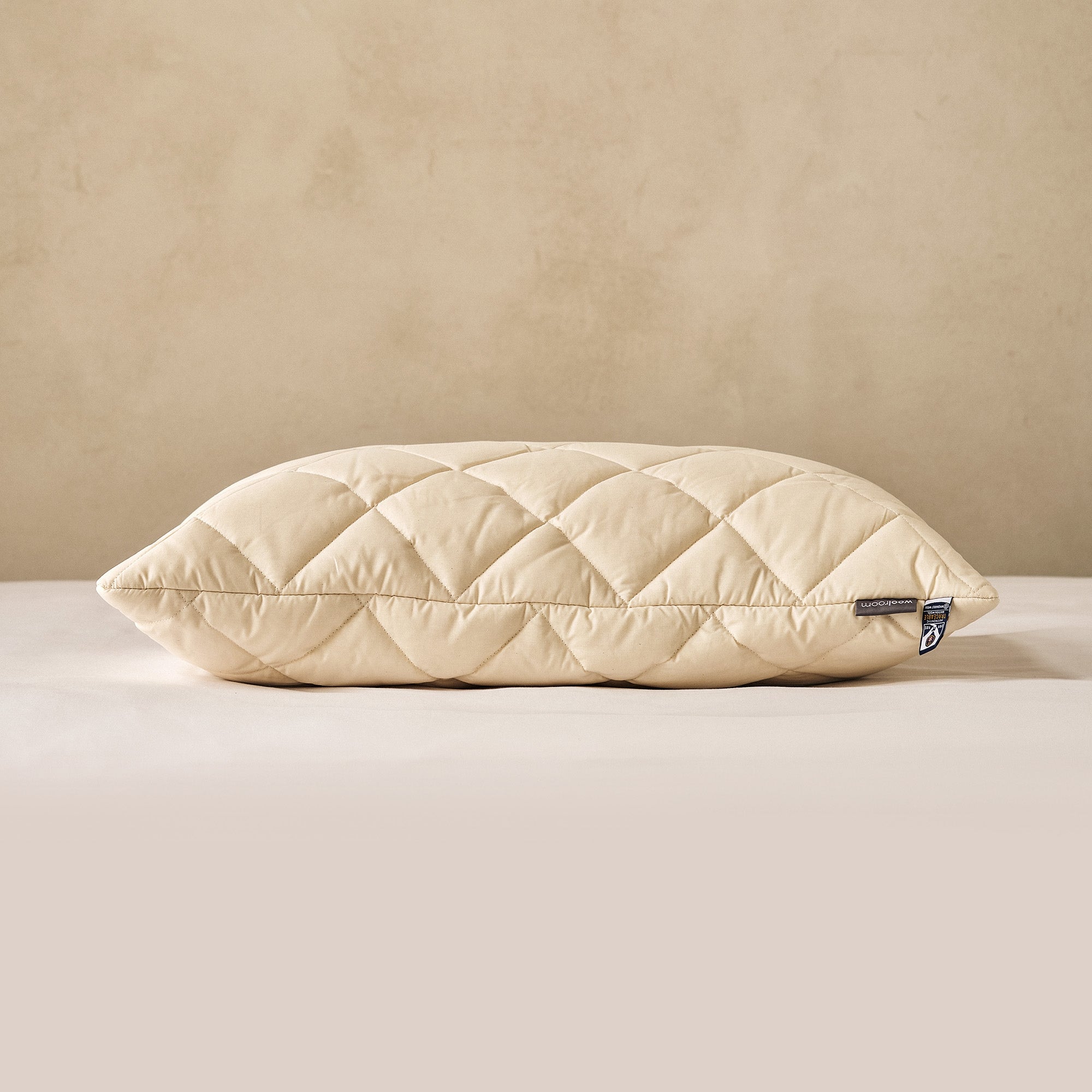
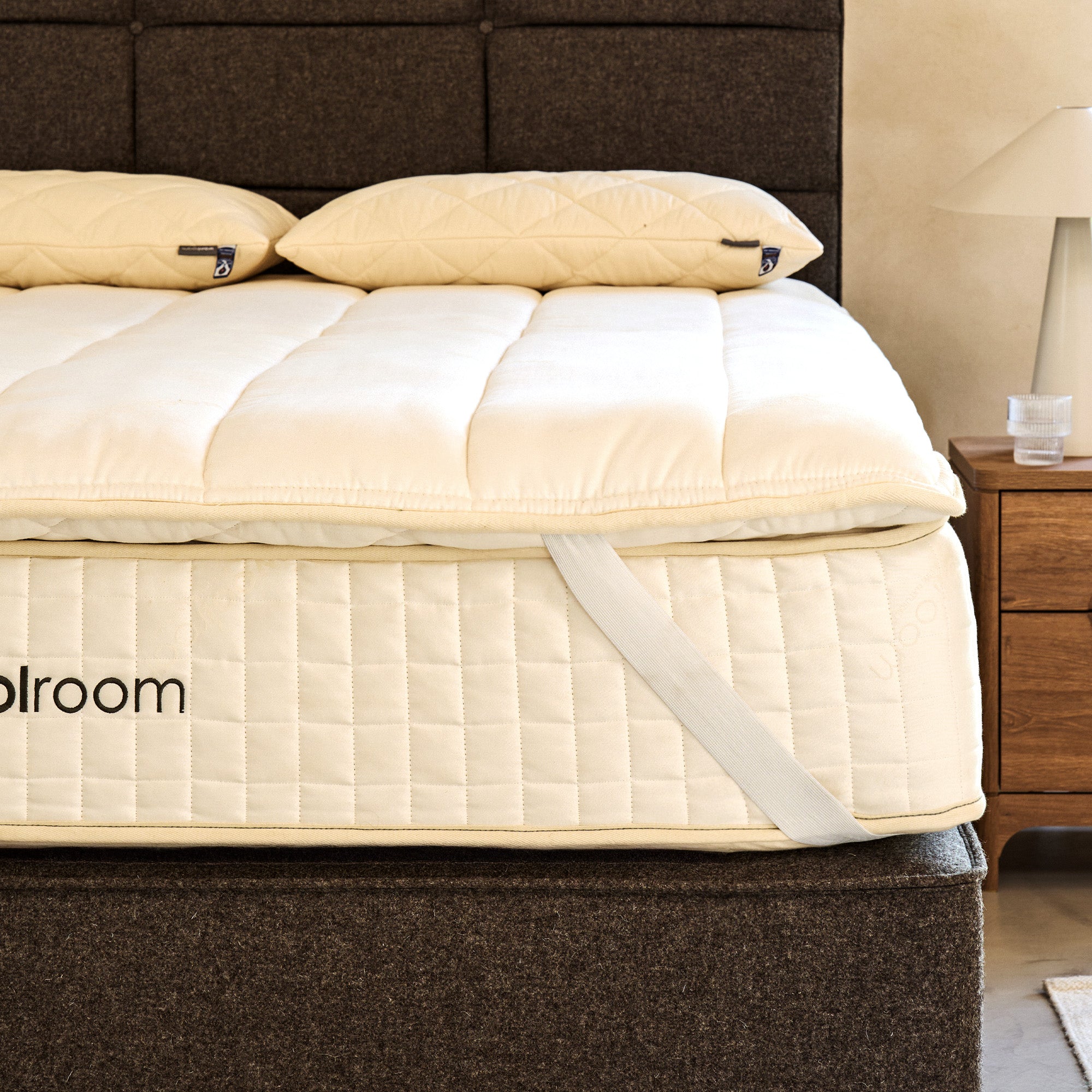
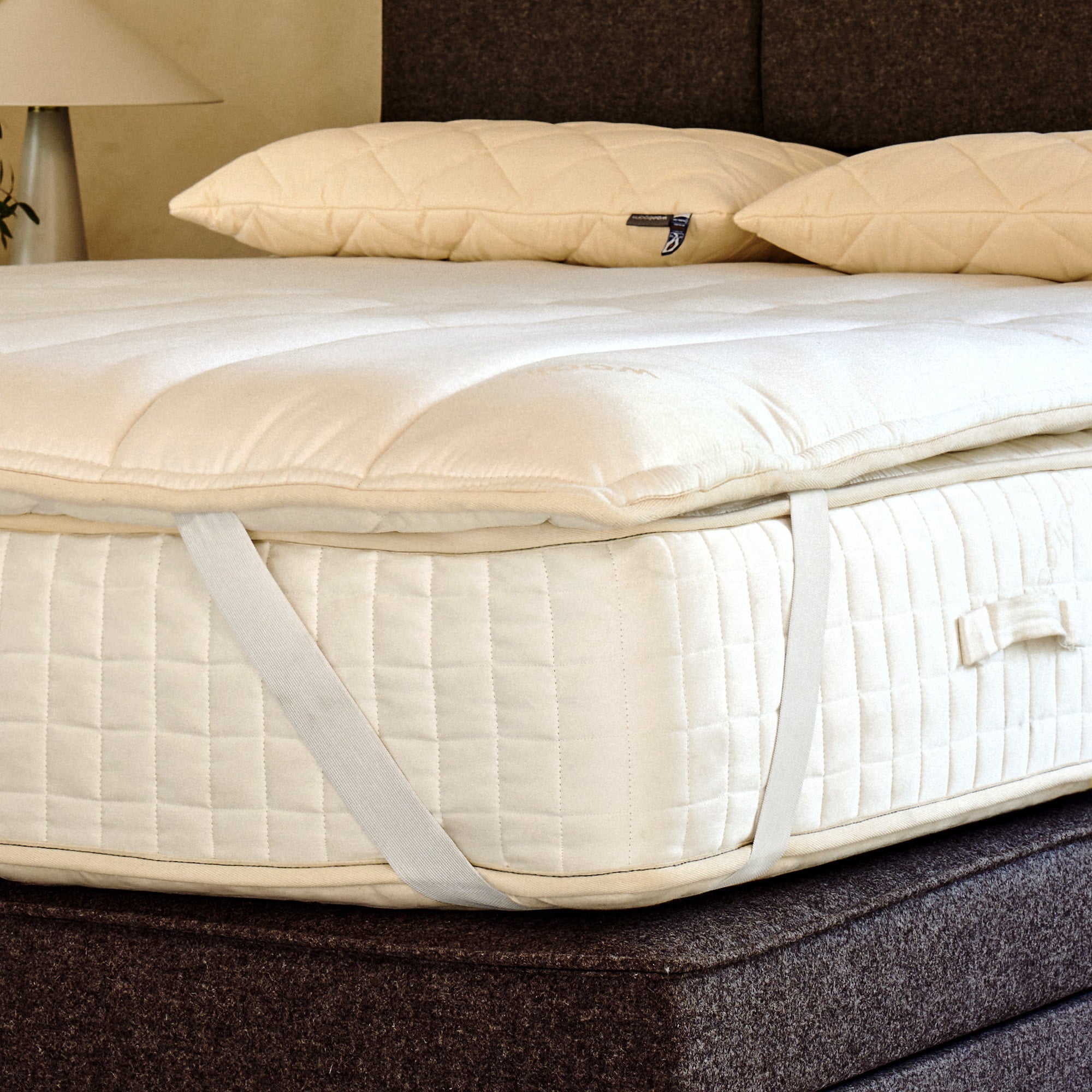
A wool pillow or wool mattress pad is the simplest entry point. Plus, they target two of the biggest heat sources: your head and the surface directly below you. If you spend the night flipping the pillow over and over in search of a cool spot, a wool pillow is worth consideration. If you’re currently sleeping on memory foam, a layer of wool creates a meaningful barrier between you and that heat-retaining material. Either option is a good way to put wool to the test.
Remember that the first night of sleeping with new bedding isn’t usually a good representation, especially if you’ve been struggling with overheating. Your body needs a little time to adjust to a material that works with it, not against it. Most people begin to notice a difference a few nights into the experience, usually in the form of less tossing and turning, waking up drier, or fewer middle-of-the-night wakeups.
The Full Hot Sleeper Setup
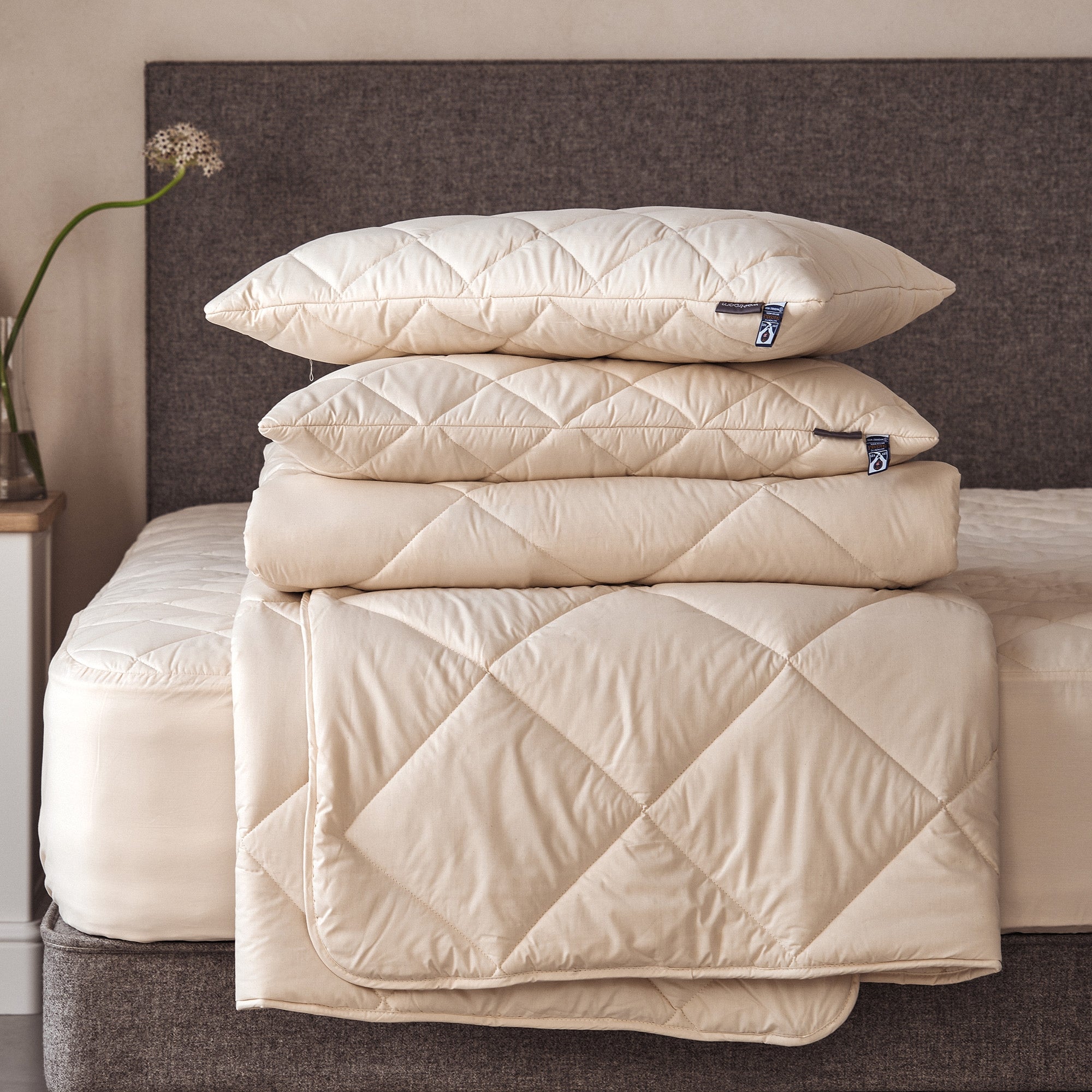
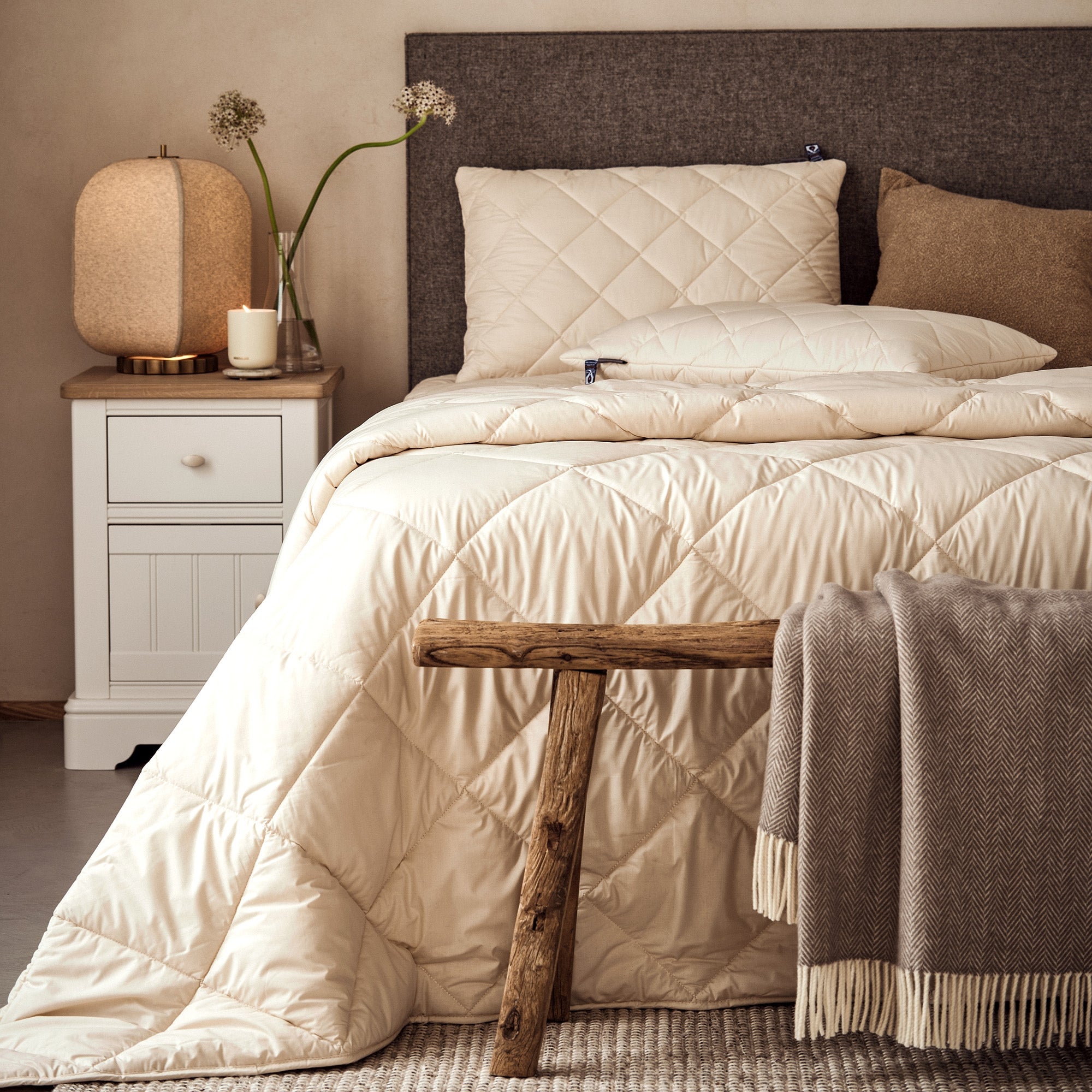
For hot sleepers, the goal should be a sleep system where every layer works together. Here’s Woolroom’s recommendations:
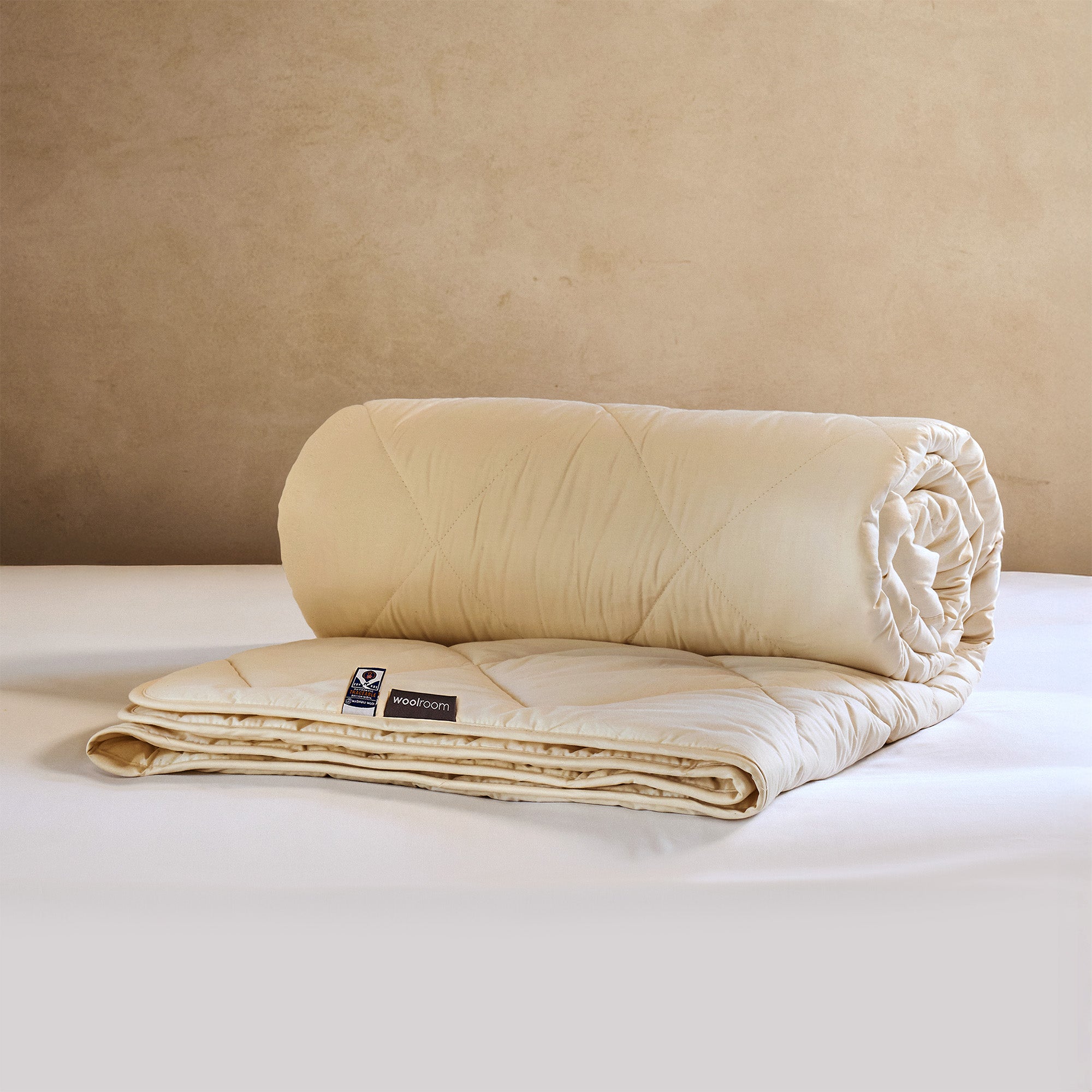
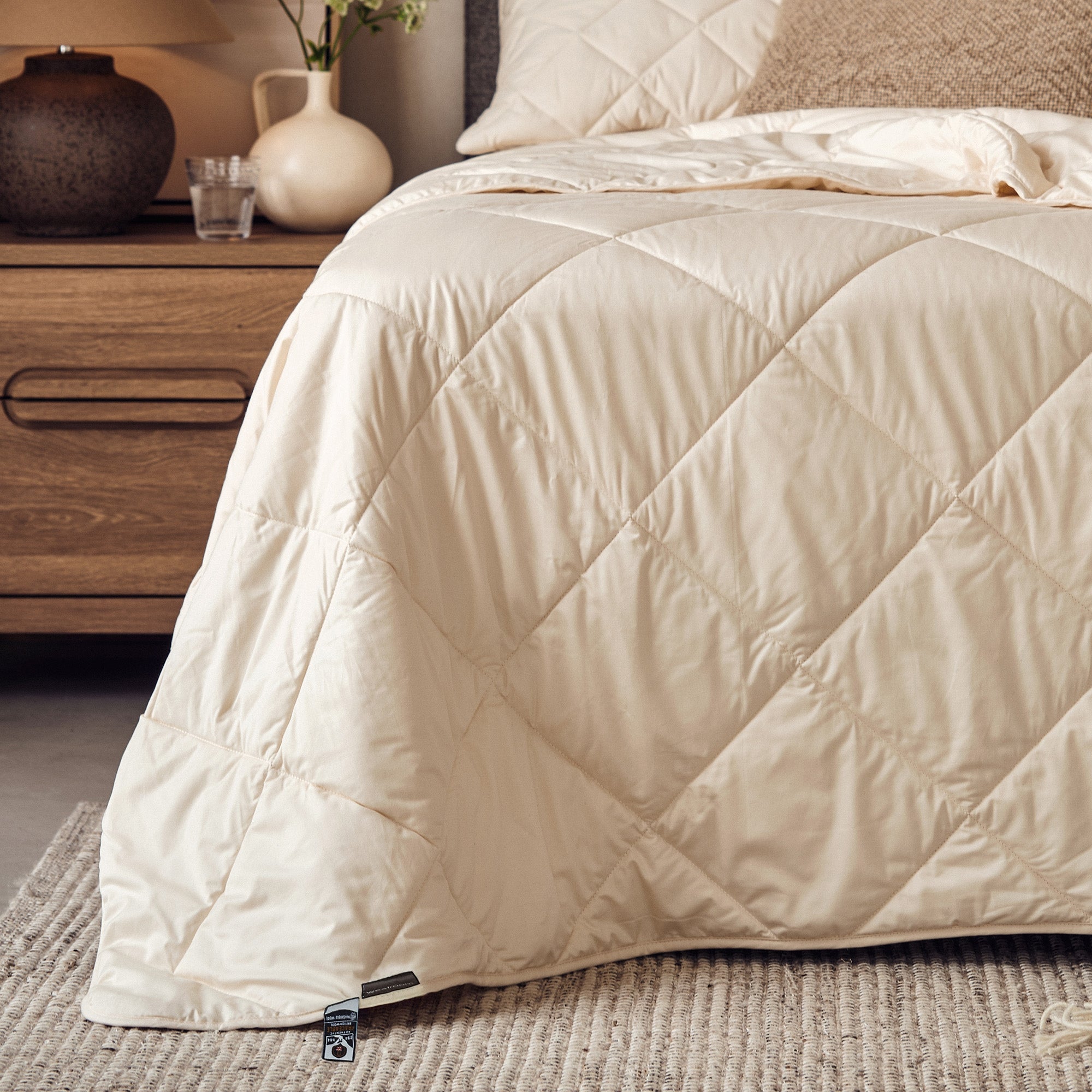
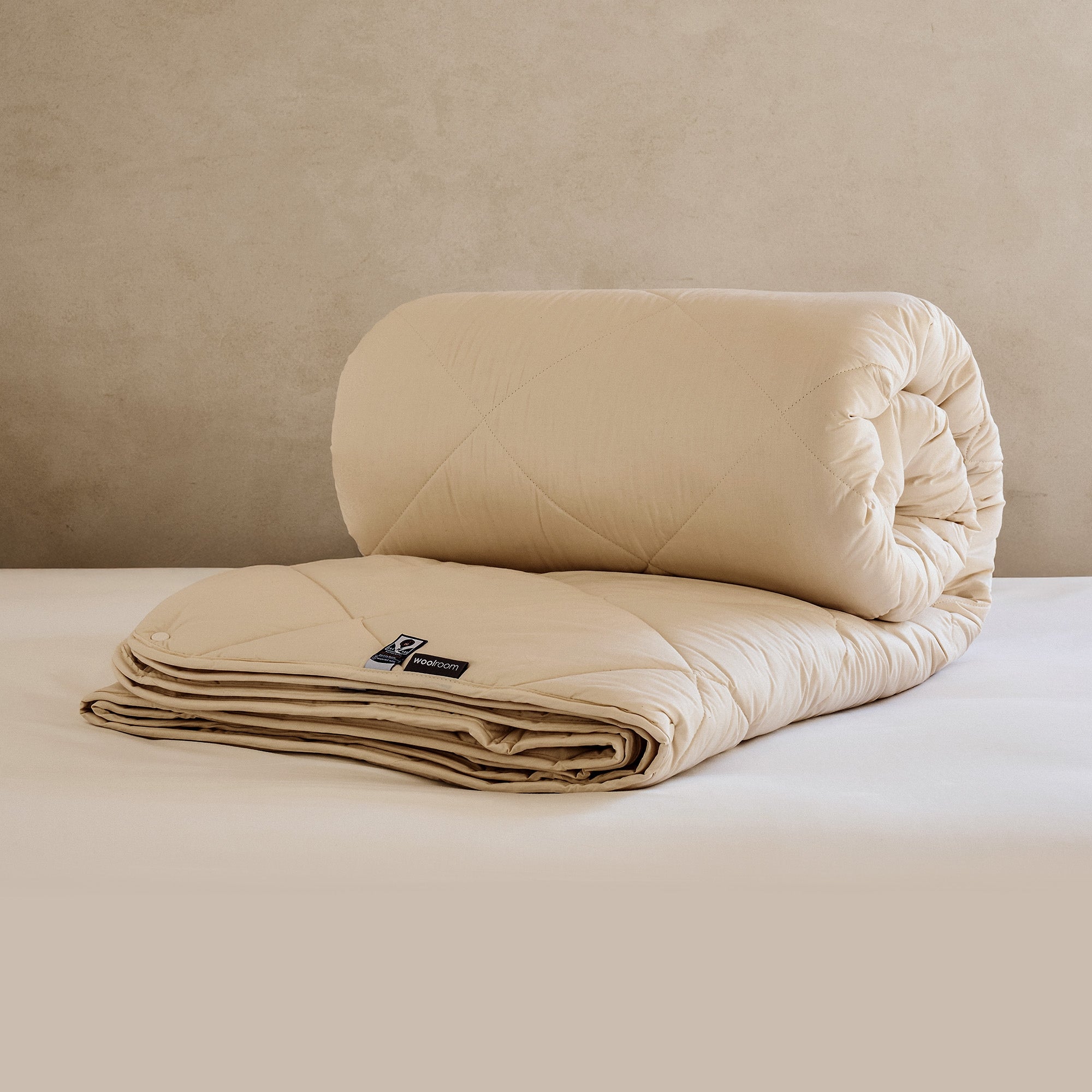
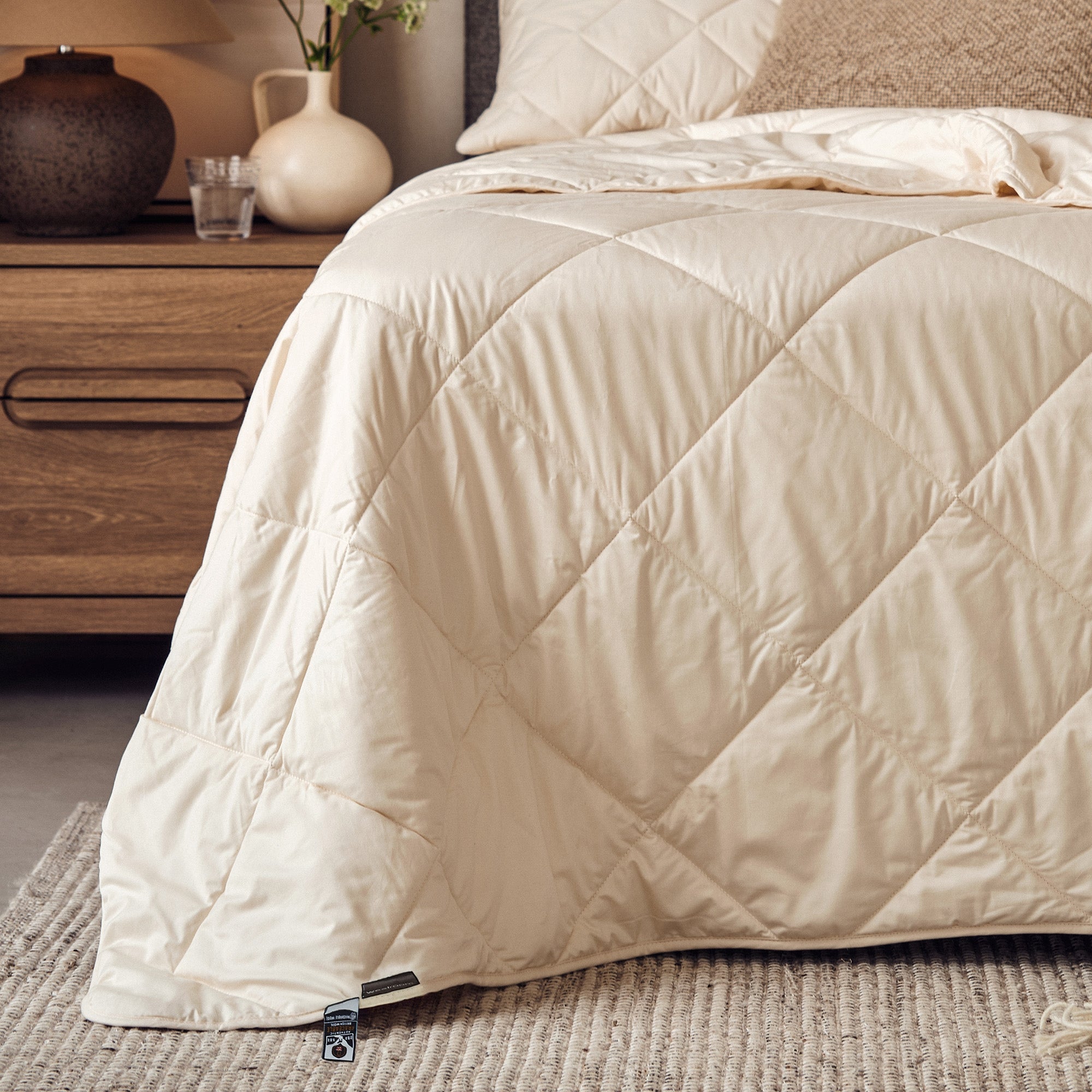
- A lightweight wool comforter for temperature regulation and moisture management without excess weight or warmth.
- Organic cotton or organic cotton/linen blend sheets for breathability and airflow to avoid heat retention.
- A wool mattress protector, pad or topper, especially if you sleep on foam, to create an effective barrier against heat retention.
Together, these layers create something no single product can: a sleep environment that actively manages heat and moisture from every direction. Each reinforces the others, and the result is meaningfully different from swapping one material for another.
A note on your bedroom environment: bedding can only do so much if the room itself is working against you. A wool sleep system performs best with some airflow—a ceiling fan on low, a cracked window, or a thermostat set a few degrees cooler than you think you need. Wool handles what happens at the fiber level, and a cooler room handles the rest.
The Last Cooling Bedding Switch You'll Make
It’s easy to be skeptical when you’ve had no luck with cooling bedding. But you don’t have to be convinced that wool works—you just need to try it. At Woolroom, our wool bedding comes with a risk-free, 30-night sleep trial. While most hot sleepers who switch to wool tend to be really surprised at how effectively it works, you can return it if you don’t have the same experience.
If you're not sure where to start, a wool pillow or mattress pad is a low-stakes first step. But if you're ready to stop cycling through products that treat the symptom and finally address the cause, the full Woolroom sleep system is worth trying. The worst case is that you return it. The best case is that you finally stop waking up at 2 am.

Frequently Asked Questions
Is wool bedding good for hot sleepers?
Yes, and it’s probably the best option. Unlike synthetic cooling products that manage surface temperature temporarily, wool regulates heat and moisture throughout the night. Its crimped fiber structure creates air pockets that allow heat to escape when your body temperature rises, and it actively pulls away moisture vapor from your skin before you feel it. The result is a sleep surface that responds to your body in real time rather than working against it.
What is the best bedding for people who overheat?
Wool is the best bedding for people who overheat, especially as part of an overall sleep system: a lightweight wool comforter, organic cotton percale sheets, a wool pillow, and a wool mattress protector or pad. Those layers support breathability and active temperature management instead of passive cooling. Wool outperforms common alternatives like gel-infused foam, bamboo sheets, and down alternative comforters because it addresses the root cause of overheating—heat and moisture buildup—instead of just treating the surface temperature.