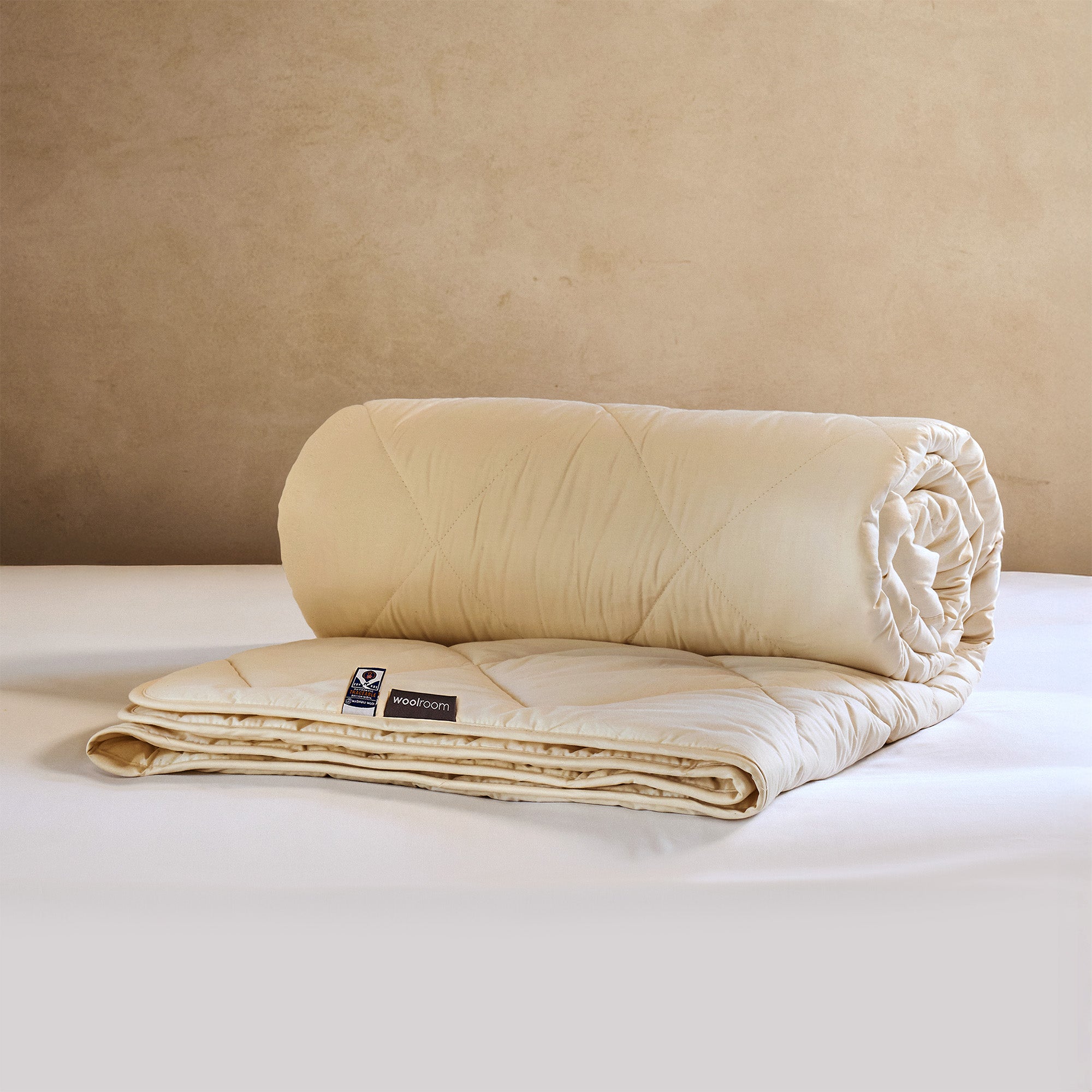
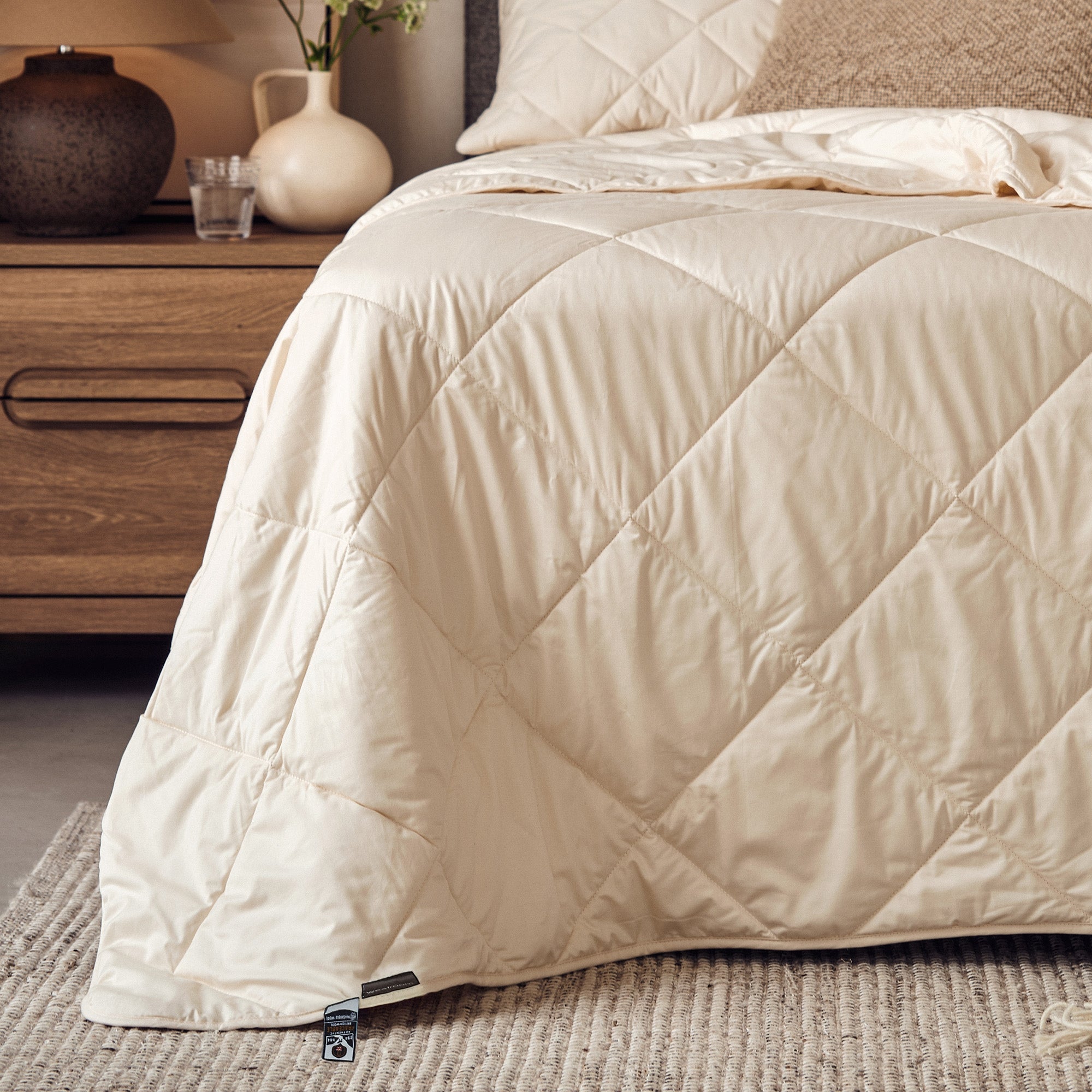
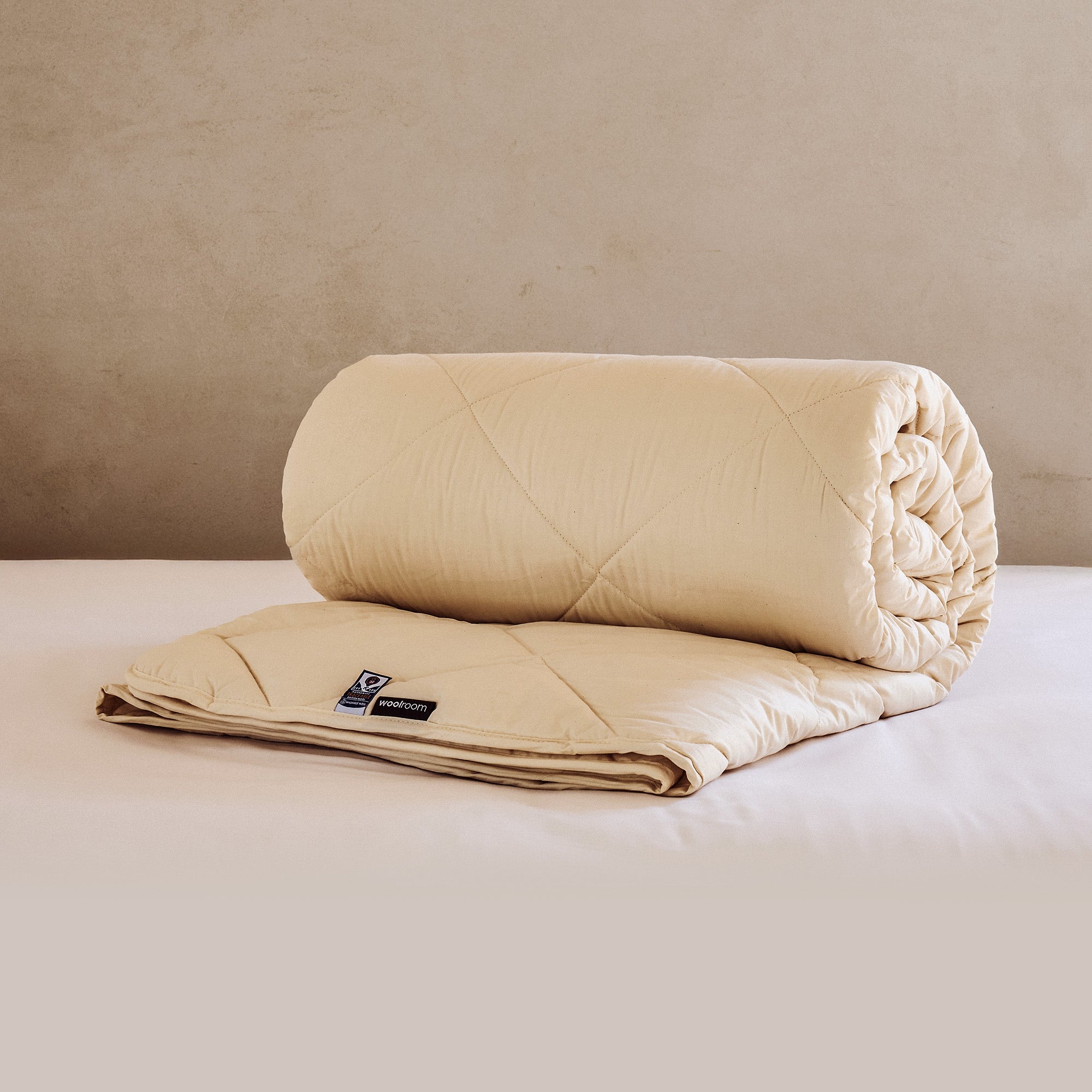
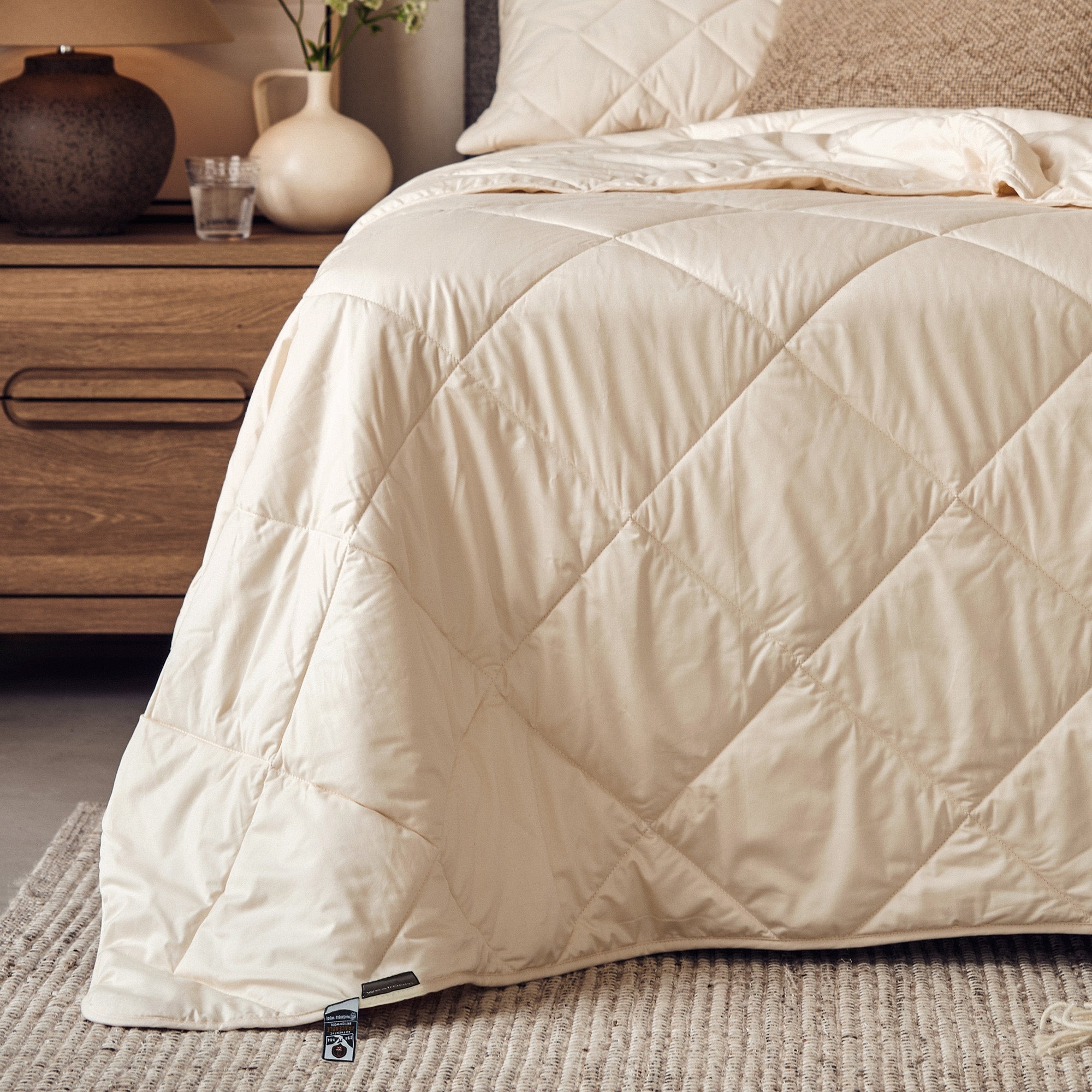
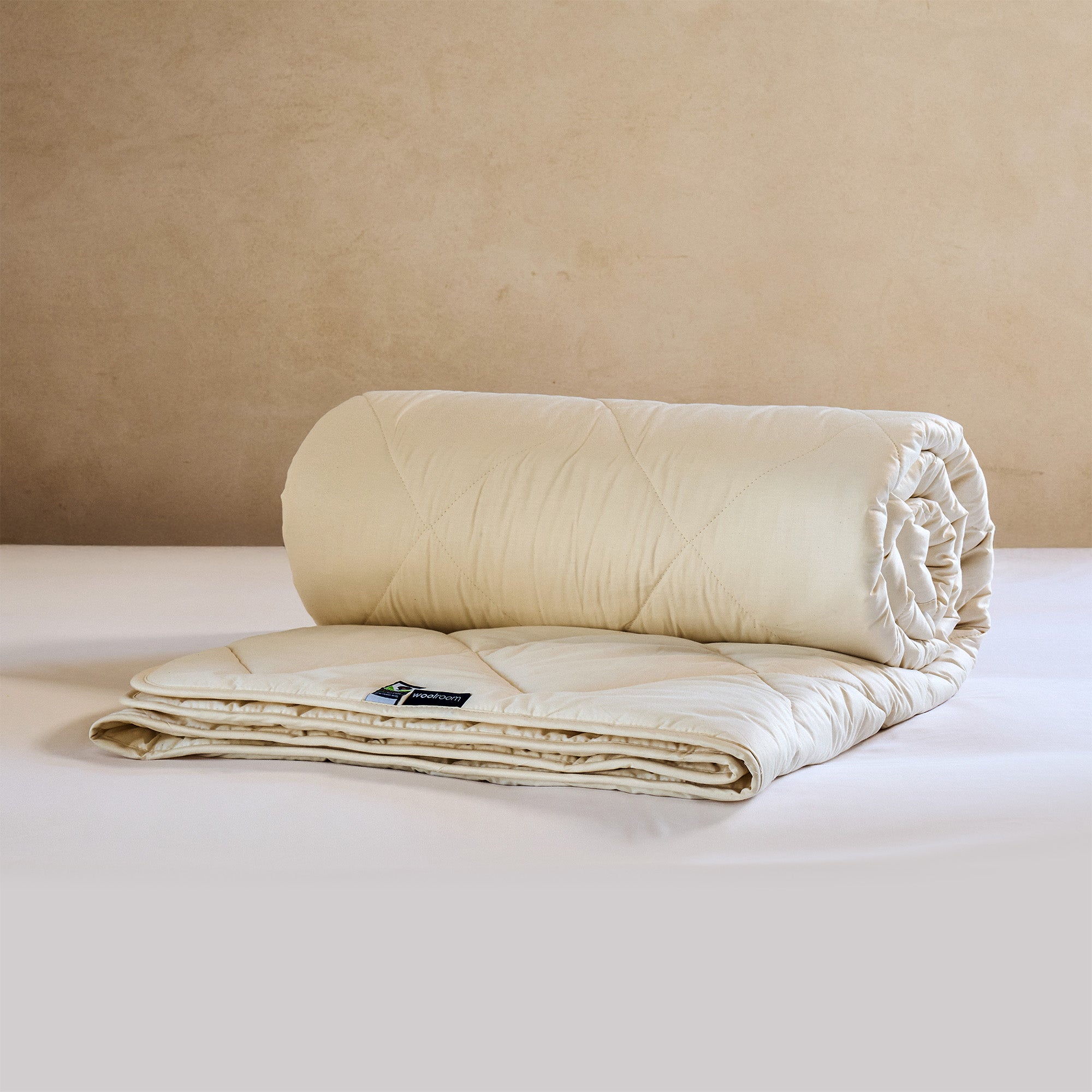
For many households, a synthetic duvet is the default choice.
It’s affordable, can usually be washed at home, and is widely available - online, in homeware stores and even supermarket aisles. Straight out of the packaging, it often feels soft, lightweight and warm - everything you’d expect from a comfortable night’s sleep.
What’s less often considered is how that comfort holds up over time, and how different fillings behave with regular use. While many duvets and pillows can feel similar at first, they don’t all respond in the same way night after night.
But are polyester duvets actually good for sleep over time?
What Do We Mean by a 'Synthetic Duvet'?
When we talk about synthetic duvets, we’re referring to those filled with man-made fibres, most commonly polyester.
You're more likely to see the fillings listed as hollowfibre, microfibre or, more recently, rPET. These descriptions relate to how the fibres are made and how the duvet feels, rather than what they fundamentally are. In the simplest terms, they're all variations of polyester, engineered in different ways to change how the duvet feels and performs:
Hollowfibre duvet:
Fibres with a hollow centre, designed to trap air and create a lightweight, insulating structure.
Microfibre duvet:
Much finer strands, packed more densely to create a softer, smoother feel that’s often compared to down.
rPET (recycled polyester) duvet:
A recycled form of polyester, typically made from plastic bottles. While the source material is different, it behaves in a similar way to standard polyester once used as a duvet filling.
Some synthetic fibres are also described as siliconised. This means they’ve been treated to feel smoother and to help reduce clumping, particularly after washing.
That’s what gives synthetic duvets their familiar characteristics:
- lightweight and easy to handle
- soft and comfortable to the touch
- effective at retaining warmth
They're also relatively inexpensive to produce, which is part of the reason why they're so widely used as a type of duvet filling - often chosen without much consideration of how the material performs over time.
While the initial feel can be very similar to natural alternatives, like feather, down and wool, the way these fibres behave with regular use is where the difference starts to become more noticeable.

What Happens to Polyester Duvets Over Time?
While polyester duvets are designed to feel soft and lofty at first, that structure doesn’t always remain the same with regular use.
The fibres inside the duvet are engineered to trap air, creating the light, insulated feel most people associate with comfort. But over time those fibres can begin to compress.
“Polyester doesn’t have the same natural resilience as materials like wool. With repeated use, the fibres are exposed to the moisture your body releases during sleep. Because these fibres don’t manage moisture in the same way, microfibre, hollowfibre and rPET fillings can gradually lose their loft. Over time, that changes how the duvet feels and performs.”
Chris Tattersall, Managing Diractor, Woolroom
It's not something that happens all at once, but rather a gradual process. Over time, you may start to notice:
- the duvet feeling flatter than when it was new
- the filling becoming less evenly distributed due to clumping
- warmth feeling less consistent across the surface
Many sleepers will only begin to question whether their duvet is still performing as it should at this point, which is something we’ve explored in our guide to How Long Duvets Last.
How Do Polyester Duvets Feel Night After Night?
There’s a good chance you’ve slept under a polyester duvet at some point. While changes in structure can affect how a duvet performs, they’re often experienced as small shifts in how it feels during the night.
Sleep isn’t just about staying warm (or cool during the spring and summer months). As your body rests, it naturally releases both heat and moisture, and your duvet plays a role in how that’s managed.
“Polyester fibres are effective insulators - they help to retain warmth. What they don’t do is manage moisture in the same way as natural fibres. That moisture tends to remain within your personal sleep environment, rather than being drawn away from the body. And that’s a key factor in how well your temperature is regulated during the night.”
Chris Tattersall, Managing Director, Woolroom
If you’ve ever wondered why you wake up hot in the night, we explore it in more detail in our guides on Is Polyester Too Hot for Sleeping? and Night Sweats and Sleep Guide
The combination of warmth and retained moisture can also create a more humid environment within your bed. In these conditions, dust mites and other allergens are more likely to thrive.
Moisture can also influence how the filling behaves. As fibres are exposed to repeated humidity, they can begin to clump together and lose their loft, which reduces airflow through the duvet. This can make temperature harder to regulate, contributing to a sleep environment that feels less balanced and, ultimately, less comfortable night after night.
Wool vs Polyester Duvets - How Do They Compare?
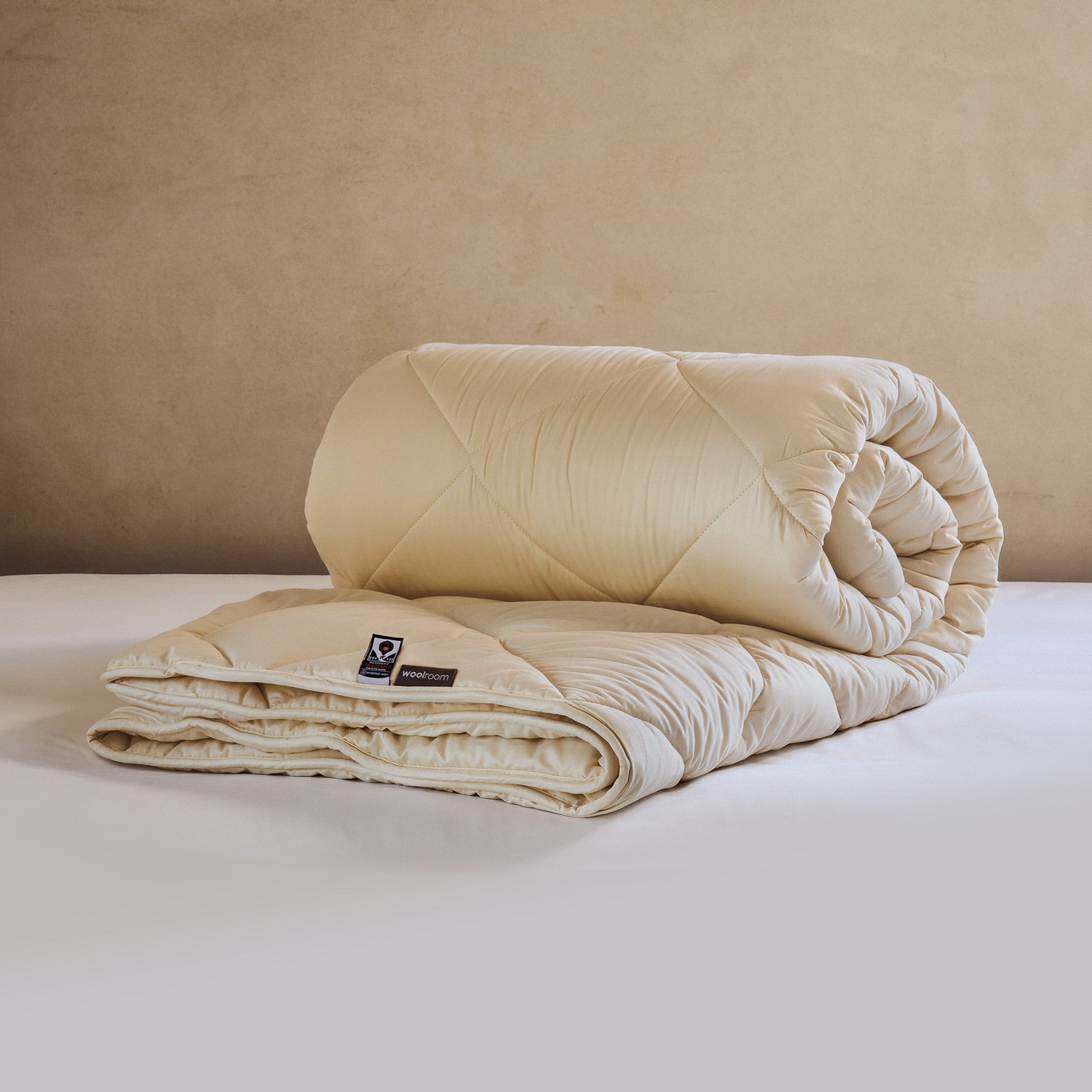
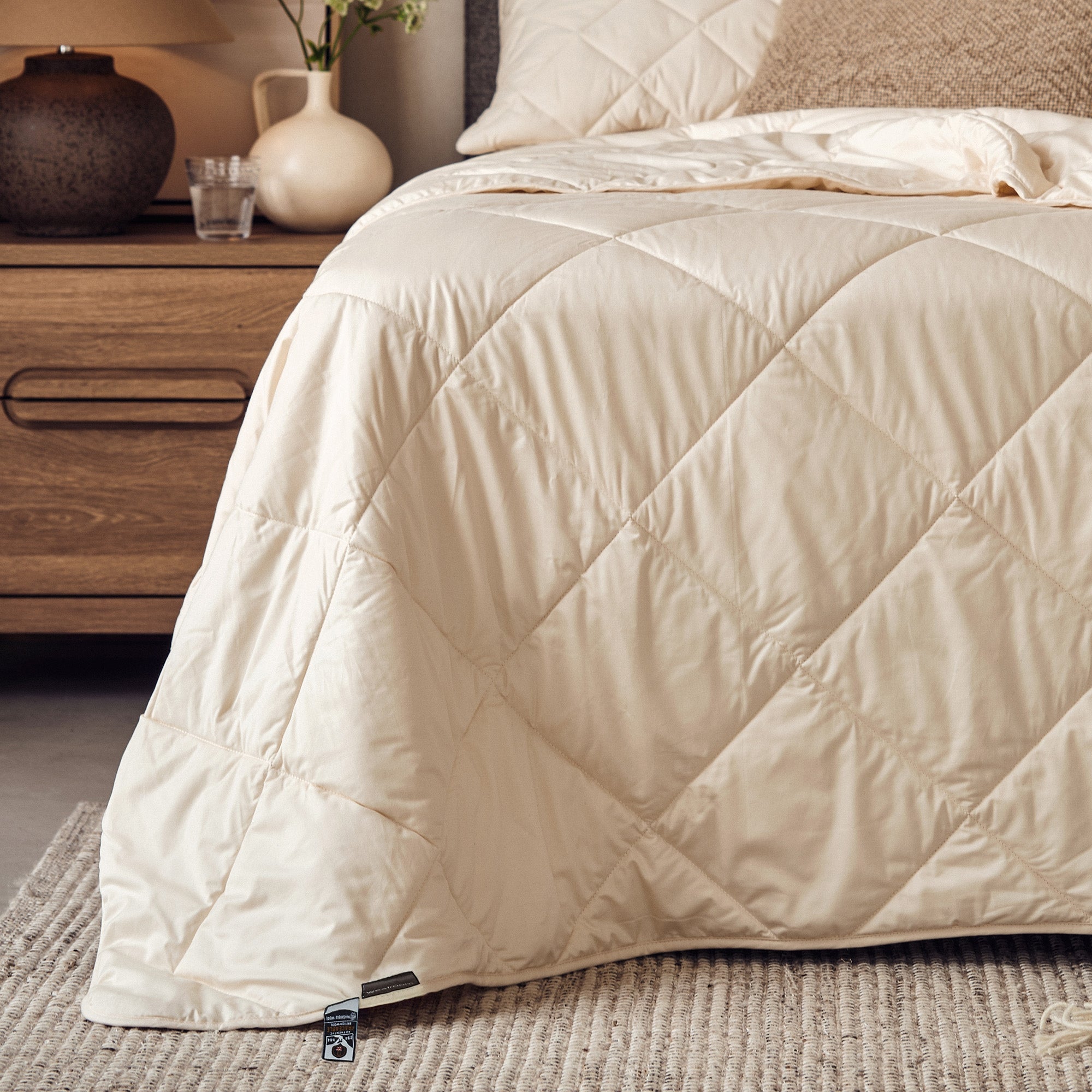
The differences between polyester and Wool Duvets become much clearer when you look at how they behave inside a duvet over time.
Wool fibres are structured very differently from synthetic fibres. Each fibre has a natural crimp, which creates pockets of air while also allowing it to flex and recover. This helps wool maintain its loft and structure more effectively, even with regular use.
More importantly, wool interacts with moisture differently. Rather than allowing it to sit within your duvet, wool fibres can absorb moisture vapour within the fibre itself and release it back into the air. This helps reduce the build-up of humidity within your bed, supporting a more balanced and comfortable sleep space.
What this means for sleepers is:
- a more consistent temperature across the duvet, with less clumping
- less build-up of humidity, which, combined with its natural hypoallergenic qualities, reduces the impact of allergens
- a drier, more breathable feel throughout the night
Wool fibres also retain their structure more effectively, meaning these characteristics remain more stable over time. And for even greater peace of mind, . Thanks to its high nitrogen content, it’s less likely to ignite and doesn’t require additional chemical treatments.
Polyester duvets are often machine washable, which makes them easy to care for. Wool duvets may require a different approach, but because wool fibres naturally manage moisture, they don’t need to be cleaned as frequently. In many cases, simply airing them outside on a clear, breezy day is enough to keep them fresh.

What About Sustainability and Material Impact?
Beyond how a duvet feels and performs, the materials inside also differ in how they behave over their full lifespan.
Polyester is a plastic-based fibre, derived from petroleum. While it can be recycled in some forms, most synthetic bedding is difficult to fully recycle due to mixed materials and construction. Over time, and particularly through washing, polyester can also release microplastics into the water system. It can take up to 200 years to fully decompose.
Wool, by contrast, is 100% natural fibre. It’s shorn from sheep as part of their natural care cycle - much like getting a haircut, it helps keep them comfortable. At the end of its life, with its nitrogen-rich content, it’s biodegradable and can break down naturally in the right conditions without leaving long-term residue behind.
It’s not necessarily the primary deciding factor when choosing between a natural or synthetic duvet. However, it does form part of the wider picture when comparing materials.
Are Polyester Filled Duvets Good for Sleep?
Polyester duvets - filled with microfibre, hollowfibre, rPET or siliconised fibres - are widely used, but when it comes to supporting good quality sleep, they’re not as effective as wool.
As we’ve explored, polyester fibres don’t manage moisture effectively and can lose their structure over time. This can make temperature harder to regulate, reduce airflow through the duvet, and lead to a less stable and comfortable sleep environment night after night.
Wool duvets are better suited to supporting good quality sleep. Their ability to regulate both temperature and moisture, while maintaining their structure, allows them to provide a more balanced and consistent sleep experience over time.
Synthetic duvets might appeal because of their lower upfront cost, but how they perform over time can make a noticeable difference to comfort and longevity. This often means they need to be replaced more frequently, as the filling becomes less evenly distributed and less effective at maintaining comfort. Wool’s durability and resilience mean it can maintain its structure and comfort for longer, reducing the need for frequent replacement when properly cared for.
Over time, the materials inside your duvet play a direct role in how well your body can regulate temperature and stay comfortable through the night.
This is supported by independent research into how different duvet fillings perform during sleep.
Research conducted at Bangor University, in collaboration with the International Wool Textile Organisation, found that wool outperformed synthetic fillings in both temperature regulation and moisture management during sleep. The study showed that wool transports moisture away from the body more effectively and maintains a more stable temperature throughout the night.
For those reasons, wool is widely recognised as a more effective material for supporting deeper, more restorative sleep.