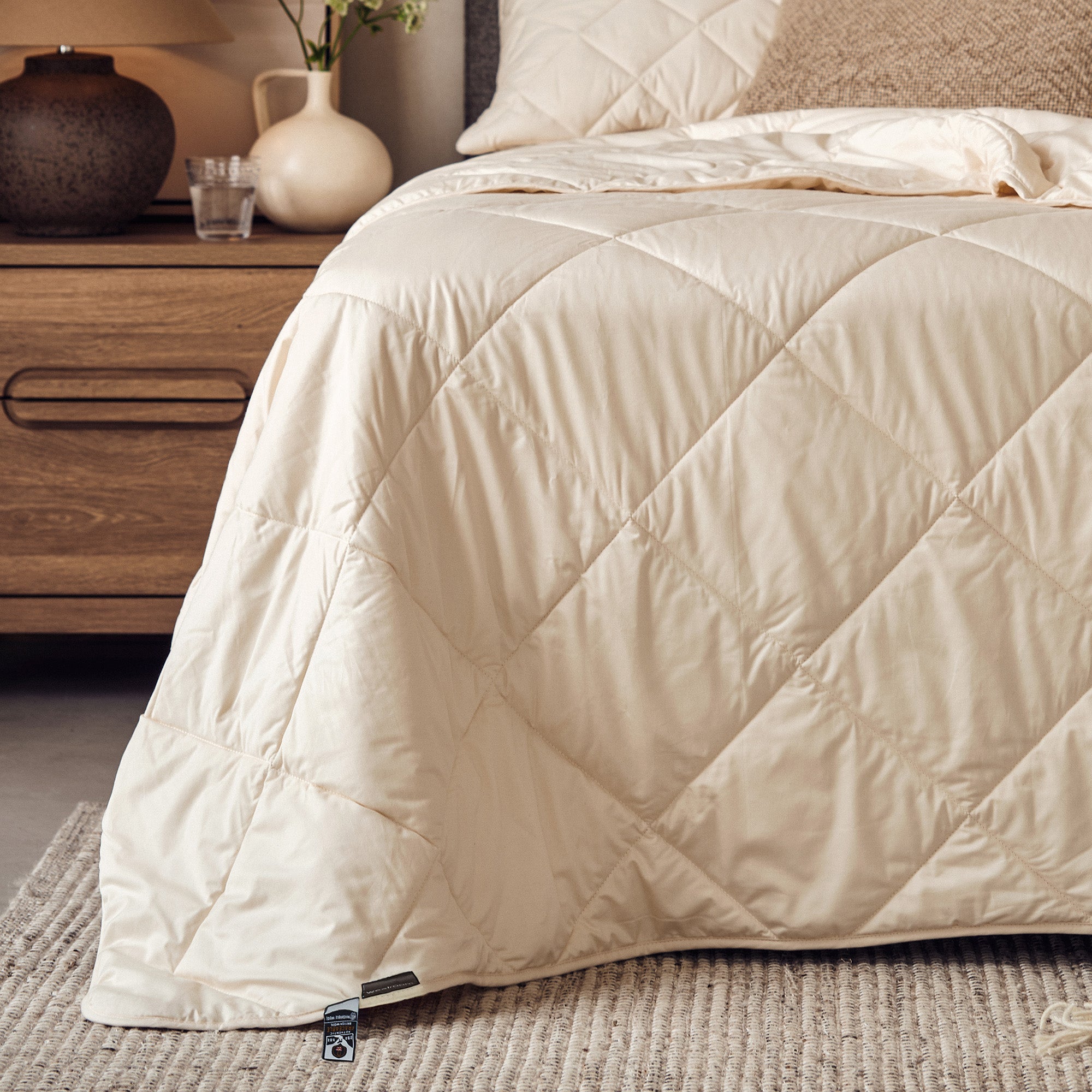
Key Takeaways
-
Wool is nature’s original smart fiber, adjusting to your body temperature to keep you warm in winter and cool in summer.
-
Its crimped fiber structure traps air for insulation while allowing breathability, making it ideal for year-round comfort.
-
Wool wicks away moisture and releases it into the air, preventing overheating, night sweats, and that dreaded clammy feeling.
-
Naturally hypoallergenic and resistant to mold, dust mites, and mildew, wool is a healthier bedding choice—especially for sensitive sleepers.
-
Woolroom’s ethically sourced, chemical-free wool bedding combines luxury, sustainability, and scientifically backed sleep benefits for your best sleep yet.
Wool is often associated with cozy sweaters and thick socks, for good reason. But there’s a reason this natural fiber has been used for thousands of its years—and it’s not just its ability to keep us warm. Actually, wool is one of nature’s most impressive materials, capable of regulating temperature in ways that synthetic fabrics (and other natural fibers) just can’t match. Wool can keep you cool on a hot summer night and toasty during the coldest winter night because it actually adjusts to your body and the environment. Wondering how? Let’s take a closer look at the science behind wool’s natural temperature regulation—and why that makes it such a great material for bedding.
The Structure of Wool
Wool’s natural superpower is entirely linked to its crimped, spring-like structure—it’s like a teeny tiny coil. The shape creates countless microscopic air pockets when wool fibers are woven or layered. It’s these little pockets that give wool its knack for regulating temperature.
When it’s cold, the air in these pockets acts as an insulator, holding onto body heat to keep you warm. But what makes wool unique is that these pockets also allow for airflow, which means heat and moisture escape when your body warms. That’s what prevents overheating when the weather is hot or your body cycles through its normal thermoregulation process. Wool’s ability to both insulate and breathe is what makes it a great choice all year round.

Snuggle up in wool and enjoy the benefits of temperature regulation for more regenerative sleep.
Moisture Management
Wool’s cooling ability is entirely related to its moisture management, which responds to both your body and environment. It’s not smart tech, but it kind of feels that way! Wool can actually absorb up to 30% of its own weight in moisture. In warm or humid conditions, wool fibers draw away sweat and heat from your skin (a process known as wicking) and then release it in the air—evaporative cooling in action.
It’s passive but incredibly responsive, because wool reacts to heat and moisture around you. That’s what maintains a stable and comfortable microclimate. It’s a stark contrast to fabrics that cling when you sweat or typical bedding materials, like polyurethane foams and polyester, that can’t wick away moisture and contribute to overheating and clamminess.
The Smartest, Most Sustainable Sleep Solution
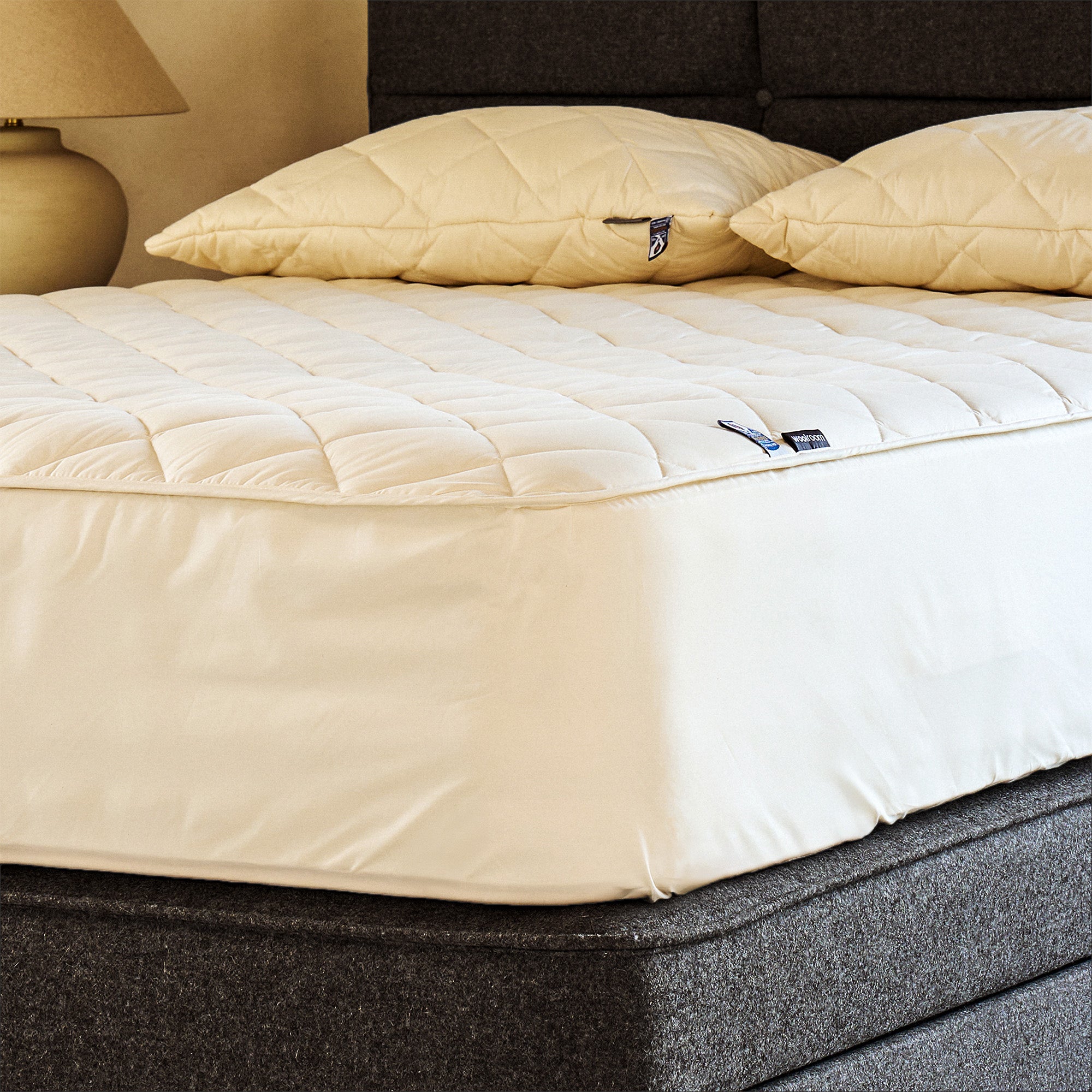
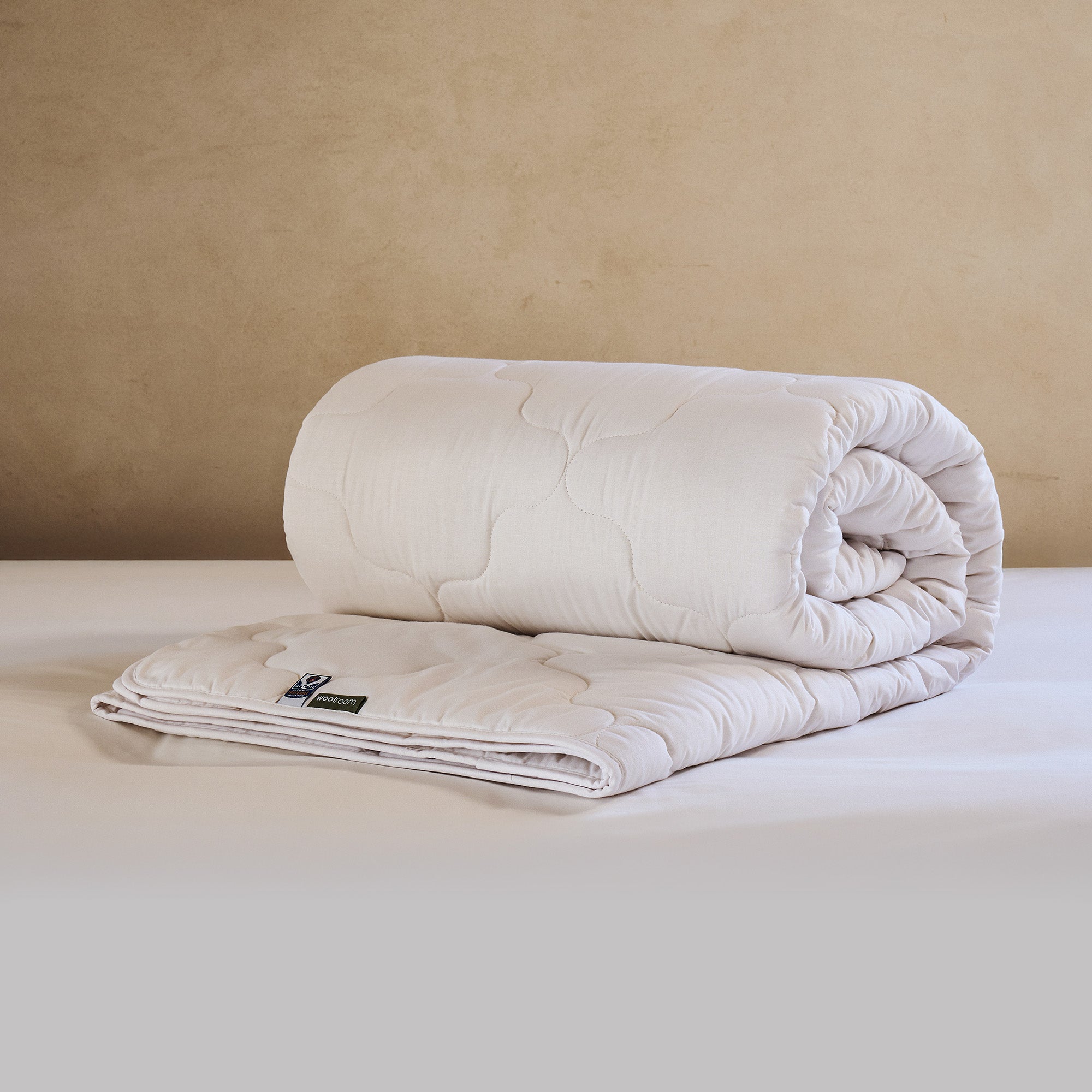
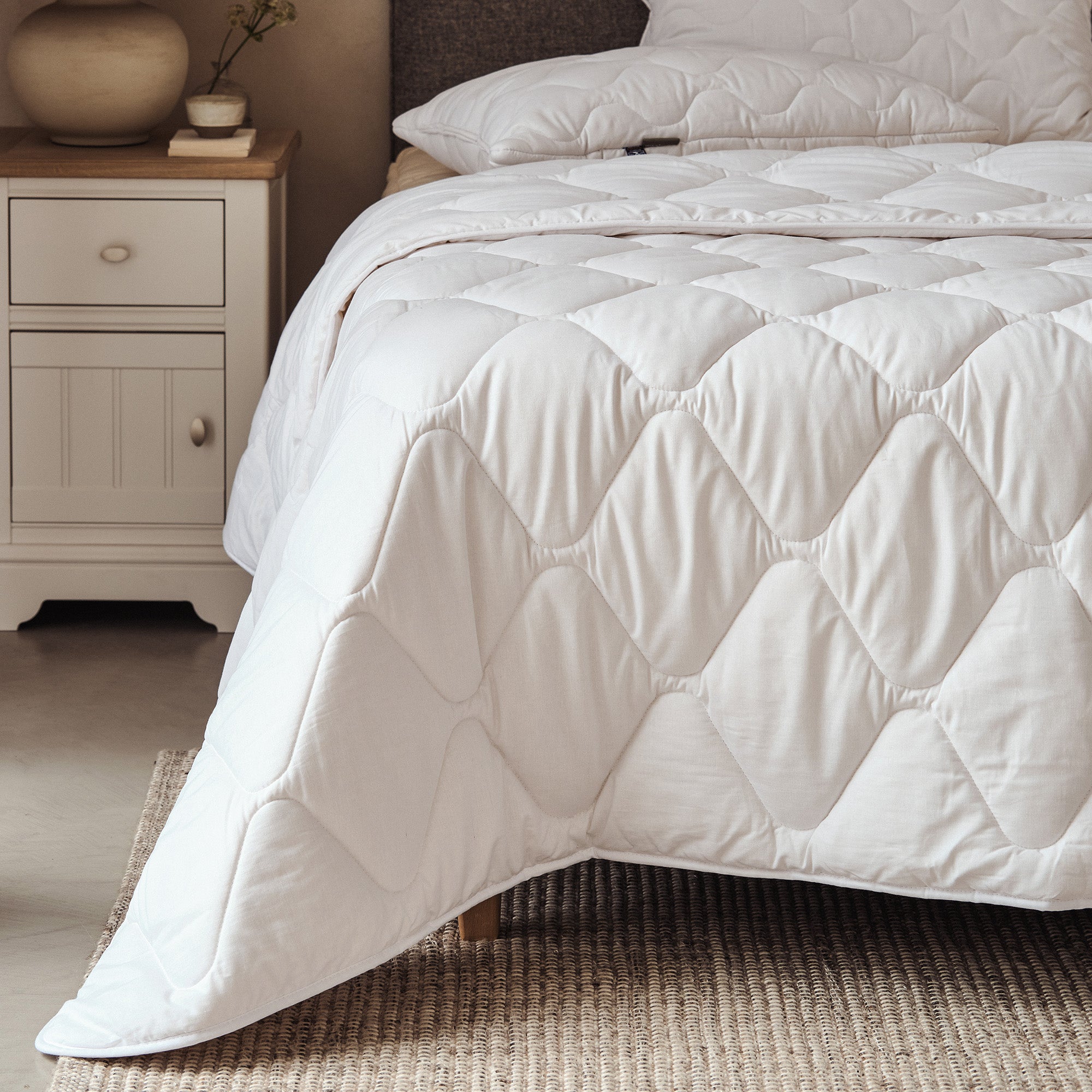
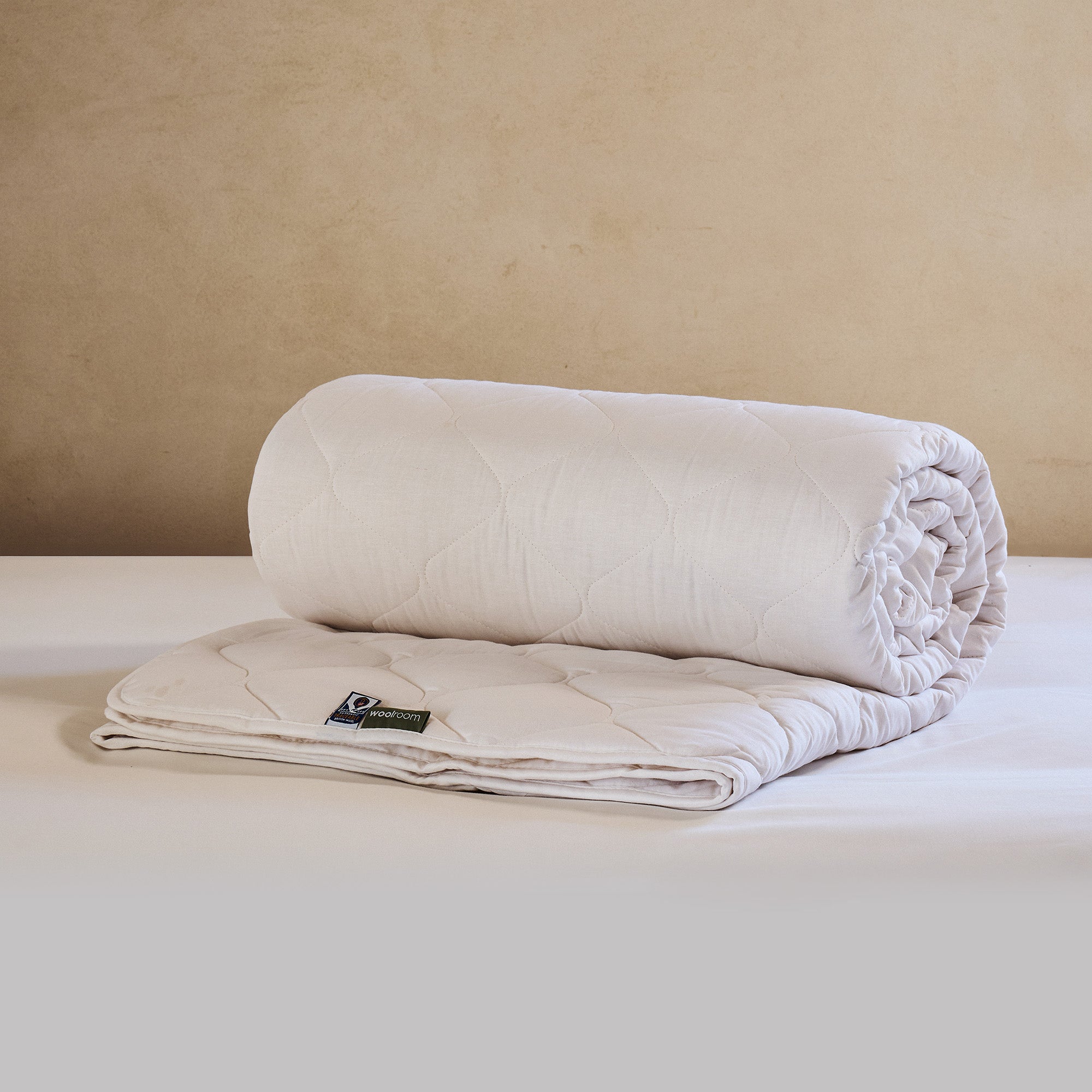
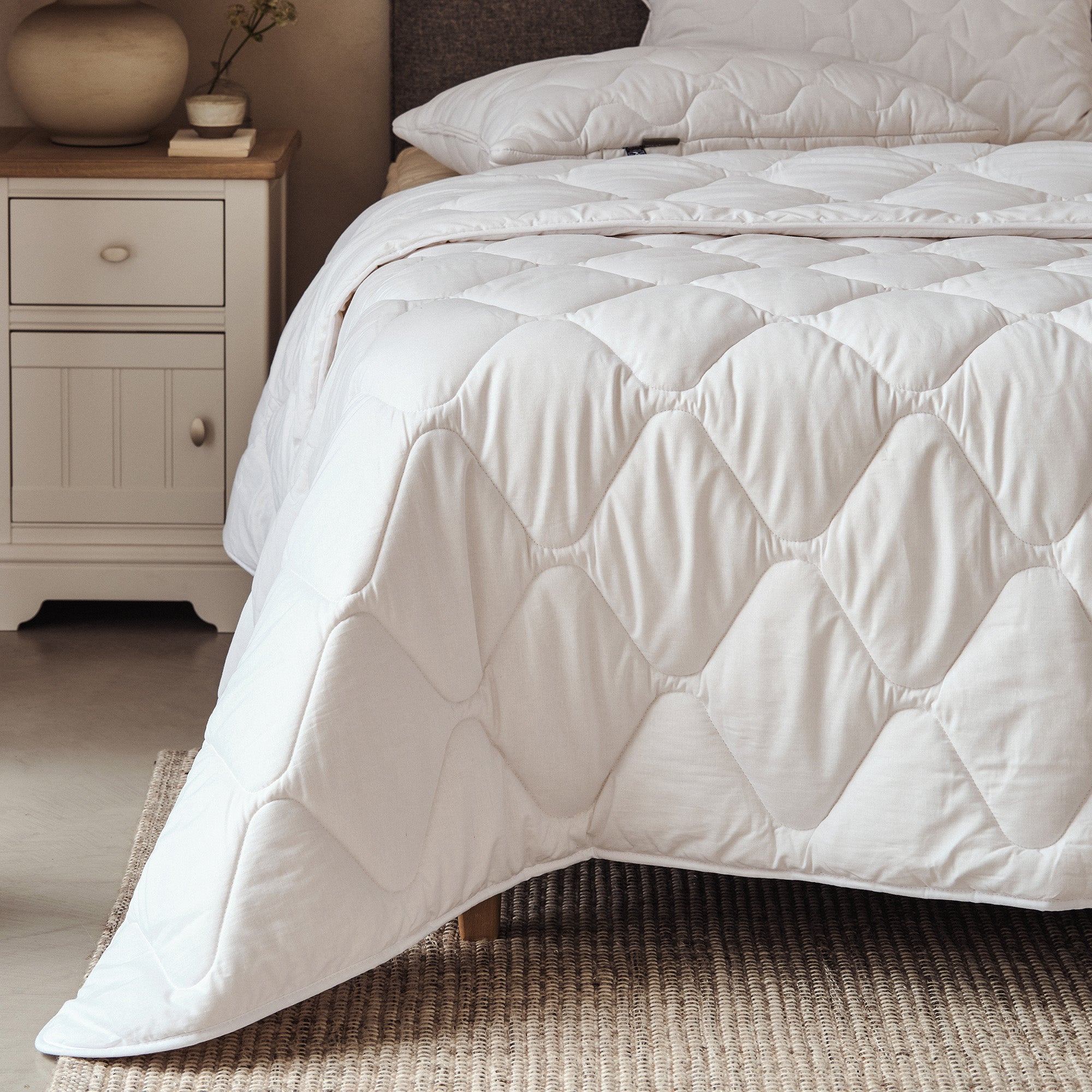
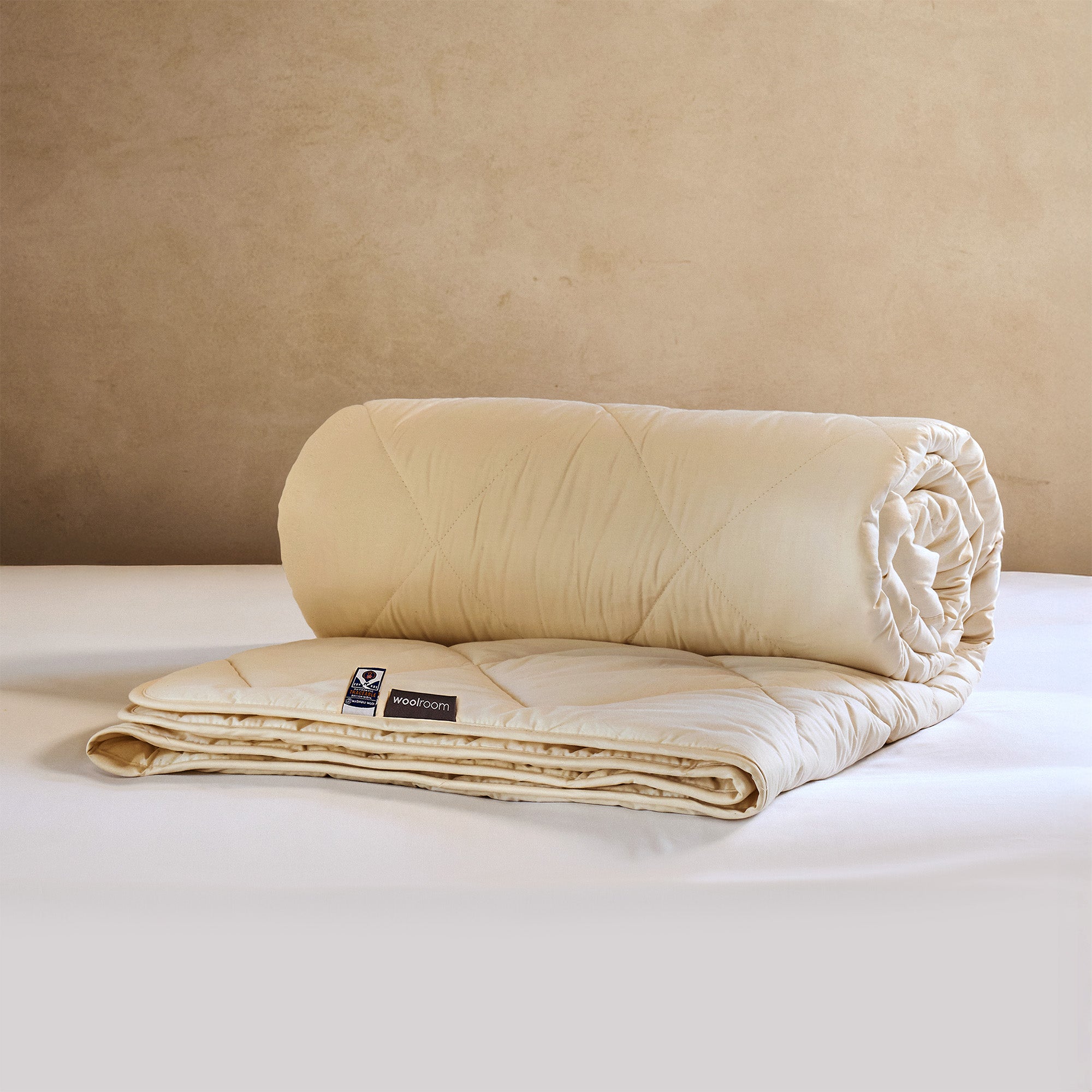
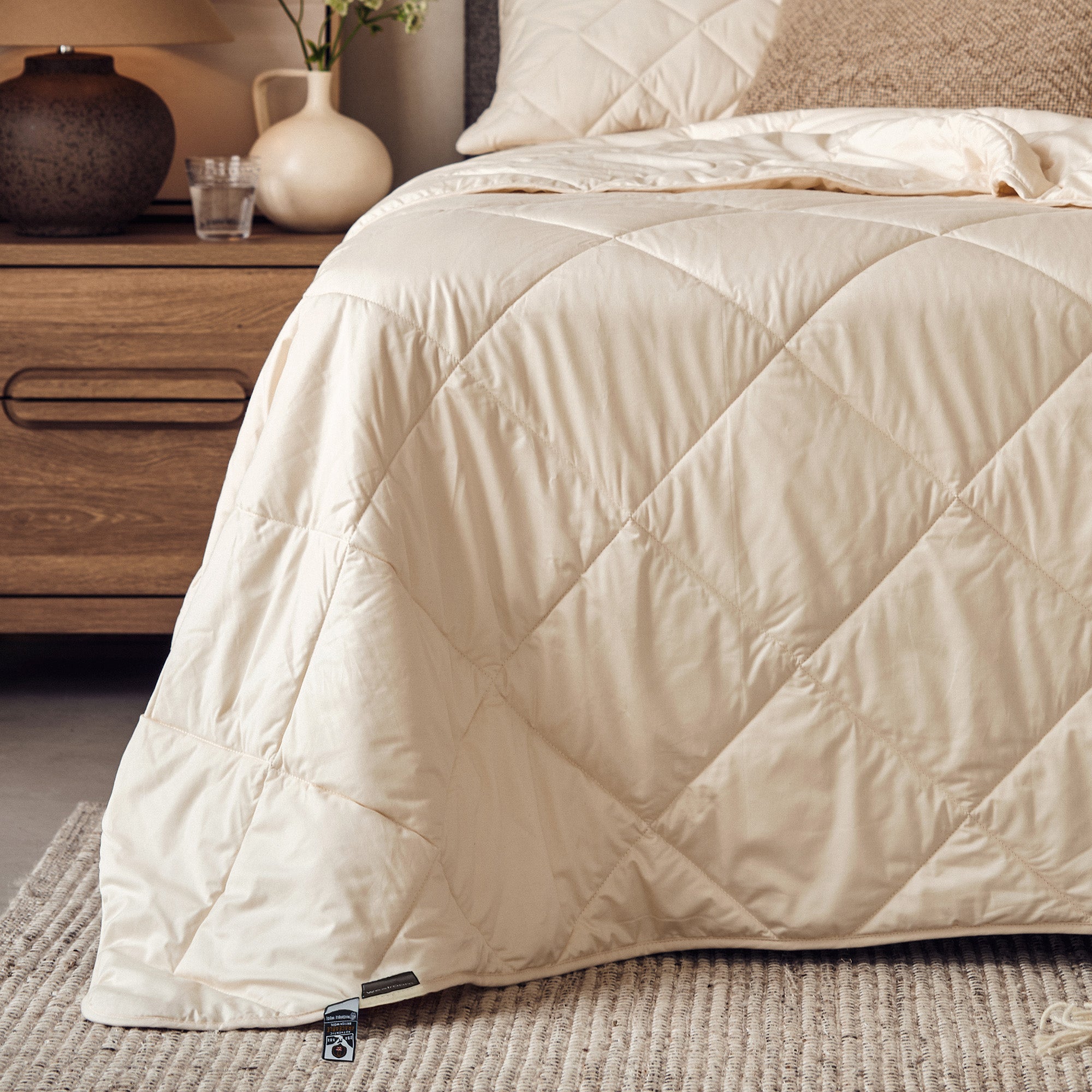
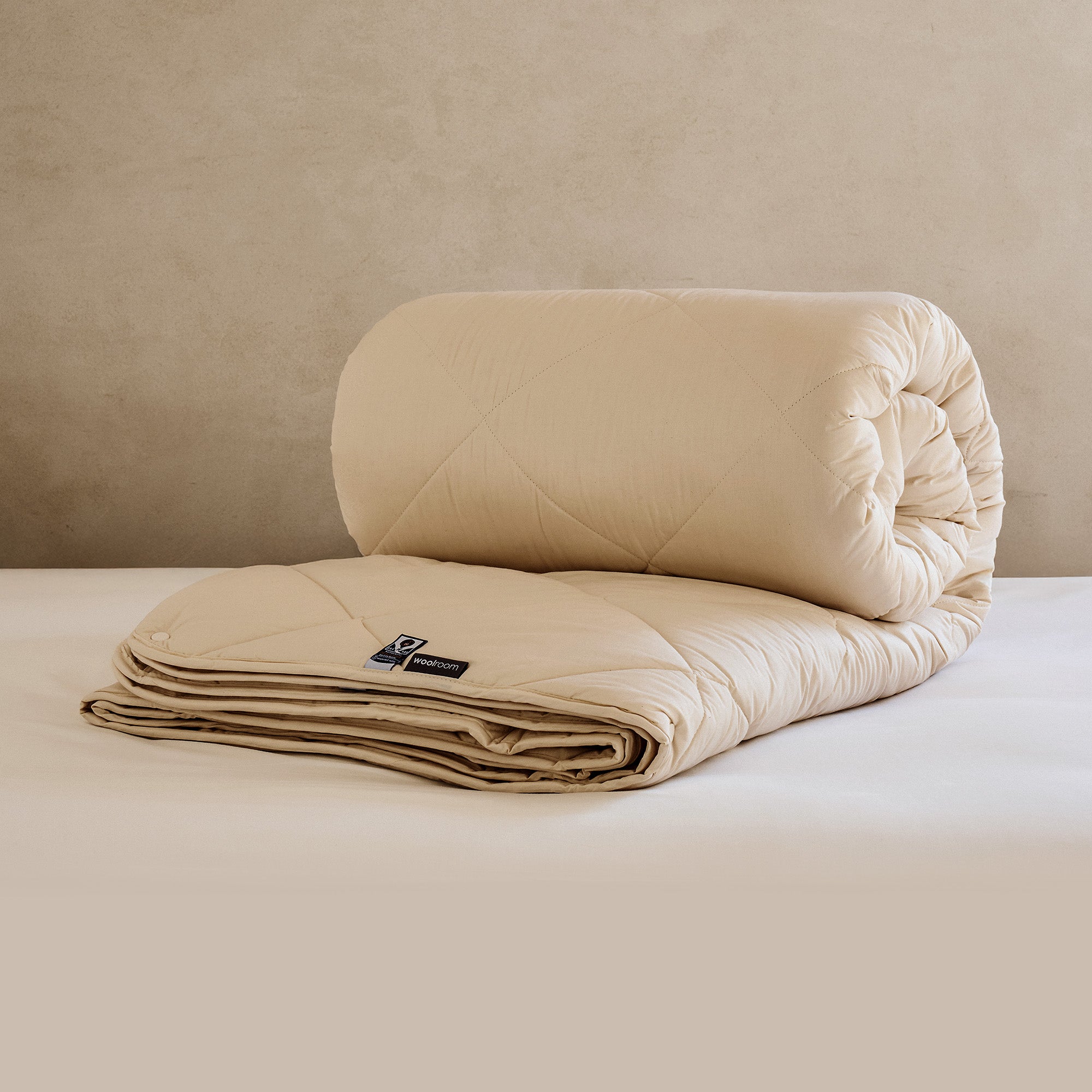
It’s this one-two punch of temperature regulation and moisture control that makes wool bedding products a solution for better sleep all year long. In fact, research conducted by Leeds University for Woolroom found that wool bedding actually boosts regenerative sleep by 25%. In comforters, pillows, mattress pads and toppers, and even mattresses, wool’s innate properties make it ideally suited to more comfortable nights.
Plus, those same benefits make wool bedding a healthier choice for more sustainable sleep. Wool’s breathability and wicking ability means wool bedding staples simply aren’t hospitable to allergens and irritants, like dust mites, mold, and mildew. And because wool isn’t petroleum based, it doesn’t pose the off-gassing issue typical of polyurethane and memory foams. That’s a huge plus for people who struggle with nighttime allergies or general sensitivities.
By nature, wool is renewable and biodegradable. But harvesting and processing are key to making it sustainable, ethical and hypoallergenic. In 2008, Woolroom opened for business with a plan to create the highest-quality wool bedding in the most responsible and sustainable way possible. To that end, we hand selected British farms that share our vision, beginning with a commitment to ethical animal husbandry practices. All of the farms from which we proudly source our wool abide by the five freedoms in the UK Animal Welfare Act of 2006. Through our Wool ID® program, we trace every fiber back to ethically managed British farms that uphold the highest animal welfare standards. We process our wool without harsh chemicals, making it safe for sensitive sleepers and hypoallergenic. With over 150 years of textile experience guiding our craftsmanship, we ensure that every comforter, topper, pillow, and mattress delivers the cleanest, most comfortable sleep possible—naturally.
Wool’s resilience contributes to its sustainability. Wool fibers are incredibly durable, so they can be recycled repeatedly without affecting tensile strength. That’s why Woolmark calls wool the most recycled fiber in the world. When cared for properly, wool bedding products can last for decades, reducing the need for replacements and minimizing waste.
Why Choose Woolroom for Wool Bedding?
At Woolroom, we don’t just work with wool—we wholeheartedly champion it. From day one, our mission has been to harness the incredible, science-backed benefits of wool to help people sleep better, live healthier, and make more sustainable choices. Every wool bedding product we make is thoughtfully designed to support your comfort through all seasons, thanks to this wonder fiber’s unmatched ability to regulate temperature and manage moisture. From day one, we’ve held an uncompromising commitment to quality, traceability, and transparency. It’s what sets Woolroom apart.
The Bottom Line
Wool isn’t just cozy—it’s clever. Between its exceptional temperature regulation and moisture-wicking properties, it really does outperform other natural and synthetic materials alike. Add to that its sustainability credentials, and wool really is hard to beat. Whether you’re looking to sleep cooler in summer, warmer in winter, or simply better all year long, wool bedding from Woolroom offers a smarter, healthier, and more natural solution. That’s the science of wool—and the comfort of knowing you’re sleeping with the very best.
Frequently Asked Questions
How does wool regulate temperature?
Wool fibers have a crimped structure that both traps air for insulation and promotes airflow for breathability. It also wicks moisture and releases it into the air. These properties help maintain a stable micro-climate that keeps you comfortable all year long.
Why does wool keep us warm?
Wool’s coiled shape creates tiny air pockets that act as an insulating layer. It slows down the transfer of body heat away from you, just like the insulation in your home’s walls. But it prevents overheating because those pockets allow air to circulate, while wool’s moisture-wicking properties draw away moisture.
Is 100% wool really warm?
Yes, 100% warm is really warm. It’s actually one of the best materials for retaining heat in cold weather, minus the bulk.
Is wool warmer than polyester?
Wool is a better choice for staying warm than polyester because it’s a better insulator. It also allows air to circulate and it effectively manages moisture, which prevents overheating in a way that polyester and other synthetic materials can’t replicate.