Key Takeaways
- Not all “cooling” fabrics work the same way. Cotton promotes airflow, bamboo has a silky surface feel, and wool actively regulates temperature and moisture.
- Moisture control matters as much as breathability. Staying dry overnight is key for uninterrupted, deeper sleep, and wool excels at managing humidity.
- Weave and construction are just as important as fibre. Lightweight cotton percale typically sleeps cooler than sateen or dense, high–thread-count fabrics.
- The best cooling setup is layered. Combining breathable organic cotton sheets with thermoregulating wool layers creates a balanced, year-round sleep system.
Overheating at night is a common sleep complaint, and breathable bed linens can offer some much-needed relief. Natural fibres, like cotton, wool, and bamboo, help combat heat retention for a more comfortable sleep environment. But all three of these materials work differently and offer their own strengths and weaknesses.
To really manage temperature overnight, bedding should do more than just feel cool when you first climb into bed. The best cooling fabrics are still performing at 2 a.m., when heat and humidity are more likely to become trapped. In this cooling fabric showdown, we compare cotton vs. wool vs. bamboo so you can decide which material best supports deeper, cooler sleep.
Why cooling sheets matter, and who needs them
Picture this: It’s the middle of the night and you wake up suddenly, tangled in damp sheets and desperate to kick off the covers. If that’s a scenario that sounds familiar, you’re the kind of sleeper who would benefit from cooling sheets. Even if you don’t consider yourself a hot sleeper, your core body temperature is still fluctuating while you sleep. It’s part of the body's natural thermoregulation process. Bedding and bed linens that interfere with this process by trapping body heat disrupt these natural rhythms, forcing your body to work harder to cool itself down. That can directly affect sleep quality by interrupting deeper sleep stages like REM. Even if you aren’t waking completely, there’s a good chance that you experience micro wakeups, and those can be equally disruptive to restful sleep.
While your mattress can be part of the problem, especially if you sleep on synthetic foam, the bedding materials surrounding you play a big role. Common heat traps include synthetic fabrics, like microfiber and polyester, thick comforters with synthetic fill, and poor bedroom ventilation. Synthetics are dense and don’t allow air to circulate. That might feel cozy initially, but it can quickly become far too warm.
Swapping out synthetic fabrics for bedding that’s breathable and moisture-wicking, especially in your sheets and comforter, helps regulate heat by allowing air to circulate freely and pulling moisture away. That keeps heat from building, so you stay more comfortable.
Keep in mind that cooling bedding really comes down to thoughtful material layers. There’s no magical sheet set that can get the job done all on its own. It’s the right balance of bed linens, comforter, pillows, mattress protector, and even your pyjamas that ultimately work together to release heat.
Cotton: The classic, breathable bedding material
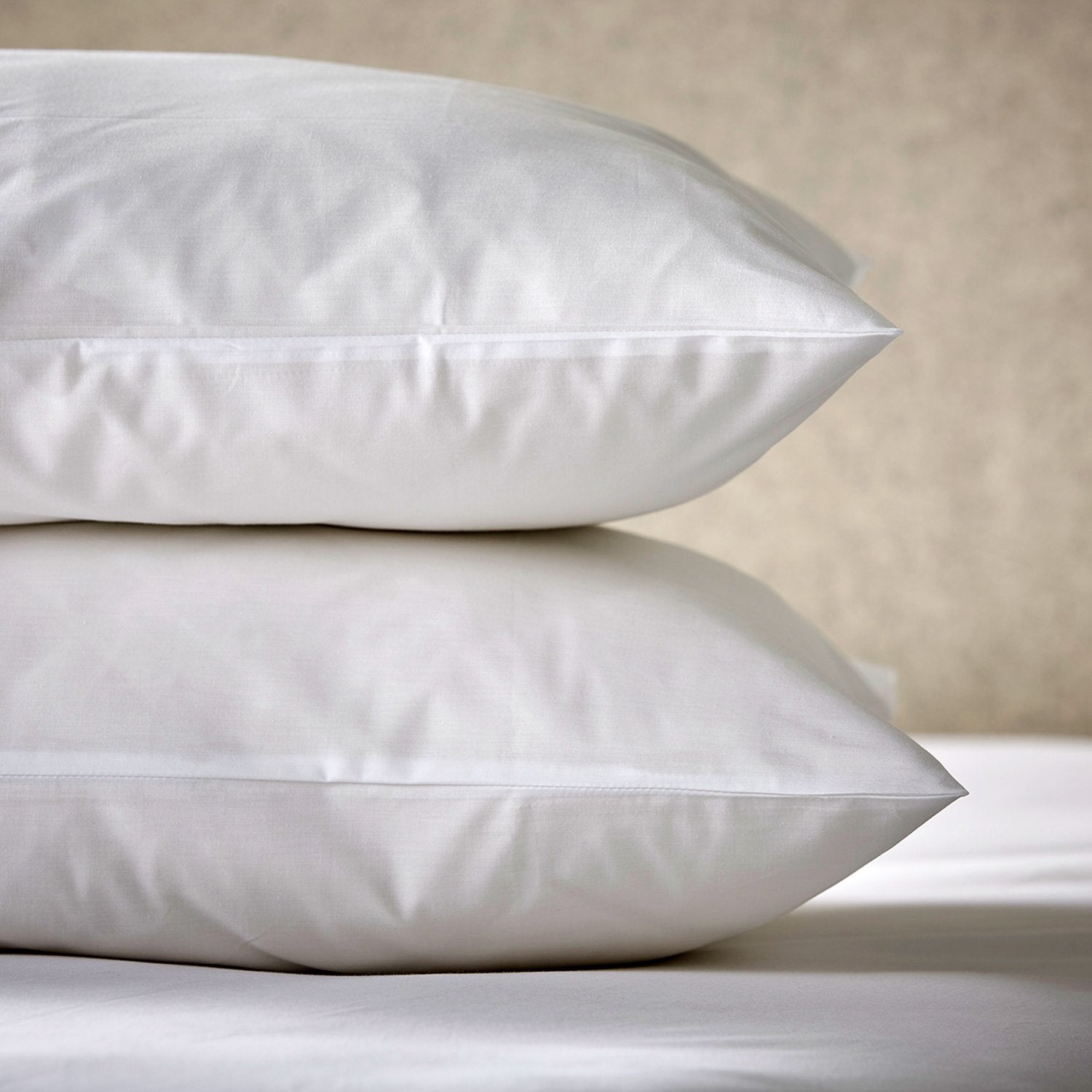
When people think of breathable sheets, cotton usually comes to mind. Not only is it familiar, it’s naturally derived and can be very breathable with the right weave. But not all cotton sheets sleep cool, and that’s largely due to how it’s woven and whether it’s heavily treated during processing.
Low-quality cotton bedding often has heavier yarns, a higher thread count, or a synthetic finish. Combined, those elements can limit airflow and feel noticeably dense. Chemical wrinkle-resistance treatments might sound good in theory, but these coatings reduce breathability.
Cotton bedding that’s well made and minimally processed, on the other hand, really is one of the most cooling bedding materials you can buy. Here’s why:
- Cotton is a naturally breathable fibre, which allows air to circulate freely around the body.
- Cotton absorbs moisture, pulling perspiration away from the body.
- When it has a percale weave, cotton sheets have an airy structure that’s especially conducive to breathability. Plus, this weave is known for its crisp, cool feel and easy drape.
At Woolroom, our organic cotton percale bed linens are certified by the Global Organic Textile Standard (GOTS), verifying that the cotton is grown and processed without harmful chemicals. They’re free of synthetic coatings of any kind, and they have a 200 thread count to maintain high breathability.
When it comes to cotton bedding, prioritizing organic is the more environmentally conscious approach. Conventional cotton bedding uses large amounts of water and the crops are treated with fertilizers and pesticides. That’s why it’s known colloquially as “the world’s dirtiest crop,” in the eyes of several regulating bodies. Organic cotton is different. From energy consumption to farming practices, organic cotton is a far more sustainable approach for bed linens, and it aligns beautifully with our commitment to responsibly manufactured wool bedding here at Woolroom.
Who are cotton sheets best for?
Organic cotton bed linens are an excellent choice for those in search of breathable, chemical-free sheets. Because they’re durable and cooling, they work well for shoppers who want to limit frequent replacements and prefer a sustainable, natural fibre option.
Drawbacks of cotton sheets
Cotton absorbs moisture, but when it’s layered with heat-retaining materials, like synthetic comforters and mattress protectors, it can hold onto that moisture. To enjoy the full benefits of organic cotton bedding, pair it with layers that match its breathability, like wool bedding.

Bamboo: The trendy cooling option (but not always what it seems)
Bamboo bedding is undeniably popular, and it’s often promoted as eco-friendly, cooling, and outrageously soft. But there’s a little more to the story.
Most bamboo bedding is actually bamboo viscose or rayon, meaning there’s little actual bamboo in the fibre. Instead, it’s regenerated from bamboo pulp. That creates a smooth, silky fabric that feels cool to touch and drapes closely to the body. Bamboo bedding might sound eco-friendly, but turning raw material into a usable textile fibre involves a chemically heavy production process. Unless the system is a closed loop, it’s not nearly as green as many manufacturers would have you believe. Plus, some brands use synthetic blends that further reduces the eco factor (and limits breathability).
Bamboo sheets have a distinct feel. They’re soft, almost to the point of feeling slippery, and they can clingy. Like cotton, they can trap heat in thicker weaves and higher thread counts.
Who are bamboo sheets best for?
Bamboo bedding might be a good choice if you’re willing to search for sets that are responsibly manufactured—just be prepared to pay a premium. Those who prefer a silky, draped feeling over crisp bed linens may also find bamboo sheets appealing.
Drawbacks of bamboo sheets
Bamboo bedding may not be as breathable as expected if it’s a heavier weight. And those who are specifically considering bamboo sheets because it’s often marketed as sustainable may not be pleased with the lack of transparency.
Woolroom’s perspective
For hot sleepers, organic cotton bedding paired with temperature-regulating, moisture-wicking wool layers is hard to beat for consistent breathability and moisture management. These low-impact materials are also the better choice from a sustainability point of view.
Wool: Not for sheets, but ideal for cooling bedding layers
If you’re like most people, wool bedding doesn’t leap to mind when you’re thinking about cooling materials. We tend to think along the lines of “heavy winter sweaters” and “thick woolen socks.” But in bedding, wool couldn’t be better.
This wonder fibre is naturally moisture wicking and thermoregulating, which means it actively responds to body temperature fluctuations. When your body temperature drops, wool is gently insulating. When it increases, wool fibres help release heat and manage moisture. Each wool fibre can absorb up to 30% of its own weight in moisture without becoming heavy or damp, which helps you stay more comfortable. That’s what makes wool bedding effective year-round, even when it’s hot outside.
Why wool for cooling bedding?
Wool fibres have a coiled structure, which is what makes it breathable, temperature regulating, and moisture wicking. Because wool helps you stay dry, it tends to feel cooler.
How Woolroom uses wool
At Woolroom, our natural wool bedding products use wool in ways that deliver the biggest impact:
- Wool comforters: Lightweight and breathable insulation for temperature regulation without overheating.
- Wool mattress toppers and protectors: Adds breathability and airflow to reduce heat buildup in the mattress below.
- Wool pillows: Dissipates head around the head and neck, where temperature sensitivity is high.
- Wool mattresses: Offers an alternative to synthetic mattresses that trap heat and off-gas.
Our wool is ethically sourced and fully traceable, collected from sheep on our partner farms in Britain. With our Wool ID™ program, we’re proud to be fully transparent about our sourcing. We only partner with farms that guarantee the five freedoms in the UK Animal Welfare Act of 2006, so you can rest easy knowing our wool comes from happy, healthy animals.
Who is wool bedding best for?
Hot sleepers who want to stay dry, not just cool, often find wool bedding exceeds their expectations. Paired with organic cotton sheets, wool bedding supports a sleep setup with outstanding temperature regulation.
It’s also a good choice for people who prioritize low-chemical, eco-friendly bedding. Sensitive sleepers and those with allergies often opt for wool bedding as well, thanks to its hypoallergenic properties. Since it stays dry, it’s not hospitable to common allergens and irritants.
Just remember that wool isn’t a sheet replacement. Think of it as a performance layer.
Performance Comparison – Cotton vs Bamboo vs Wool
Here’s a side-by-side comparison of material performance.
| Feature | Wool | Cotton | Bamboo (Viscose) |
|---|---|---|---|
| Breathability | Excellent | Very good (best in lightweight weaves) | Moderate (varies by weave and processing) |
| Moisture control | Excellent (absorbs and releases moisture without feeling damp) | Good (absorbs moisture but holds onto it) | Good (can wick, but not as well as wool) |
| Temperature regulation | Actively thermoregulates year-round | Cools with passive airflow | Mostly surface-level cooling |
| Eco-friendliness | High when ethically sourced (like Woolroom) | High if organic (GOTS certified) | Low to moderate unless closed-loop |
| Comfort & Feel | Light, airy, gently insulating | Crisp (percale) or smooth (sateen) | Silky, slightly slippery, drapes closely |
| Durability & Maintenance | Very long-lasting, naturally antimicrobial | Durable, machine washable, softens with time | Durable |
Cotton vs Wool vs Bamboo: Which Cooling Fabric Is Best for Sleep?
Cooling sleep really isn’t about the coldest fabric. It’s about creating balance. Cotton is reliable for breathable comfort, while bamboo is known for its silky feel. But for consistent temperature regulation and moisture control all night and all year, layering natural materials makes the biggest difference.
Hot sleepers who combine breathable organic cotton sheets with temperature regulating wool layers above and below set up a sleep environment that manages airflow, wicks moisture, and adapts to the body’s temperature changes. That’s what keeps you dry, comfortable, and undisturbed for the most restful sleep.