
Key takeaways
- The ideal bedroom temperature for sleep is 16–19°C. Cool is good, but cold is not.
- A room that’s too cold increases night-time waking and reduces REM sleep, especially in the early morning hours.
- Shorter autumn days weaken your body’s daylight signal and can shift melatonin release later.
- Synthetic bedding traps heat and moisture, which can leave you swinging between too hot and too cold.
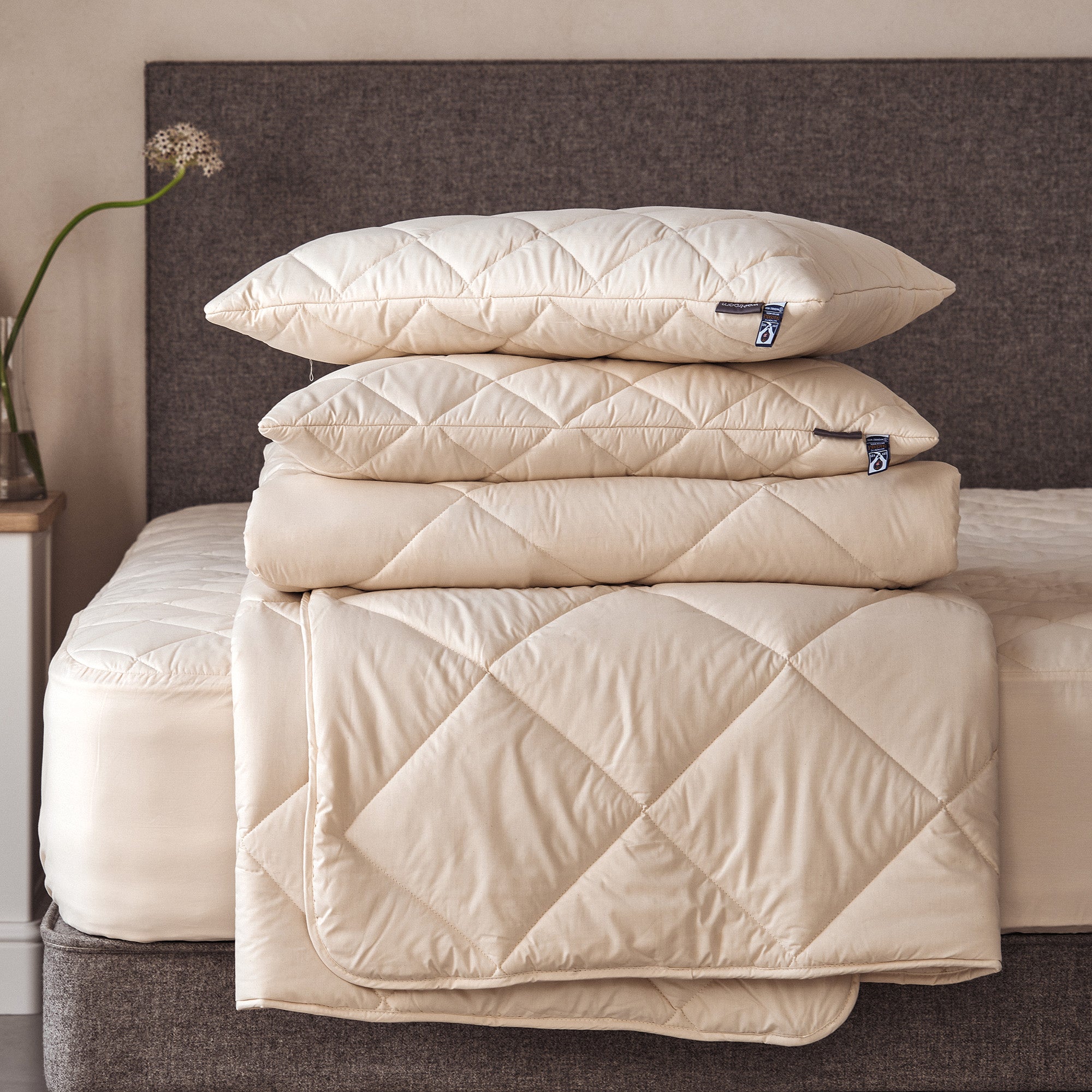
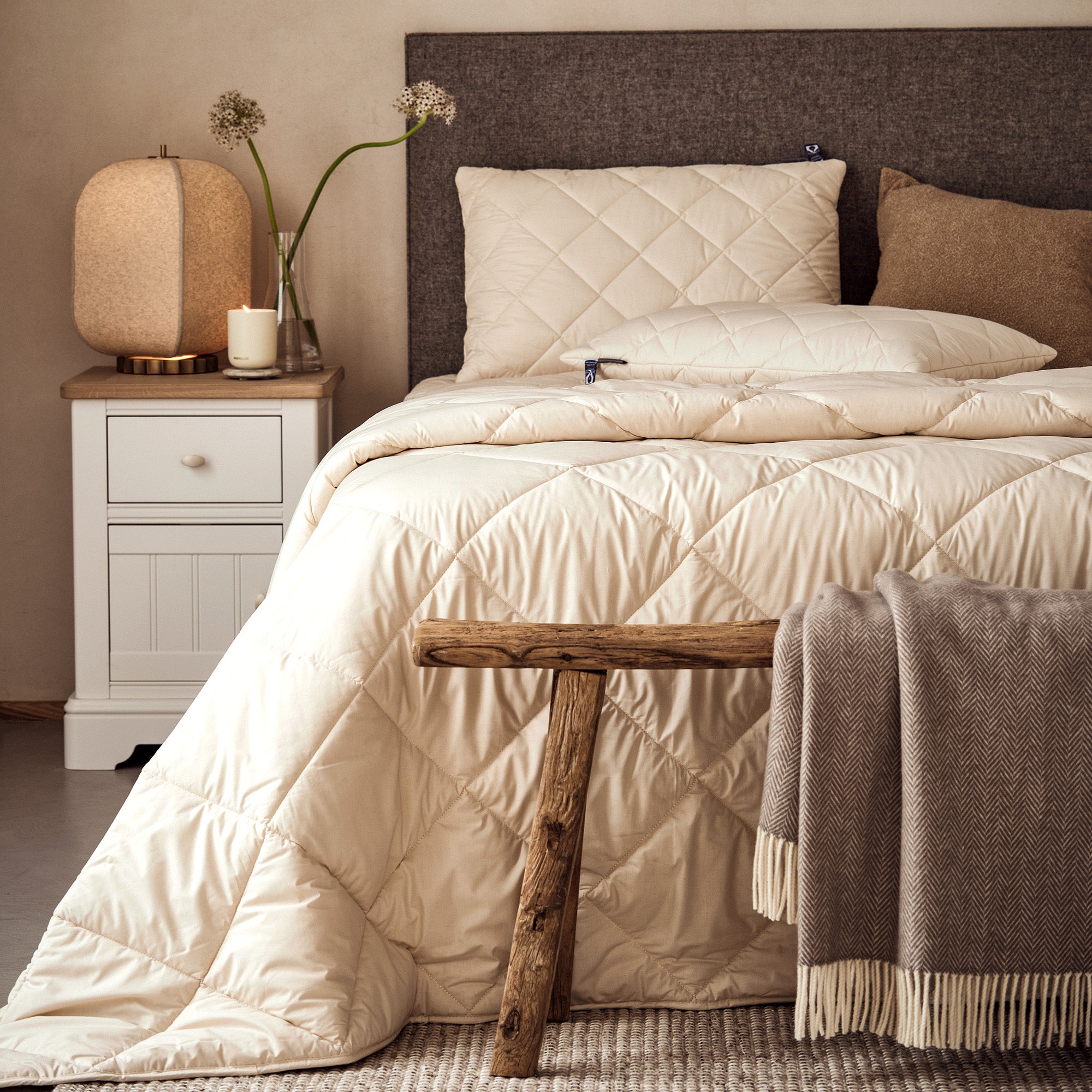
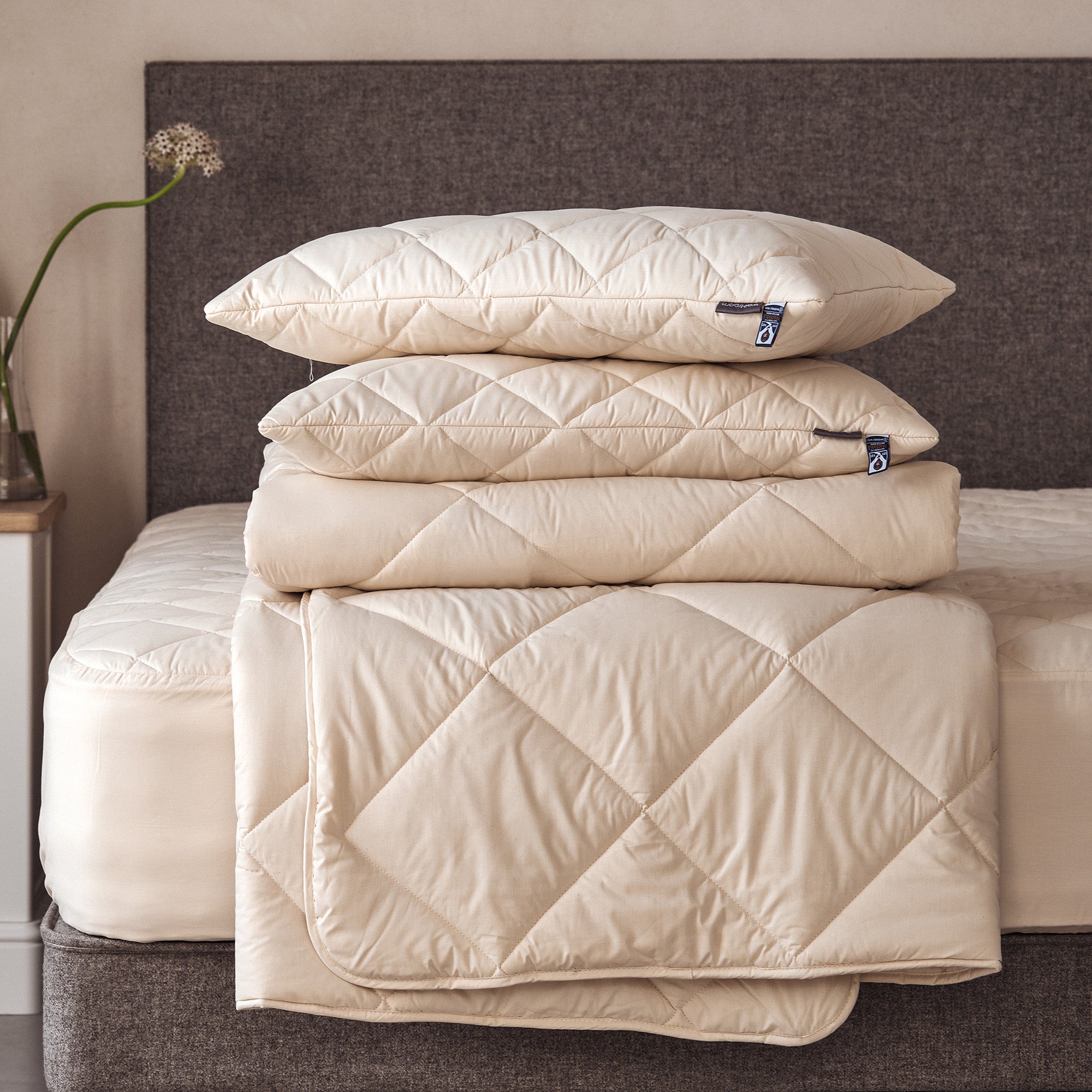
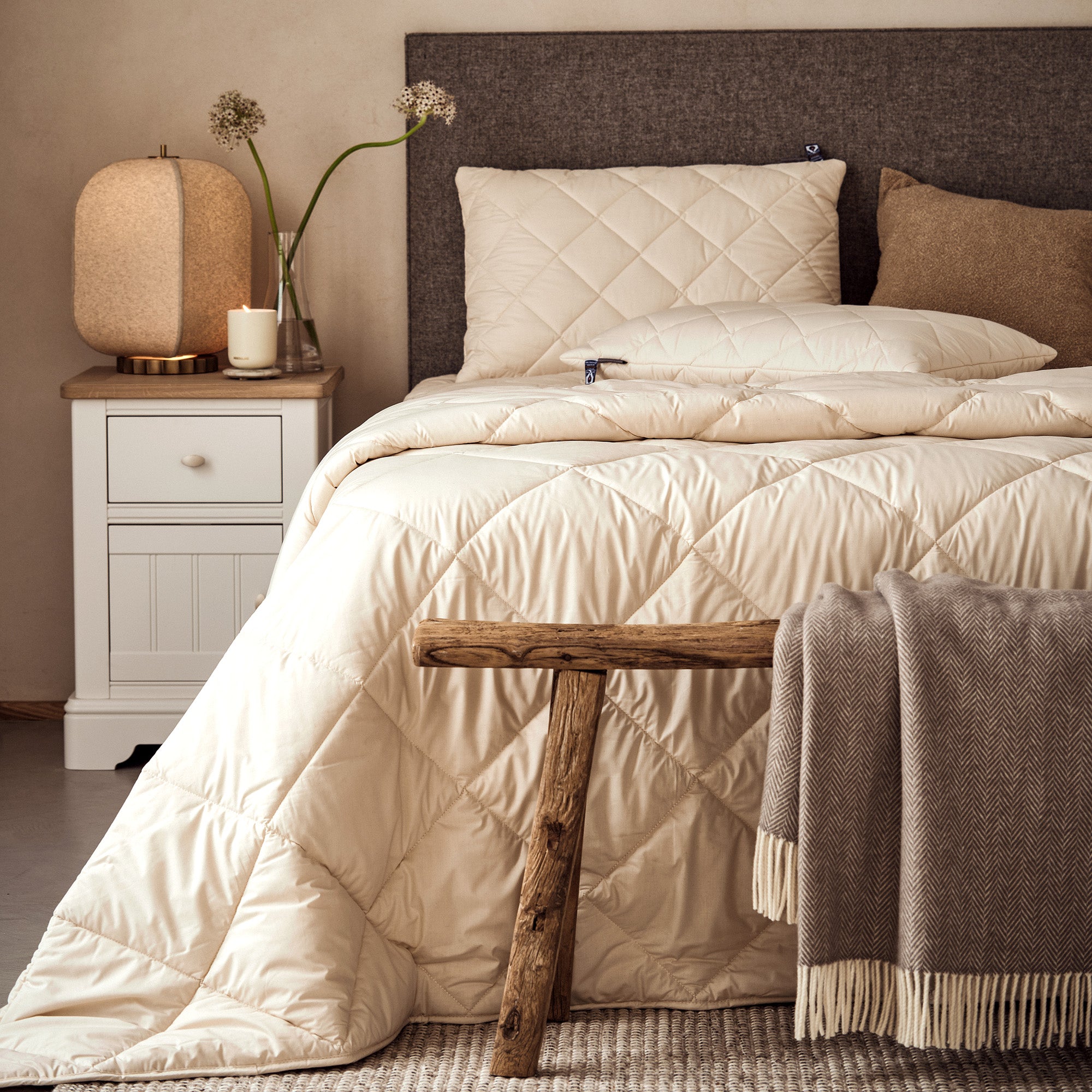
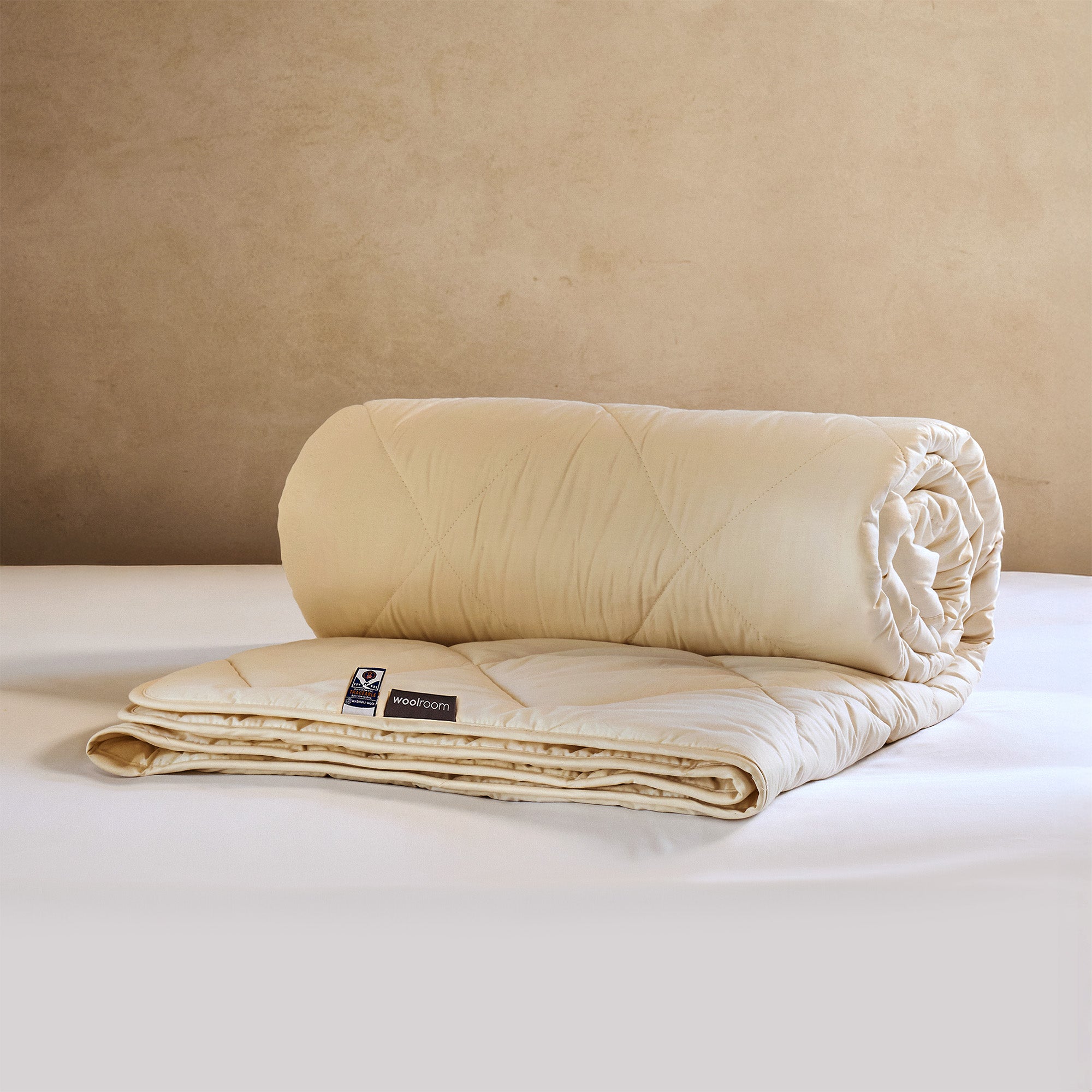
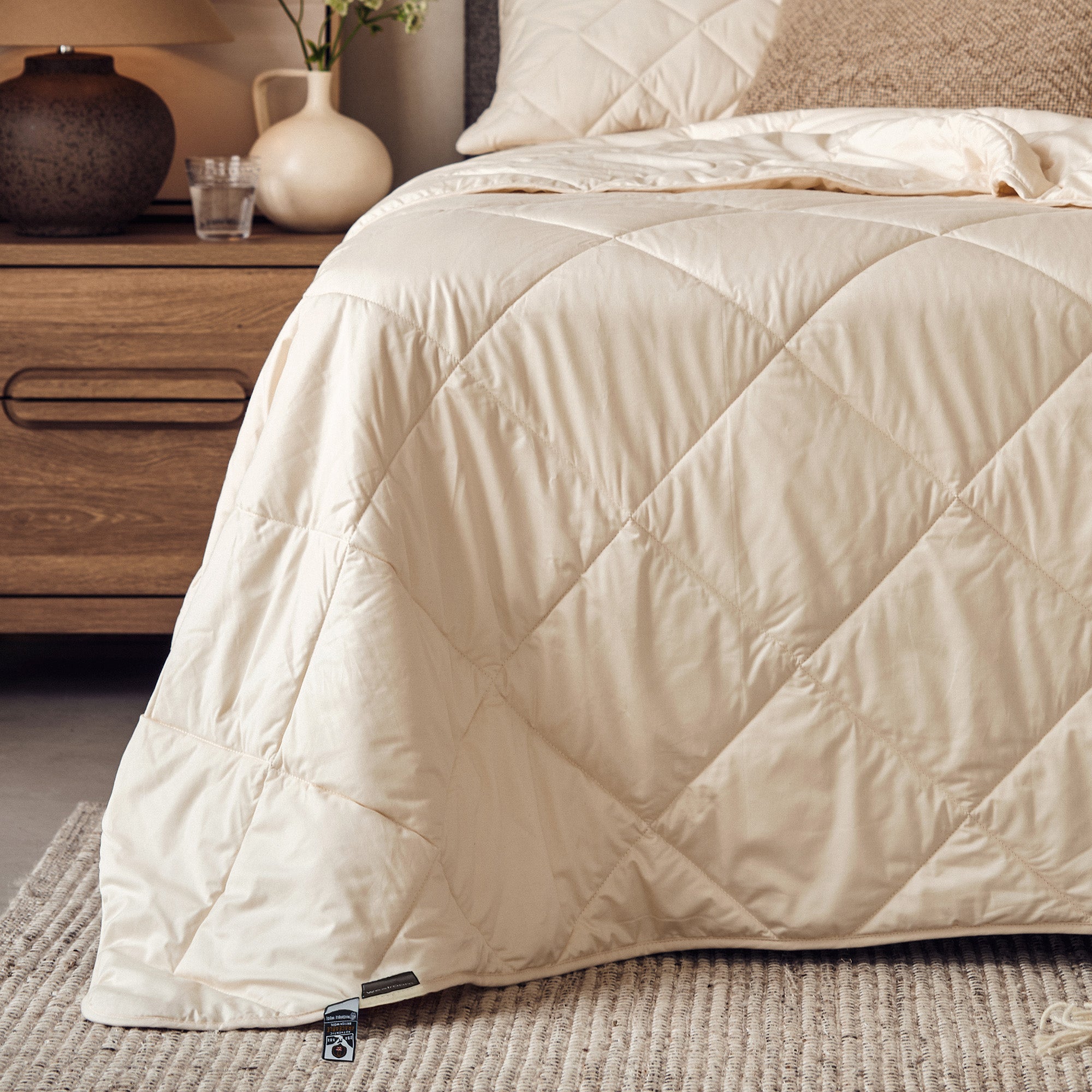
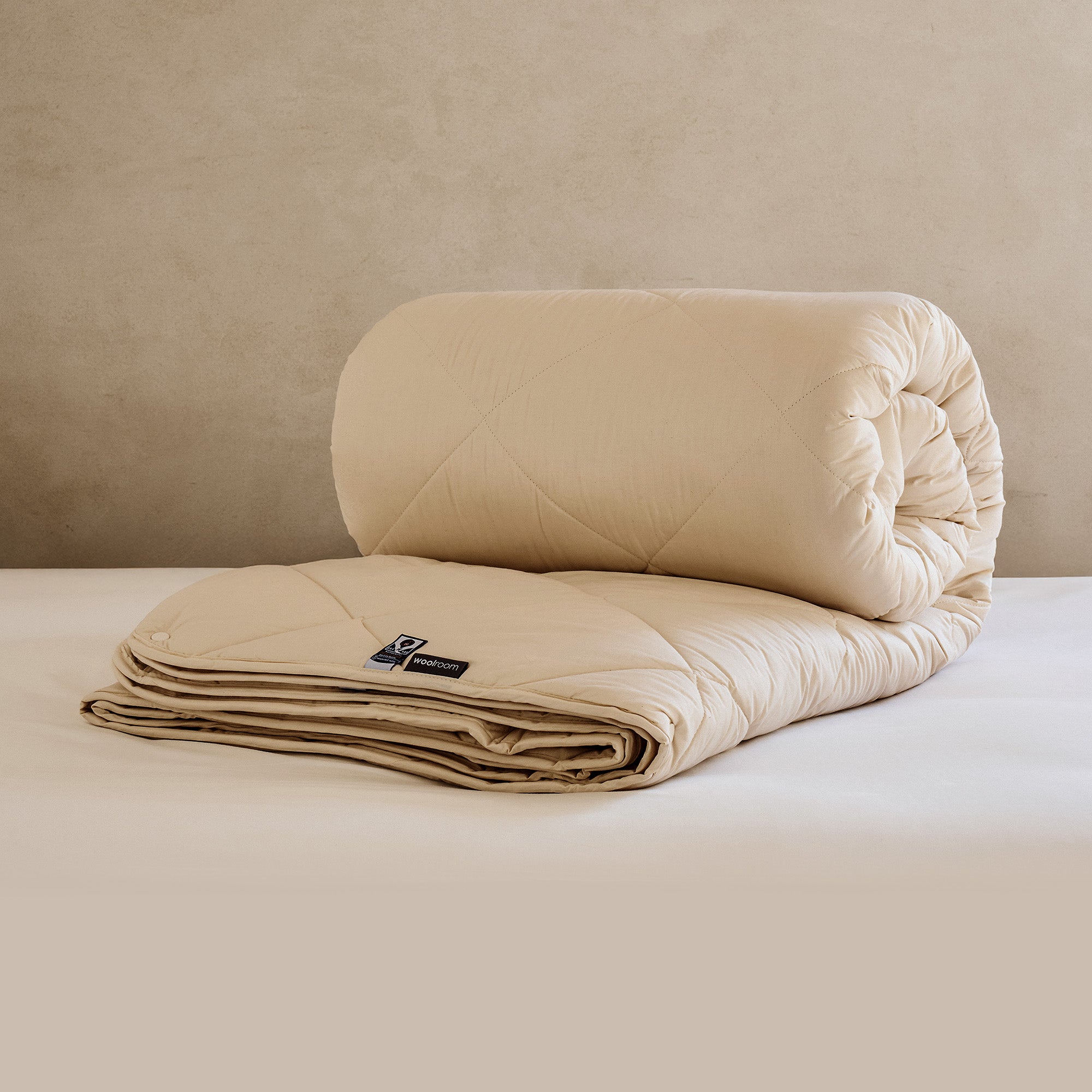
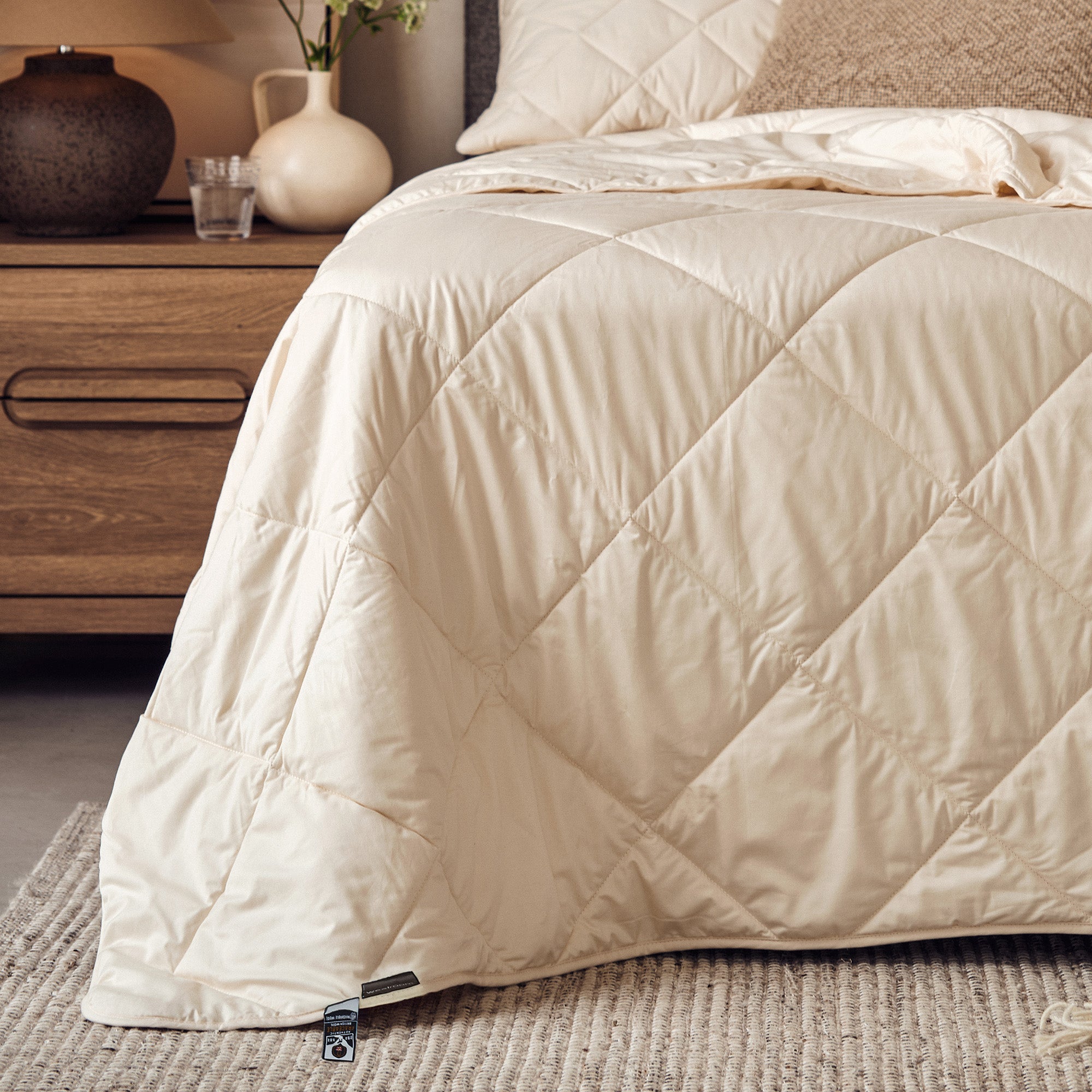
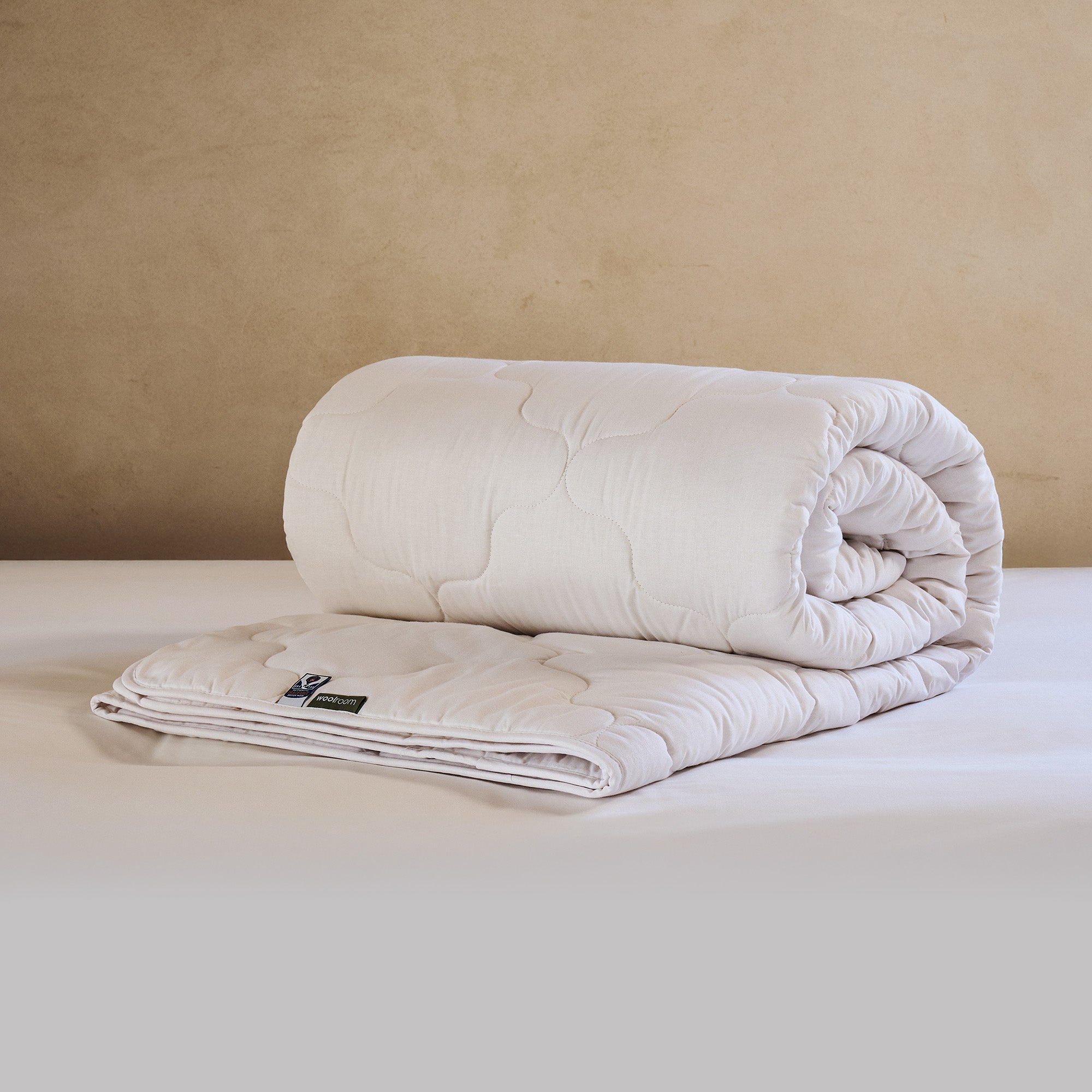
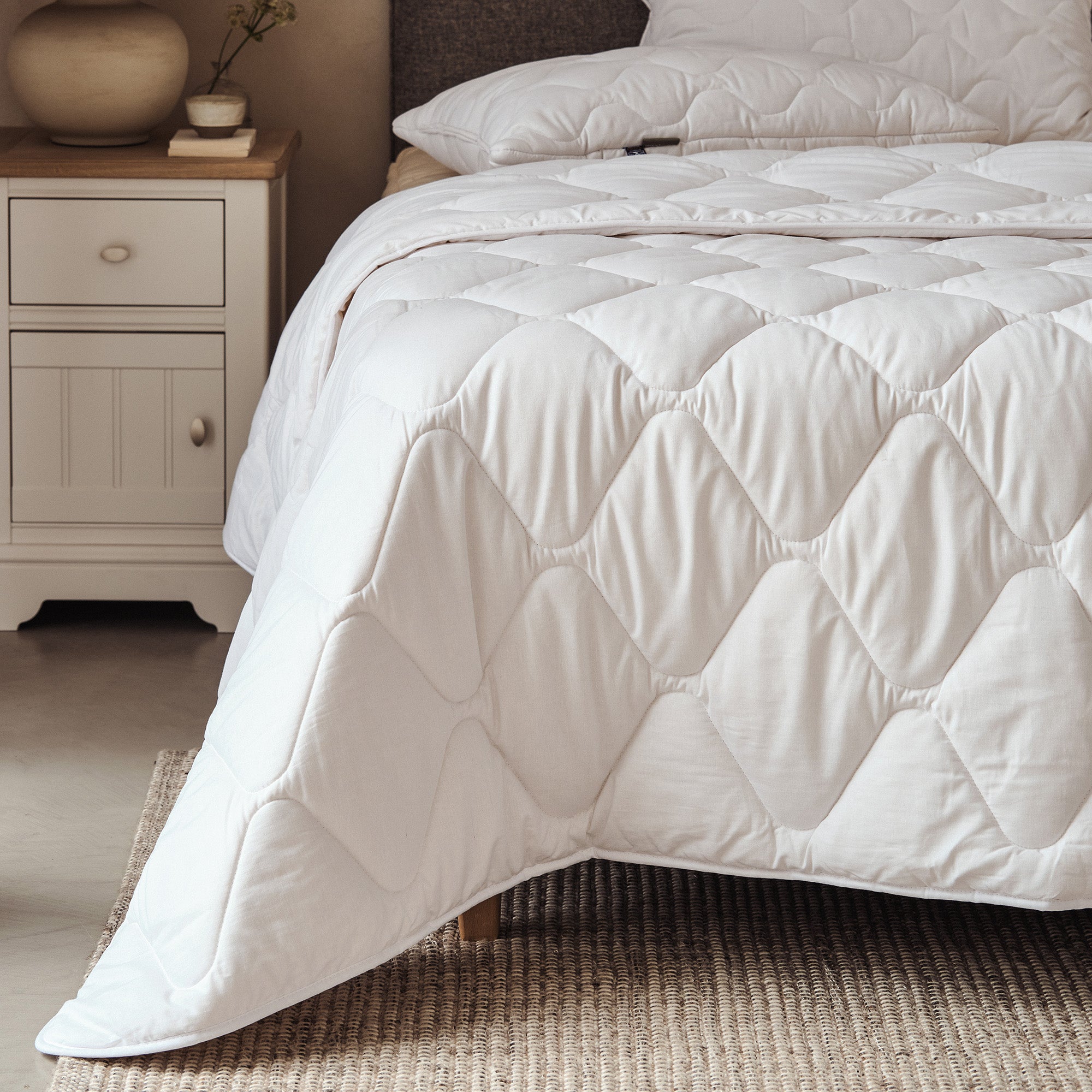
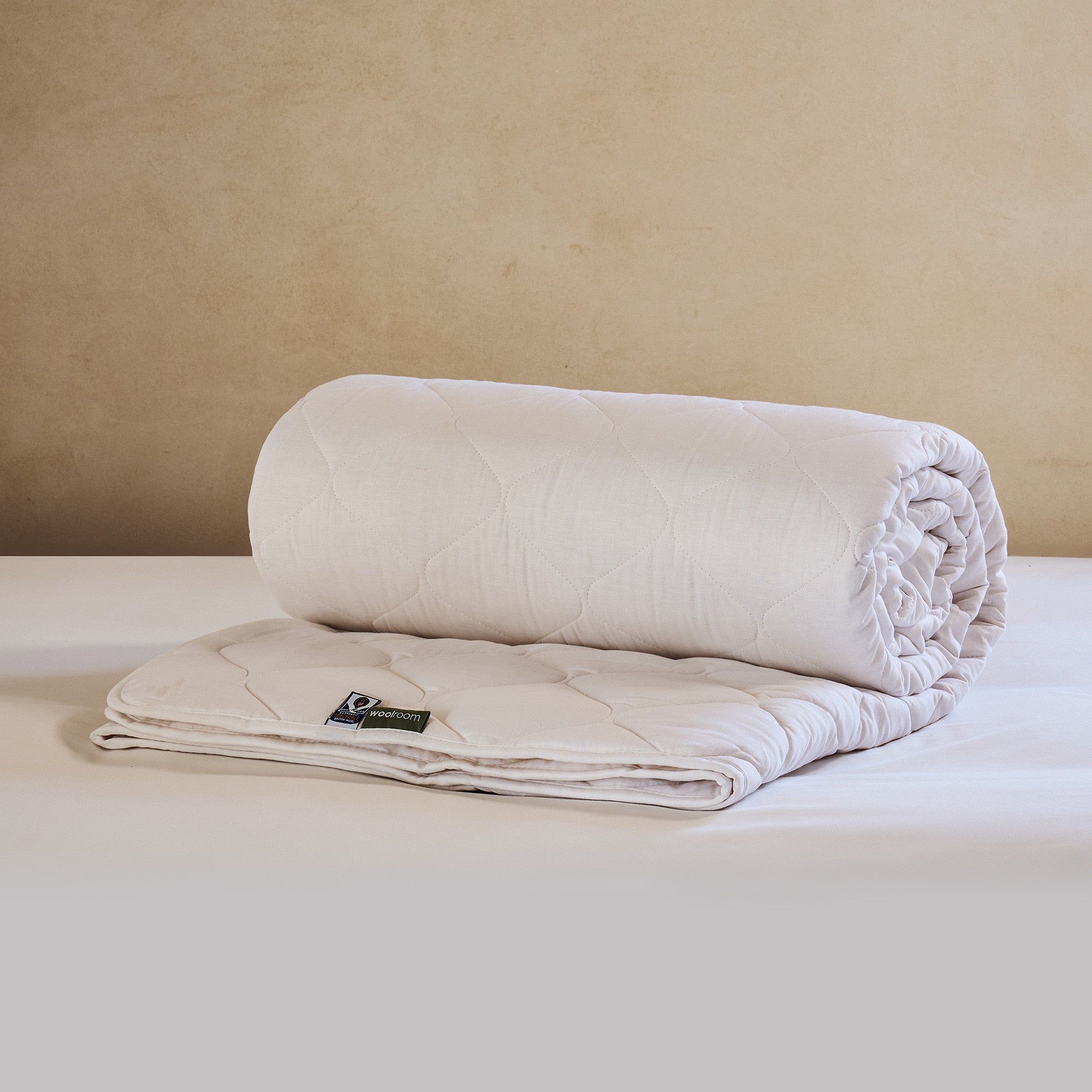
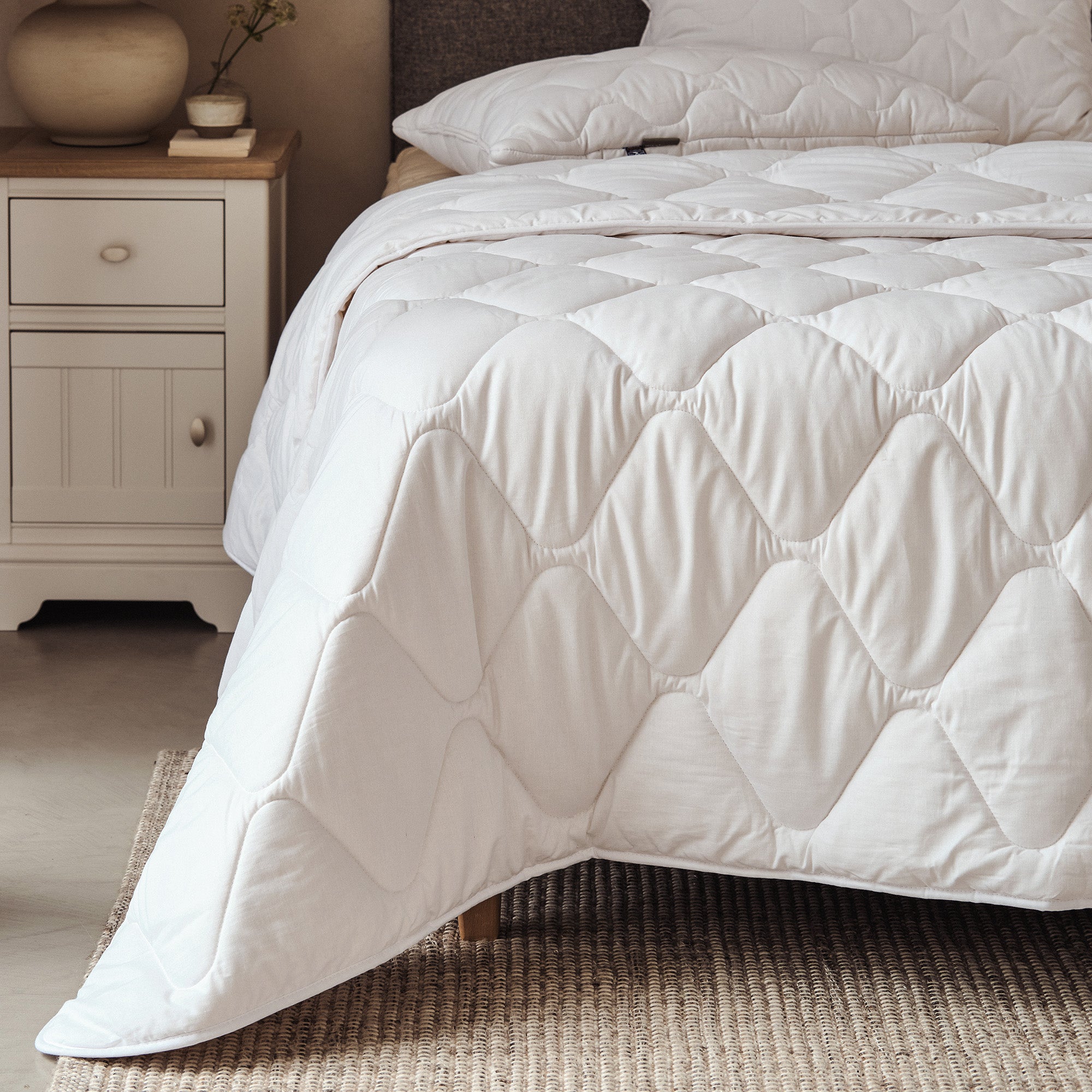
- Wool bedding, like Woolroom’s duvets and pillows, absorbs moisture vapour and adjusts to your body temperature, so you stay comfortable all night.
- Warm socks, a cool pre-bed shower, and a steady thermostat also help you sleep better as temperatures drop.
If it seems like you’re sleeping a little more soundly now that autumn and its cooler weather have arrived, it’s not your imagination. Sleep quality tends to improve with falling temperatures because it supports your body’s natural rhythm, but it only goes so far.
Let’s take a closer look at the impact temperature has on sleep quality, where bedding fits in and what you can do to keep snoozing peacefully all year long.
Why Does Temperature Matter So Much for Sleep?
In preparation for sleep, core body temperature naturally drops by a few degrees and reaches its lowest point two to three hours before you wake up. That decrease is a signal to the brain that it’s time to shift to rest and recovery mode. Research has shown that cooler sleep environments (though not cold) support this process, making it easier to fall asleep and reducing night-time disruptions. In other words, the thermal environment can make or break a good night’s sleep.
What Is the Ideal Bedroom Temperature for Sleep?
The ideal sleep temperature range for most people is between 16–19°C, give or take a degree or two. Most adults find 18.3 degrees Celsius (65 degrees Fahrenheit) is ideal, though older adults tend to prefer a slightly warmer room. That temperature allows the body’s own temperature fluctuations to happen naturally.
Bear in mind that choices relating to materials and fabrics in your bedding and even pyjamas also play a role, as do evening habits like intense workouts, big meals, caffeinated drinks or alcohol, and very hot showers.
How Cold Weather Affects Your Sleep Cycle
While cooler bedroom temperatures really do support sleep, a very cold room does not. Just like an overly warm room, a room that’s too cold interferes with the body’s ability to regulate temperature. Instead of dropping slightly to prepare for sleep, the body struggles to stay warm. The resulting shivering, tossing and turning and general physical discomfort keeps you awake or fragments your sleep if you do nod off. Layering on extra blankets can be a short-term fix, but you may find yourself overheating and kicking off the blankets in the middle of the night, only to become chilled again in the cold room.
There’s an identifiable pattern here: exposure to temperatures outside of a standard comfort zone increases wakefulness and cuts into both REM and deep sleep. The bigger priority is staying warm, which means you spend more time in lighter sleep or full wakefulness, so the body can generate and conserve heat more effectively.
In the morning, you aren’t just tired. REM sleep is used for things like memory consolidation, emotional processing, and learning, so a stretch of cold, REM-light nights often leaves you irritable and foggy. That’s true even if you go to bed and wake up at the same time.
Shorter autumn days also mean your internal clock has a weaker daylight signal, which can affect melatonin production and your sleep schedule. The circadian rhythm is mostly set by light: bright morning light tells your brain the day has begun, and fading evening light cues the release of melatonin, the hormone that tells us it’s time to sleep.
Pair that with an icy bedroom, and you’re setting up major sleep problems.

Is It Better to Sleep in a Cold Room or a Warm Room?
If you’ve read this far, you know the answer is neither. The best sleep environment is a cool room, with an ambient temperature between 16–19°C. That’s the range that helps you fall asleep faster and spend more time in deep sleep. And the trick isn’t layering on the blankets to feel cosy in a too-cold bedroom. That generally leads to overheating, especially if you’re sleeping with heat-trapping synthetic materials and fabrics. Simple swaps work much better: breathable natural fibres, light layers and a focus on warming up before bed, not all night long.
Signs You’re Too Cold (or Too Hot) at Night
Your body lets you know when it’s too cold, even if you don’t fully wake up. Here are common signs that your bedroom temperature is off:
-
Cold hands or feet. Cold extremities often make it hard to fall asleep. Warm hands and feet actually help the body release heat, which lowers its core temperature.
- Curling up into a tight ball. This is a way for the body to conserve heat.
- Waking up in the early morning. REM sleep is heaviest in the second half of the night, and cold disrupts it. That makes 3 or 4am wake-ups more likely.
- Night sweats. Waking up hot and sweaty, especially under synthetic sheets or a heavy duvet, is a sign that you’re trapping too much heat.
- Kicking off the covers, then pulling them back up. This kind of back-and-forth often means your bedding is too heavy and your room is too cold.
How Your Bedding Affects Temperature Regulation
Bedding choices are as important as your thermostat when it comes to supporting healthy sleep. Your material choices here dictate how well heat and moisture escape from the body overnight. Even in a cool room, you lose moisture through the skin while you sleep. Bedding that can’t effectively manage that moisture poses a direct hurdle to uninterrupted sleep.
Polyester sheets on a memory foam mattress are the biggest culprits. They’re insulating, but they don’t breathe well or wick moisture. Instead, you get hotter and soggier. When you wake up and kick off the covers, that clammy feeling cools quickly, leaving you chilled. Then it’s back to burrowing under the covers, setting up a hot-then-cold cycle that too many people blame on their bedroom temperature.
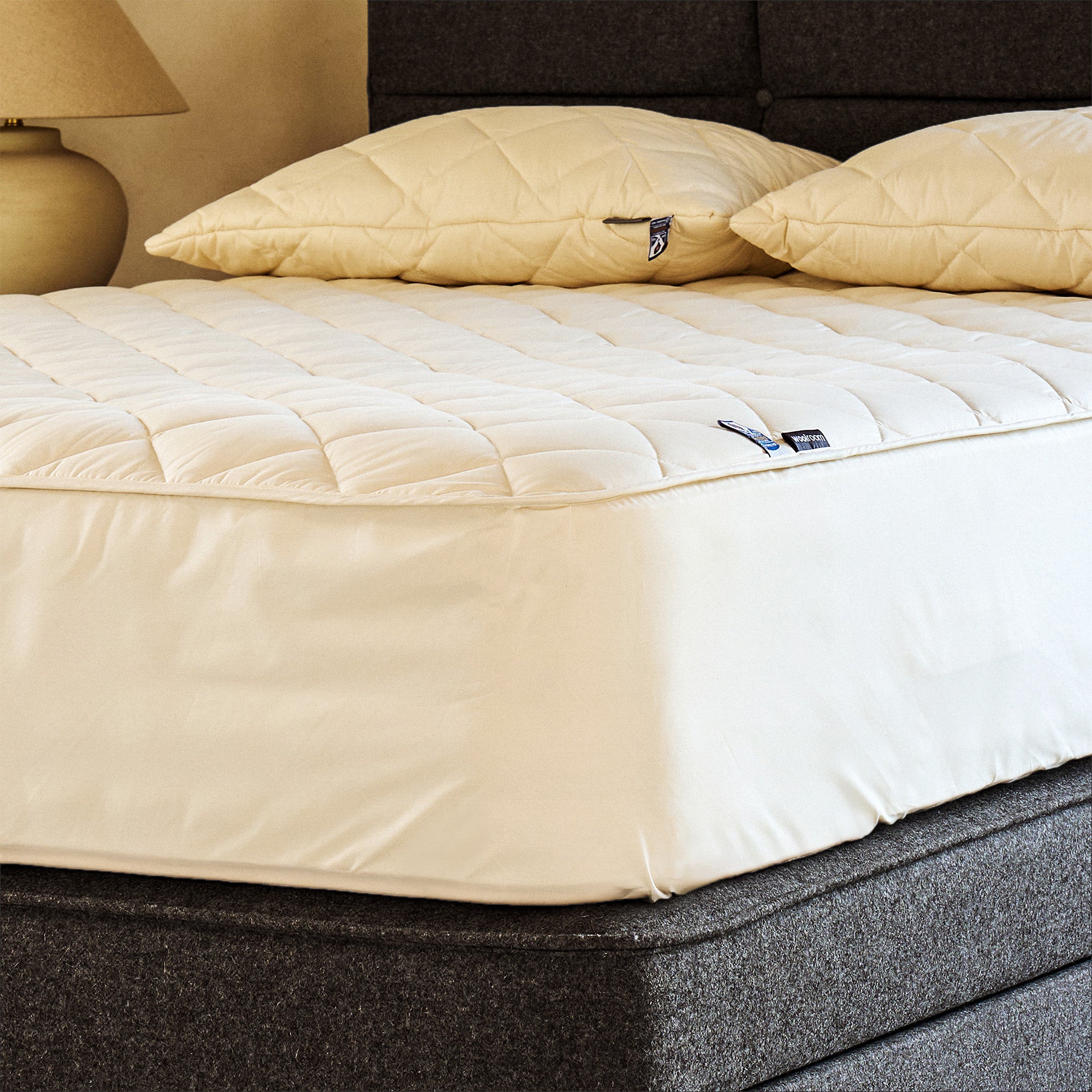
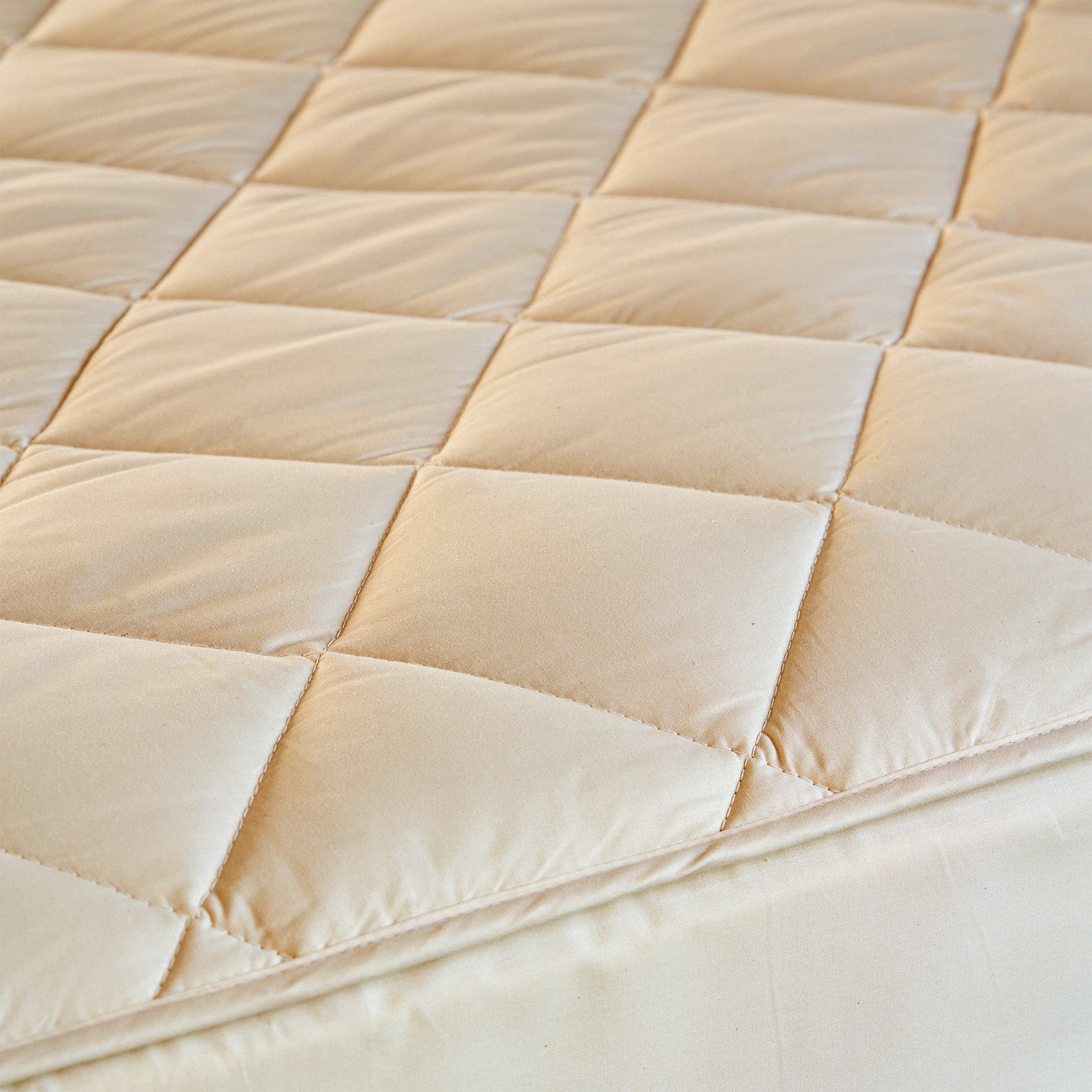
Natural fibres handle this differently, and here at Woolroom, we know first-hand that wool is the standout. Wool fibres absorb moisture vapour (up to about a third of their weight) without becoming damp or heavy. This moisture is released into the air instead of soaking into your bed or pyjamas. The fibre’s natural crimp makes it highly breathable, creating countless air pockets that respond to your body, insulating when you’re cool and allowing heat to escape as you warm. In other words, wool bedding, like Woolroom’s duvets, pillows and mattress toppers, adjusts with your body instead of fighting it. That supports a stable microclimate that keeps you in a comfortable temperature range, not swinging between too cold and too hot.
When you choose bedding for cooler months, focus on breathability, not just warmth. Cotton, linen and wool all help regulate temperature, and wool is the most adaptable of the three.

How to Sleep Better as Temperatures Drop
Cooler weather can be your sleep’s best friend, as long as your room stays cool rather than cold. Here’s what to try to support restorative sleep as temperatures drop.
- Upgrade to wool bedding. Wool absorbs moisture vapour and adjusts to your body temperature. That keeps you warm without the clammy overheating that synthetic fillings can cause. A wool duvet or mattress topper from Woolroom is an easy place to start.
- Keep your feet warm. Wear wool or cotton socks, or tuck a hot water bottle at the foot of the bed before you get in. Warm feet help your body release heat and fall asleep faster.
- Take a warm shower or bath 1–2 hours before bed. The warmth draws blood to your skin, and the cool-down afterwards helps your core temperature drop at the right time. Just don’t make it too hot.
- Set a steady overnight temperature. Programme your thermostat to stay within 16–19°C all night instead of letting the room swing cold towards morning, when REM sleep is most vulnerable.
- Manage dry winter air. Indoor heating can dry out your nose, throat, and skin. A humidifier set to keep humidity around 30–50% can make breathing easier and help you sleep more comfortably.
The Bottom Line
Cooler weather really can help you sleep better, but only to a point. A bedroom that’s too cold costs you REM sleep and leads to early morning wake-ups. The fix is simple: maintain a steady bedroom temperature between 16–19 degrees Celsius and choose breathable wool bedding that manages heat and moisture well. You might just find that autumn nights bring you the best sleep of the year.
Frequently Asked Questions
Can being cold keep you awake at night?
Yes. A bedroom that’s too cold makes the body work harder to stay warm instead of relaxing into sleep. That makes it harder to fall asleep and stay there.
Should you sleep with socks on?
Many people find sleeping in socks helps them sleep. Warm extremities release heat and lower its core temperature, which tells the body it’s time for rest. Opt for breathable wool or cotton socks so your feet don’t get too hot.
Does cold weather make you sleep more?
It can. Many people sleep a little longer and feel sleepier in autumn and winter, mostly because of longer nights and less daylight. That can extend melatonin release, so it’s really not the cold itself. A room that’s too cold actually fragments sleep instead of deepening it.
Is a wool duvet too hot?
No. Wool regulates temperature instead of just trapping heat. It absorbs moisture vapour and lets excess heat escape, so a wool duvet keeps you warm in cool weather without the clammy overheating that synthetic fillings can cause. Since it insulates when you’re cold, a wool duvet actually works year-round.