Key Takeaways
- Losing just one hour of sleep during Daylight Saving Time can disrupt your circadian rhythm and impact sleep quality for up to a week.
- Temperature regulation becomes more fragile during time changes, making overheating and humidity more disruptive.
- Gradual schedule shifts, morning light exposure, and a cool, breathable sleep environment can ease the transition.
- Natural materials like wool help regulate temperature and moisture, supporting deeper, more restorative sleep as your body adjusts.
On March 8, 2026, Americans will participate in that time-honored tradition of turning the clocks forward one hour—and feeling a little cranky about it. Yes, Daylight Savings Time is upon us, which means we’re all losing an hour of sleep.
It may not sound like much, but even a sixty-minute shift can have a big impact on your circadian rhythm and your sleep temperature cycle, which can leave you feeling groggy for days. On the plus side, pairing some small habit adjustments with a sleep environment that supports your body’s natural rhythms really can smooth the transition.

Why Losing One Hour Affects Sleep So Much
Those sixty minutes of lost shut-eye take a surprising toll. According to the National Heart, Lung, and Blood Institute, several nights of losing just one to two hours of sleep affects your ability to function as much as going an entire day or two without sleep.
In this case, restful sleep really isn’t about total hours as much as timing. When the clocks spring forward, it’s an abrupt change to the body—and the circadian rhythm doesn’t catch up immediately. Instead, it stays on its usual schedule for a few days, even though your alarm clock is going off earlier.
That’s why these experiences are pretty typical in the first few days after Daylight Saving Time:
- Feeling wide awake when the clock says you should be winding down for bed
- Lighter, more fragmented sleep quality
- Greater sensitivity to temperature, light, and noise
- Feeling groggy and out of it the next day
The impact to sleep temperature isn’t always mentioned, but it’s a big deal. As part of the sleep cycle, core body temperature naturally drops at night in preparation for sleep. When your circadian rhythm is disrupted, it means your temperature cycle is slightly off schedule. That can make it harder to fall asleep and easier to wake during the night.

How Long Does it Take to Adjust to Daylight Saving Time?
For most people, adjusting to Daylight Saving Time takes about a week, but it can vary up or down a little depending on your sleep habits. Sleep chronotype plays a big role here: Night owls tend to have a harder time than early birds.
Teenagers and young adults can also find it challenging because their circadian rhythm cycles are delayed, meaning they tend to feel awake much later and naturally prefer a later wake time. It makes getting up early a challenge, even before they lose an hour.
While Daylight Savings Time does make for a difficult few days for most of us, the circadian rhythm eventually recalibrates itself. Supporting your body during this adjustment period can really smooth out the experience.
Easy Ways to Soften the Spring Change
Aside from lobbying lawmakers to get rid of Daylight Saving Time altogether, being mindful of light exposure, daily routines, and your sleep space can make a big difference.
Here’s what to try:
- Start shifting your bedtime a few days before the change. Starting your wind-down routine 15 to 20 minutes early each night is a gentler way to start adjusting your internal clock.
- Get morning light within an hour of waking. Light is the circadian rhythm’s strongest signal, so you can help yourself feel more alert in the morning by opening the shades or stepping outside in the sun.
- Dim the lights earlier in the evening. Softer lighting (and avoiding blue light completely) helps support melatonin production, which makes it easier to fall asleep earlier.
- Limit caffeine and alcohol in the late afternoon and evening. Caffeine is a stimulant, and alcohol can affect sleep quality. Those are two things to avoid when your sleep is already a little disrupted.
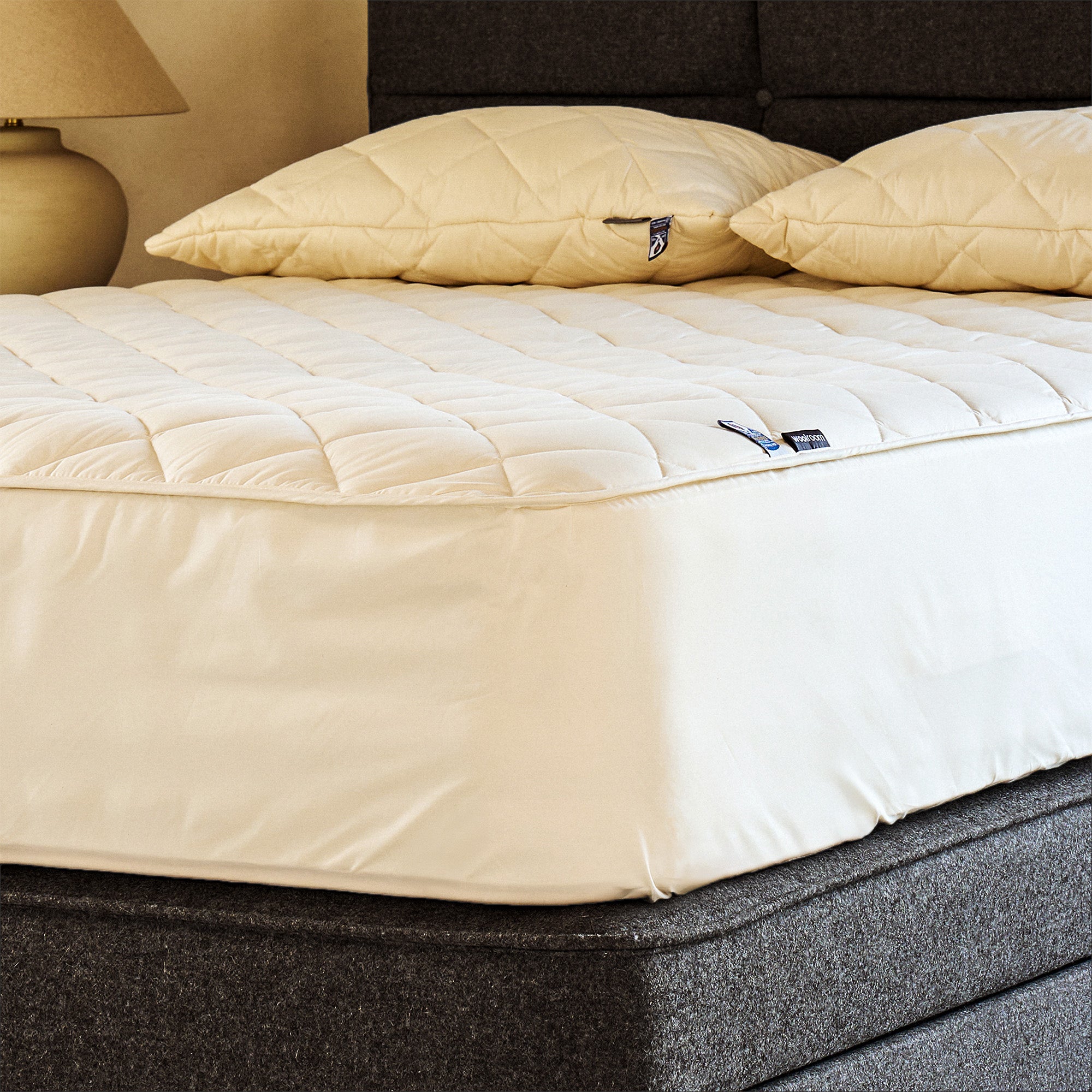
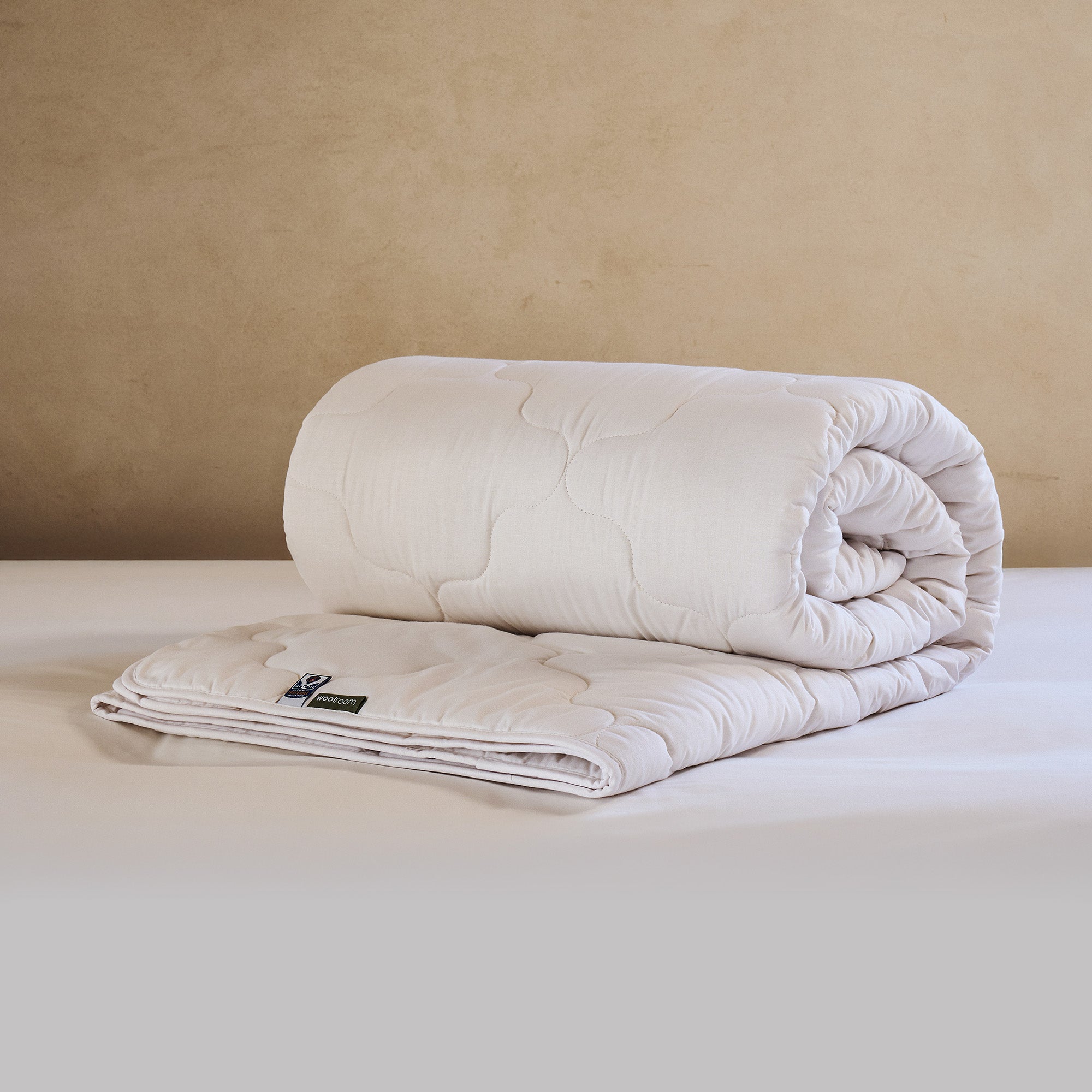
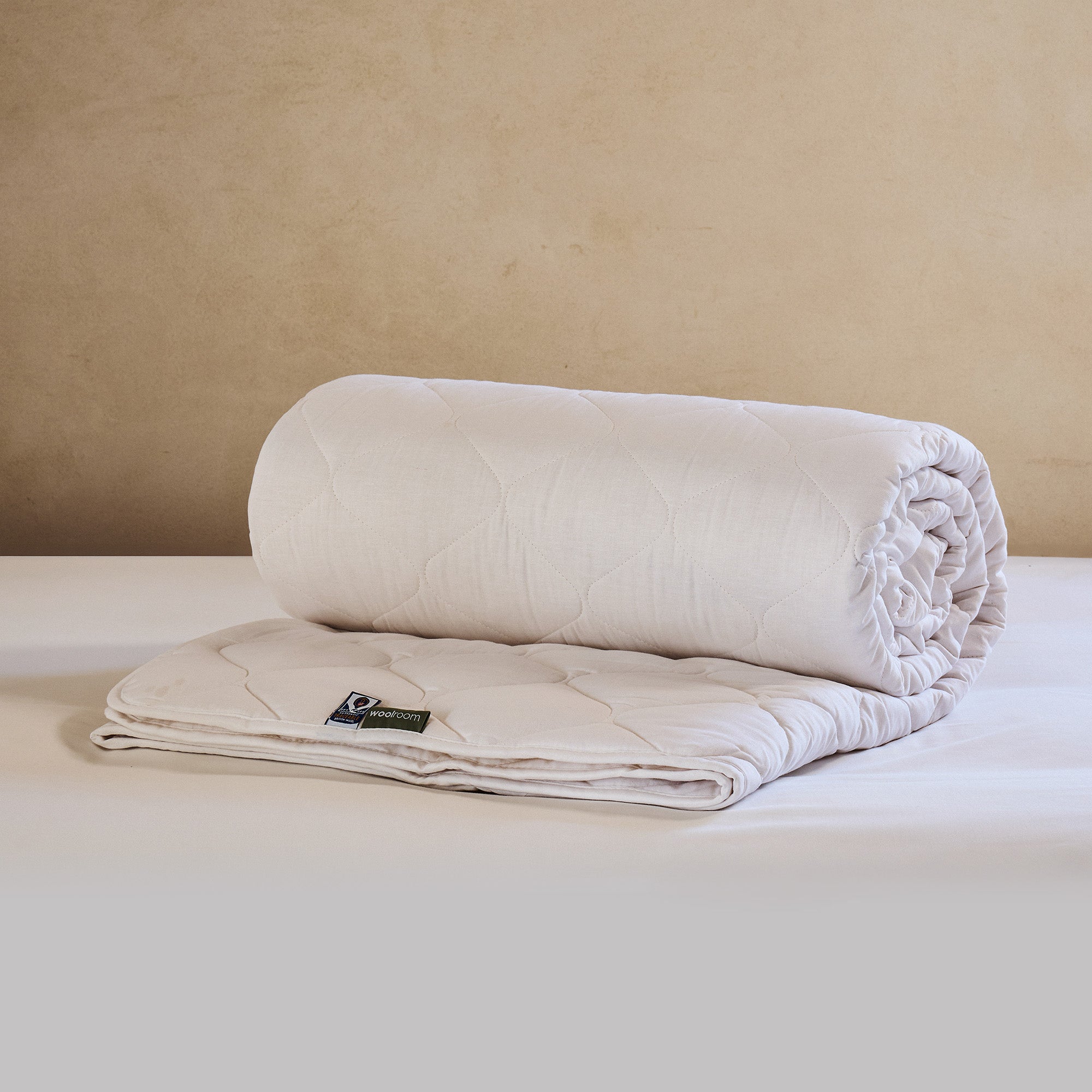
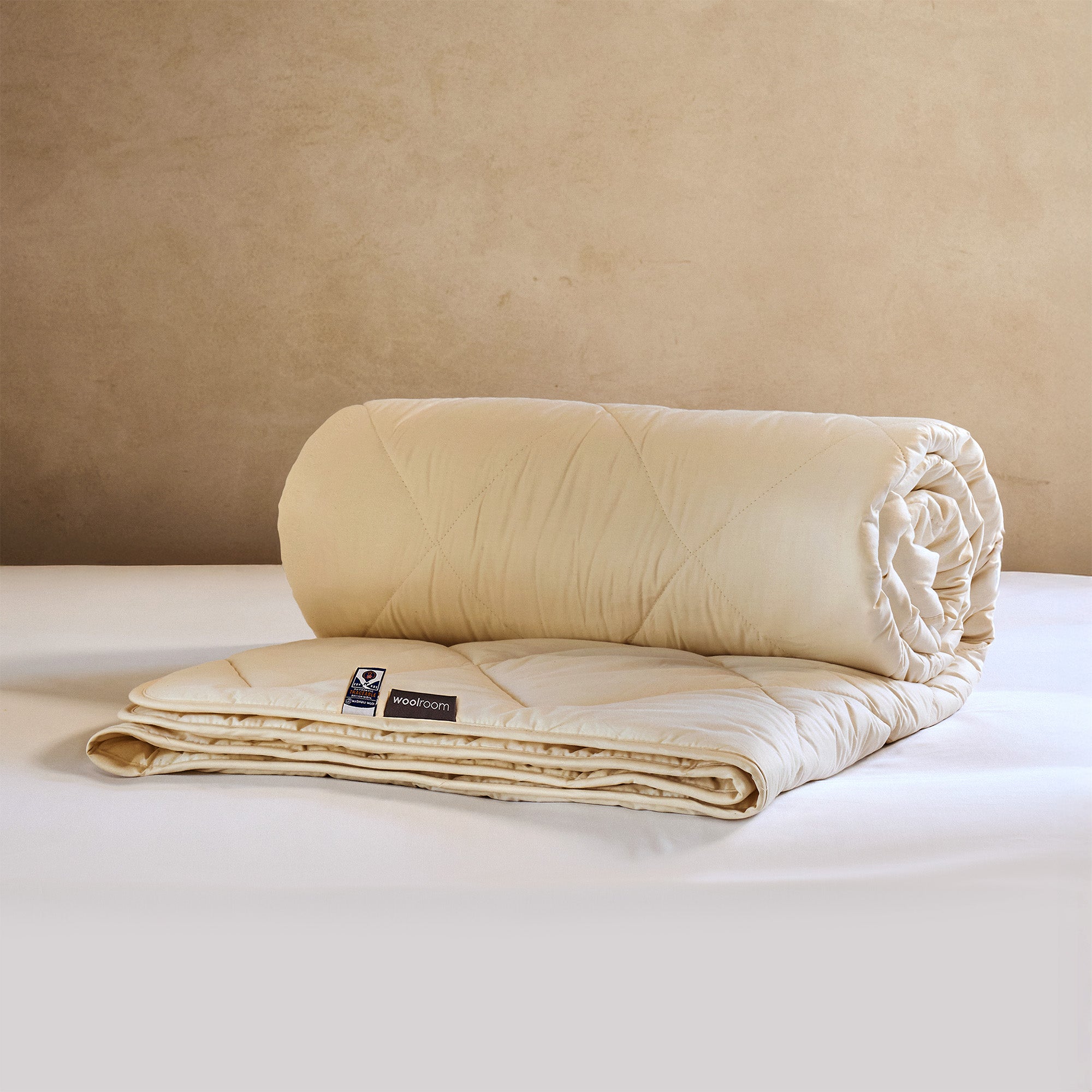
- Keep your sleep environment cool and breathable. Body temperature is fragile during the time change, and overheating makes it harder to fall and stay asleep. Synthetic materials, like polyurethane foams and polyester fabrics, can trap heat and moisture, interfering with the body’s natural rhythms. Breathable, moisture-wicking bedding materials, like wool, work with your body instead of against it. That helps reduce nighttime wakeups and supports deeper, more restful sleep.

Why Temperature Regulation Matters More During Time Changes
A circadian rhythm that’s even slightly out of sync makes the body far more sensitive to minor disruptions, especially relating to temperature.
Sleep cycles and body temperature are closely connected. About two hours before falling asleep, core temperatures begin to decline. It’s a signal to the body that sleep is approaching. During the night, temperature fluctuations continue as part of normal sleep stages. Then, in the early morning, our core temperature starts to rise in preparation for waking up.
Losing sixty minutes from one night to the next affects this internal timing, and the difference can be really noticeable. The spring season itself doesn’t help, either. While it’s often still very cold at night, indoor heating and heavy layers trap heat. What starts as a cozy bed at bedtime can feel really stuffy by 3 a.m.
That’s where material choice makes a difference.
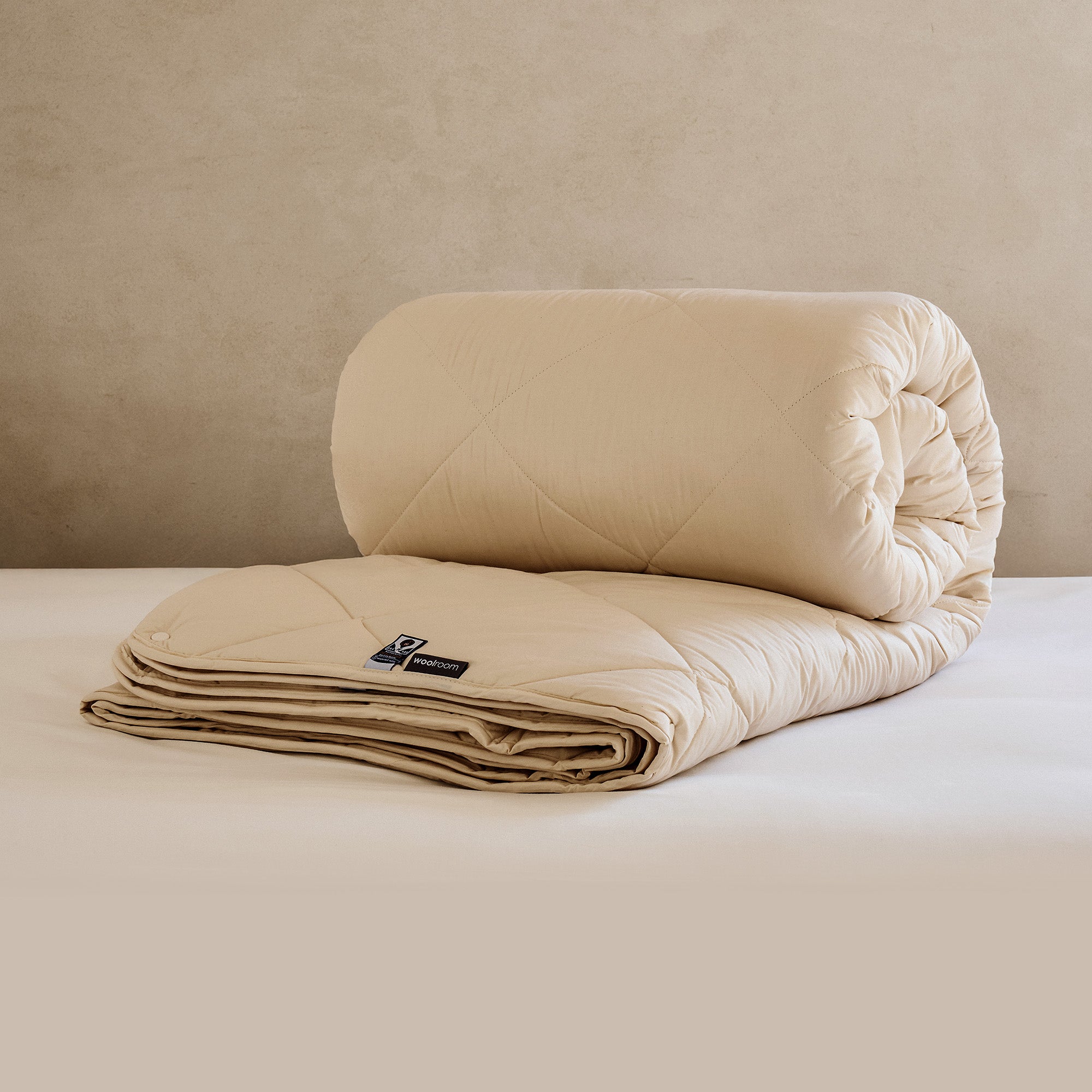
Unlike synthetic foams and fill, wool fibers are naturally suited to sleep. Wool is temperature regulating, moisture wicking, and breathable, and those traits combine to create an ideal microclimate that keeps you comfortable all night long. In fact, research conducted by Leeds University for Woolroom found that wool bedding actually boosts regenerative sleep by 25%. When your circadian rhythm is already adjusting, that kind of temperature stability can help smooth the transition.
The Bottom Line
Dreading the shift to Daylight Saving Time is justified—your body really misses that last hour. It’s an abrupt shift from one next to the next, and the circadian rhythm doesn’t move that fast. That’s why sleep disruptions feel bigger, temperature regulation is more fragile, and your overall sleep quality suffers, at least for a few days.
To make things easier on yourself, try making easy adjustments leading up to the spring time change. An earlier wind-down routine, morning light exposure, and wool bedding will all work in your favor.