Key Takeaways
- Down bedding traps heat, holds moisture and accumulates allergens, which makes it less comfortable over time.
- Durability is a concern with down, which often clumps, flattens and loses loft.
- Ethical and environmental issues surround the down industry, from animal welfare to chemical processing.
- Wool naturally regulates temperature, wicks moisture and resists allergens for healthier, more sustainable sleep.
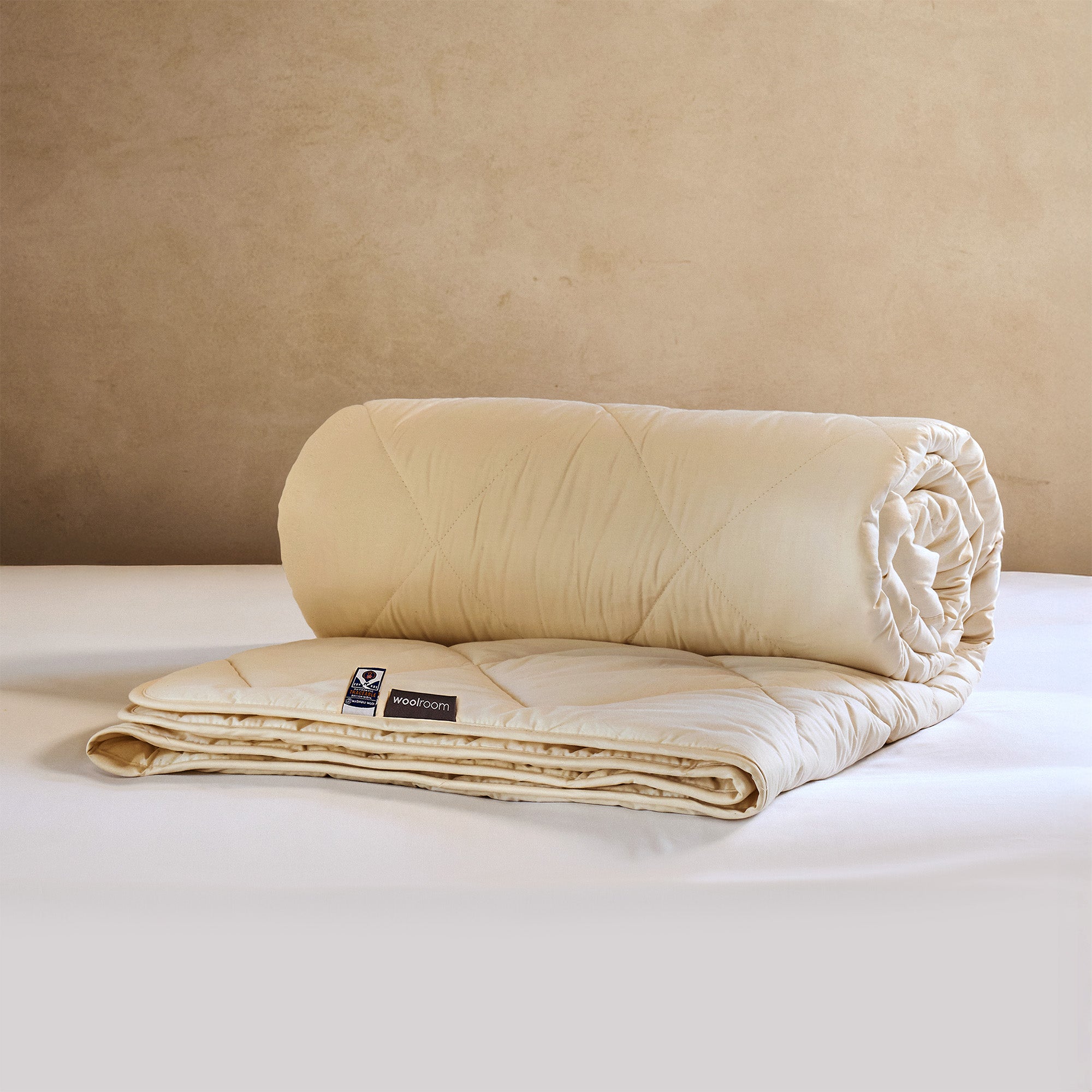
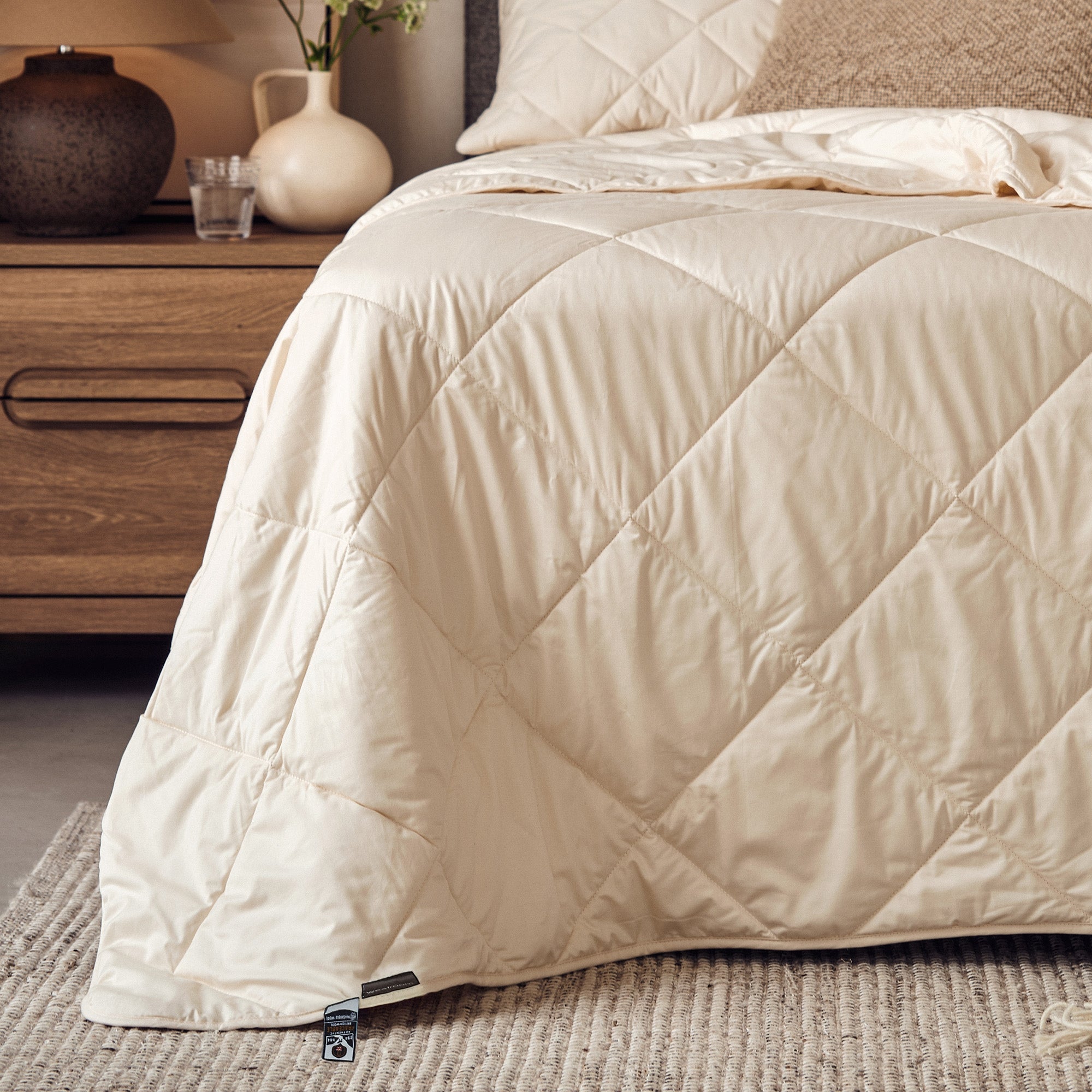
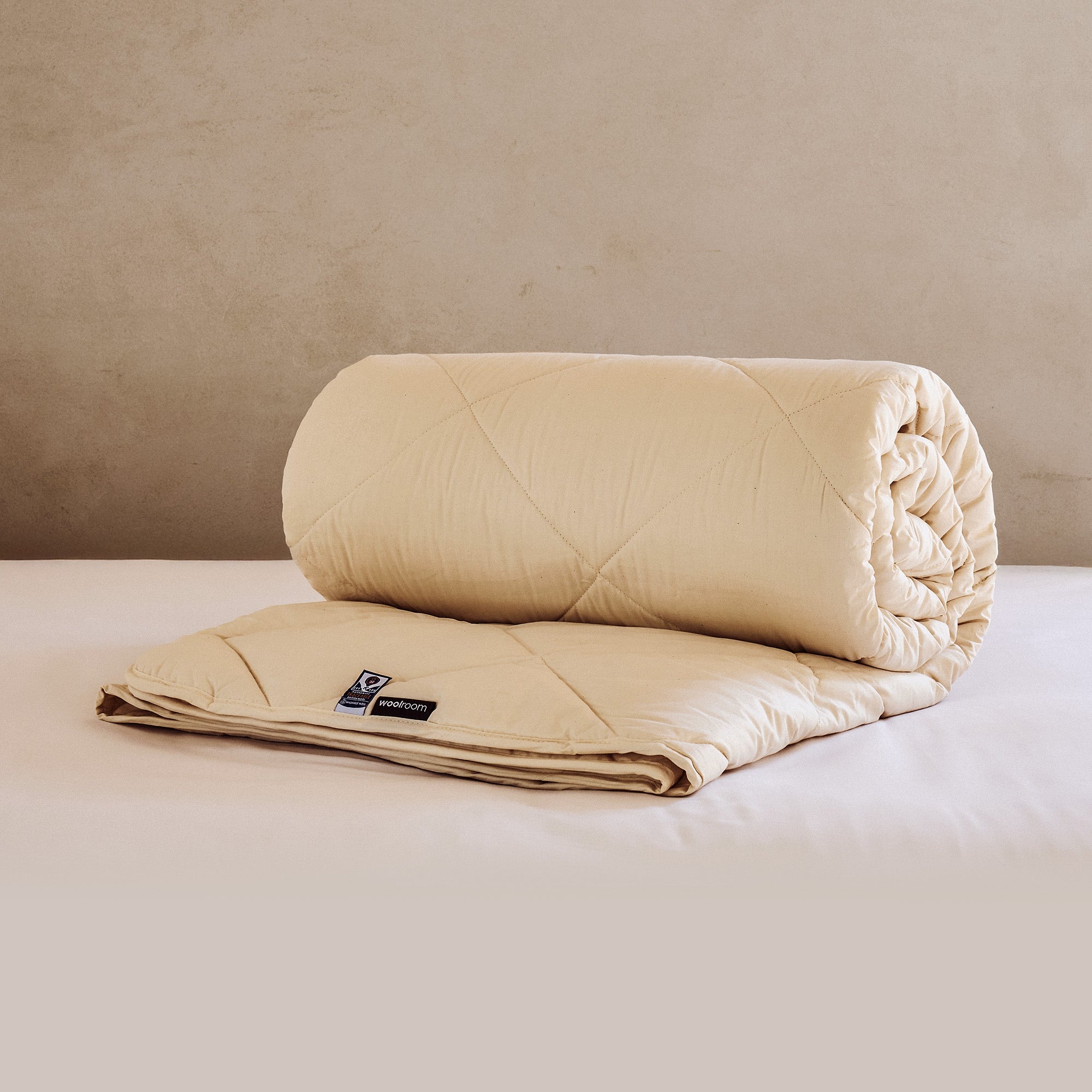
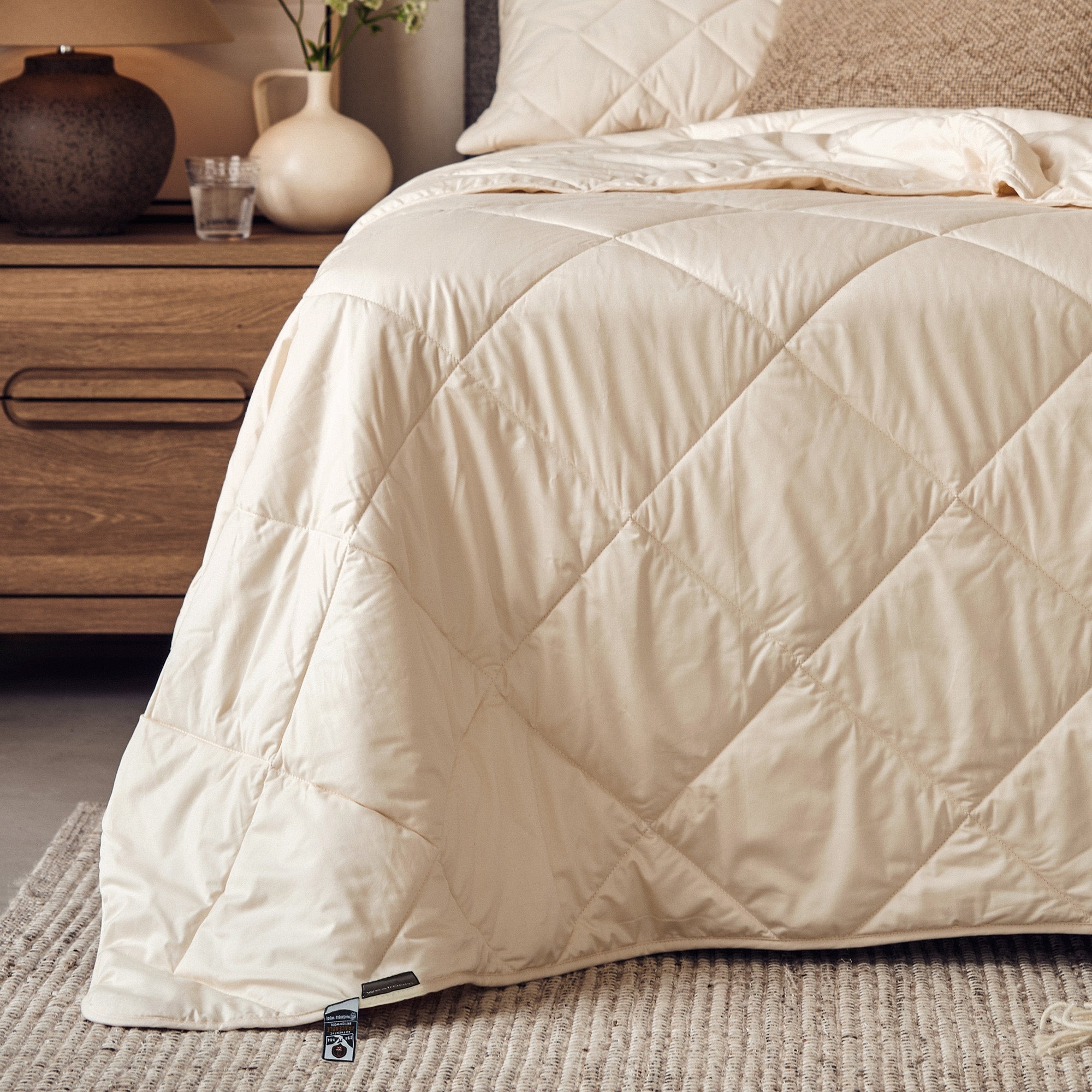
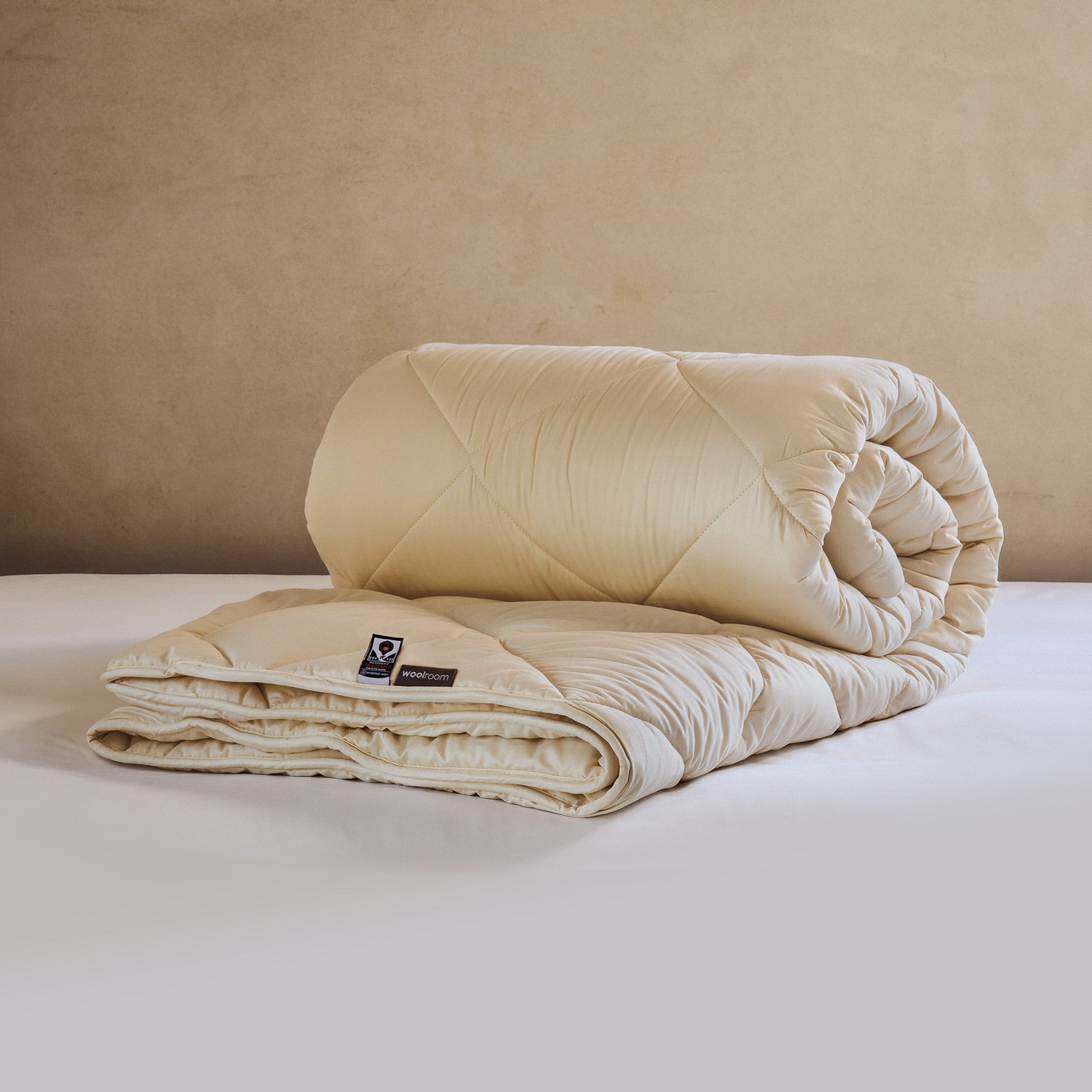
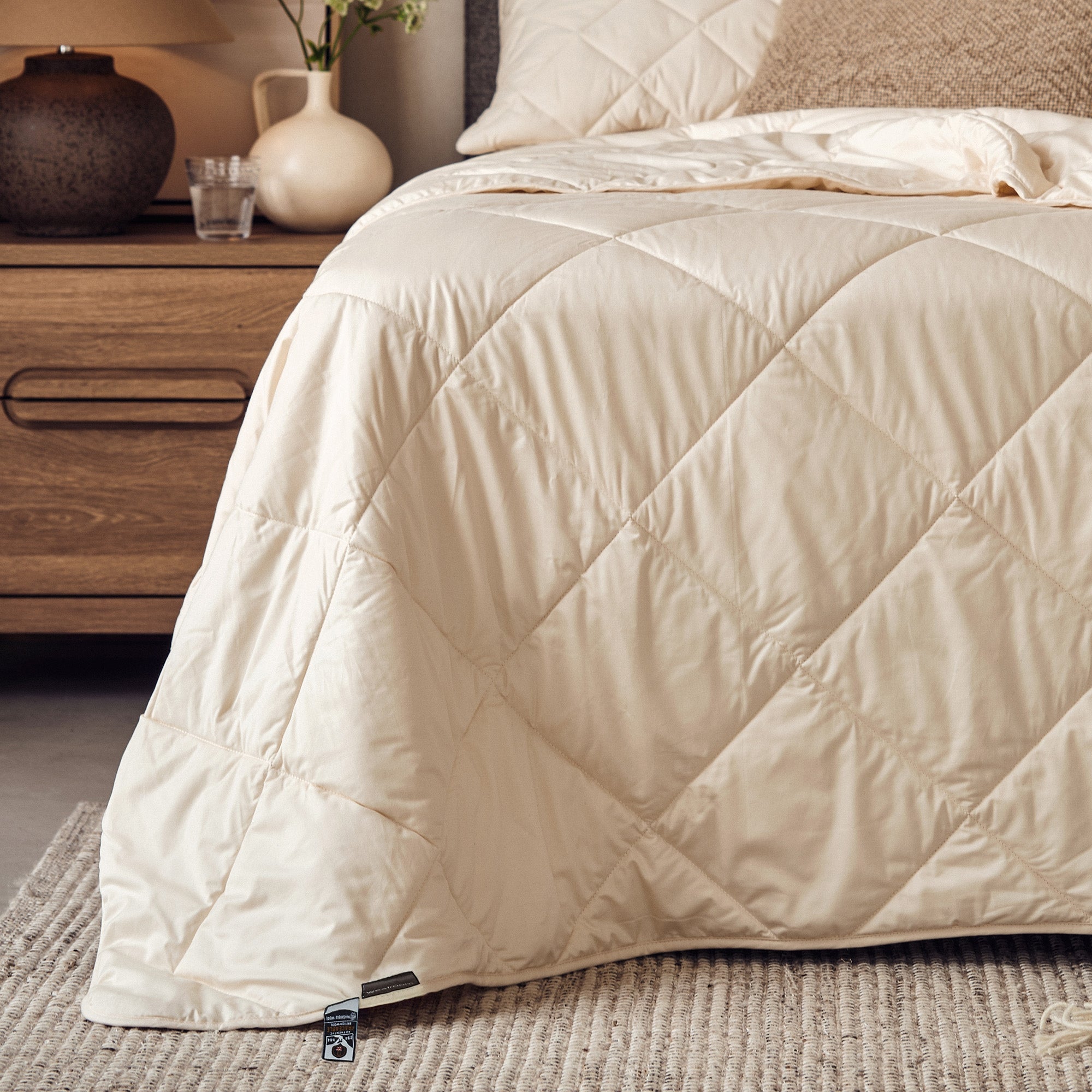
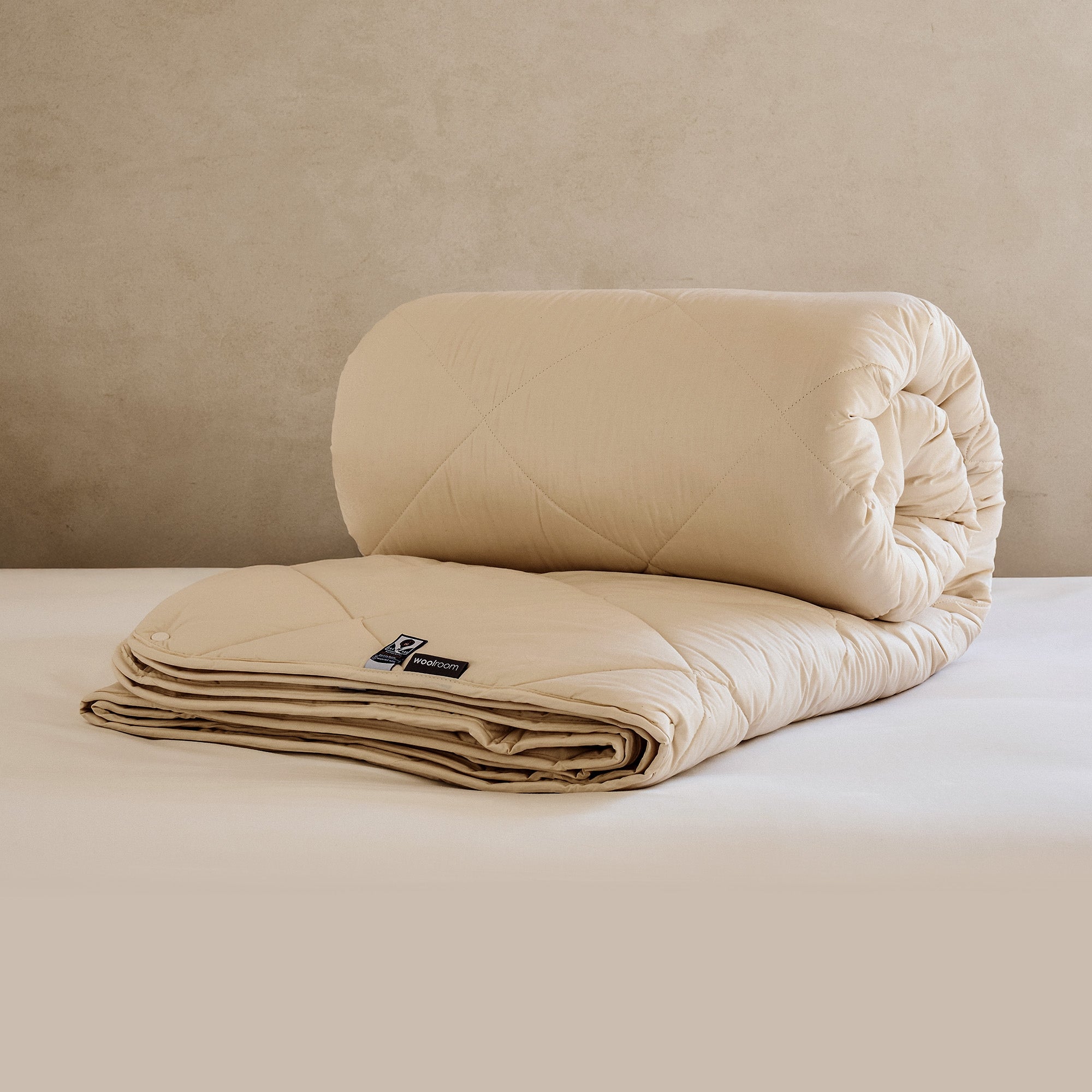
- Woolroom bedding uses 100% traceable British wool, offering a chemical-free, ethical and sustainable alternative to down.
Think of a luxuriously made bed, and a lofty down duvet or fluffy down pillows probably come to mind. Down has long been associated with indulgence, warmth, and comfort, which is why it’s often found in high-end hotels and designer bedding collections. But for all its popularity, down isn’t always the dreamy material it’s made out to be. Those soft, airy clusters often cause overheating, trap allergens, and can become matted far faster than you’d think. And that’s before you get into the ethics of this material. The downsides of down means people are increasingly turning to wool as a natural, sustainable alternative—no compromise required.
What Is Down and Why Is It Popular for Bedding?
Down is the term for the soft layer of very fine feathers that lie below the stiffer, tougher outer feathers on fowl like ducks and geese. Unlike the rigid feather we’d use for, say, a quill, down clusters are fluffy, lightweight, and airy. They’re composed of thousands of tiny filaments that branch out in every direction, so each cluster is really a little three-dimensional puff ball with countless air pockets. It’s the air pockets that act like insulation, by simultaneously trapping warm air in and keeping cooler air out. That’s why down is popular for bedding—its warmth-to-weight ratio is excellent, delivering a lot of warmth with very little weight.
Of course, that’s only half the story.

The Hidden Downsides of Down Bedding
While it’s true that down stays cozy and warm, its insulating ability can pose an issue. Yes, down traps heat close to the body, which creates a cozy little microclimate. But that can quickly veer into unpleasantly heated territory. For hot sleepers or those in warmer climates, it’s easy to become overheated when you sleep with down bedding and that can directly affect your sleep quality.
Part of the problem is that down doesn’t manage moisture well. Whether you’re prone to night sweats or not, your body’s natural process of thermoregulation means your body temperature naturally fluctuates. What’s more, it’s estimated that most people lose roughly a pint of water during a regular night of sleep, from a combination of breathing and sweating. It creates a humid environment that only gets worse when you sleep on down bedding. Down clusters hold onto moisture instead of wicking it away, which can make you feel clammy and hot. When your down bedding is exposed to this type of humidity night after night, the down clusters themselves start to clump and flatten. That reduces their airy loft, which is part of the visual appeal of a down comforter, as well as their insulating power.
Those dense, downy clusters pose another issue as well. They’re really good at trapping allergens and contaminants like dust mites, dander, and even mold spores if there’s enough moisture. If you have nighttime allergies, asthma, or sensitivities, you may find restorative sleep out of reach because you’re dealing with disruptive symptoms like congestion, sneezing, itchy eyes, or a runny nose. And in gross-but-true news, dust mites and their droppings actually add measurable weight to down pillows and duvets over time. So not only is it losing that airy feel, it’s harboring allergens that compromise sleep quality.
What about hypoallergenic down, you say? Down isn’t naturally resistant to allergens, so down bedding pieces marketed this way are usually treated with chemical finishes. That can pose issues of its own.
Down’s Durability and Longevity Concerns
Straight out of the bag and onto your bed, down bedding can be lovely—airy, lofty, and luxurious. But it can lose those signature characteristics faster than you’d think. Those fluffy down clusters are incredibly delicate, so you can imagine what repeated compression night after night does to their structure. If you’ve ever noticed flat spots in a down comforter or pillow, you’re looking at collapsed clusters. It goes beyond aesthetics too, since those thin spots mean uneven warmth and comfort. Even regular fluffing and shaking—which is recommended to maintain down’s loft anyway—won’t help.
We’ve already mentioned that moisture is damaging to down, which makes cleaning more complicated. Many high-end down bedding pieces are recommended for dry cleaning instead of washing at home. That’s because soaking your down duvet or pillow in a conventional washing machine can permanently affect the loft of those down clusters (even if you throw tennis balls in the dryer!).
These shortcomings mean down bedding has a shorter lifespan than those made with other natural materials, like wool. You can expect to replace even pricey down bedding comforters, pillows, and mattress toppers within a few years or so.
Down’s Ethical and Environmental Issues
If these issues aren’t enough to make you pause, you can’t discuss down bedding without covering very real ethical and environmental concerns. Sure, down is natural in that it comes from birds, but it’s not always as kind or sustainable as you may think.
The biggest issue is sourcing. There are organizations that ensure suppliers follow humane practices, but live plucking—as terrible as it sounds—has been uncovered in investigations. And even with certifications, there’s a lack of transparency in the industry as a whole. Since supply chains can be complex and spread across different countries, it’s not always easy to verify claims. So how can you be certain that a particular down bedding product aligns with your values?
Then there’s the sustainability debate. Natural doesn’t always mean eco-friendly, and the industrial farming of ducks and geese has a distinct carbon footprint. Processing down, especially if it’s going to be marketed as hypoallergenic, also involves chemical cleaning and sterilization. It means the environmental impact is usually a lot bigger than people might think.
Why Wool Is a Smarter Alternative
For anyone who doesn’t want to deal with overheating, clamminess, allergens, and sourcing question marks, wool is an excellent alternative for deeper, cleaner, more sustainable sleep. Nature’s wonder fiber handily sidesteps all the issues down poses—it naturally regulates temperature, manages moisture, and lasts for years to come. Plus, when it comes from Woolroom, you can rest easy knowing that your wool bedding comes from healthy, happy animals on farms that abide by the five freedoms outlined in the Animal Welfare Act of 2006. Our Wool ID® traceability program means you can trace the wool in your bedding all the way back to the farm from which it came. We only partner with farmers who share our perspective on ethical animal welfare practices, and we’re happy to show it!
So, how does wool compare to down? Let’s review.
- Temperature management. Wool has a coiled structure that’s springy and resilient. When wool fibers are clustered together, they create air pockets—just like down. But unlike down, the air pockets in wool insulate when it’s cold and allow heat to dissipate when it’s warm. That’s part of the secret behind down’s ability to regulate temperature so effectively all year round.
- Moisture management. The second piece of the puzzle is wool’s ability to wick moisture. Each fiber can absorb up to 30% of its weight in moisture without becoming damp or heavy. It simply pulls sweat and heat away from your body and releases it into the air. It’s a passive process, but it’s impressively responsive. Wool fibers simply react to the heat and moisture you build to maintain a dry, comfortable microclimate.
- Naturally hypoallergenic. Wool isn’t hospitable to dust mites, mold, mildew, dander, and other irritants the way down is, and it doesn’t need chemical treatments or additives to stay cleaner, either. That makes it a great fit for people with allergies or sensitivities.
- Longevity and durability. Unlike delicate down clusters, wool fibers are naturally resilient. Their coiled structure means they bounce back into shape night after night, which is why wool bedding retains its loft and support for much longer than down. Plus, wool doesn’t have the same propensity for clumping, and it doesn’t need constant fluffing, either. Well-made wool comforters, pillows, mattress toppers, and mattresses can last for many, many years, so they’re a great long-term investment.
- Sustainability. The wool fiber is among the most sustainable on earth, and it can be recycled many times without losing its tensile strength. Wool is biodegradable and renewable, since sheep are shorn annually to keep them comfortable when the weather warms. The key is choosing wool bedding products from companies that are committed to transparency and ethical animal husbandry, like Woolroom.

Choosing Woolroom Bedding: A Healthier, More Sustainable Choice
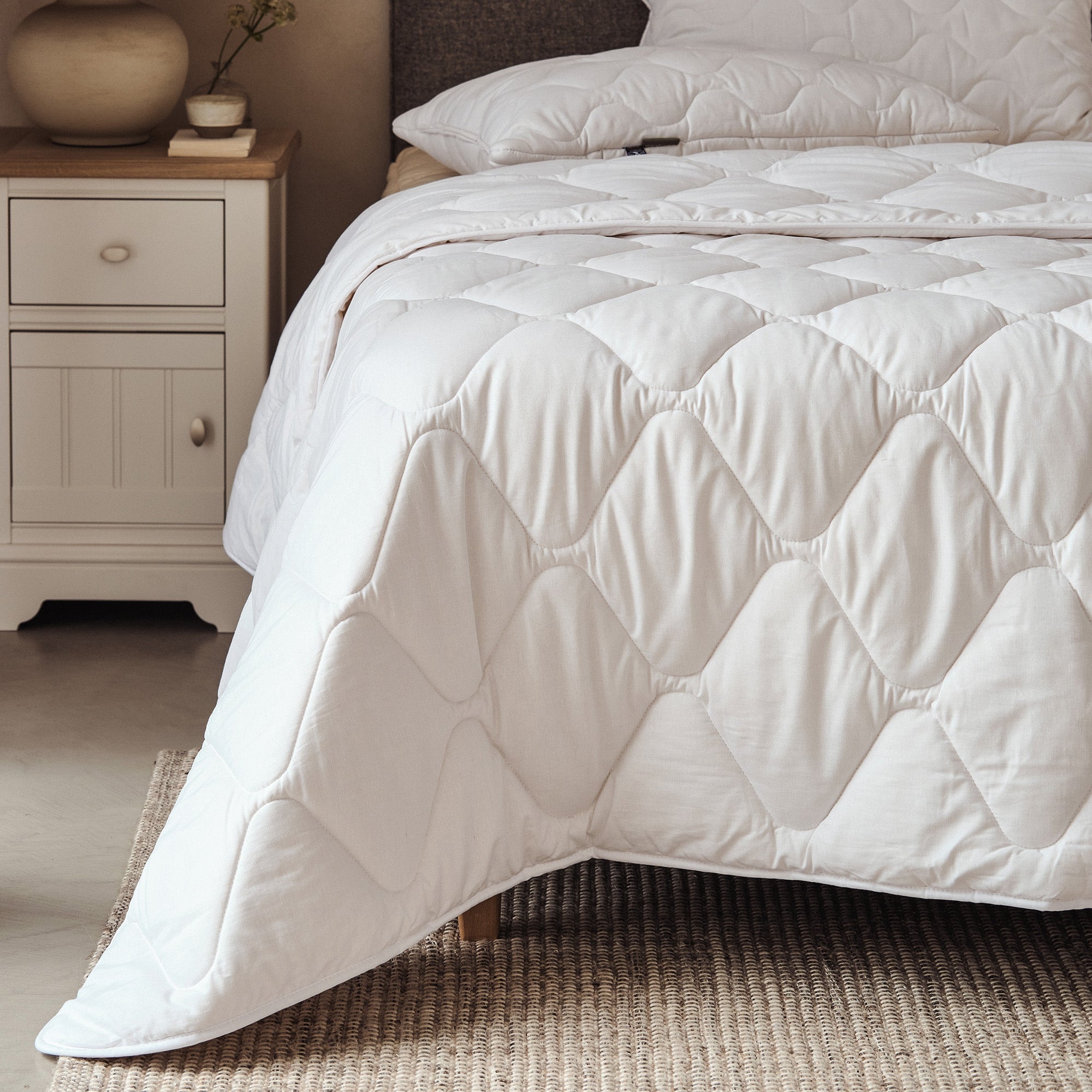
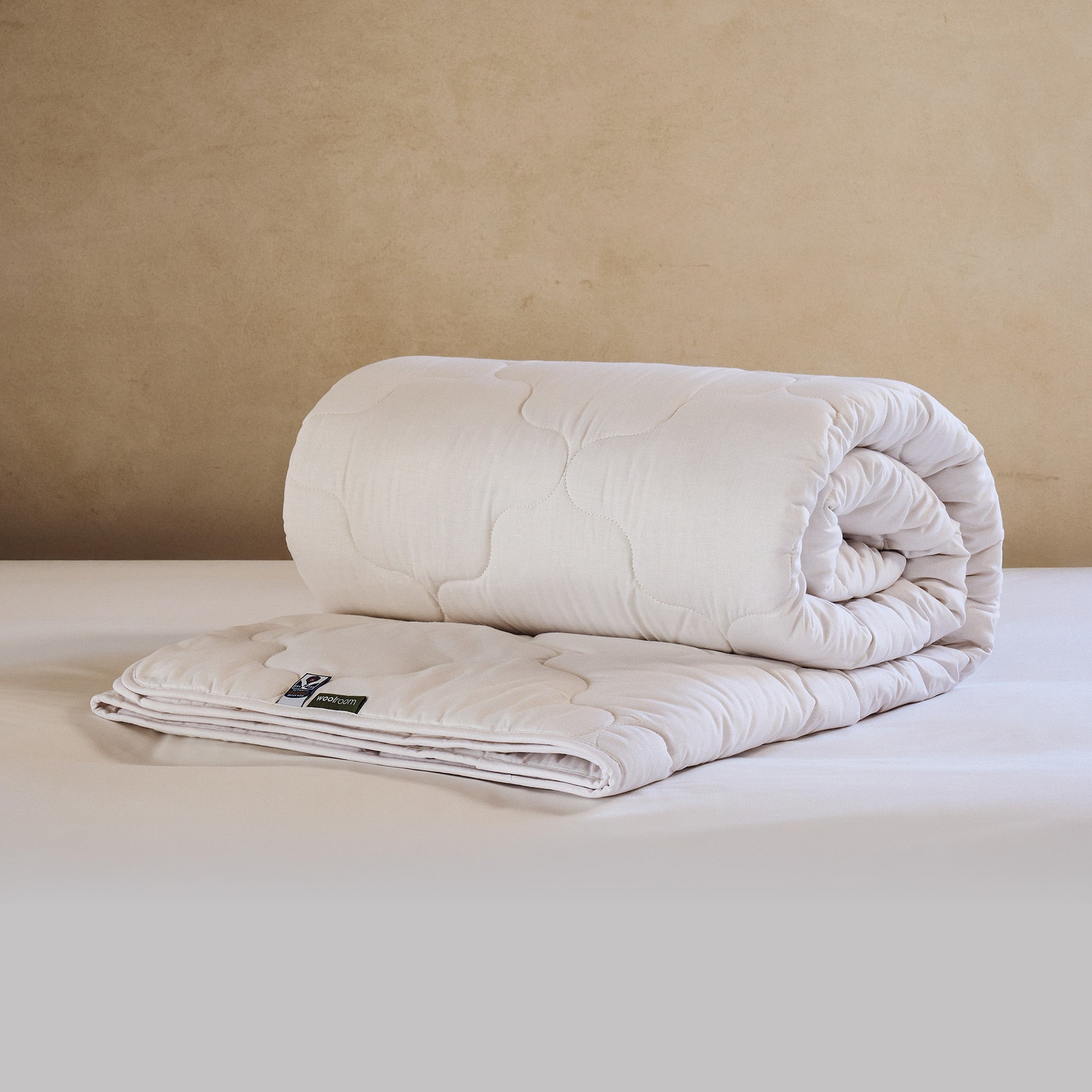
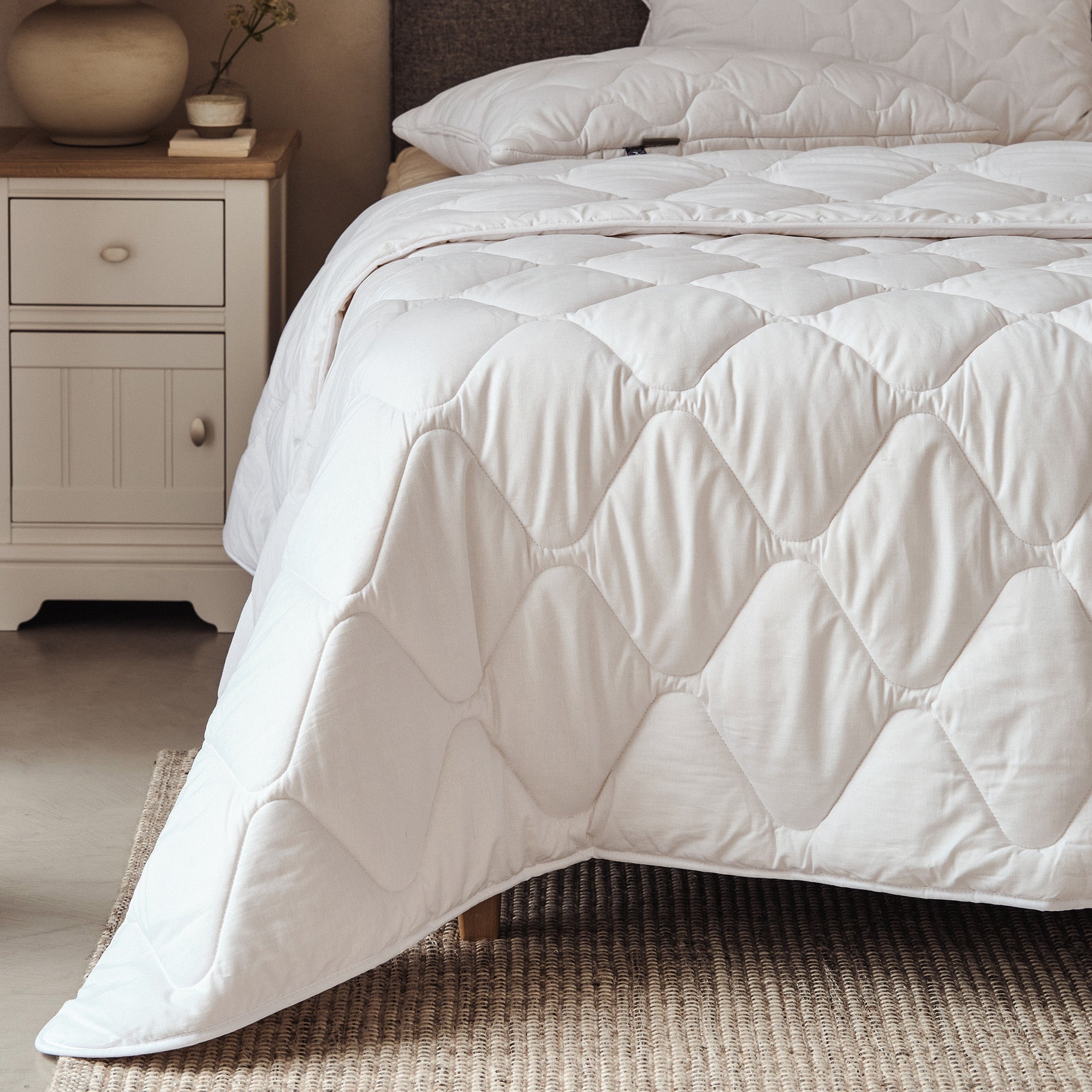
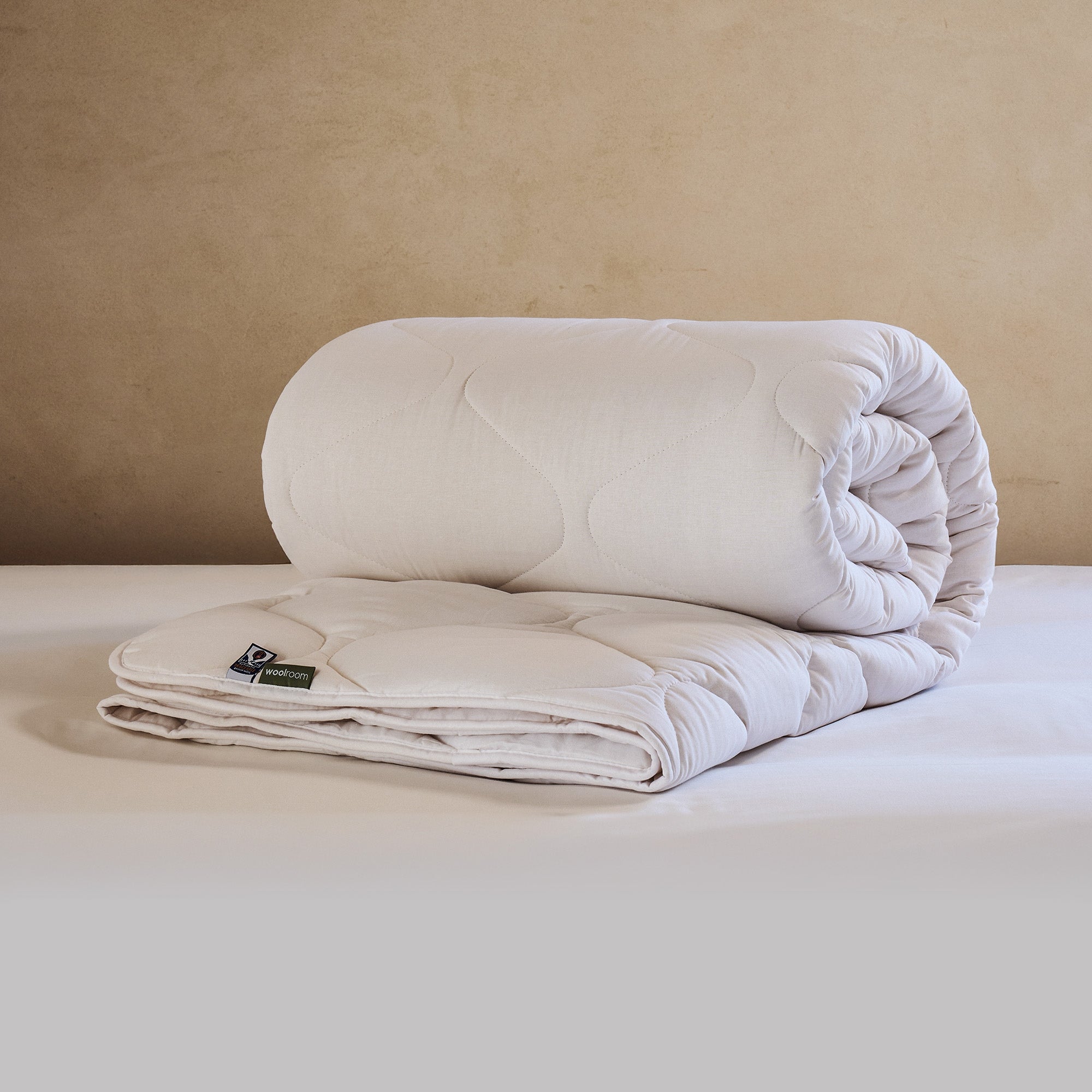
At Woolroom, we’re intimately acquainted with the amazing properties of wool, and we’ve built our entire bedding collection around them. All of the wool in our natural bedding products is 100% traceable British wool. We work directly with farmers in the UK to ensure our wool is sourced responsibly, which supports animal welfare and the rural economy. Our traceability programs means you can follow the wool in all our products right back to the sheep that shared its fleece.
We have no need for harsh chemical treatments, synthetic finishes, or bleaches, which can be common in down and synthetic products (and even with conventional wool processing). Instead, wool’s natural properties—its breathability, hypoallergenic structure and moisture-wicking ability—mean we can craft bedding that’s clean, safe and incredibly effective without compromise.
Pair that with eco-conscious packaging, and Woolroom bedding is as sustainable as it is comfortable. It’s designed to perform night after night, season after season, giving you not just healthier sleep but also peace of mind that your bedding choices are kinder to the planet.

Frequently Asked Questions
Is wool or down better for warmth?
Both materials are warm, but wool has the breathability that down lacks. Down is a good insulator so it traps heat, but that can lead to overheating. Wool naturally adapts to your body temperature to keep you warm when it’s cold and cool when it’s warm.
What is the downside of a down duvet?
Down duvets can lead to overheating and they aren’t moisture wicking, which can lead to clamminess and allergen buildup. Since they trap heat and humidity, they can become clumpy over time and attract dust mites. They also have a shorter lifespan compared to wool duvets.
What are the downsides of wool?
Wool bedding is heavier than down and it doesn’t have the same lofty, cloud-like look or feel. High-quality wool duvets can also be more expensive than you’d expect compared to synthetic options. But they offer benefits like temperature regulation, durability, and sustainability, that often outweigh the drawbacks.
Is wool good for sleeping?
Wool is excellent for sleeping. It’s one of the best materials, natural or synthetic, that you can buy for bedding. Wool naturally regulates temperature, wicks moisture, and resists allergens. That means cleaner, drier, more comfortable sleep.