Key takeaways
- Wool regulates temperature and manages moisture, so it adapts to autumn’s changing nights instead of simply adding warmth.
- Down offers lightweight, high-loft warmth, but it can trap heat and lose loft when it absorbs moisture.
- For hot sleepers, allergy sufferers and anyone dealing with fluctuating temperatures, wool is usually the better autumn duvet.
As days get shorter and nights get chillier, snuggling up under a cosy duvet sounds pretty great. If you’re considering contenders in the natural fibre category, wool and down top the list. Both fibres will keep you warm when it’s cold, but they handle autumn weather differently and it all comes down to how they manage temperature and moisture. Knowing that distinction upfront can steer you towards a duvet that will make you look forward to bedtime all season long.
The Short Answer: Wool Wins For Most Autumn Sleepers
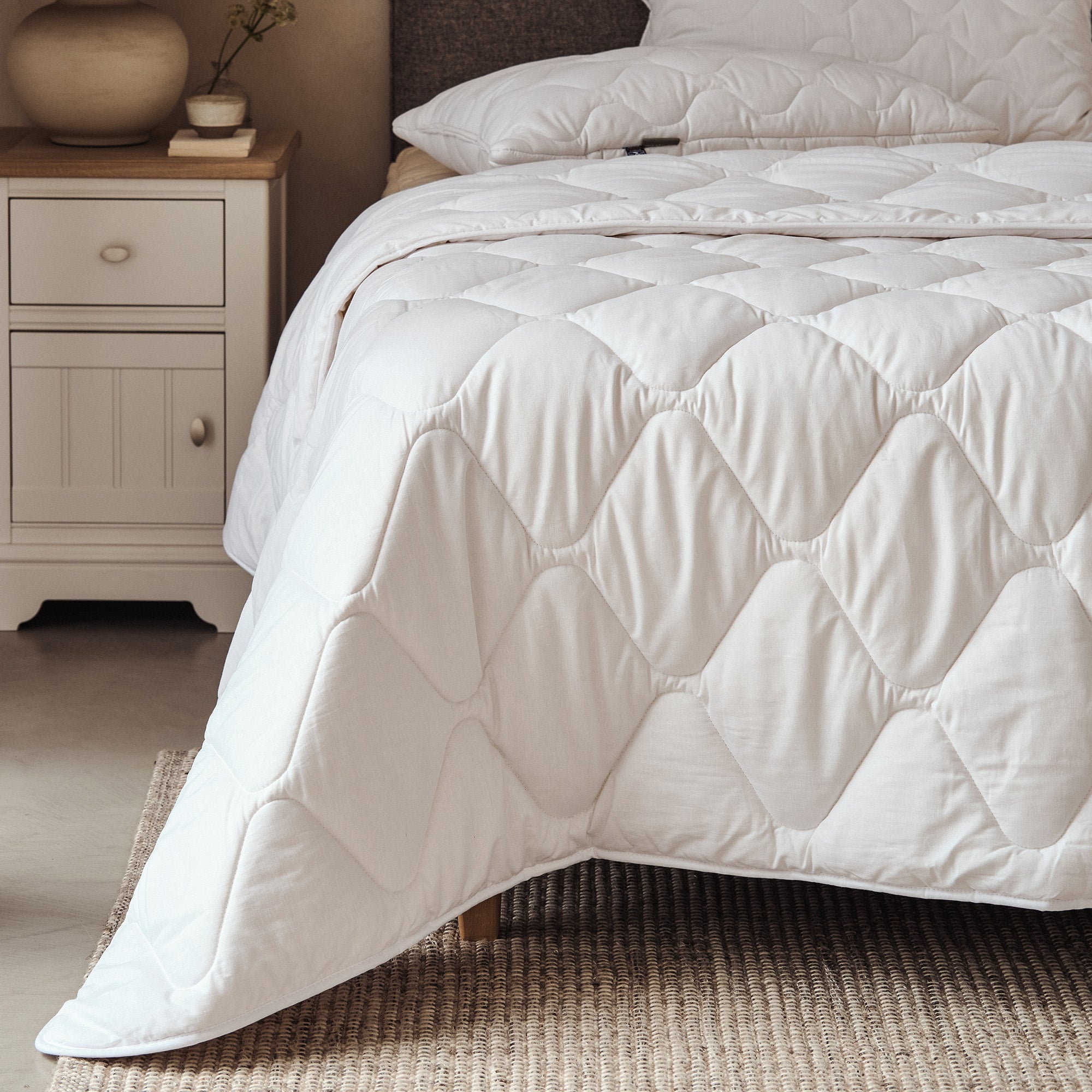
Wool regulates temperature through autumn’s weather swings, and it’s naturally breathable with excellent moisture control. Down is an excellent insulator, but it tends to trap heat and loses loft when it absorbs moisture. Here’s why most people find wool stands out.
Wool vs Down Duvet: A Side-by-Side Comparison
Wool and down are both natural, insulating and long-lasting, and the right choice often comes down to how you sleep and what your autumn nights look like. Here’s how the two compare on the features that matter most once the temperature starts to drop.
|
|
Wool Duvet |
Down Duvet |
Winner for Autumn |
|---|---|---|---|
|
Warmth |
Warm yet breathable; doesn’t trap excess heat |
Very warm and lightweight; traps heat |
Tie |
|
Breathability |
Highly breathable |
Less breathable |
Wool |
|
Moisture management |
Absorbs and releases moisture vapour; wicks away sweat |
Absorbs and holds moisture; can clump and lose loft |
Wool |
|
Allergies |
Drier sleep environment isn’t hospitable to dust mites, mould or mildew |
Can aggravate feather or dust sensitivities |
Wool |
|
Weight and feel |
Heavier, closer drape |
Light and fluffy, high loft |
Depends on personal preference |
|
Sustainability |
Renewable, biodegradable, compostable; look for traceable supply chains for ethical considerations |
Biodegradable by-product of the poultry industry; look for Downmark or RDS certification for ethical considerations |
Depends on sourcing |
|
Care |
Can be machine washable; air regularly |
Often needs professional dry cleaning or a large washing machine and thorough drying |
Wool |
Why Autumn Is the Hardest Season to Dress the Bed
Autumn is tricky because the weather can change in an instant. Afternoons may feel positively summery, but nights dip low enough to leave you shivering and reaching for another layer. Your bedding has to keep up, and the same duvet that’s warm enough for a frosty night can mean you’re kicking off the covers the next. Many people end up waking up too hot, then too cold and never really settling into deep, comfortable sleep.
That’s why fibres that regulate temperature are especially important during the autumn months. The best autumn duvet isn’t just the warmest one. It’s the one that adapts to changing conditions, keeping you warm when it’s cold without trapping so much heat that you wake up clammy.
How Does Wool Regulate Temperature?
Wool fibres are incredibly well suited to supporting sleep, and that’s thanks to their naturally crimped structure. The shape creates pockets that hold warmth close to the body, and the fibres themselves absorb moisture vapour and release it away from the skin. That combination keeps you warm without trapping so much heat that you wake up sweaty and disorientated in the middle of the night.
Moisture is the part that people often overlook. Between respiration and perspiration, everyone releases moisture at night. If it has nowhere to go, it builds up under the covers, leaving you damp and uncomfortable. Wool fibres can absorb up to 30% of their own weight in moisture without becoming damp or heavy. Then they release it into the air as conditions change. That creates a drier, more stable microclimate that supports more restorative sleep. And that’s backed by science. A study conducted by Leeds University in collaboration with Woolroom found that wool bedding increases the likelihood of a good night’s sleep by 67% and supports 25% more deep, regenerative sleep than other types of bedding.
Wool’s ability to regulate temperature and manage moisture is what makes it so well suited to autumn. It doesn’t just add warmth, like down. It responds to your body and the room, which helps you stay comfortable whether the night is crisp or unseasonably mild.
Is Wool Warmer Than Down?
Not by weight. Down is truly an outstanding natural insulator. Its fluffy clusters trap a lot of warm air without adding much weight, which is why a new down duvet is so light and airy. Weight for weight, a down duvet probably feels warmer than a wool duvet.
But maximum warmth isn’t really the goal, especially in autumn. Down holds heat so well that it can become stifling on milder nights or when the heating is on. And when it absorbs moisture from your body, down loses loft, which reduces its insulating power and leaves you feeling damp and a far cry from cosy.
Wool is different. It provides steady, comfortable warmth and moves moisture away from the body, which means you’re less likely to swing from too hot to too cold. It provides more stable temperature regulation throughout the night and across the seasons.
How Long Does a Wool Duvet Last Compared to Down?
With proper care, both wool and down duvets can last for years. But they age differently, and that affects how often you’ll need to replace them.
Wool fibres are naturally resilient. Their crimped, spring-like structure bounces back after being compressed, so a wool duvet keeps its shape and loft without clumping or flattening. Because wool resists odours and stays dry, it also needs less frequent washing, which means less wear over time. Cared for well, wool bedding can last for decades.
Down clusters are much more delicate. Over time, they break down and lose loft, especially when they’re exposed to moisture or stay compressed for long periods. Clumping is common as a down duvet ages, and regular shaking and fluffing are needed to keep it lofty. Washing also takes care, since down has to be dried thoroughly to prevent clumping and mildew.
In autumn, durability means more than lifespan. A duvet that holds its loft and adapts to changing temperatures can carry you from early autumn through winter and beyond, so you’re not swapping bedding every time the weather shifts.

Which Is Better for Hot Sleepers and Allergies?
For hot sleepers, wool is usually the better call. Its breathability lets excess heat escape, and its moisture management keeps night sweats from turning into a clammy, uncomfortable night. Down is designed to hold heat in, so it’s a better fit for people who are always cold.
If you’re an allergy sufferer, wool has the advantage. It really comes down to dust mites. Those microscopic spider relatives are the leading cause of bedroom allergies, affecting up to 400 million people around the world (including at least 45% of people with asthma). Dust mites thrive in warm, dark, humid places, so bedding can be the ideal home. While down holds onto moisture, making for a hospitable environment, we’ve already covered that wool does not. By absorbing and releasing moisture, wool bedding keeps the sleep environment too dry for dust mites to thrive. That’s why Woolroom’s natural wool bedding carries the Allergy UK Seal of Approval.
Sustainability and Sourcing: Wool vs. Down
Both wool and down are natural, biodegradable fibres, which gives them an edge over synthetic duvets made from polyester (a petroleum-based material). But sustainability still comes down to sourcing.
Wool is a renewable fibre. Sheep grow a new fleece every year, and shearing is a routine part of their care. At the end of its life, wool breaks down naturally in soil. Sheep farming does have an environmental impact and animal welfare practices vary, so it’s important to choose wool from a brand with a transparent, traceable supply chain.
Down is a by-product of the poultry industry, so it makes use of material that would otherwise go to waste. Like wool, it’s biodegradable and reasonably long lasting with proper care. The big concern is welfare. Some down has historically come from live-plucked or force-fed birds. That makes certifications like Responsible Down Standard (RDS) and Downmark really important, since they indicate down has been humanely sourced.
For both down and wool, traceability is the best indicator of quality. Here at Woolroom, that’s built into every product. Our wool comes from British farms that guarantee the five freedoms set out in the UK Animal Welfare Act 2006, and our Wool ID® programme shows you exactly where your wool comes from. After shearing, the wool is checked, sorted and graded at the highly regulated British Wool depot before it goes to our artisan manufacturers, and the finished bedding is free of chemical treatments and synthetic fibres. Woolroom bedding also carries certifications including OEKO-TEX Standard 100, Woolmark, British Wool approval, and the Allergy UK Seal of Approval.
The Verdict: Wool Is the Best Duvet for Autumn
Down earns its reputation as a lightweight, lofty insulator, and it’s a solid choice for people who sleep cold in consistently chilly climates. But the thing about autumn is that it’s notoriously inconsistent. Between warm afternoons, cold nights and the heating coming on, most sleepers need a duvet that adapts, not one that just holds onto heat.
That’s where wool wins. It keeps you warm on crisp nights, stays breathable on mild ones and manages moisture so you wake up comfortable instead of clammy. Add its allergy-friendly properties and long lifespan, and wool is the duvet that carries you through autumn and well into winter.
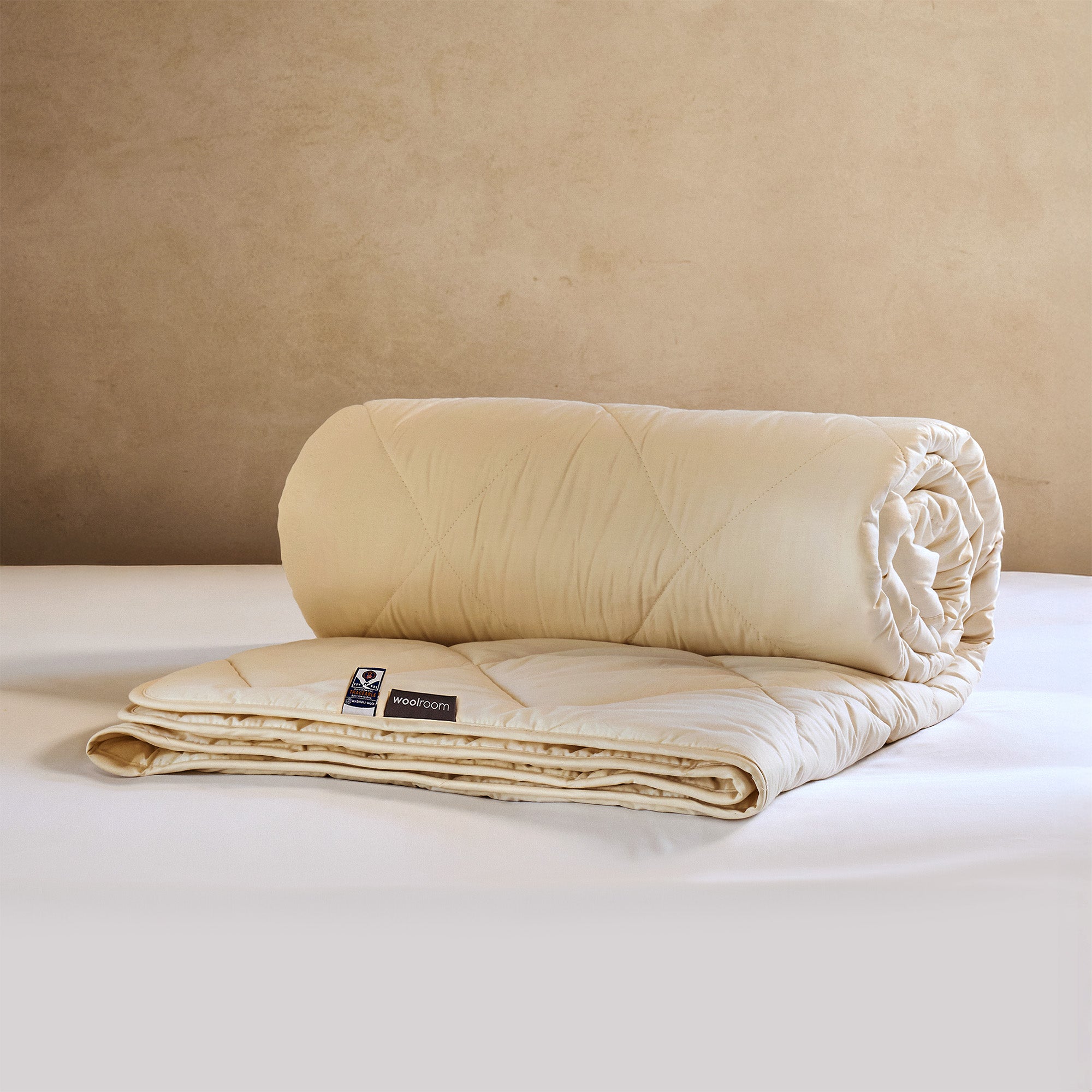
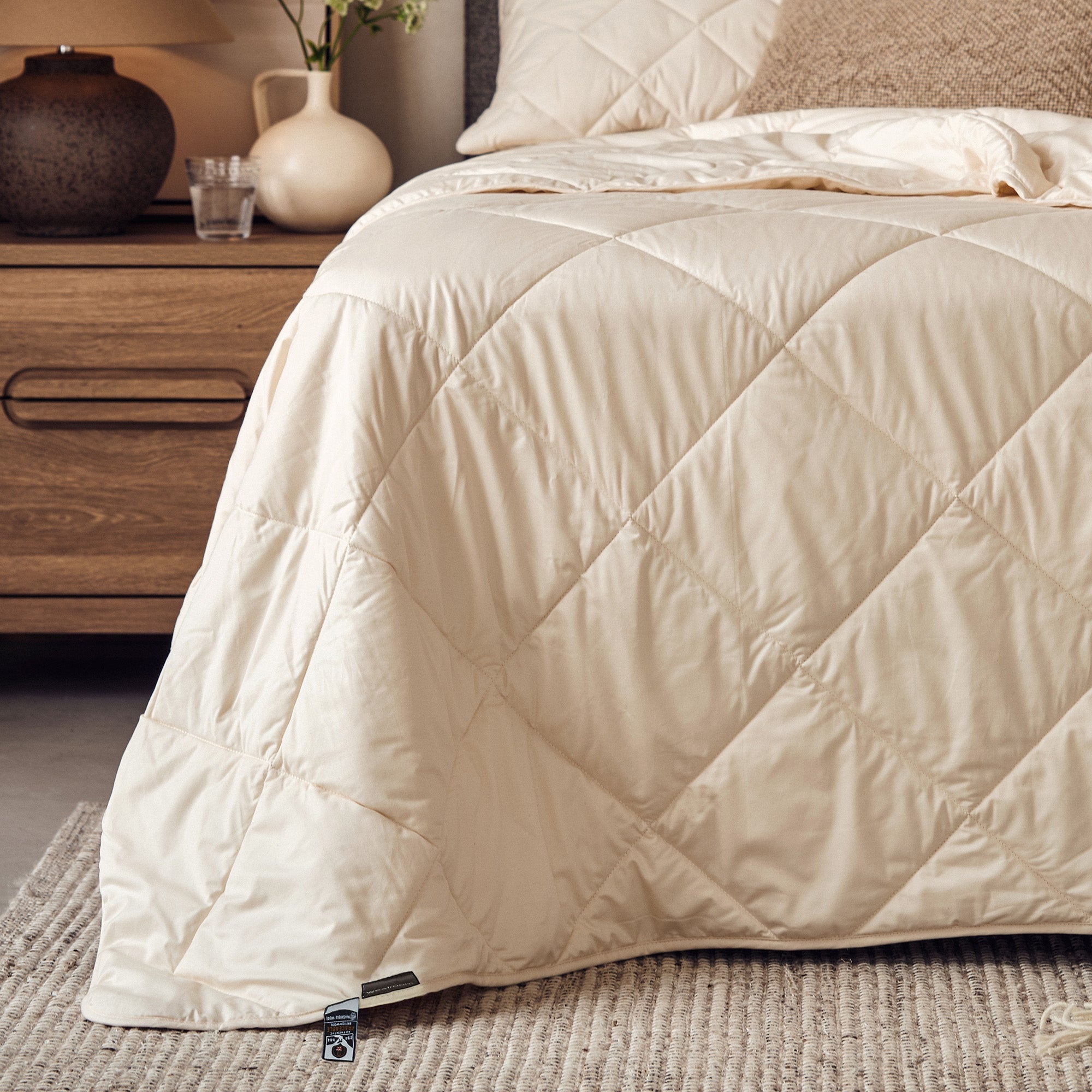
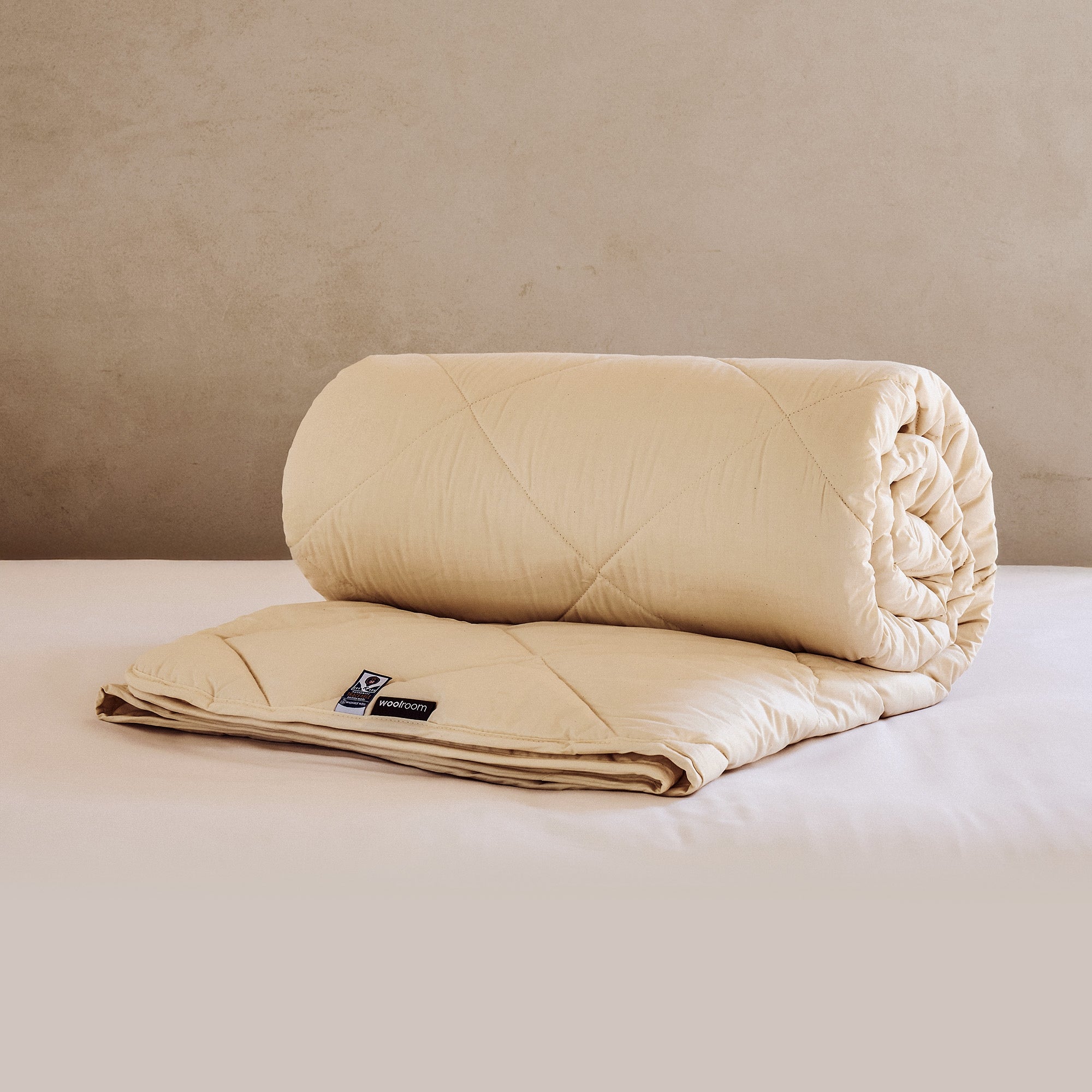
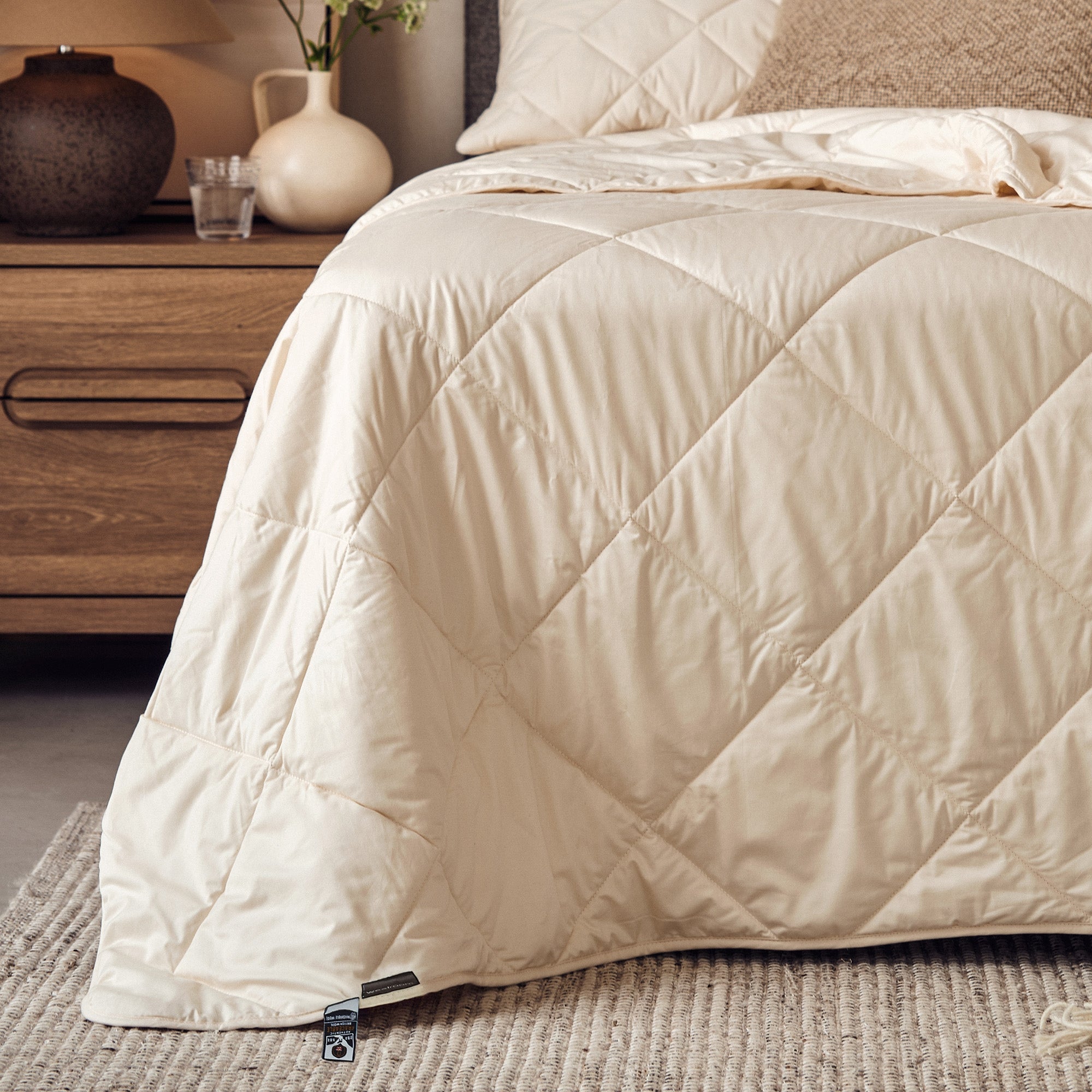
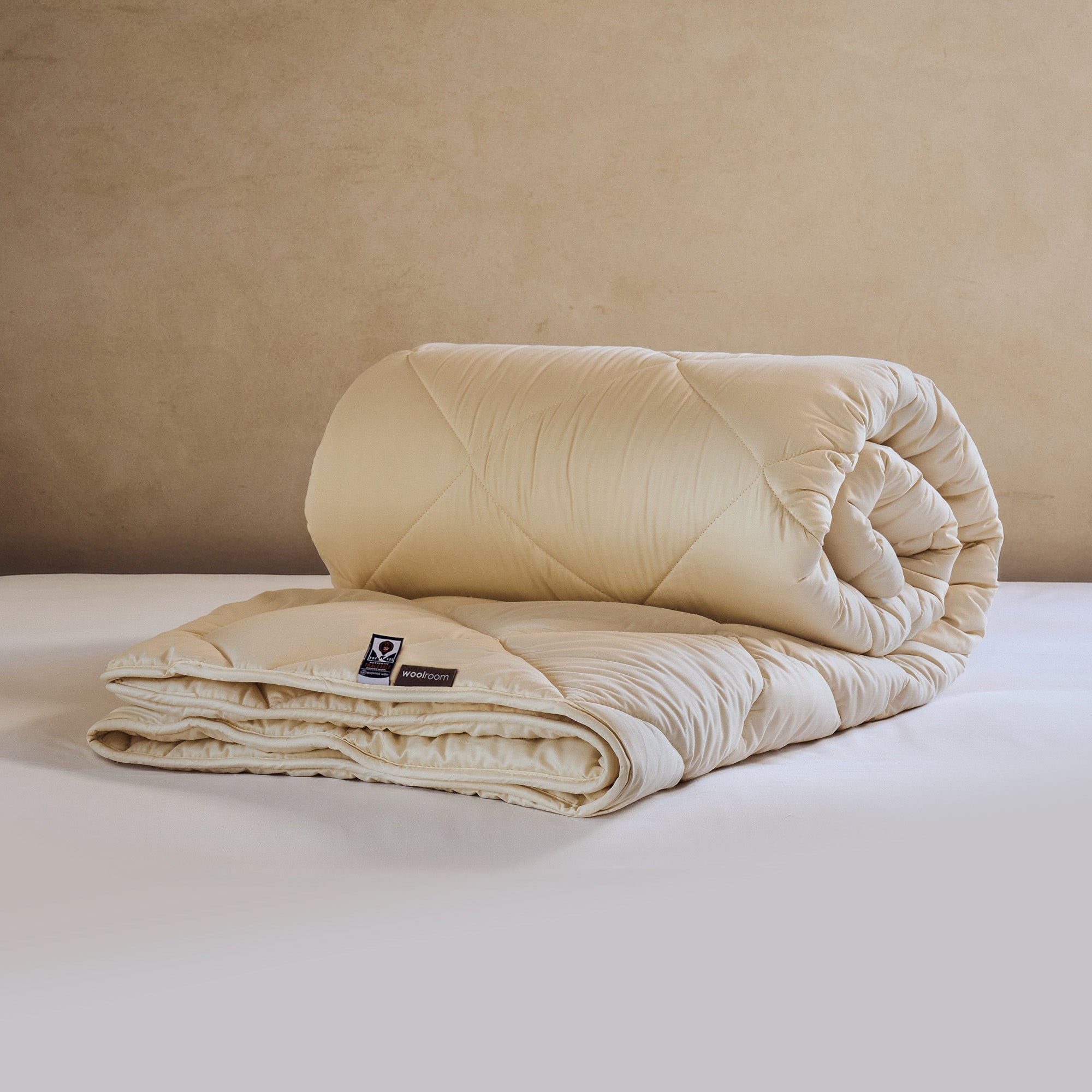
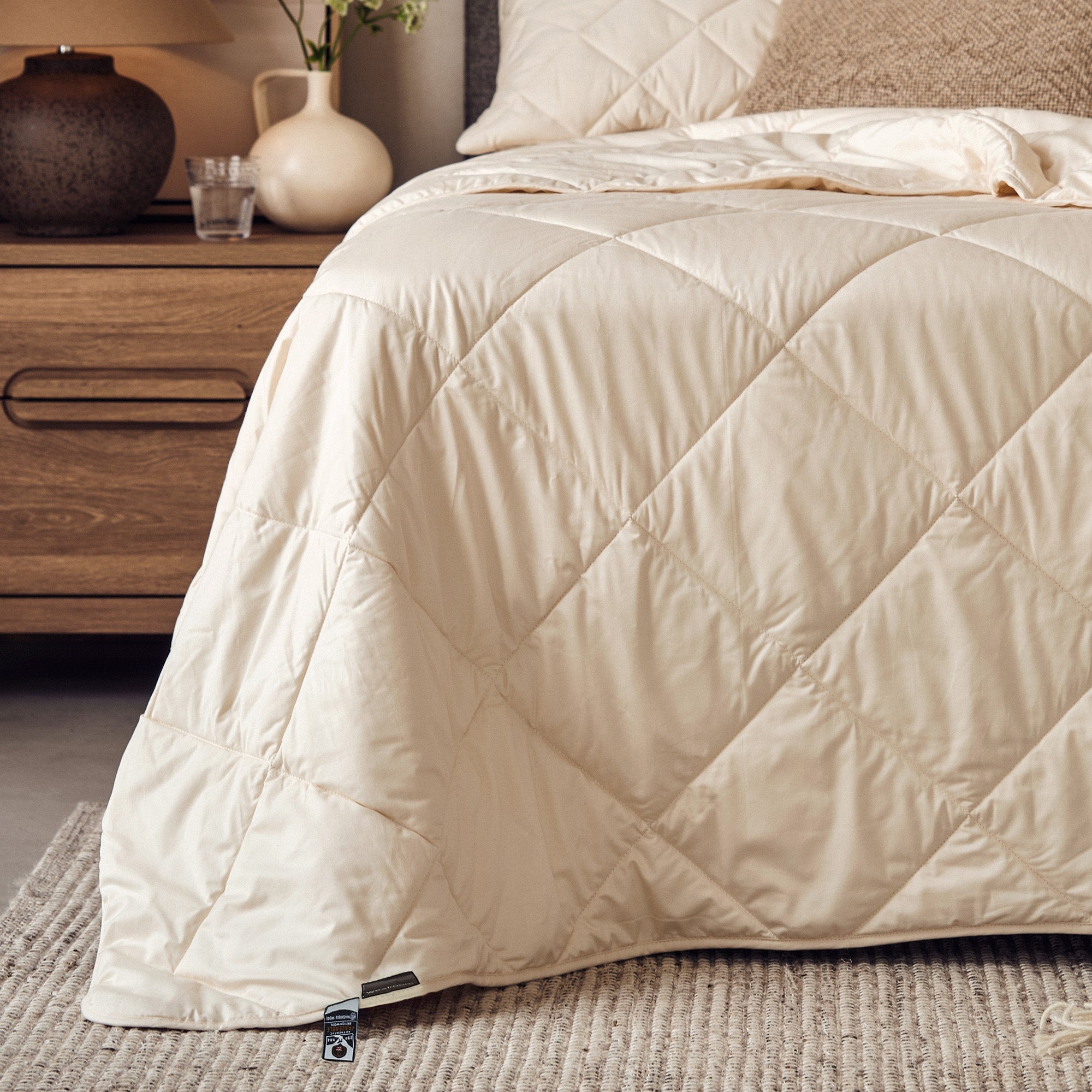
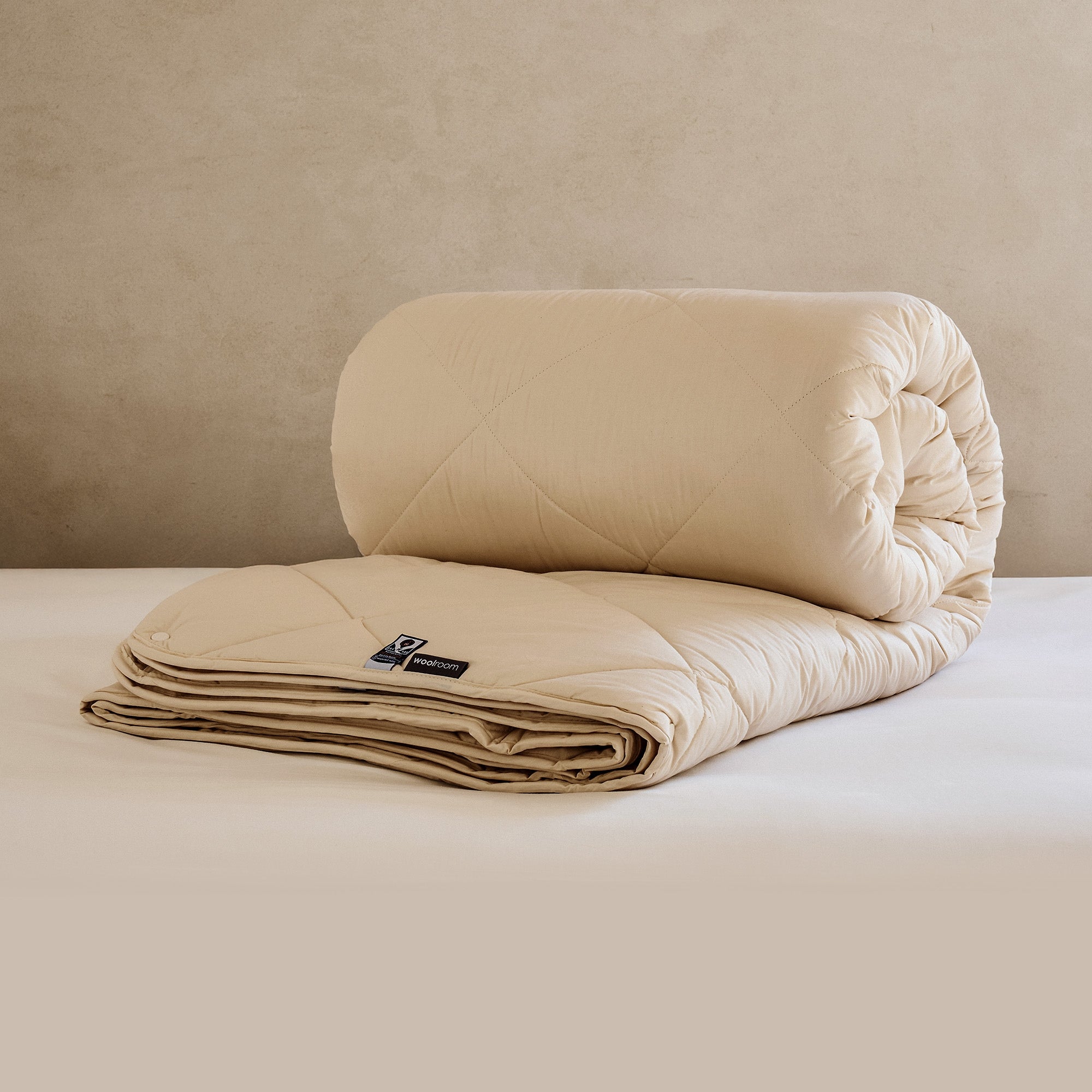
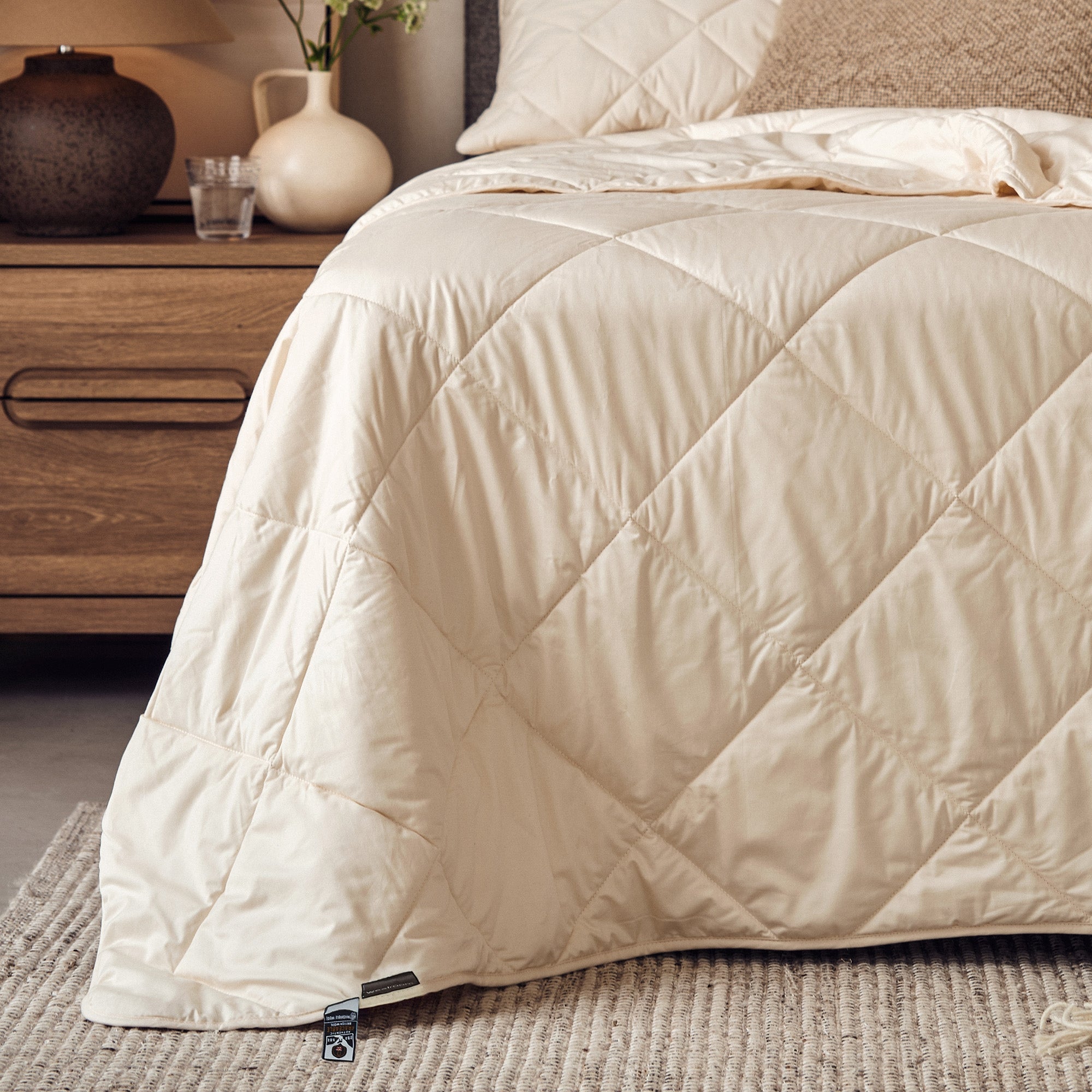
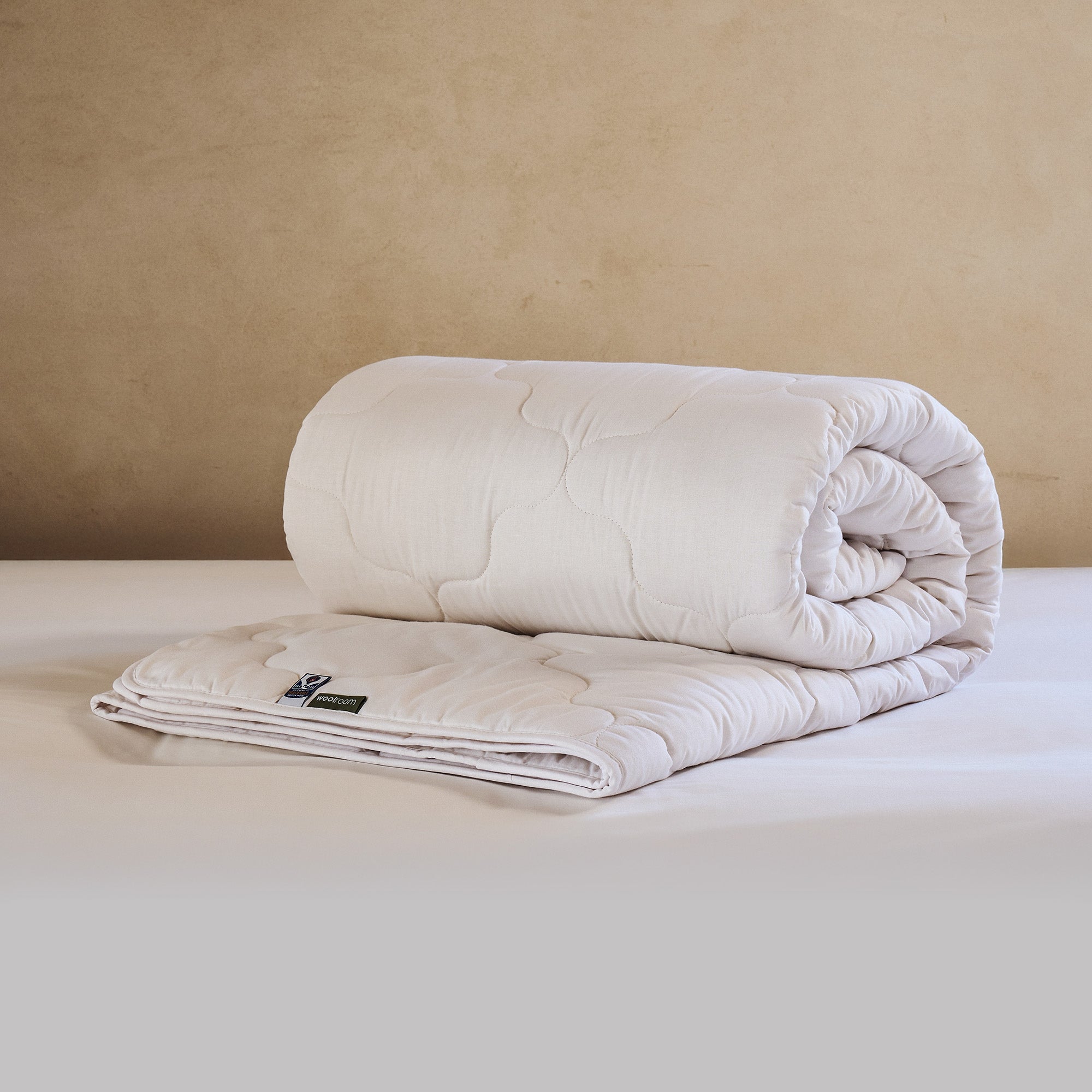
Ready to make the switch? Explore Woolroom’s wool duvets, available in multiple tog ratings to match how you sleep.

Frequently Asked Questions
Are wool duvets better than down?
For most autumn sleepers, yes. Wool regulates temperature and manages moisture, so it stays comfortable through cool nights, mild nights and everything in between. Down is warmer by weight and a good fit for people who always sleep cold, but it can trap heat and lose loft when it absorbs moisture. If you sleep hot, have allergies or deal with changing autumn temperatures, wool is usually the better choice.
When should I switch to a warmer duvet in autumn?
Most people make the switch once night-time temperatures consistently drop to around 10–15°C, or when they turn the heating on for the season. With a wool duvet, timing matters less. Because wool adapts to changing temperatures, you can switch early without overheating on the warmer nights that still pop up in early autumn.