It’s a simple question, often asked when shopping for a new duvet, but the answer isn’t always as clear as it seems. Although most guidance suggests replacing a duvet after around five years, the reality is very different.
Higher-quality options can last significantly longer – often five to 10 years, and in the case of natural fillings such as wool, sometimes longer still. In practice, many duvets are only replaced once they’ve already lost much of their comfort, rather than at a fixed point in time.
The actual lifespan of a duvet varies depending on a few key factors, including:
- The materials inside
- How often it’s used
- How it’s looked after
The difference isn’t just time – it’s about how well a duvet continues to perform over the years.
The Short Answer: How Often Should You Replace Your Duvet?
Most experts, including Woolroom managing director, Chris Tattersall, recommend.
Why Duvet Lifespan Isn’t Just About Time
It’s easy to assume a duvet reaches the end of its life simply because of its age. However, what really matters is how it behaves after years of use – whether it continues to support a good night’s sleep or not.
“When people ask how long a duvet should last, they’re usually thinking about it in terms of years. They’re not necessarily thinking about how the filling behaves and performs over time.
Over time, every duvet is exposed to the same conditions:
- Moisture released by your body as you sleep
- Compression from nightly use, which can cause the filling to become thin and less resilient
- A gradual loss of loft, reducing the duvet’s ability to trap air and retain warmth
- Reduced airflow, making temperature harder to regulate
- Uneven or shifting filling, particularly after repeated washing or long-term use
As these changes take place, a duvet may begin to feel flatter, less comfortable, and less effective at maintaining a consistent temperature.
The better a duvet is at handling these challenges, the longer it will continue to perform as it should.
How Long Do Different Types of Duvets Last?
There’s no fixed rule, but the filling inside your duvet gives a good indication of how long it’s likely to maintain its comfort and performance. Naturally, spills, accidents and how well a duvet is cared for can all have a significant impact on its lifespan, regardless of the filling.
Synthetic (Hollow Fibre / Polyester): 2 to 5 Years
Synthetic duvets are often chosen for their affordability. While not always the case, they tend to have the shortest lifespan.
The fibres can flatten relatively quickly and are less resilient to repeated washing. As this happens, they become less effective at trapping air, which can affect warmth and overall comfort, making it harder to maintain a comfortable temperature throughout the year.
They’re also more likely to retain moisture rather than release it, which can leave the duvet feeling heavier and less breathable over time.
Feather: 5 to 8 Years
Feather-filled duvets are generally more durable than synthetic options, but they can still lose structure over time.
Feathers are more susceptible to compression and movement, which can cause the filling to become uneven with regular use. This can lead to a heavier feel and less consistent warmth across the duvet.
Feather & Down: 7 to 10 Years
Blends of feather and down tend to offer greater resilience. The down clusters help the duvet retain its loft and softness for longer.
They are effective at trapping air, which supports warmth, but can still be affected by moisture and repeated compression over time, which may impact how evenly the filling performs.
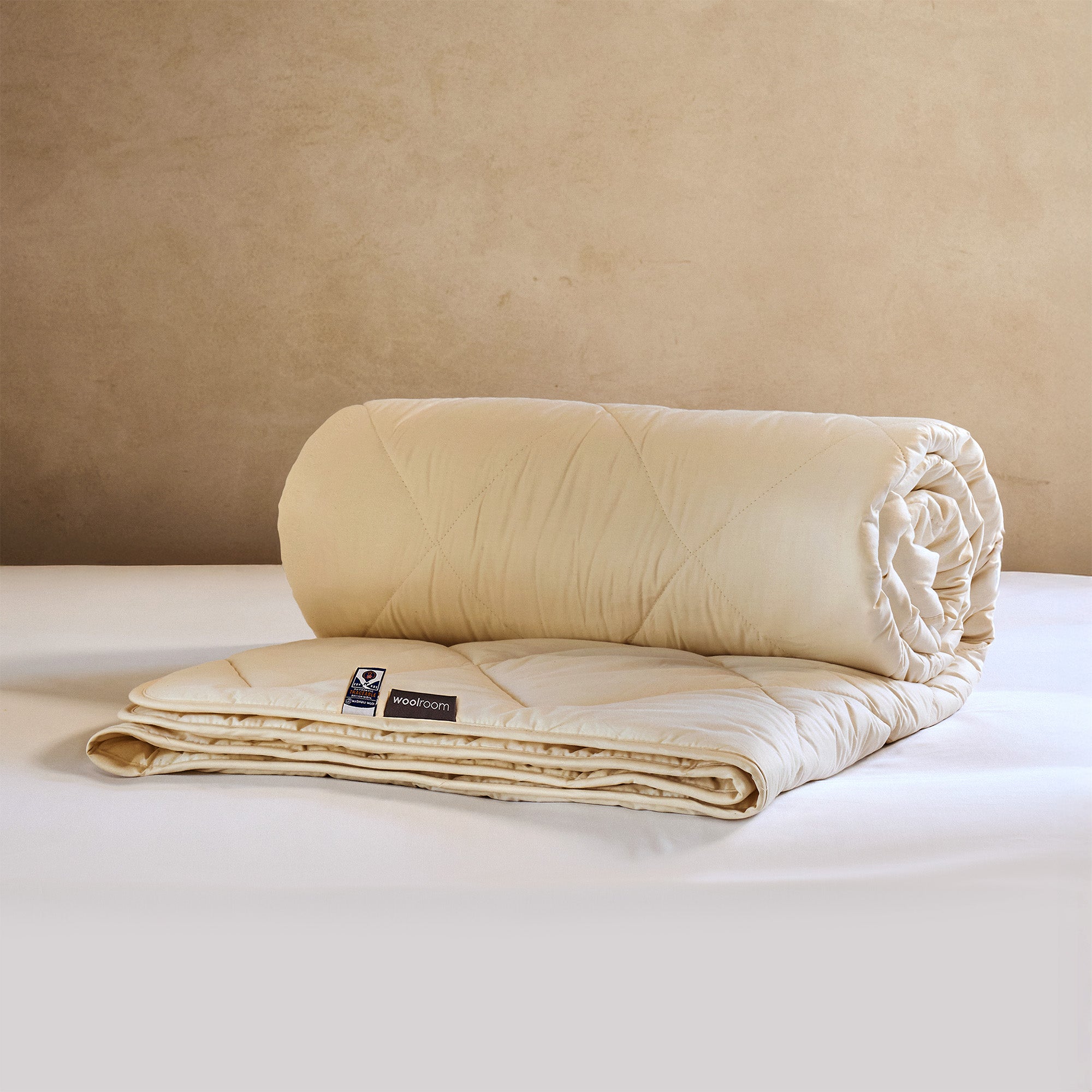
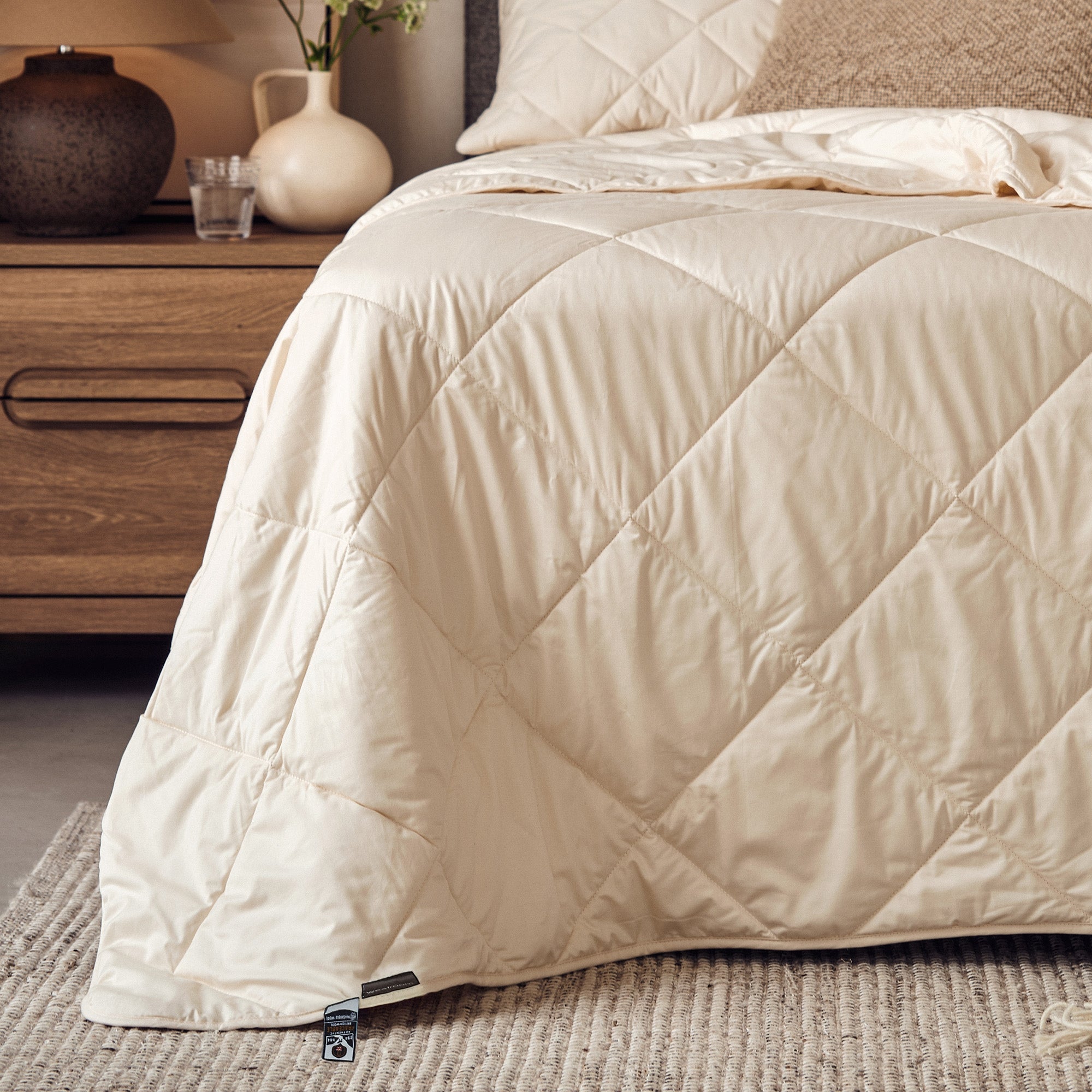
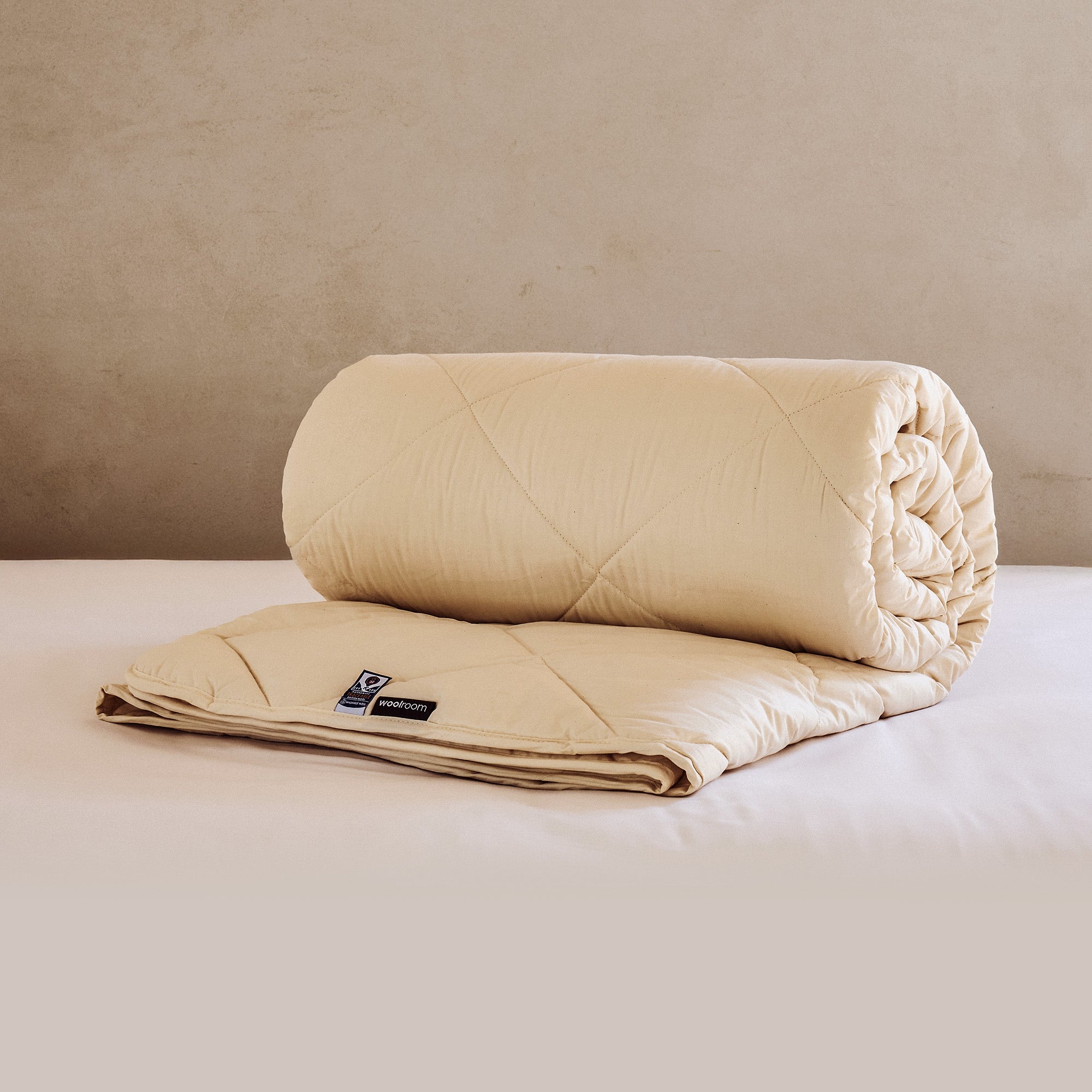
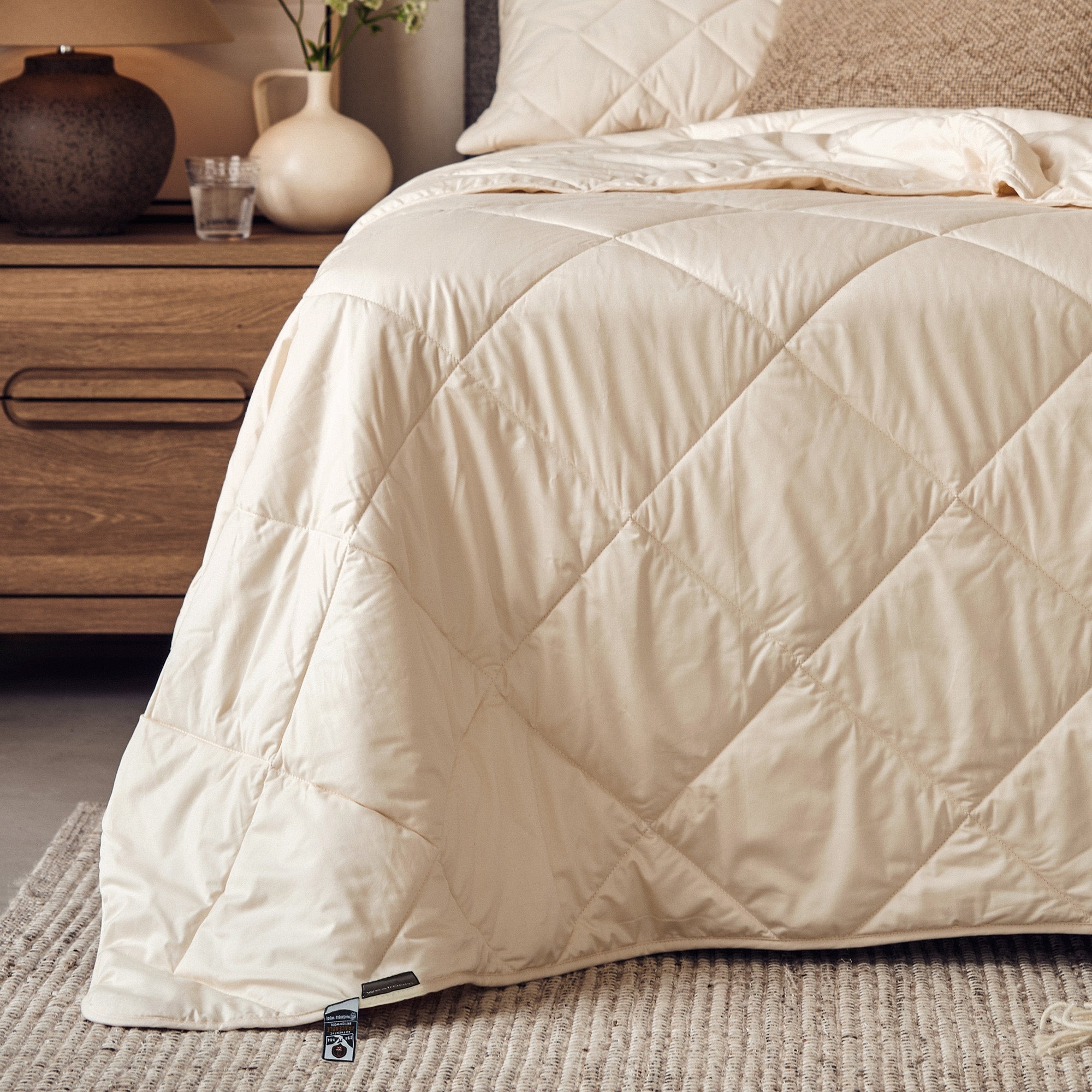
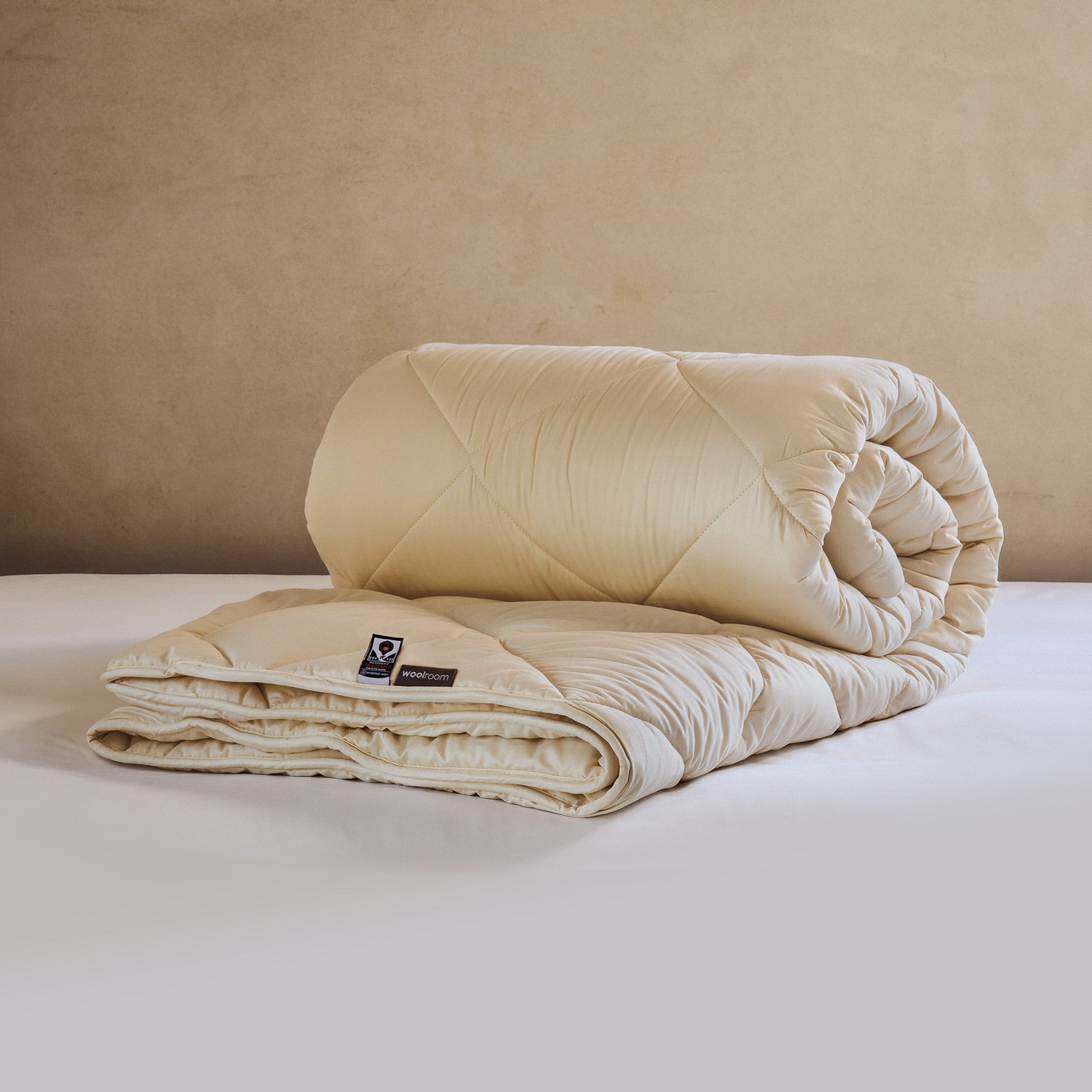
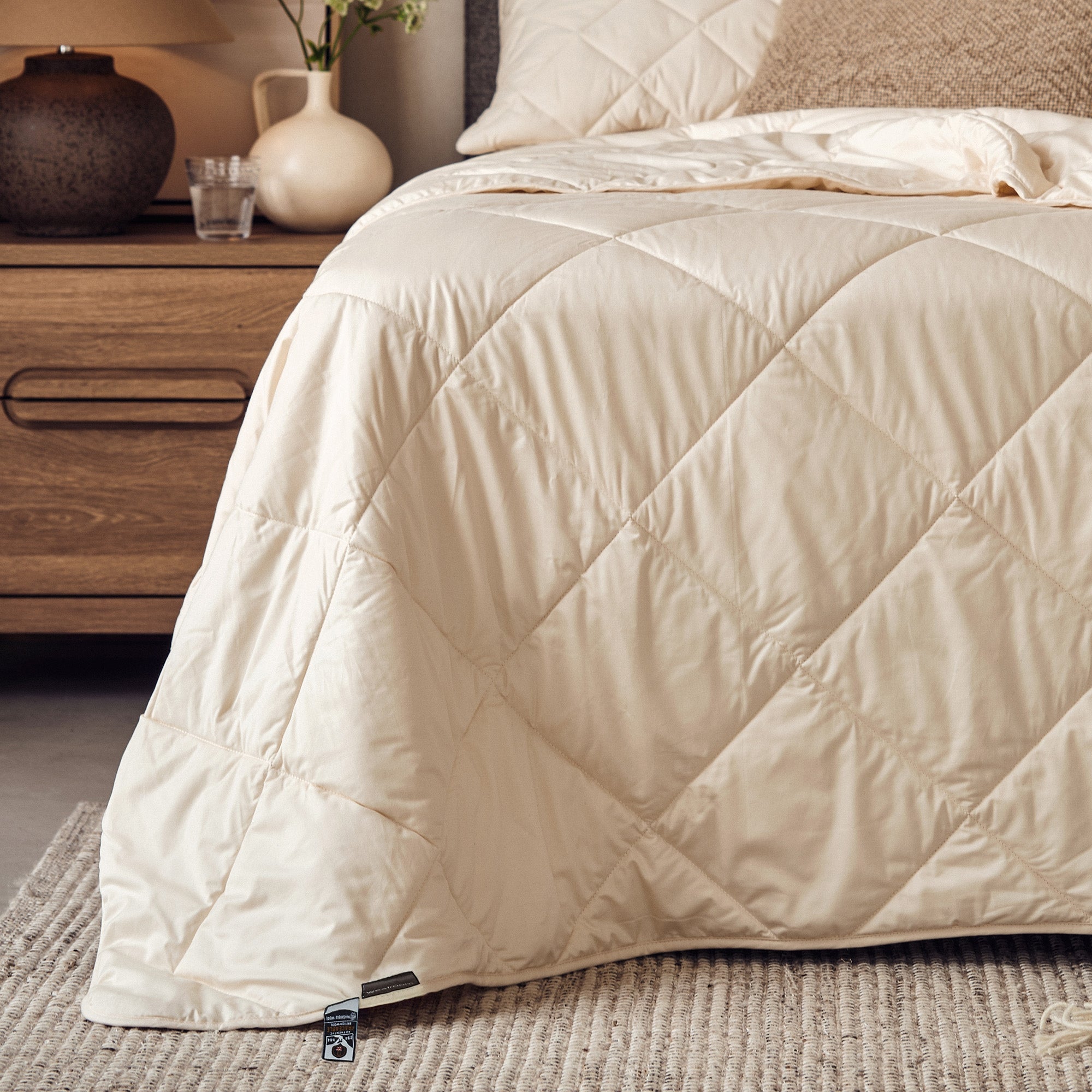
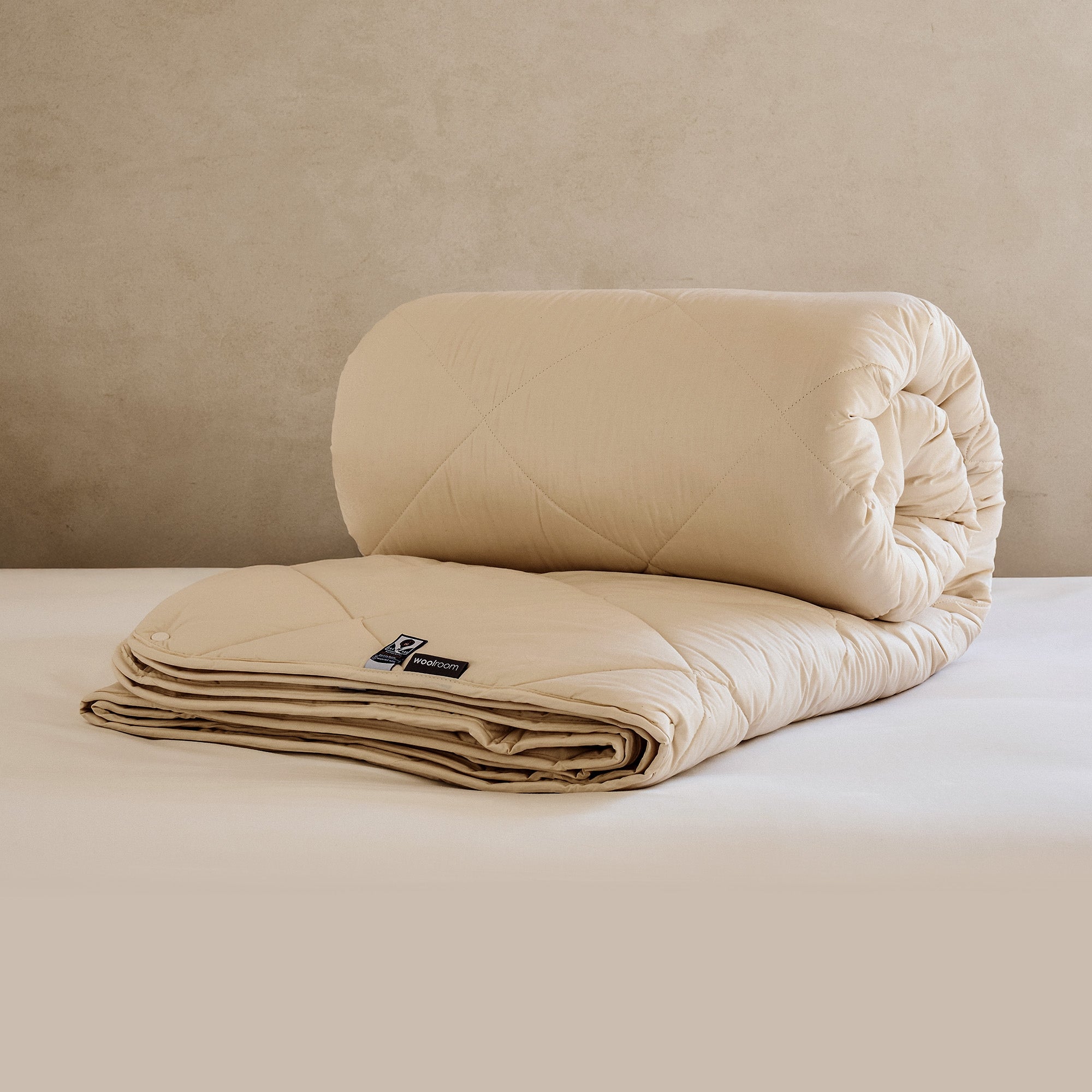
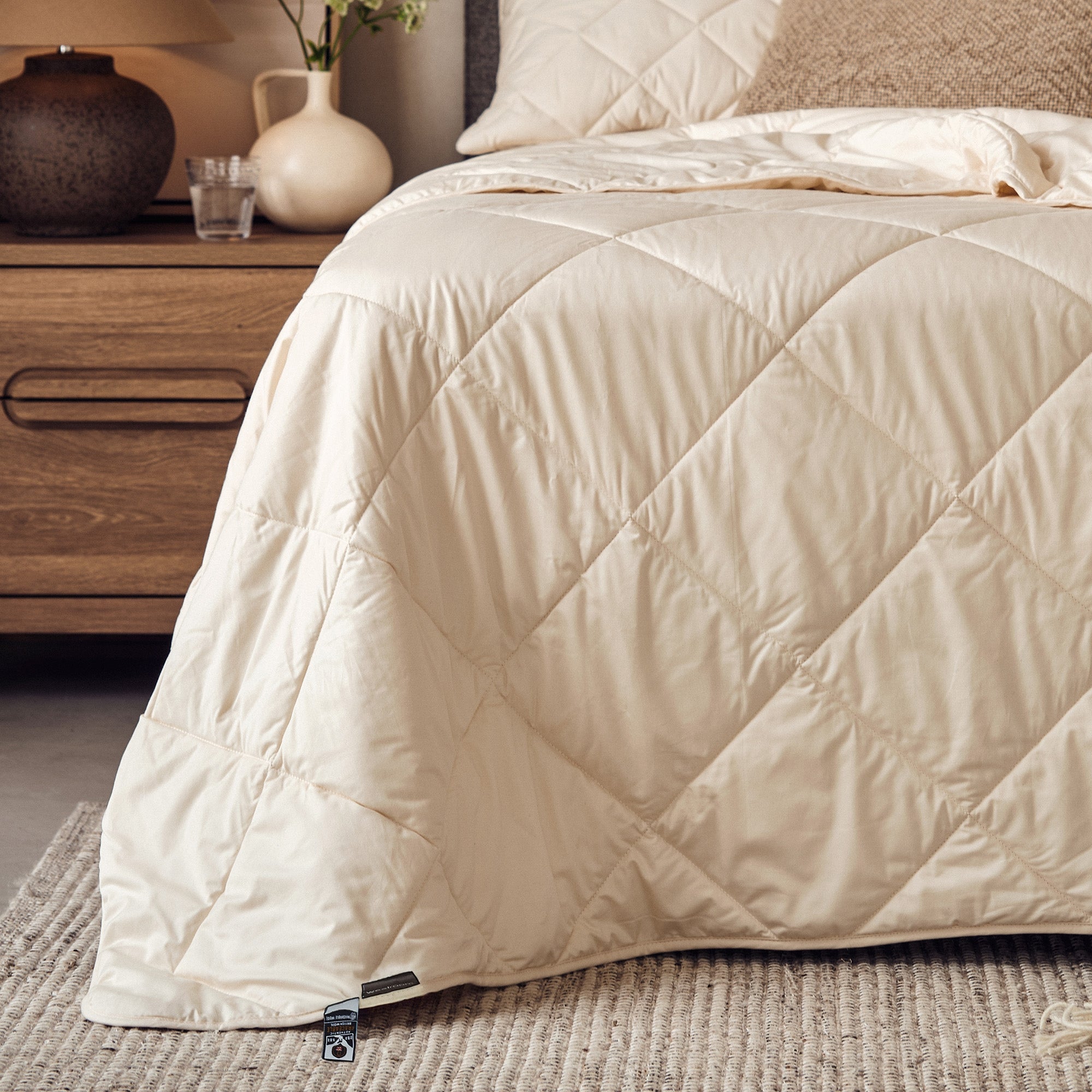
Wool: 10 to 15 Years
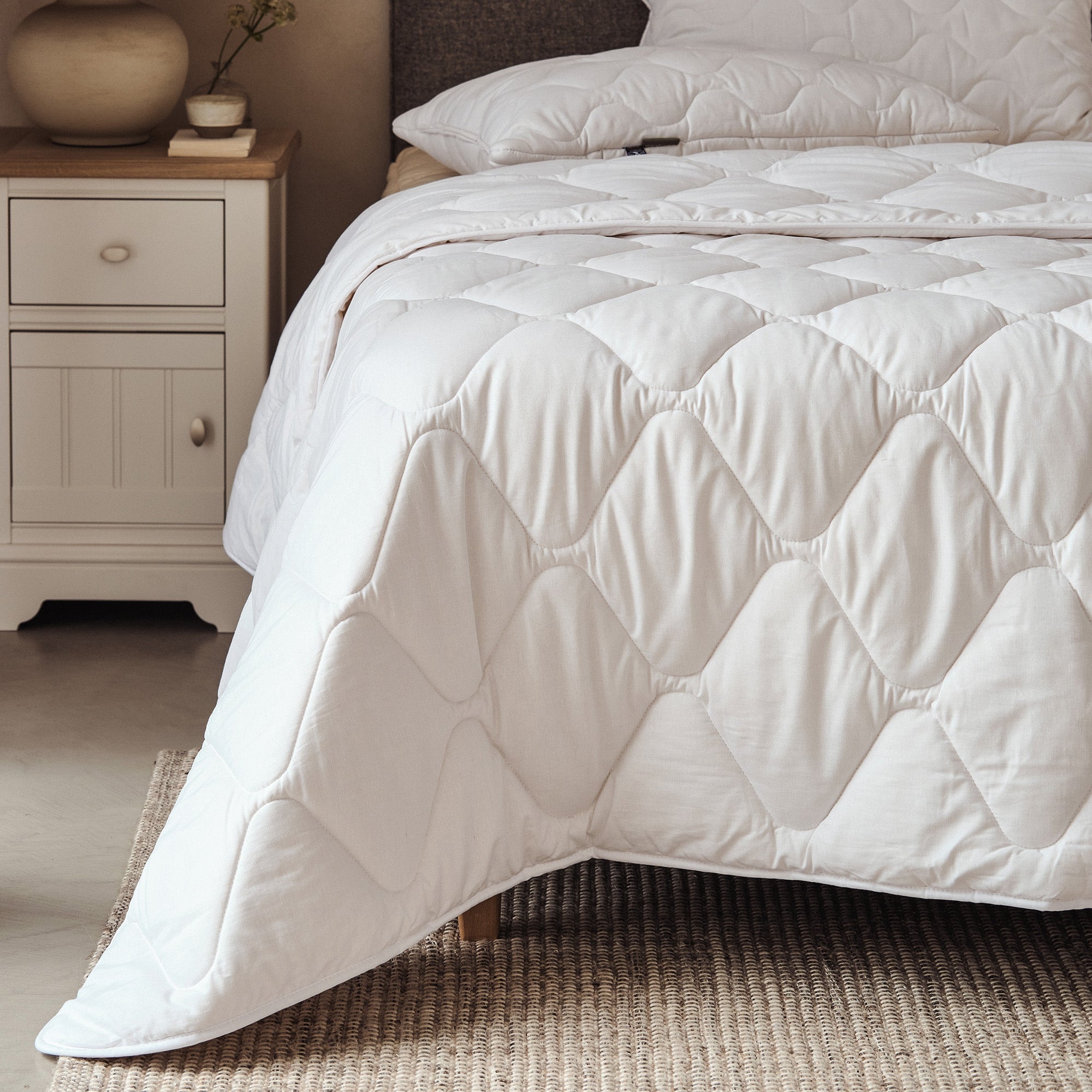
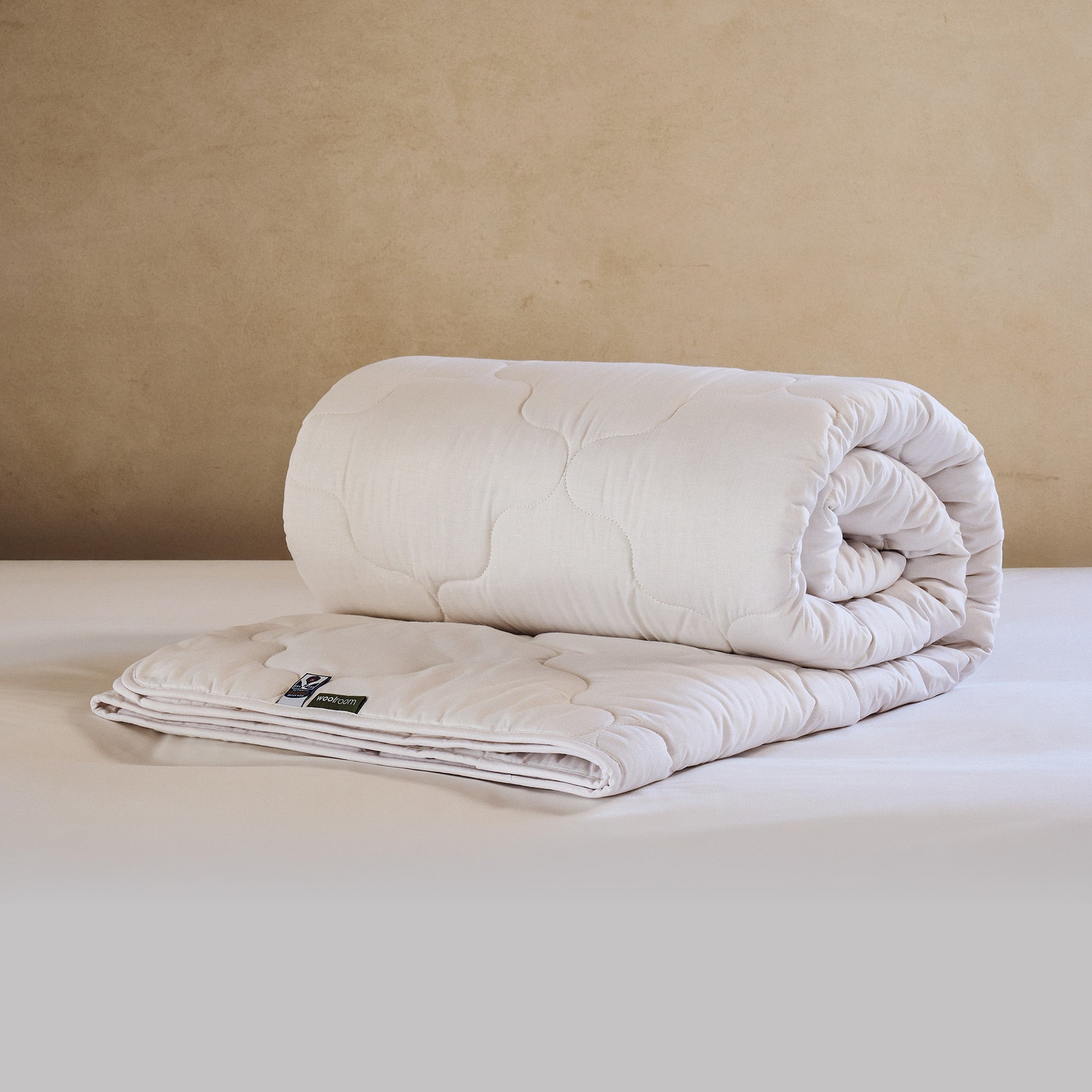
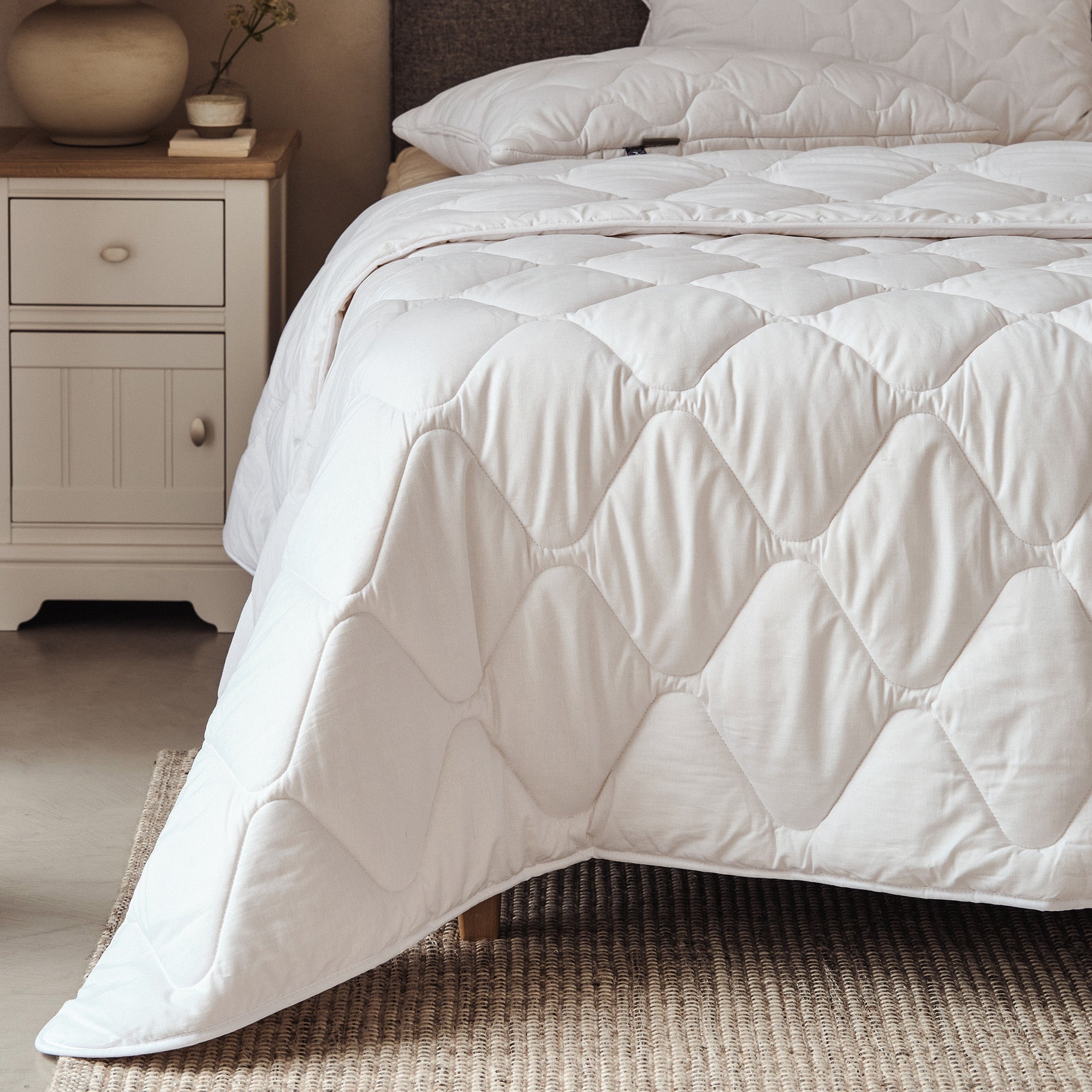
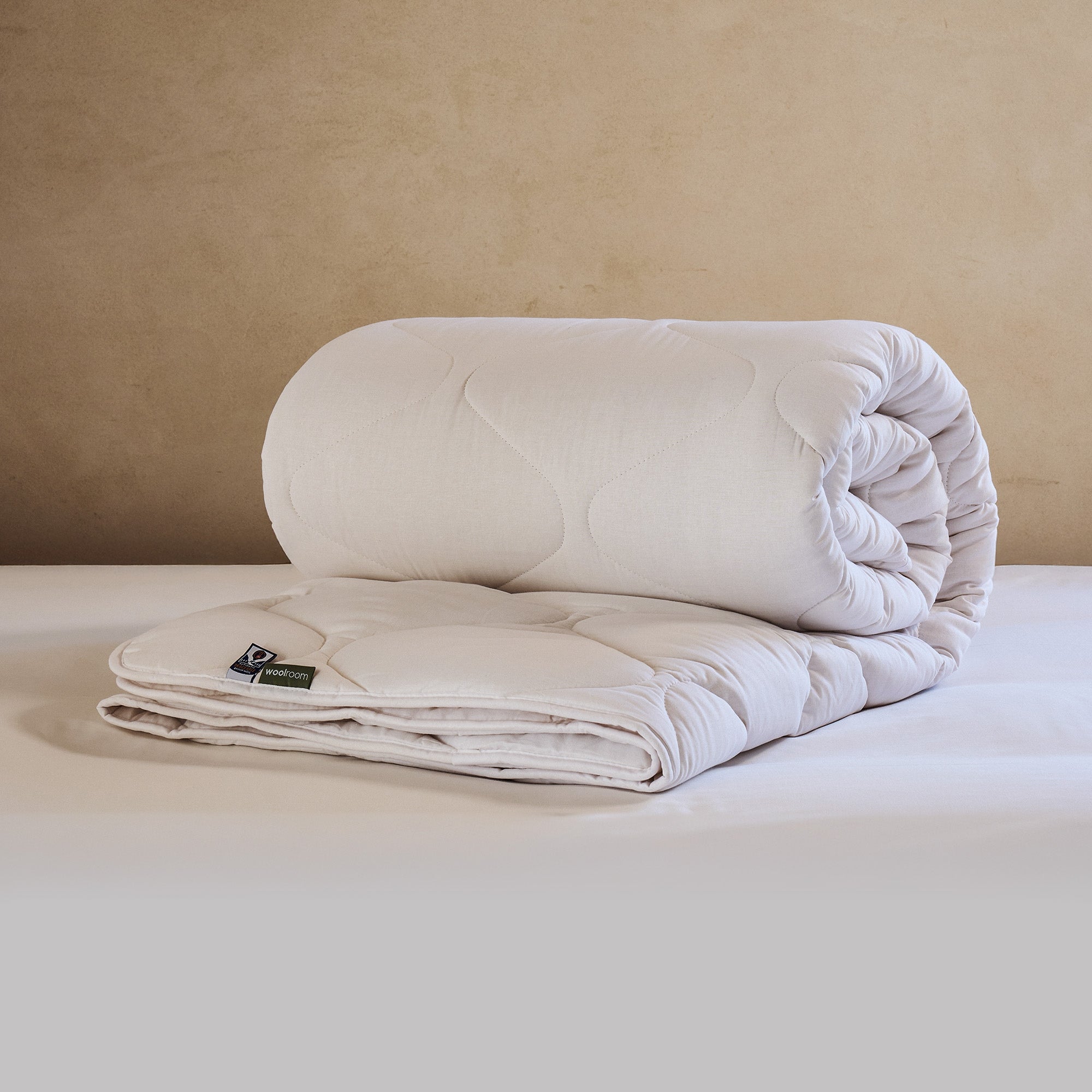
Wool duvets are known for their durability and ability to maintain consistent performance over time.
The fibres are naturally crimped, acting like a spring that recovers after compression rather than remaining flattened. Wool is also highly effective at absorbing and releasing moisture vapour, helping to keep the sleep environment dry and balanced.
Allergens and mould tend to thrive in environments that are consistently moist and warm. By helping to manage moisture more effectively, wool can make this kind of environment less likely to develop.
This combination helps the duvet retain its loft, breathability and comfort for longer.
Why Duvet Filling Matters For Lifespan
The way a duvet ages is closely linked to how its fibres behave.
In general, fibres that can breathe and manage moisture effectively are better able to maintain their structure, loft and comfort over time. Those that struggle to release moisture may gradually become denser, flatter and less effective.
Research into bedding materials, including a , has shown that different fibres behave very differently when it comes to temperature regulation and moisture management.
In controlled testing, wool was found to move moisture over 100% faster than synthetic alternatives, and significantly faster than feather and down duvets. This is important because moisture build-up is one of the key factors behind a duvet’s decline in performance.
When moisture becomes trapped within the filling, it can lead to:
- Reduced loft
- Heavier, denser filling
- A drop in breathability
- Less effective temperature regulation
Over time, this affects how the duvet feels and performs night after night.
Signs It’s Time to Replace Your Duvet
Even a well-made duvet won’t last forever. The key signals you may need to buy a new one – whether it’s before or beyond the recommended five-year mark – are:
- A loss of warmth
- Flattened or uneven filling that doesn’t recover when fluffed
- A feeling of dampness or lingering odours
- Increased allergy symptoms
- Visible wear and tear, such as thinning fabric or filling escaping
When your duvet no longer feels as comfortable as it once did, it may not be performing as it should.
How to Increase Your Duvet’s Lifespan
- Use a breathable duvet cover to prevent moisture being trapped
- Air it regularly by removing it from the duvet cover and hanging it on the washing line, to release moisture
- Avoid over-washing, which can damage the filling
- Follow the care instructions for your specific duvet
- Store it in a breathable bag when not in use
Choosing a Duvet That Lasts
If you’re looking for a duvet that will last, it’s worth thinking about the filling and how long it’ll maintain its:
- Loft
- Structure
- Breathability
- Ability to regulate temperature
These are the qualities that support your comfort over time – and ultimately determine how long a duvet continues to feel its best. A well-made duvet should support your sleep for years to come. Choosing the right materials can make a huge difference to the quality of your sleep.
If you’re considering a longer-lasting option, you can explore our range of , each filled with fully traceable, 100% British wool.