Key Takeaways
- Down and synthetic comforters insulate but can't adapt to temperature changes—wool does both, making it better suited to spring's unpredictable nights
- Woolroom wool comforters come in light, medium, warm, and all-season weights across three collections, so you can match your fill to your climate and sleep style
- Spring is also a good time to swap heavy winter sheets for lighter cotton or linen, which complement wool's natural breathability
With temperatures warming, people are throwing open windows, pulling out patio furniture, and digging in the linen cupboard for lighter-weight bedding. But there’s one seasonal bedding swap that most people get wrong—the comforter.
Most people use a warmer option in the winter, a lighter option in the spring, and something even lighter—maybe just a sheet—in the hot summer months. The swap-it-out approach becomes a real headache in the spring, when the weather can fluctuate dramatically over the course of a single day—and even more so overnight. Down and synthetic comforters can’t adjust. But wool can. Thanks to its natural fiber structure, wool responds to changes in body temperature and moisture levels all night long. That makes it genuinely useful not only in unpredictable spring weather, but year round. Spring just happens to be when wool really shines.
If you’re gearing up for the spring bedding switch, this complete wool guide is a great introduction to nature’s smartest fiber for sleep.

Why Spring Bedding Feels Complicated
Blame Mother Nature. Spring temperatures can fluctuate wildly. A week of weather mild enough to crack the window at night can be interrupted by a cold snap that has you reaching for an extra blanket and wishing for warmer pajamas. Most people opt for the heavier bedding to avoid running the risk of swapping it out and shivering awake in the middle of the night. But that’s really only an issue when you’re sleeping with materials that don’t multitask well.
Take down. It’s wonderfully insulating, which is great when it’s chilly. But when temperatures warm, down’s inability to breathe and wick moisture often lead to overheating. And once you’re too warm, sleep suffers. It’s not just what’s happening weather-wise, either. Body temperature fluctuates as part of a normal sleep cycle, and materials that interfere with the body’s ability to warm and cool also tend to interfere with sleep.
Wool's Secret: It Works Both Ways
Wool has a persistent reputation as a cold-weather fiber. The general association is warm sweaters and thick socks. And it’s not wrong! Like down, wool has impressive insulating properties. But that’s only half the story, and it’s why too many people either pack away their wool comforter for half the year—or don’t realize that wool bedding is even an option.
In the world of natural fibers, wool is uniquely temperature regulating. It has a coiled structure that creates countless air pockets, which hold onto body heat or allow it to dissipate as you warm up. At the same time, wool fibers actively manage moisture. As your body temperature rises during sleep, wool absorbs and releases that extra warmth and moisture. Individual wool fibers can absorb up to 30% of their own body weight in moisture, without becoming heavy or damp. As you cool down, the moisture is released. This passive evaporation is ongoing, all night long, and it’s not something you’re likely to notice—you just sleep peacefully.
That’s what makes a wool comforter (along with wool pillows and wool mattress pads) ideal for spring. It’s insulating when temperatures drop and breathable and moisture-wicking when it’s warm—scenarios that are likely to occur on the same night this time of year.

Making the Switch
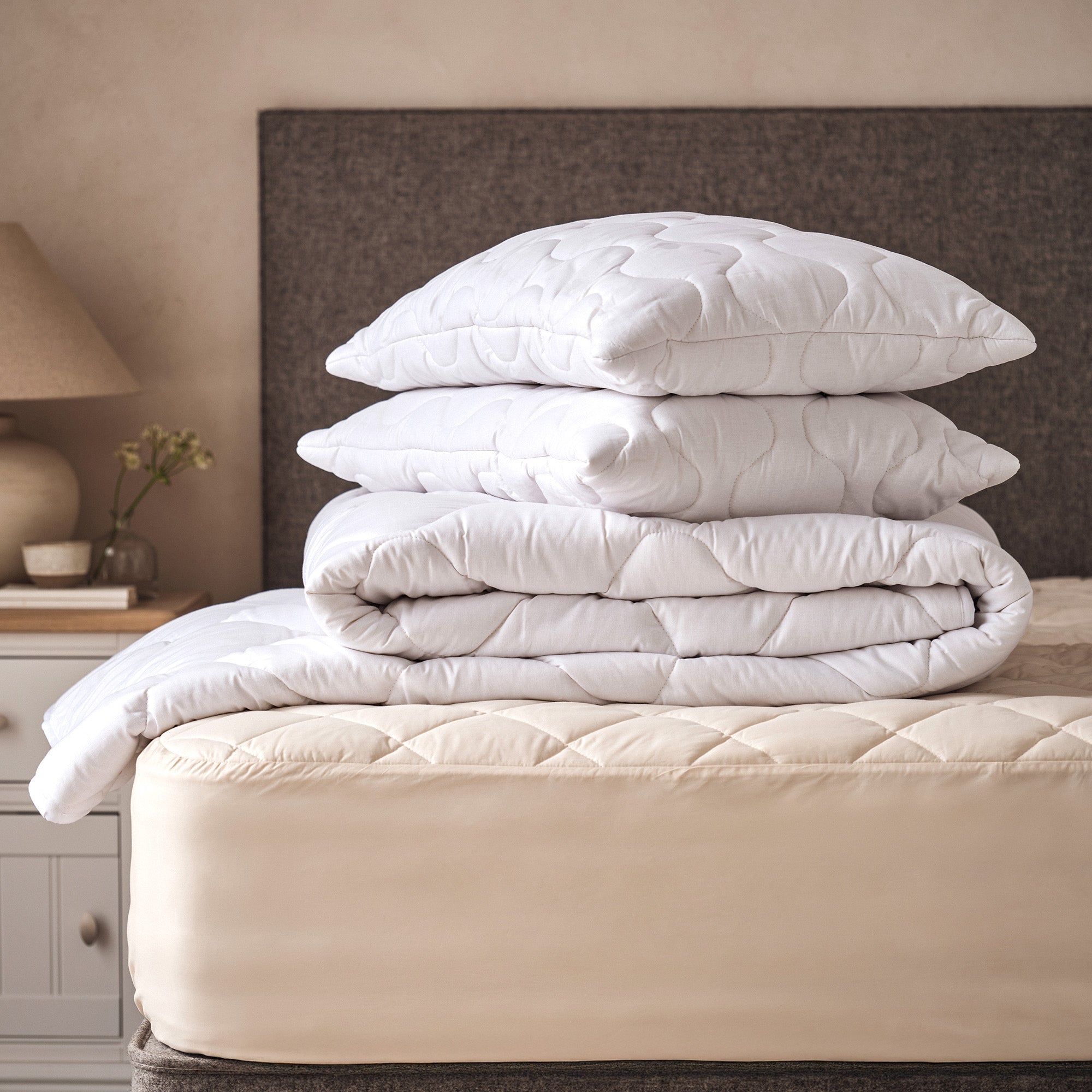
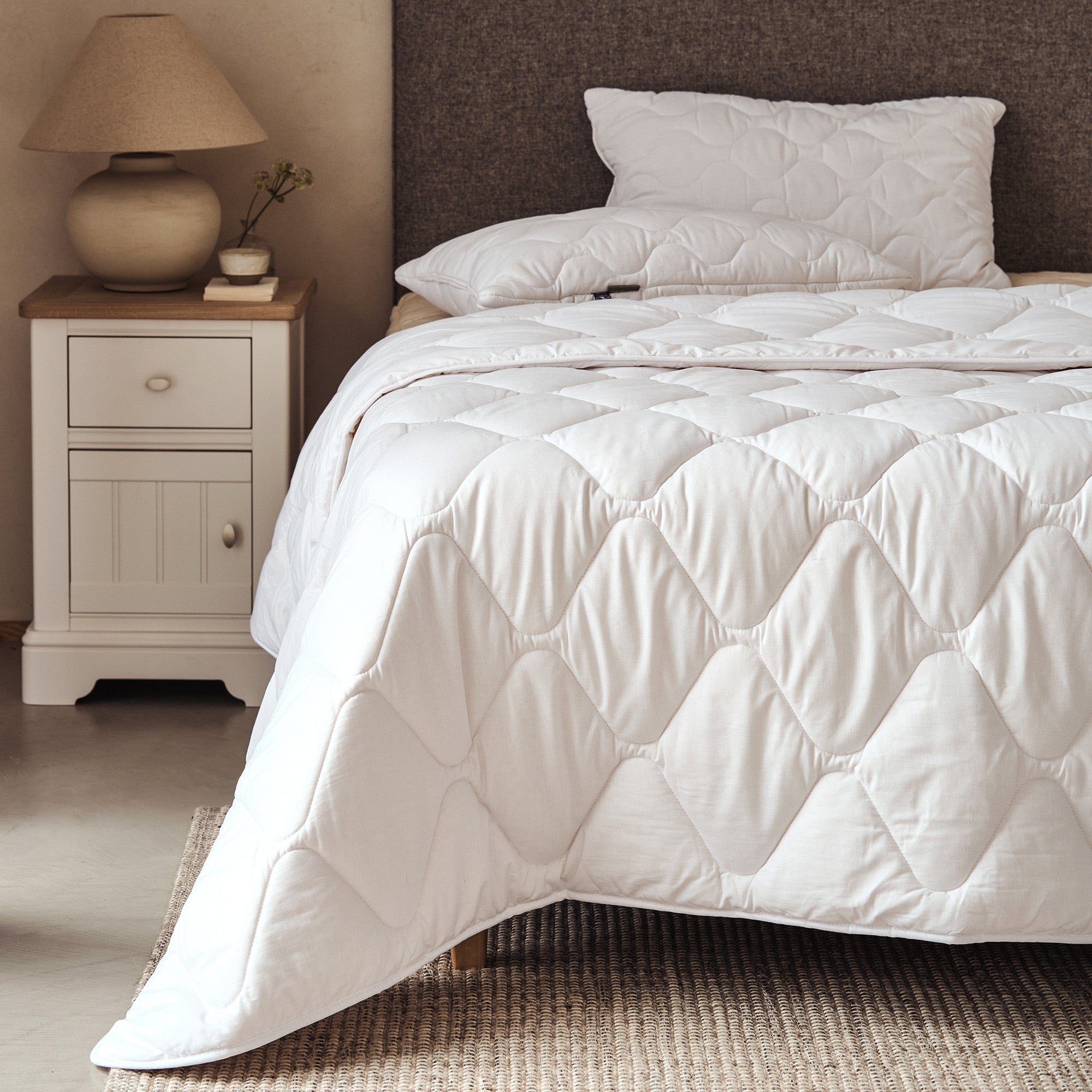
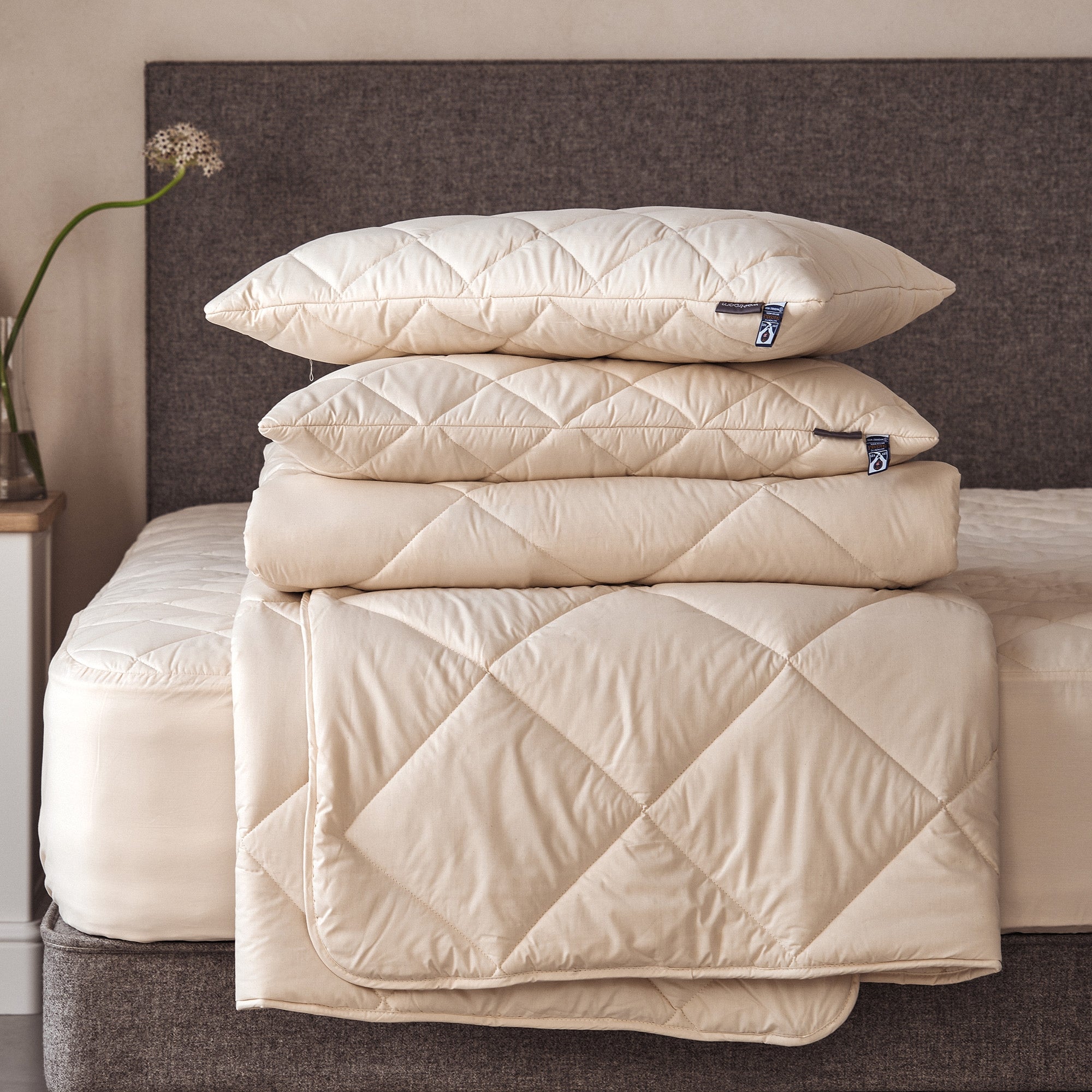
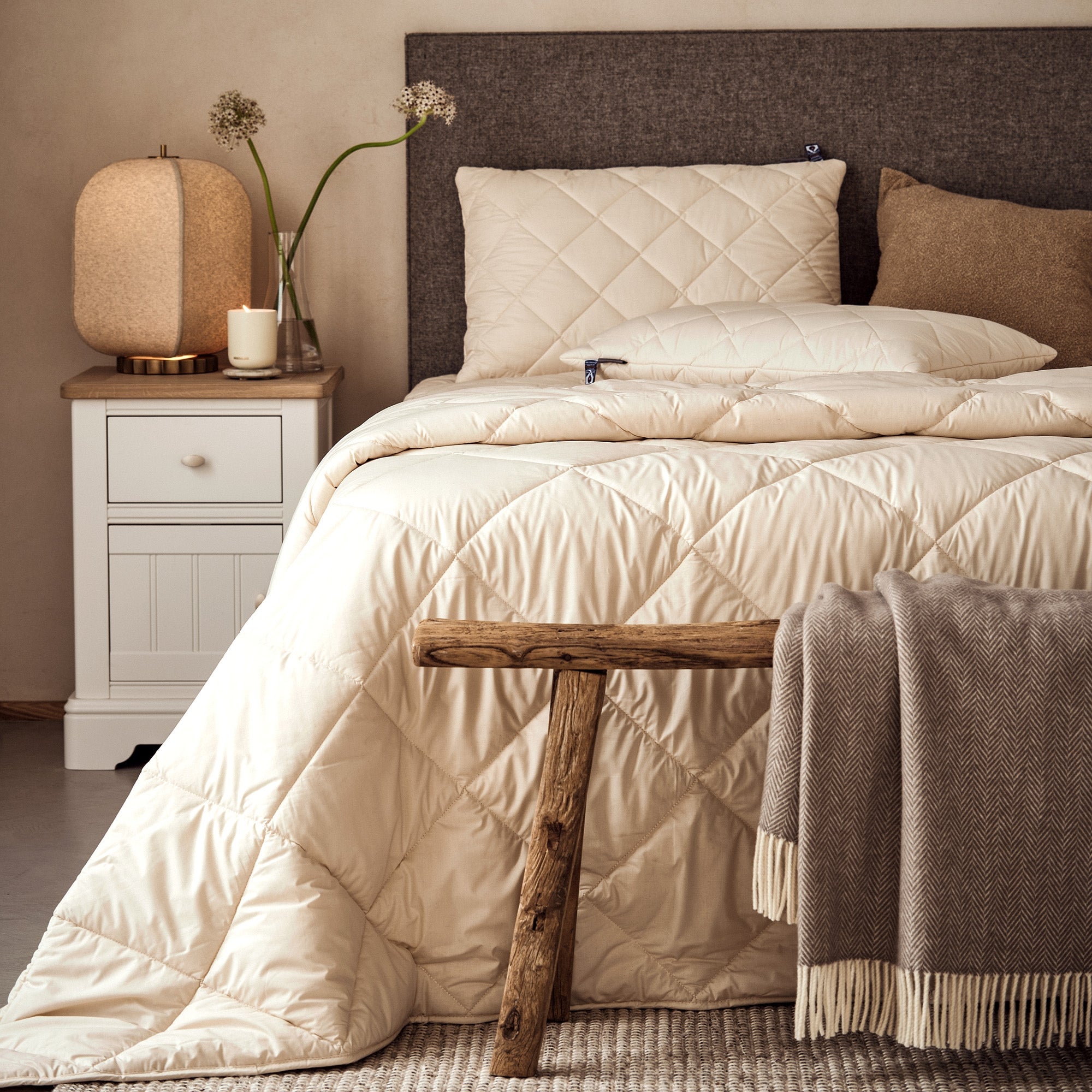
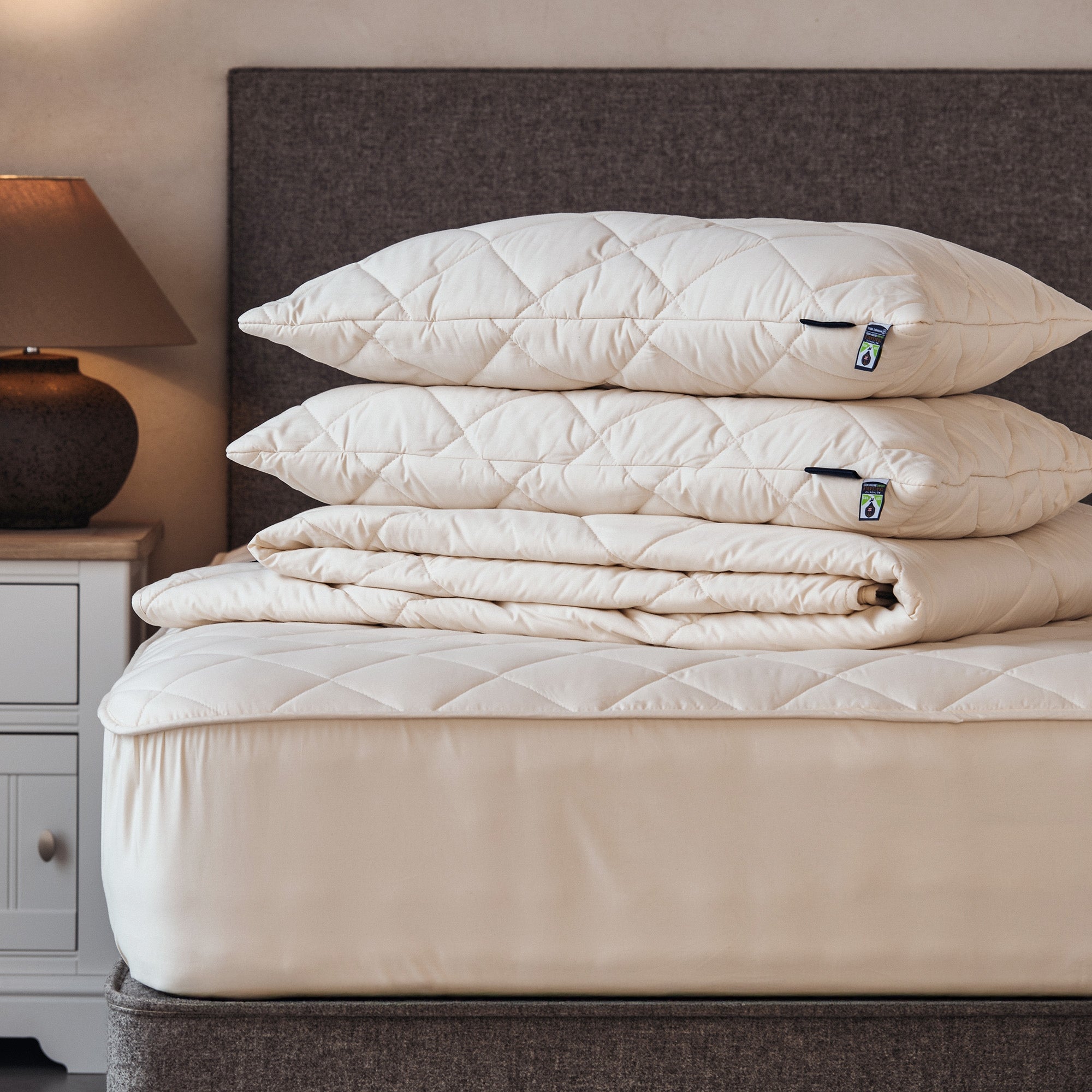
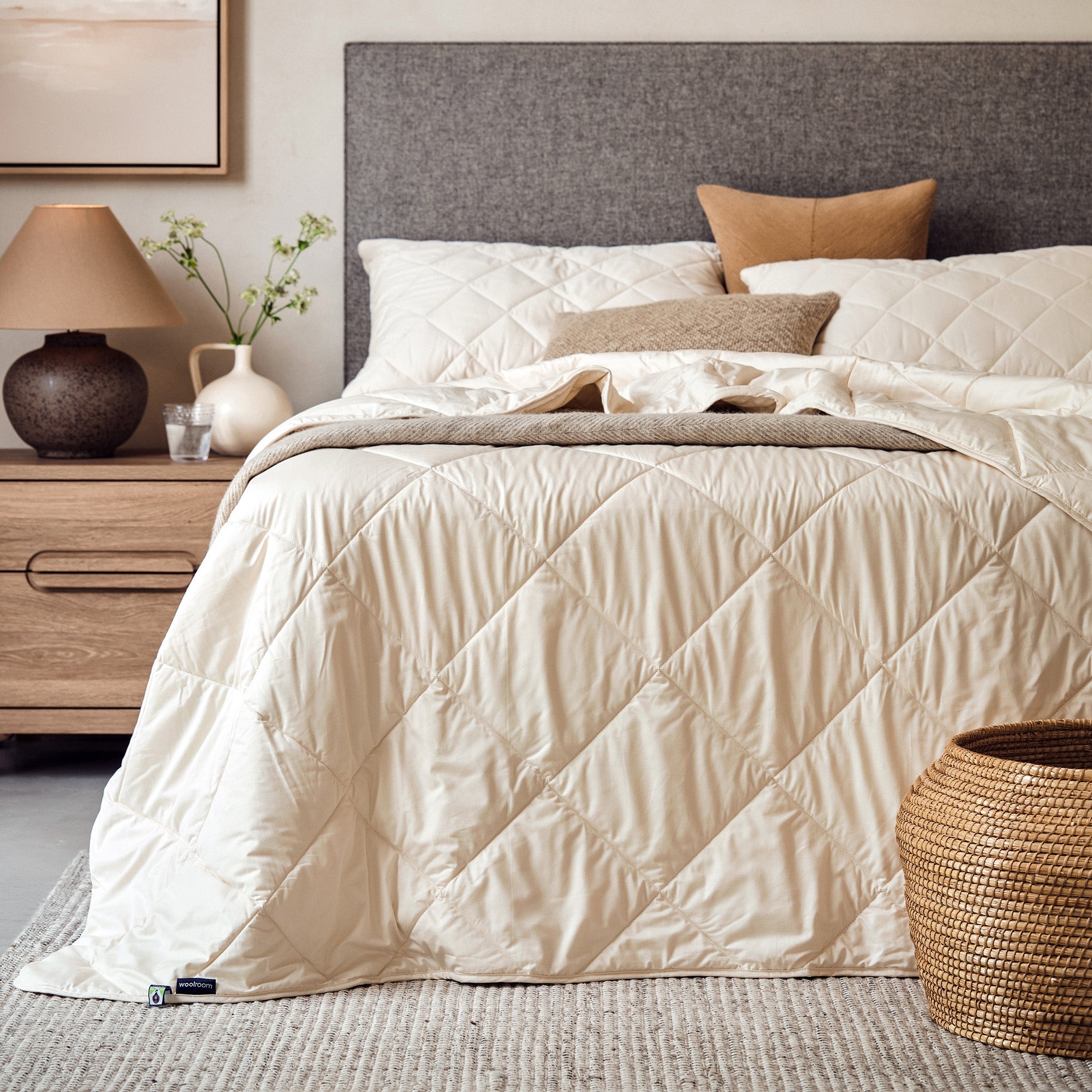
If you’re moving to wool for the first time, choosing a comforter is straightforward. Woolroom’s wool comforters are available in three collections: Classic, Deluxe Washable, and Organic Washable. Each collection includes multiple fill weight options:
- Light fills are suitable for room temperatures above 68° F.
- Medium fills are appropriate for temperatures between 60 and 68° F.
- Warm fills are best for room temperatures between 48 and 60° F.
Our Deluxe Washable and Organic Washable collections include a 3-in-1 all-season comforter. It’s made of two comforters snapped together, making it suitable for all climates and room temperatures. It’s a great option for people who don’t want to deal with seasonal swaps at all. For people making the spring switch, light or medium weights are a good choice, especially if your bedroom runs warm or you sleep hot.
All Woolroom comforters are OEKO-TEX certified—the first and only wool bedding retailer to hold this certification—and each is made with authentic traceable British wool. Our organic collection is certified organic through the Global Organic Textile Standard.
In addition to the comforter change, spring is a good season to change out sheets. Swap heavy or brushed fabrics for lighter, more breathable weaves. Wool pairs beautifully with cotton and linen. Both fabrics complement wool’s breathability and moisture management properties.
Sleep Better This Spring
Spring bedding can be hard to get right. Fluctuating weather is usually a given, and most comforter fills, including down and synthetic, aren’t equipped to handle those changes. It means you’re left with a choice—too warm, or not warm enough?
A wool comforter is an elegant solution. It’s not a lighter version of what you already have. Wool fibers themselves respond to conditions as they change. That includes your bedroom temperature and your own body temperature. It’s a meaningful difference, and once you’ve spent a few unpredictable spring nights with wool, it’s really hard to go back.

Frequently Asked Questions
Is a wool duvet too hot for summer?
No. Wool fibers breathe well, regulate temperature, and wick moisture, so they’re a great choice for year-round comfort. By adjusting to your body temperature, wool helps create a stable microclimate that contributes to more restorative sleep.
Is a wool comforter better than down?
Wool is insulating like down, but it’s also breathable and it manages moisture much more effectively. That makes it suitable year-round. Because it stays drier, wool also resists dust mites and other allergens, which contributes to a cleaner sleep environment.
Is a wool comforter good for hot sleepers?
Yes, wool is naturally temperature regulating. It actively responds to your body’s temperature fluctuations, retaining heat when you’re cold and releasing heat and moisture as your temperature rises.