Key Takeaways
- Woolroom sources all its wool through British Wool, the farmer-owned cooperative founded in 1950.
- Every fleece is graded by hand at one of eight UK depots, into almost 120 grades.
- Woolroom buys at auction every two weeks, adding each contributing farm to its traceability database.
- A QR-coded chain of custody follows the wool from farm to bale—the backbone of Woolroom's Wool ID®.
- The Shepherd's Crook mark verifies wool as genuinely British, and traceable wool earns farmers a premium.
Most wool bedding brands know whether their wool is British. But very few can tell you which farm it came from, who graded it or what happened between the sheep and the sewing machine. Woolroom can—and the reason is British Wool.
This farmer-owned cooperative collects, grades, markets and sells British wool on behalf of UK sheep farmers. Officially the British Wool Marketing Board, it was established in 1950 to give farmers a collective route to market instead of leaving them to bargain on their own. Today, British Wool is the only organization in the world handling every stage of the fleece journey.
For Woolroom, British Wool plays an intrinsic role by connecting the farmer to the buyer, applying the grading expertise we rely on, and maintaining the chain of custody that turns "British wool" from a marketing phrase into a verifiable fact.
Wool: Britain's Oldest Industry
Wool is widely regarded as Britain's oldest industry, and it's not an exaggeration to credit the fiber with building this country to some degree. Wool's production, processing and trading may well be the first commercial industrial enterprise in the nation's history, serving as the backbone of the medieval economy. Kings taxed its export, and Norwich, York and Coventry made their wealth on it. In 1327, King Edward III introduced the Woolsack—a seat stuffed with wool—to the House of Lords, and it's still there today, a permanent reminder of where the country's money came from.
In 1957, British Wool brought the Bowen shearing technique to Britain. It remains the standard method on farms today. The organization's grading system still relies on the eyes and hands of people who have done it for decades. British Wool marked 75 years in 2025, and its Bradford headquarters in West Yorkshire sits at the heart of the country's wool industry.
When we talk about heritage at Woolroom, this is what we mean: a working supply chain with centuries of accumulated skill behind it.
From Fleece to Finished Product
The journey of British wool begins on farms throughout the UK.
1. Shearing and collection
Sheep are shorn once a year, usually between May and August, for their comfort and health. Farmers pack their fleeces into official British Wool sheets and deliver them into the collection network—eight grading depots across the UK, supported by a wider network of collection locations and haulers reaching every corner of the country, from the Hebrides to the Isle of Wight.
The wool is accounted for from the moment it arrives. Every consignment a farmer delivers receives a unique document number that stays with it through the entire process.
2. Grading: where quality is decided
This is the stage that matters most to us, and the one almost nobody outside the industry sees.
Every fleece is assessed by hand and assigned a grade. British Wool grades into almost 120 different fleece grades, with further grades for lamb's wool, organic wool and traceable wool. Graders assess:
- staple length
- fineness
- crimp
- handle
- luster
- color
- strength
- uniformity
- overall style and quality
Those grades sit within six principal British wool styles: Fine, Medium, Cross, Luster, Hill and Mountain. That range exists because the UK has an unusually broad spread of sheep breeds and growing environments—more diversity than anywhere else on earth.
That's the thing about wool: it's not a standardized synthetic material. It's a natural fiber, and its characteristics vary by breed, by individual animal, by environment and by season. Two fleeces off the same hill in different years can be quite different.
Grading is what turns that variability into something usable. By separating characteristics instead of averaging them, British Wool can direct each fiber toward the application it genuinely suits: mountain wool into flooring and insulation, finer and higher-crimp wool into the products that sit against your skin.
Grading isn't a quality-control exercise added to the end of the process. It's how value is created, and it's the reason we source this way.

3. Independent testing
Before wool is sold, it's independently tested for micron, color and dry yield against international standards.
This is the part that separates British wool from most natural-fiber supply chains. It means we aren't buying on description or reputation. We're buying against measured technical data. We can specify wool not just by where it came from, but by what it actually is.
For a product that has to insulate, breathe, wick moisture and stay resilient for years, that distinction is everything.
4. The auction
Graded, tested lots are sold through a program of auctions running throughout the year, connecting British farms to the global textile trade—flooring, furnishings, apparel and bedding.
British Wool deliberately feeds the annual clip onto the market progressively instead of releasing a full year's production at once. That controlled approach helps maximize value for members and manages exposure to global price volatility.
Woolroom's wool is bought at auction every two weeks. Each purchase brings a new set of graded lots into our supply chain, and every farm that contributed to those lots is added to our traceability database. That rhythm keeps our wool current rather than sitting in long-term storage, and it means the list of farms behind our products keeps growing.
5. Payment back to the farm
Money from sales returns to British Wool's farmer members, with payments reflecting the weight and quality of wool supplied and the average price achieved for that grade across the season.
Three Levels of Traceability
More and more, knowing a material is "British" is just the starting point. British Wool's system offers provenance at three places:
- British farm provenance. All of the wool British Wool handles comes from British farms. It doesn't grade or sell wool from anywhere else. That's the foundation, the assurance that the fiber is genuinely British, not sourced internationally and simply marketed as British.
- Regional traceability. Because wool passes through one of eight regional grading depots, it can be traced to the part of the country it came from—Scottish borders, Welsh hills, West Country.
- Farm-level traceability. This is the most detailed level. Individual bales can be traced back to the farms that contributed wool to them, creating a direct line between a finished product and the people who produced the fiber.
How a Bale is Actually Traced
The system is built into the physical movement of the wool.
- Delivery. A farmer's consignment receives a unique document number, recorded on their Receipt of Wool.
- Grading. Wool is sorted into skeps, each carrying a unique data card that keeps it connected to the right farmer.
- Weighing. Data is captured against the farmer's account.
- Baling. As wool from different farms is combined by grade, the tracking information travels with it. Each finished bale receives its own identification code.
Underpinning all of it is British Wool's investment in a QR-code-based traceability system, so origin information survives grading, baling and auction instead of evaporating the moment individual fleeces enter the commercial supply chain. It's an old agricultural system with a modern digital record running alongside it.
We'll clarify something that's often glossed over: a bale weighs roughly 770–880 lbs (350–400kg) and usually contains wool from several farms. Traceability doesn't mean one bale equals one farm. It means the identities of the farms contributing to that bale are retained, not lost when the wool is pooled by grade.
That's what powers Wool ID®. Every Woolroom product carries a lot number on its care label and a QR code. Scan it and you can read about the farms, the farmers and the flocks behind your wool: Cracrop Farm in Cumbria, Boundary Farm in Rutland, Manor Farm in Dorset, Llanfechan in Wales, and a growing list of others.

Traceability Pays the Farmer
This isn't only a consumer benefit. Traceable wool commands a premium above standard auction prices, and that additional value is returned to British Wool's farmer members.
It creates a genuine link between what shoppers want to know and the people producing the fiber. You want to know where the wool in your comforter came from. We want to demonstrate responsible sourcing. And the farmer who grew that fleece is paid more because the market specifically asked for it.
Provenance becomes economic value, not just a story.
The Shepherd's Crook Mark: Your Verification
British Wool trademarked the Shepherd's Crook mark in 1970, and it's since become the established symbol of British wool provenance.
It matters because "wool" on a label tells you almost nothing. Wool can be imported from anywhere, blended with anything, and still be accurately described as wool. The Shepherd's Crook is a licensed mark that verifies the wool in a product is genuinely British—sourced through British Wool, from British farms.
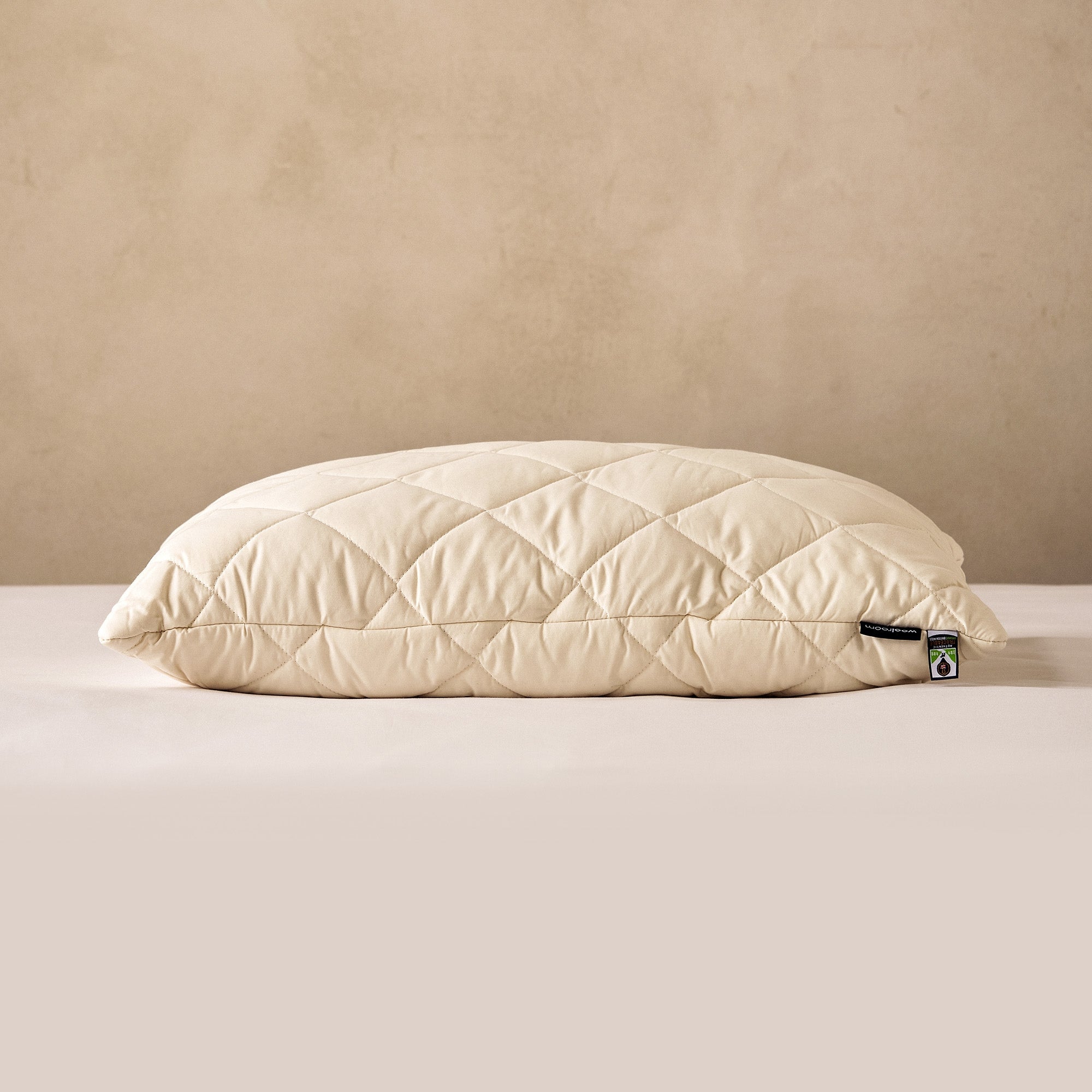
For you, it's a simple starting point when comparing products. Here at Woolroom, it means our claims are verifiable beyond our own say-so. Woolroom holds the Authentic Traceable British Wool certification alongside Authentic Traceable Organic British Wool for our organic washable collection (among other certifications).
More than a Wool Merchant
British Wool's role extends past collecting and selling fiber. It runs approved shearing and wool-handling training to keep those rural skills alive for the next generation — because the industry depends on far more than sheep and farms. It depends on generations of practical knowledge in shearing, handling, sorting and presenting wool correctly.
It also works to create demand, partnering with manufacturers, retailers and designers, and supporting initiatives such as the Campaign for Wool. Producing wool is only sustainable for farmers if there's a market for it.
Between the sheep and the finished product, British Wool provides the collection infrastructure, the grading expertise, the independent testing, the auction route to market, the promotion that creates demand, the training that preserves the skills, and the traceability that lets us tell you the truth about where your wool came from.
What It Means for Your Bedding
- Better performance. Grading and micron testing mean the wool in your comforter was selected for bedding, not simply available.
- Verified provenance. The Shepherd's Crook and Wool ID® are checkable, not adjectives.
- A fairer deal for farmers, since traceable wool earns a premium that goes back to the farm.
- A supply chain you can see, documented from shearing to sale.
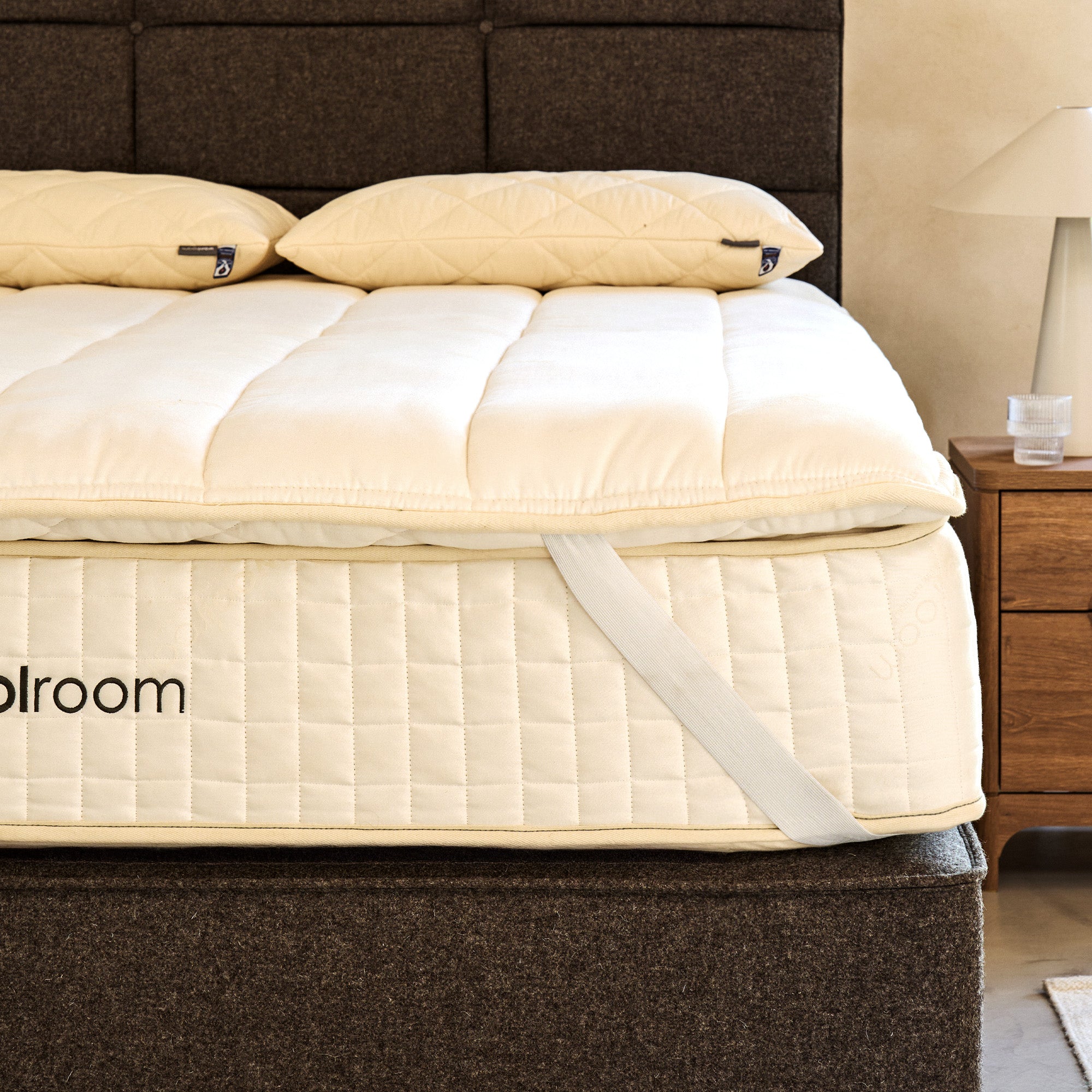
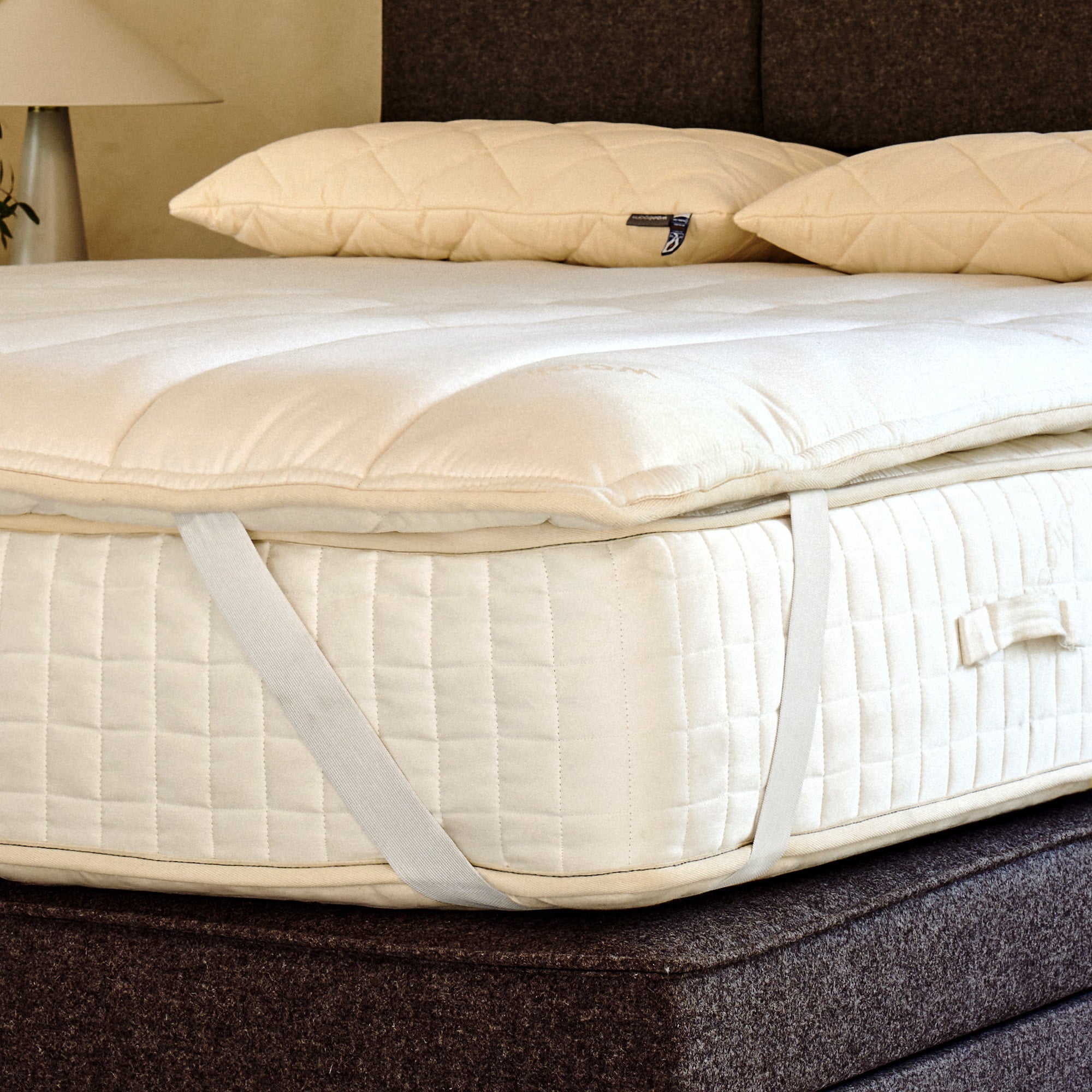
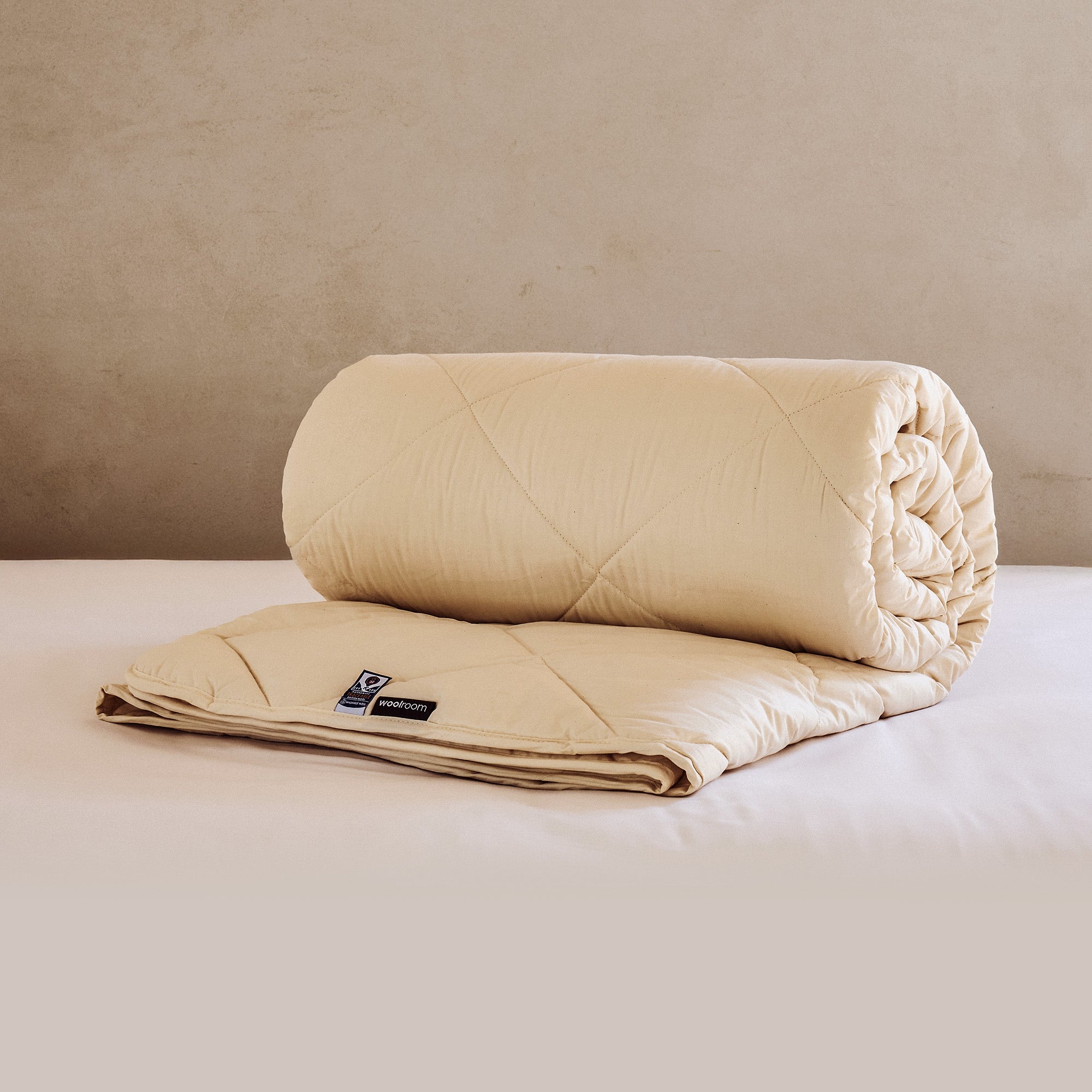
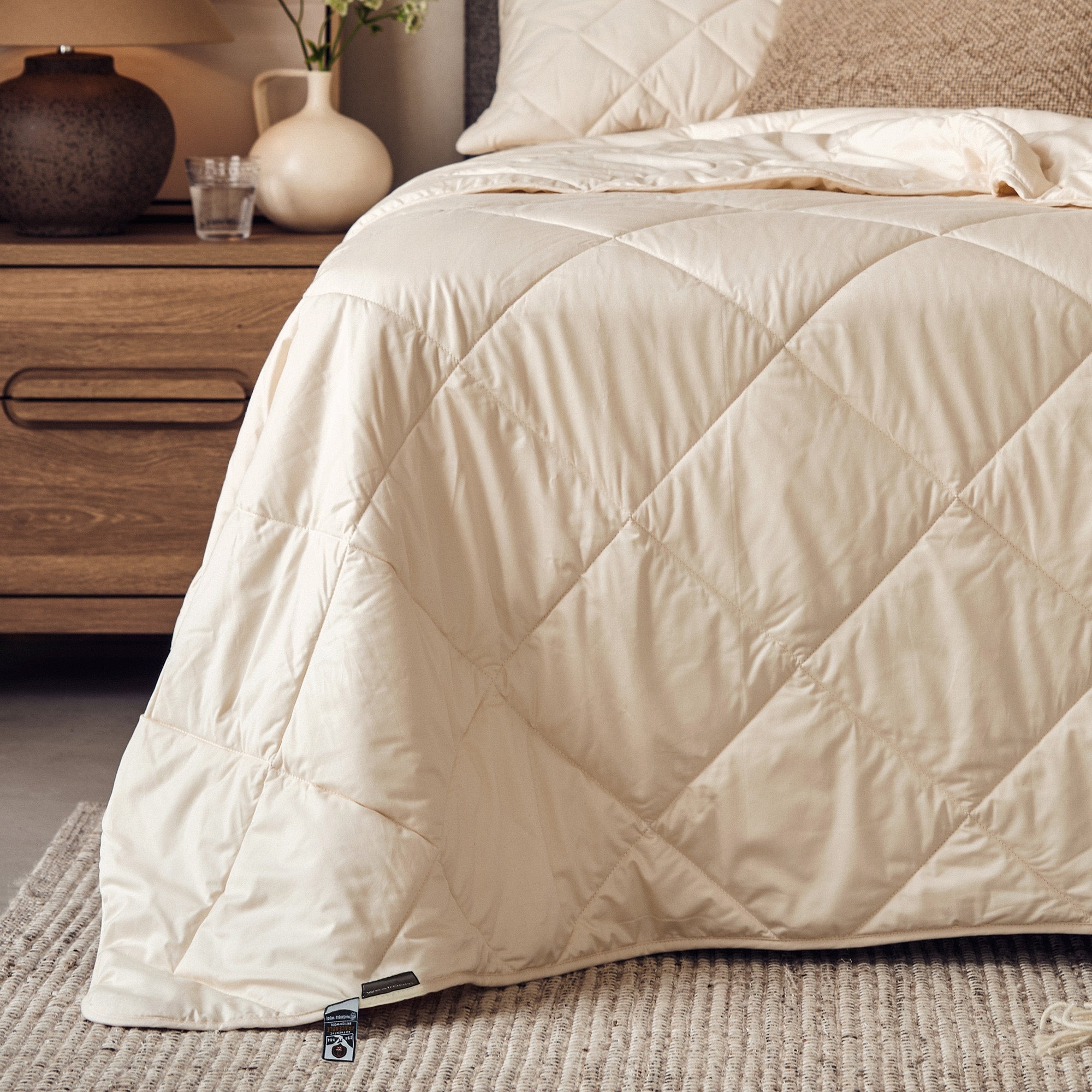
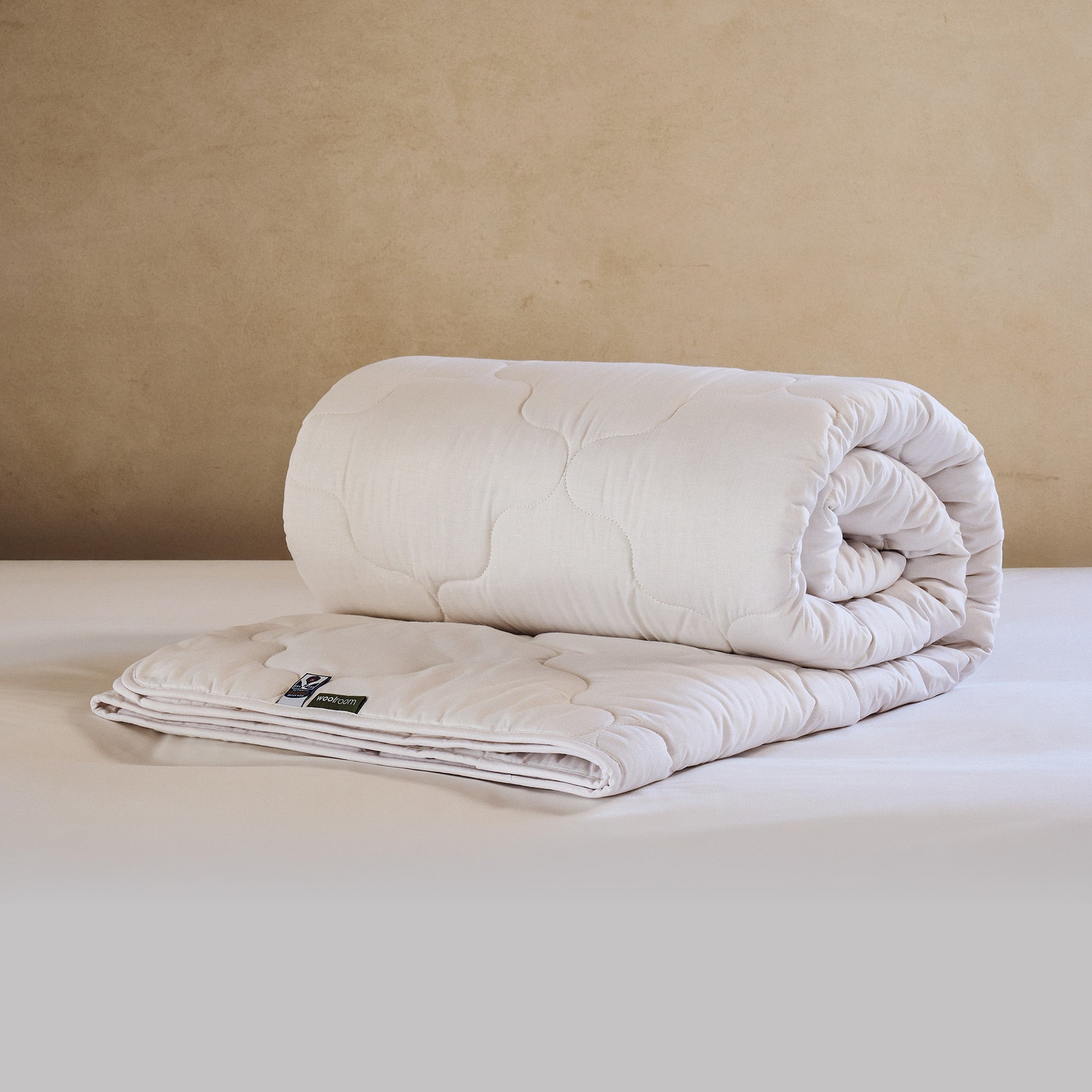
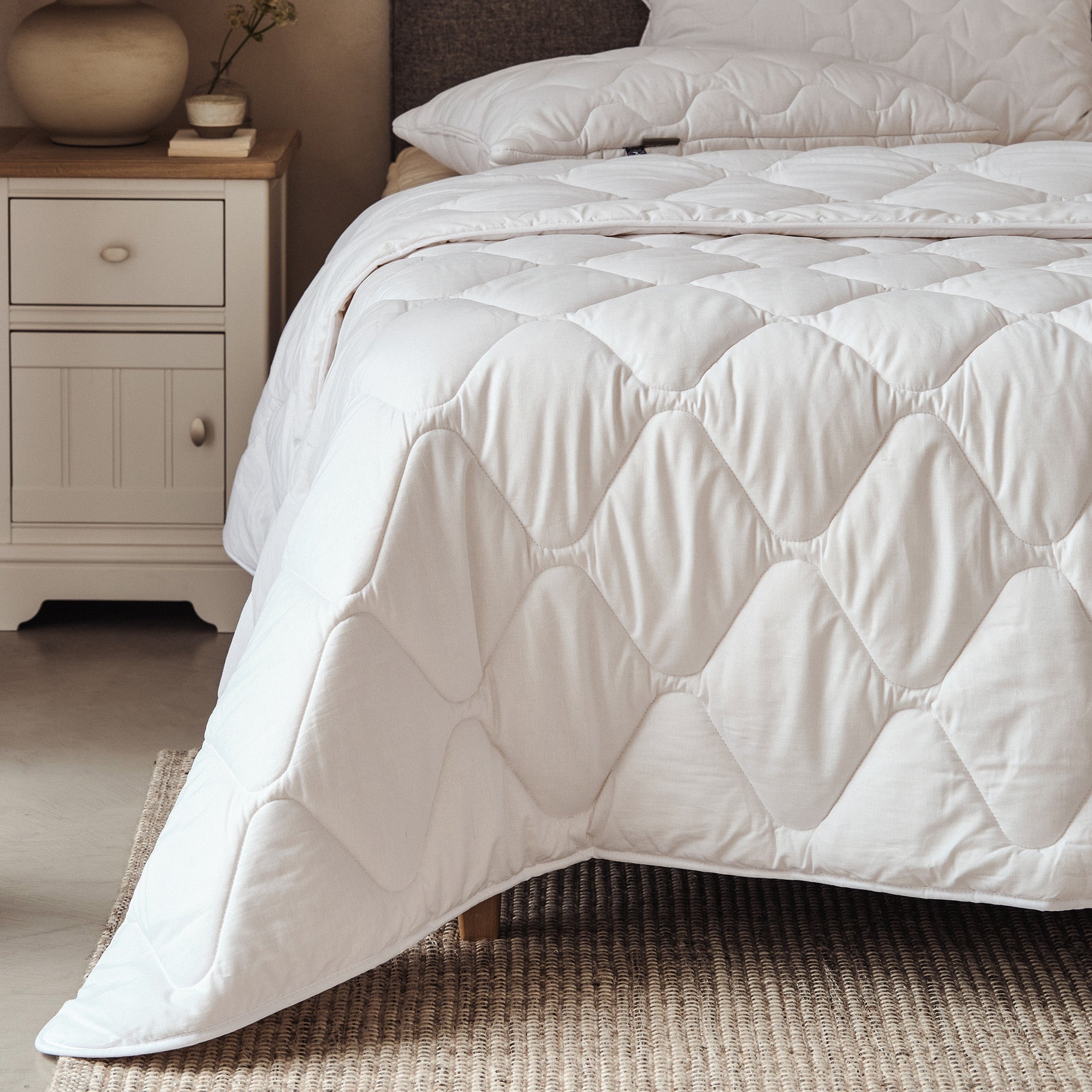
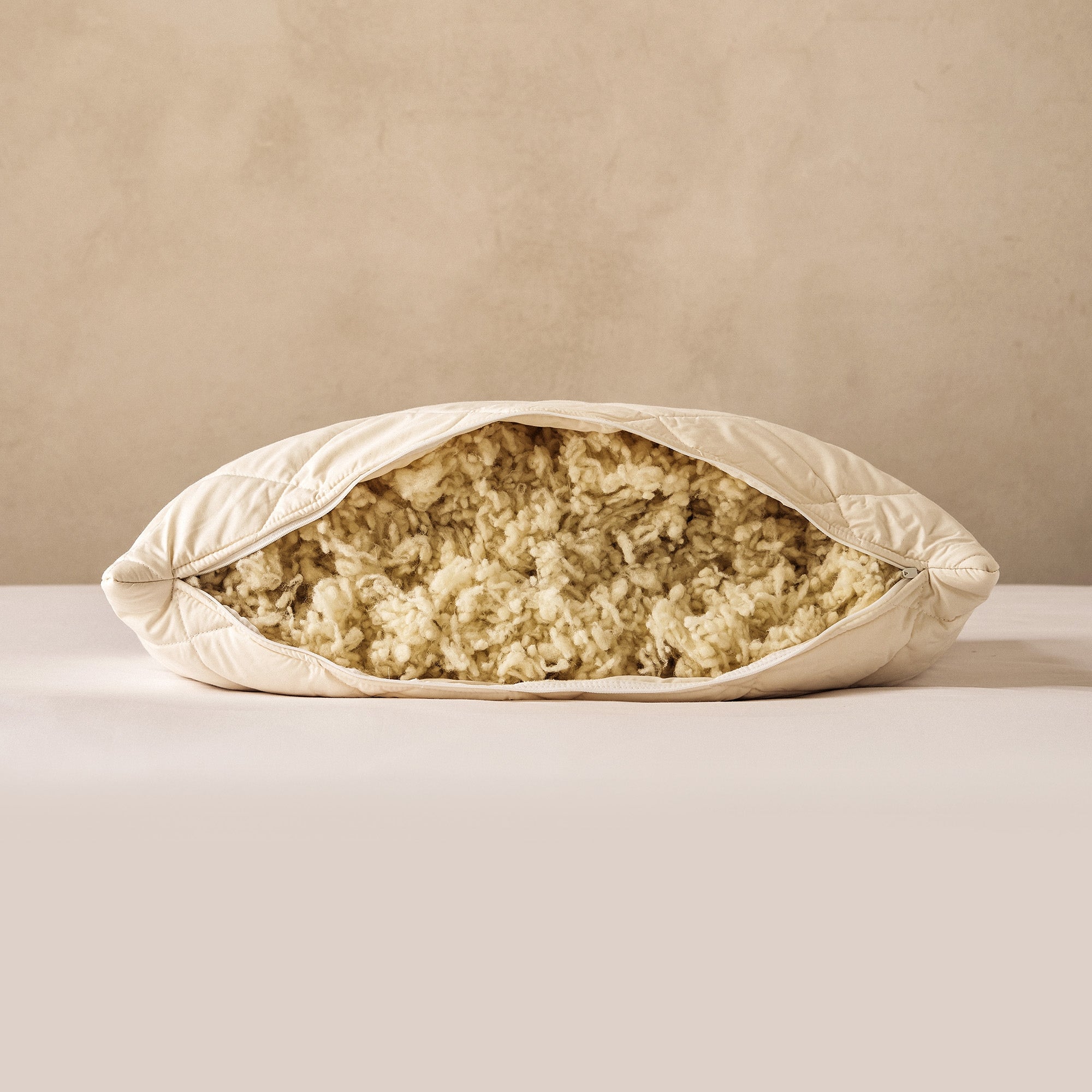
This is what behind every Woolroom comforter, pillow and mattress: a fleece from a named British farm, graded by hand, tested against international standards, and tracked every step of the way. It's not a claim about wool. It's a record of it.
Frequently Asked Questions
Where does Woolroom source its wool?
From British Wool, the UK's farmer-owned wool marketing cooperative. We buy graded, tested lots at British Wool auction every two weeks and add each contributing farm to our traceability database.
Who is British Wool?
British Wool— formally the British Wool Marketing Board—is a non-profit cooperative founded in 1950 and owned by its farmer members. It collects, grades, tests, sells and promotes fleece wool on behalf of UK sheep farmers.
How is wool graded?
By hand, at one of eight grading depots. Graders assess staple length, fineness, crimp, handle, luster, color, strength, uniformity and overall style, sorting fleeces into almost 120 grades across six principal wool styles: Fine, Medium, Cross, Luster, Hill and Mountain.
Is British wool tested?
Yes. Wool is independently tested for micron, color and dry yield against international standards before auction, giving buyers consistent technical data.
What is the Shepherd's Crook mark?
British Wool's trademark, launched in 1970, verifying British wool provenance. Licensed brands use it to signal certified British wool content.
Can British wool be traced to a specific farm?
Yes, and at the most detailed level. A bale usually contains wool from several farms, and British Wool's system retains the identity of every farm contributing to it, which is what allows Woolroom's Wool ID® to connect your product to real farms.