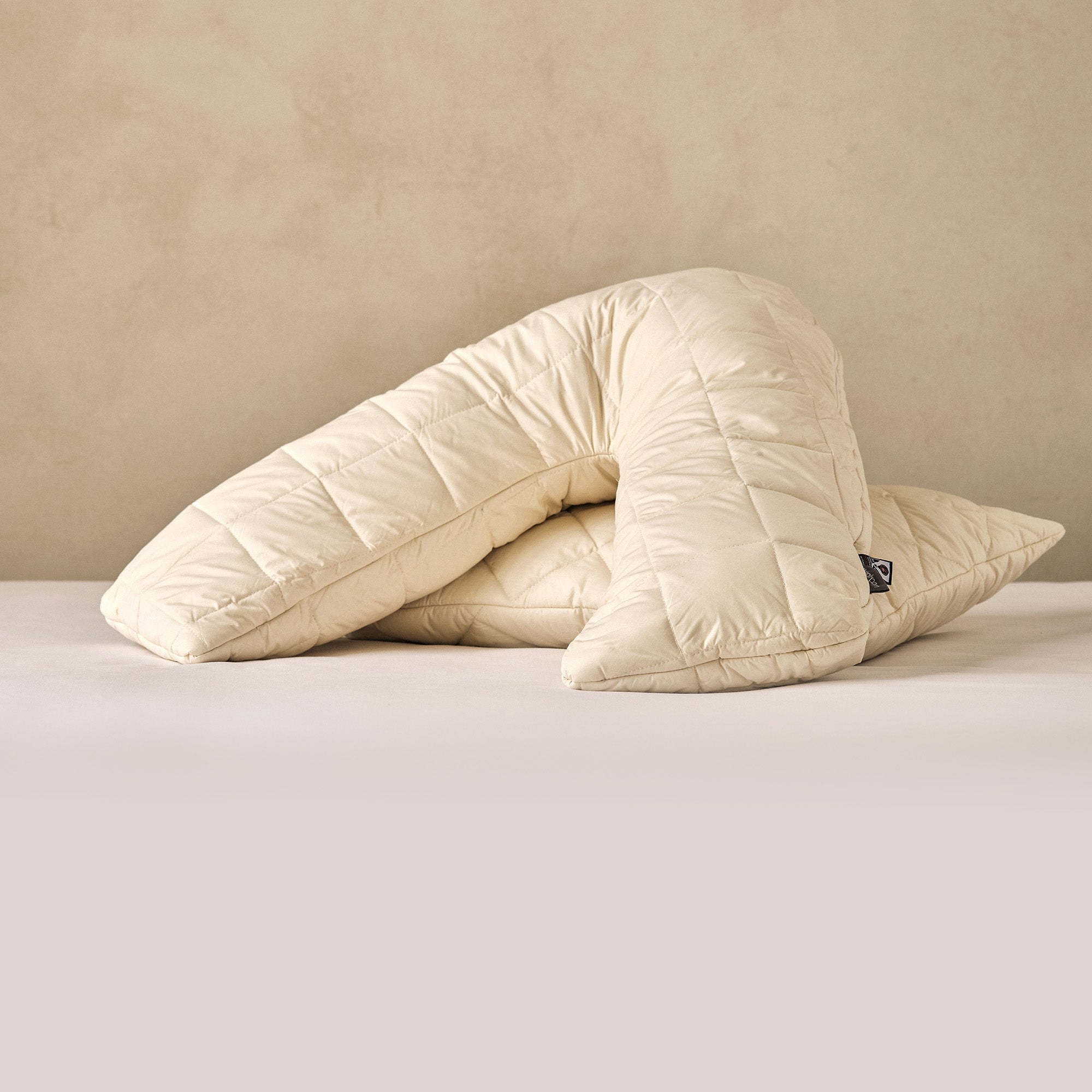
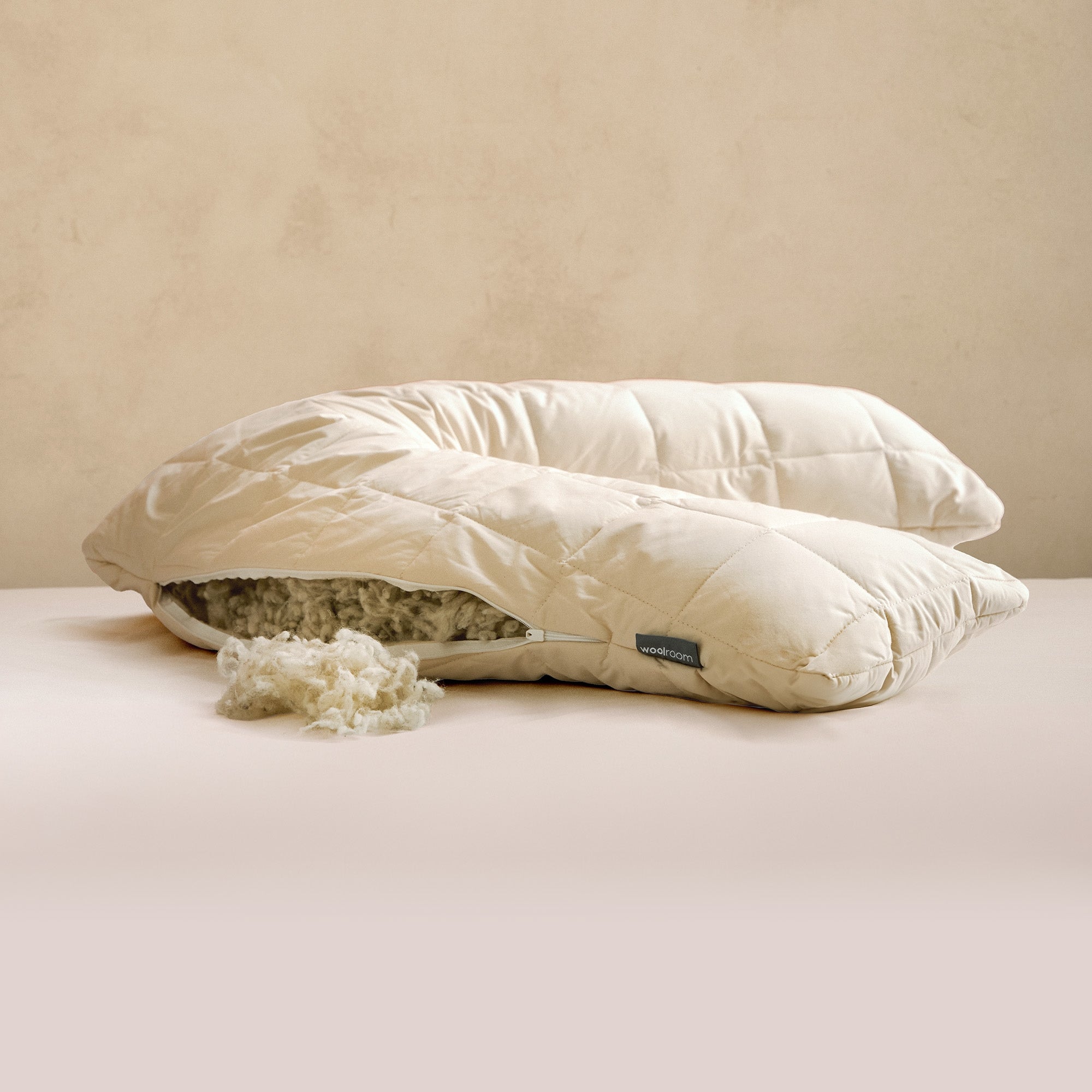
The World's Best Wool for Bedding
Key Takeaways
- Bedding asks more of a fiber than clothing does: crimp, resilience, loft and moisture management matter as much as softness.
- Britain has over 60 sheep breeds and a wider spread of growing environments than anywhere on earth.
- British Wool sorts fleece into almost 120 grades across six wool styles, so wool is selected for the specific job.
- Merino is unbeatable next to the skin; inside a mattress, resilience and recovery matter more than micron count.
If you ask most people to name the world's finest wool, they'll probably say Merino. And for a sweater, they're not wrong. But the qualities that make a wool fiber exceptional against the skin aren't necessarily the same qualities that make it exceptional inside a mattress or duvet. Bedding needs a fiber that maintains its loft, moves moisture away from the sleeper, allows air to circulate, and adapts as body temperatures fluctuate during the night.
It's a tall order. But Britain produces a wider range of wool than any other country on earth, and that range features those exact characteristics. That's why British wool is the best wool in the world for bedding.
Wool: Shaped by the British Landscape
For a relatively small space, Britain has a lot to offer its sheep. Flocks graze on the coast, in fertile lowlands, on windswept moors, and on exposed mountainsides. The climate is just as varied: wet, cool, windy, humid, and capable of changing in a single day.
The sheep here have been bred over generations to thrive in these conditions, and their fleeces deserve much of the credit. A sheep's fleece is like a working garment—it insulates without causing overheating, sheds rain and blocks wind, and adjusts to manage whatever the weather does next.
A mattress isn't that different. Its job is to maintain a stable, comfortable microclimate while conditions like your body temperature, your bedroom temperature, and the seasons outside shift.

Britain's Flocks
The real advantage in Britain isn't a single celebrated breed. It's the diversity. Across the United Kingdom, there are over 60 recognized sheep breeds, along with numerous crossbreeds. Different breeds produce fibers with different diameters, staple lengths, crimps, strengths, resilience, uniformity, luster, and handles. British Wool grades the wool according to these physical characteristics—not according to breed—and recognizes almost 120 fleece grades across six principal wool styles: fine, medium, cross, luster, hill, and mountain.
Mountain wool would never be used for a garment worn against bare skin—and that's the point. The characteristics that rule out a fiber for fine knitwear can make it outstanding as a structural natural filling. Manufacturers are free to select and combine different wools to balance softness, resilience, loft, insulation, and durability against what a specific product actually needs to do.
What Bedding Needs from a Fiber
Wool has been used to make bedding more comfortable for centuries, and that's entirely due to inherent characteristics of the fiber itself.
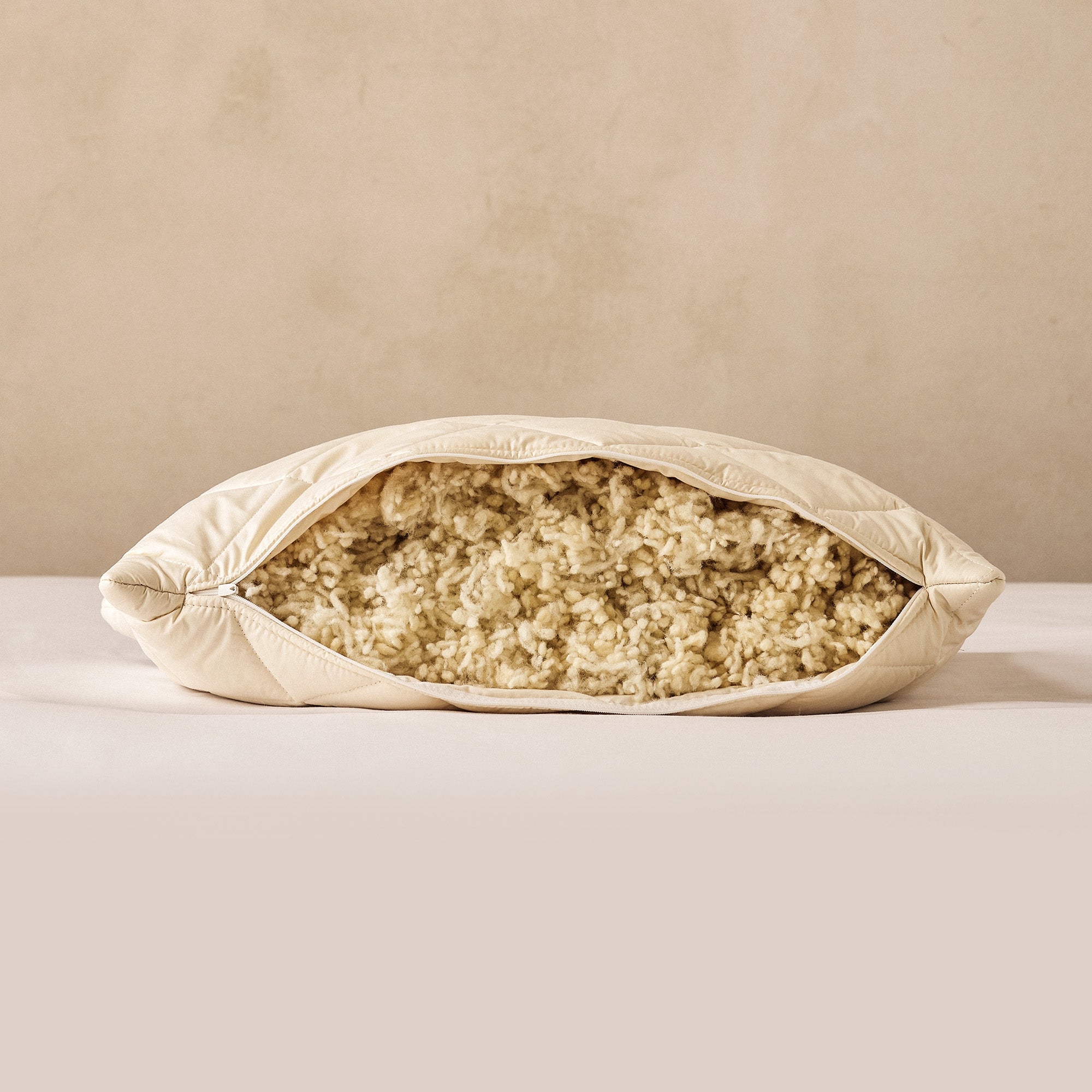
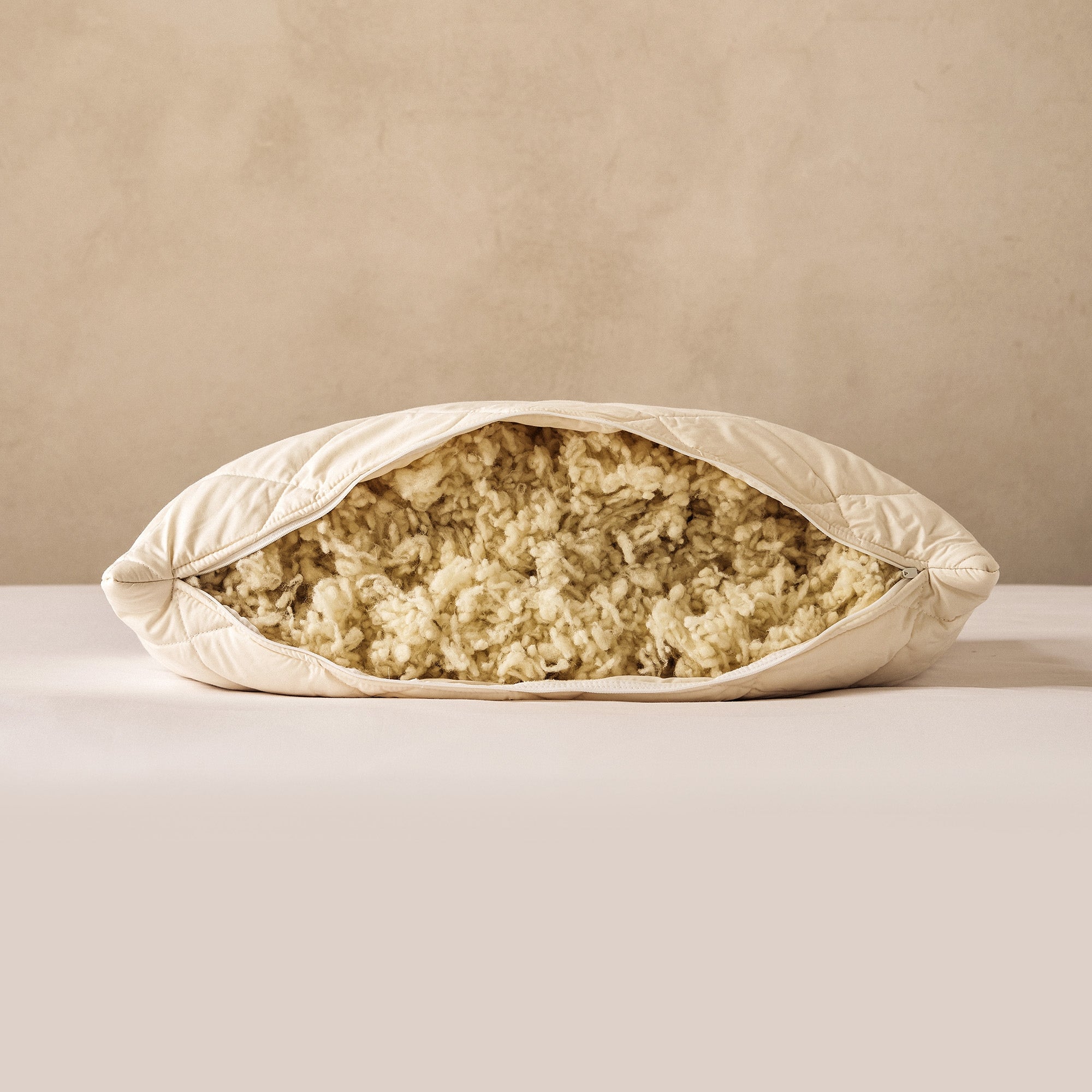
- Crimp: The fiber's natural wave or curl gives wool its springy nature and resilience. It also creates tiny pockets of still air, giving wool impressive insulating properties.
- Resilience: Wool fibers can bend under load and spring back into shape, night after night, year after year—up to 20,000 times—without breaking or compromising performance. Think about what a mattress filling endures: it's compressed by a body every night and has to keep contributing to comfort and support for years. Wool behaves like a spring, resisting pressure and then recovering. For that job, recovery matters more than fineness.
- Loft: Crimp and resilience together build a three-dimensional structure that creates warmth without foam or synthetic fibers.
- Moisture management: Wool is naturally hygroscopic, meaning its fibers can absorb water vapor from the surrounding air and release it in passive evaporation. It's why wool regulates humidity far more effectively than synthetics, down, or down alternatives.
- Thermoregulation: Wool is nature's original smart fiber, adapting by absorbing and releasing moisture or providing insulation as sleepers warm up and cool down. Instead of trapping heat, wool supports the body's natural temperature changes, contributing to a more stable sleeping environment.
- Durability: Wool performs for years, not months, putting it in a category of its own.
Softness belongs on that list too. It just doesn't sit at the top.
Warm in Winter, Comfortable in Summer
The most persistent myth about wool bedding is that wool makes you too hot. In reality, wool is thermoregulating rather than simply insulating—and the difference shows up in testing.
Research commissioned by British Wool with Bangor University's BioComposites Centre found significant advantages for wool bedding in both moisture management and thermal insulation compared with polyester, feather and down, with wool moving moisture substantially faster than the alternatives tested. Overnight sleep simulations have also found wool duvets hold a more stable temperature than down, feather and synthetic equivalents.
That matters because we all lose moisture overnight, and bedding that holds humidity against the body is what creates that clammy, disrupted feeling. Wool's ability to take up water vapor and release it again keeps the air inside your bed drier and steadier—which is what makes it genuinely suited to year-round use, not just a fiber you swap out in June.
What Merino Does Best
Merino deserves its reputation. Merino sheep produce exceptionally fine fibers that bend easily against the skin instead of causing the prickle associated with coarser wool. The Woolmark Company positions Merino primarily as a premium apparel and next-to-skin fiber, noting that broader wool types are more commonly used in interiors where durability matters.
Merino bedding exists and can be luxurious. But the finest Merino is engineered to solve a different problem. Inside a mattress, the wool sits behind a casing and never touches your skin. That prickle isn't the issue. Resilience is.
Is British Wool Better Than Merino?
It depends on the application. For the softest possible fiber against bare skin, Merino is very hard to beat, which is exactly why it dominates luxury apparel. But for a mattress, duvet or natural filling, British wool's range gives you resilience, body, loft, thermoregulation and moisture management alongside comfort.
British wool's greatest strength isn't that every British fleece is the finest in the world. It's that Britain grows the widest spectrum of wool in the world, and that spectrum contains exactly what bedding demands.

Provenance You Can Verify
There's one more thing British wool gives a luxury mattress that a micron count can't: you can know where it came from.
British Wool—a farmer-owned co-operative that collects, grades, markets and sells wool on behalf of UK sheep farmers—handles wool from British farms only. Every bale carries a unique identification code, and the identities of the farms contributing to it are retained rather than lost when wool is pooled by grade. The Shepherd's Crook mark, trademarked in 1970, verifies that the wool in a product is genuinely British. That's incredibly useful, because "wool" on a label can mean wool imported from anywhere and blended with anything.
What It Means for Your Woolroom Bedding
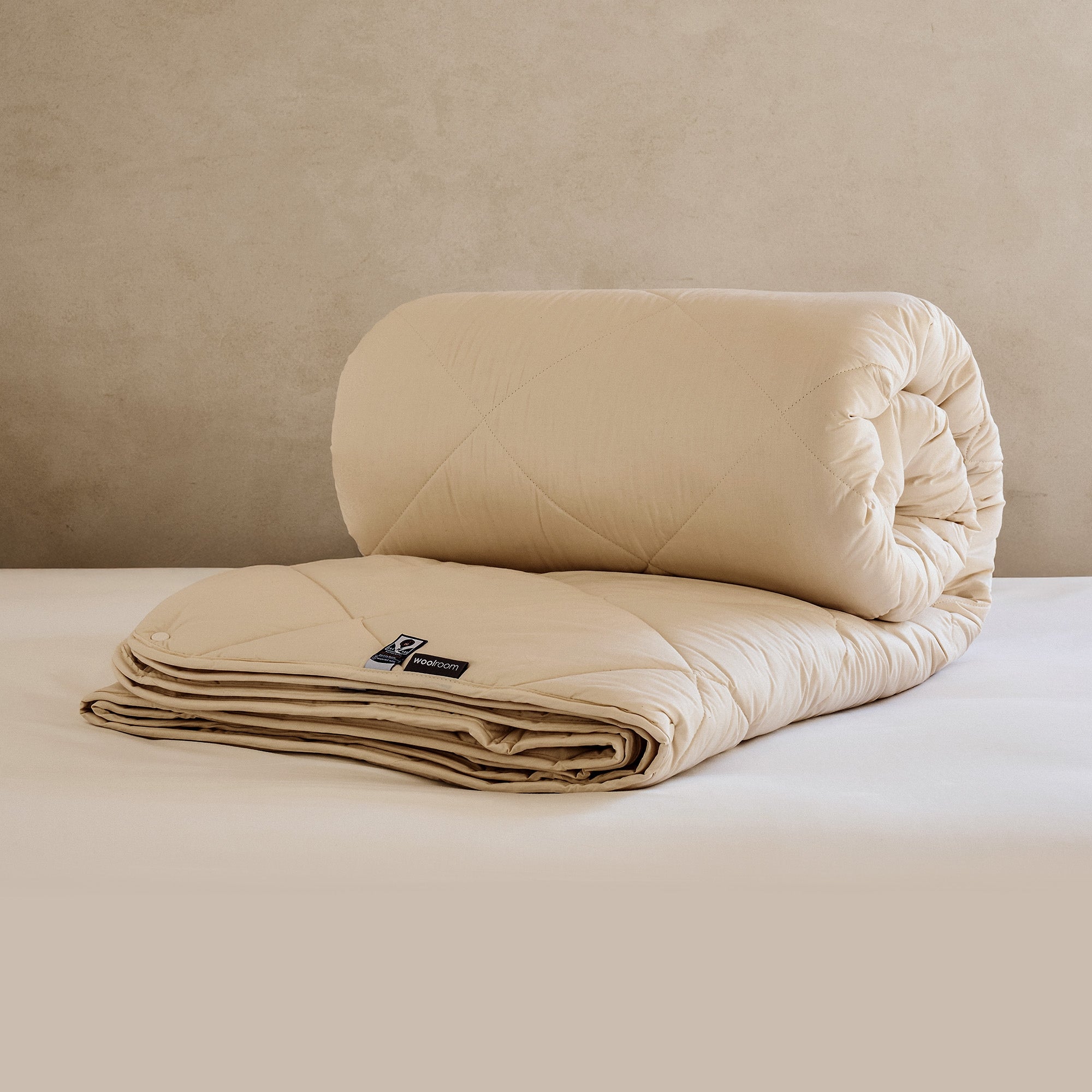
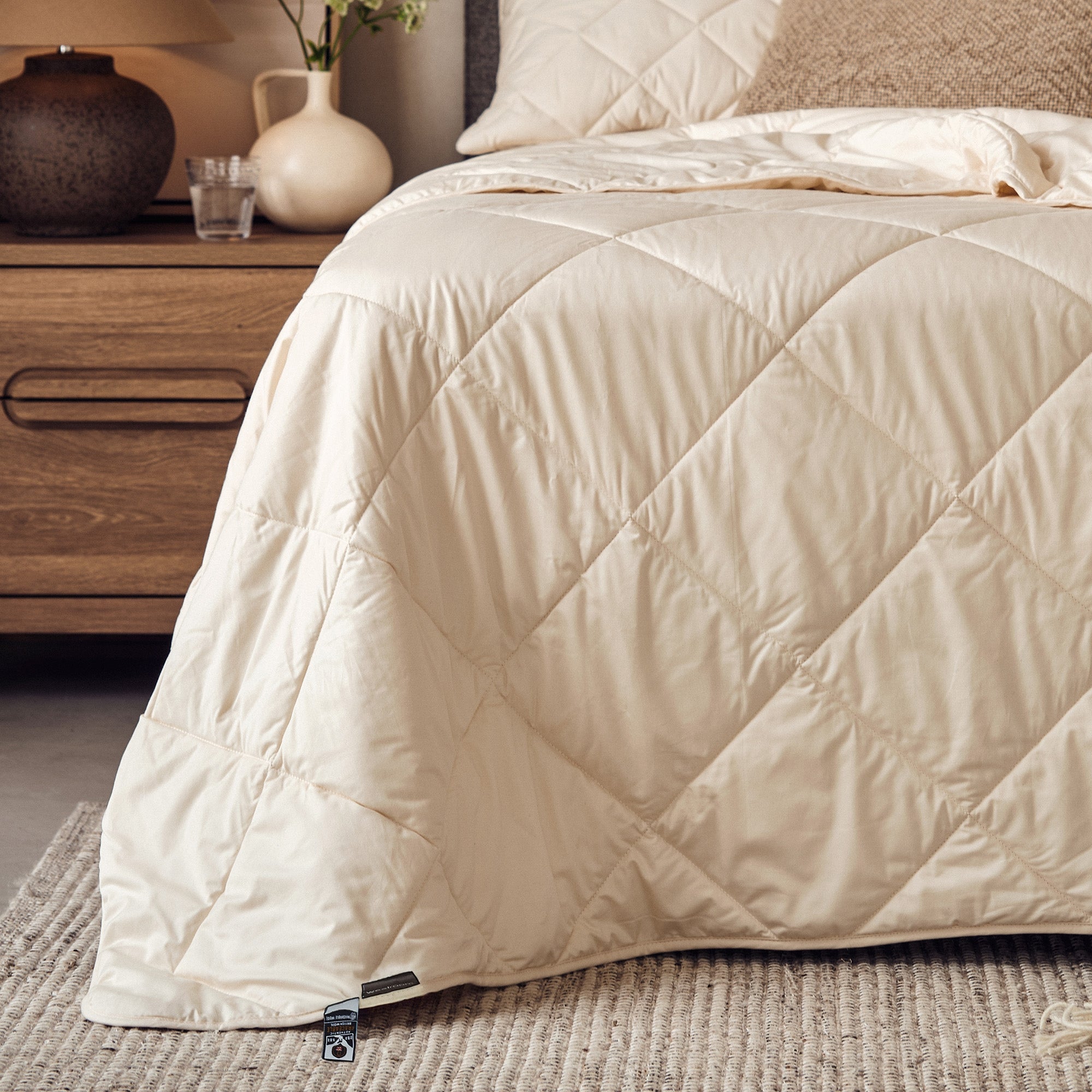
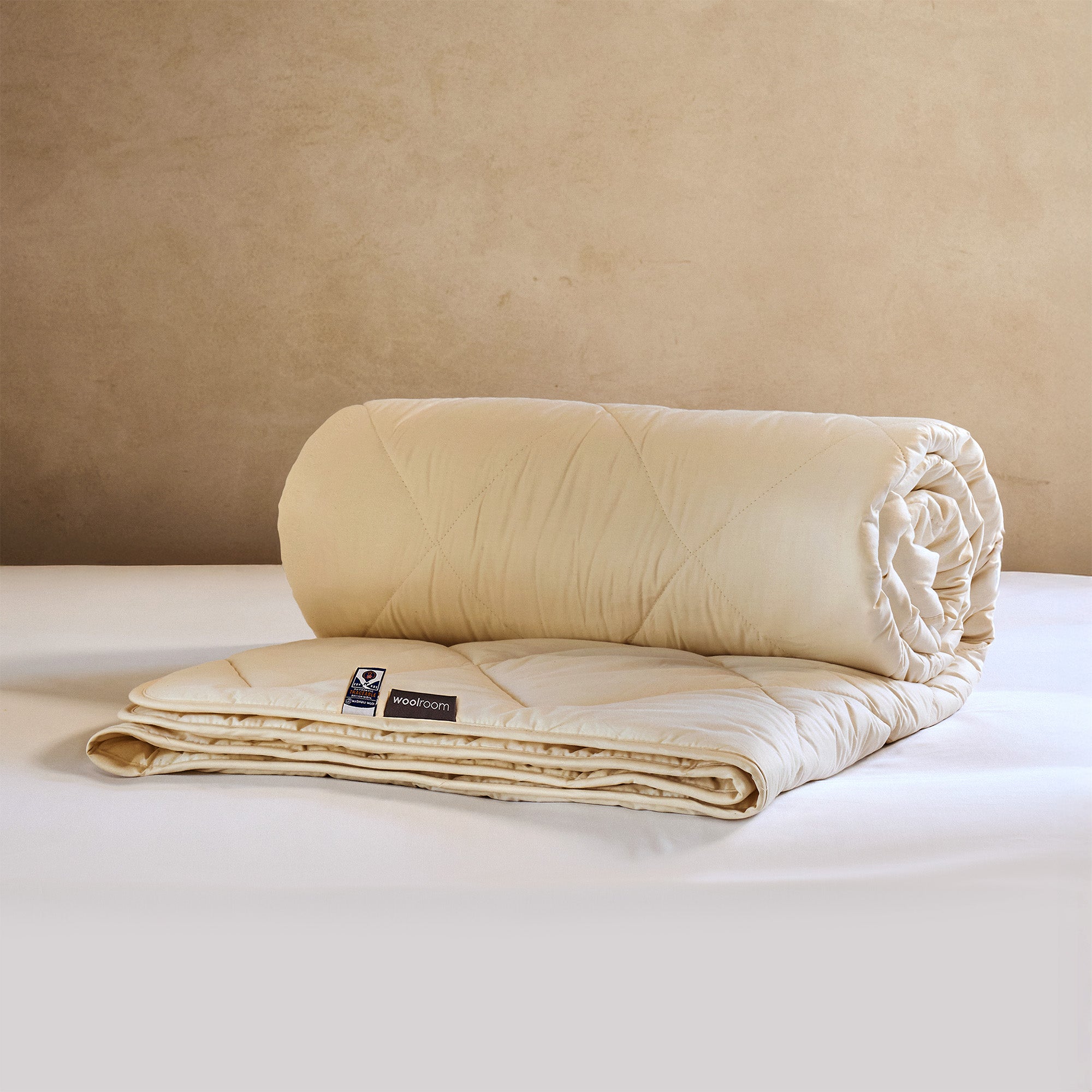
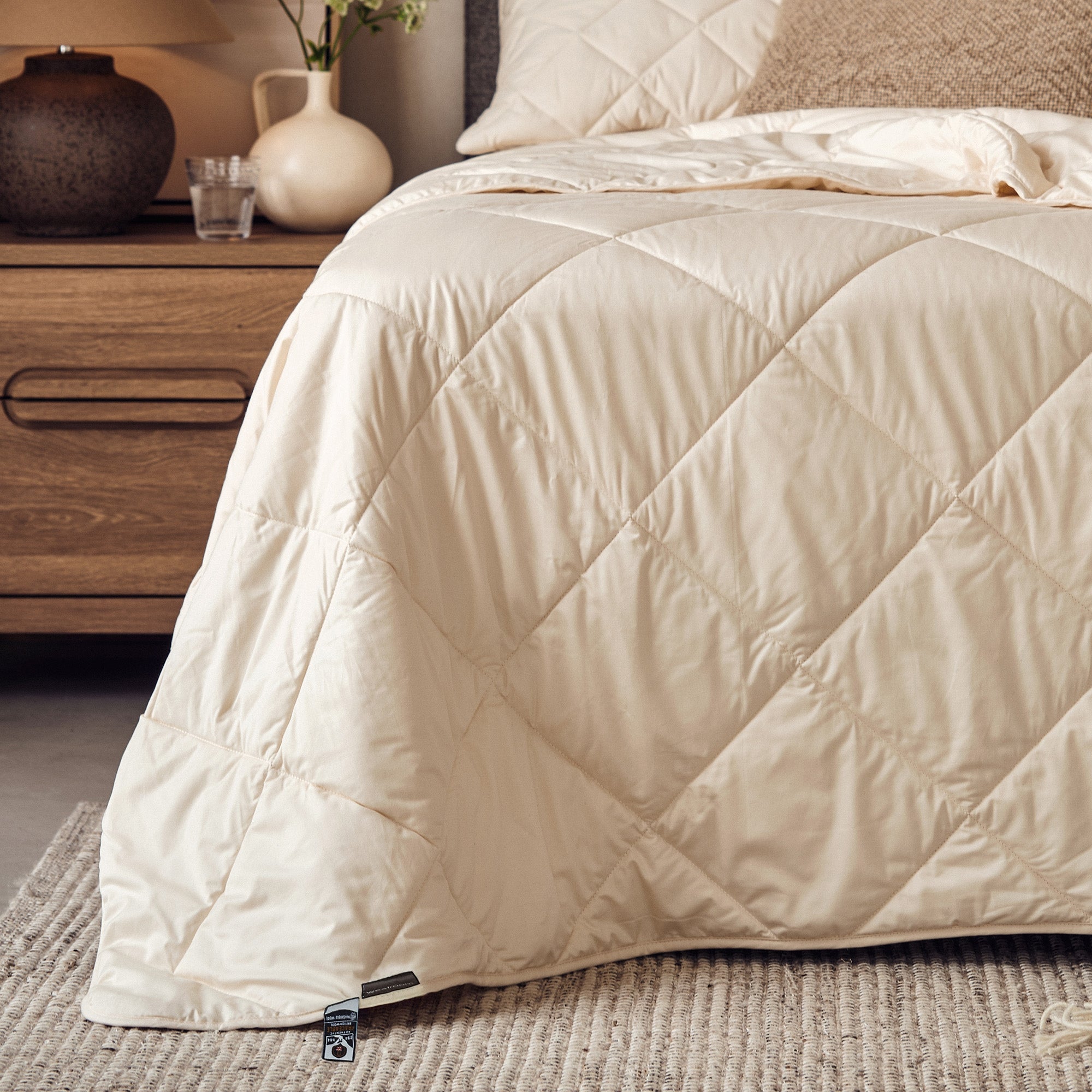
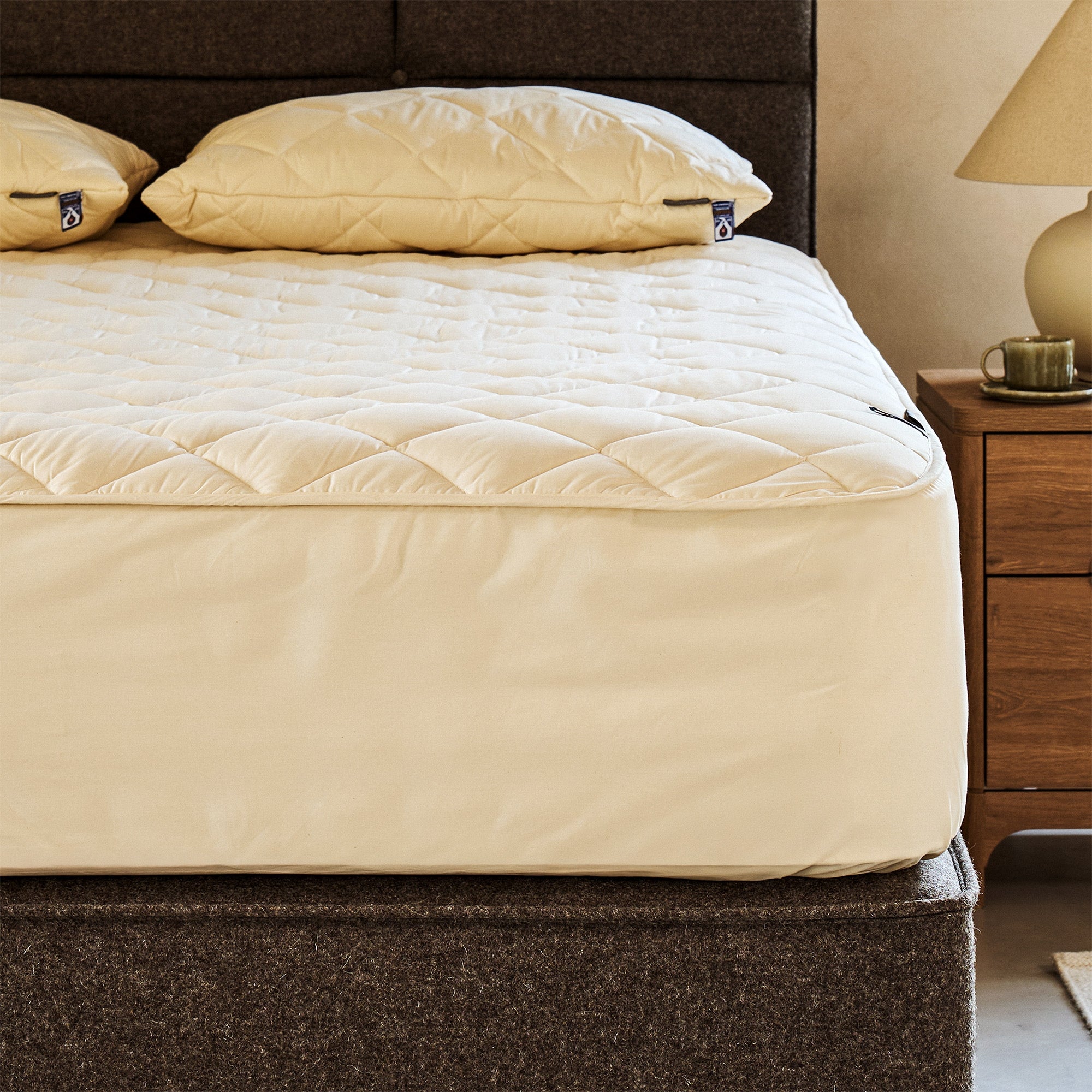
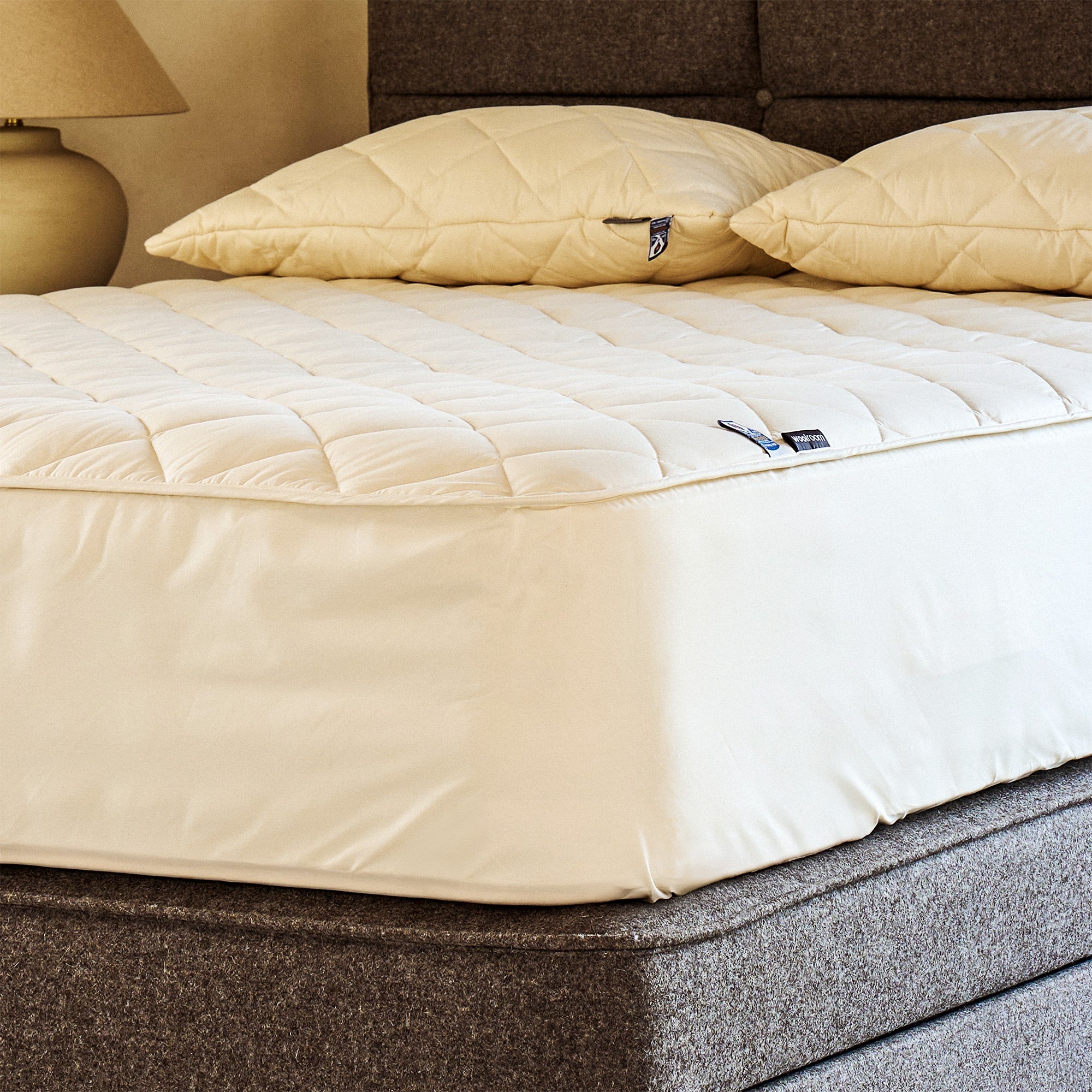
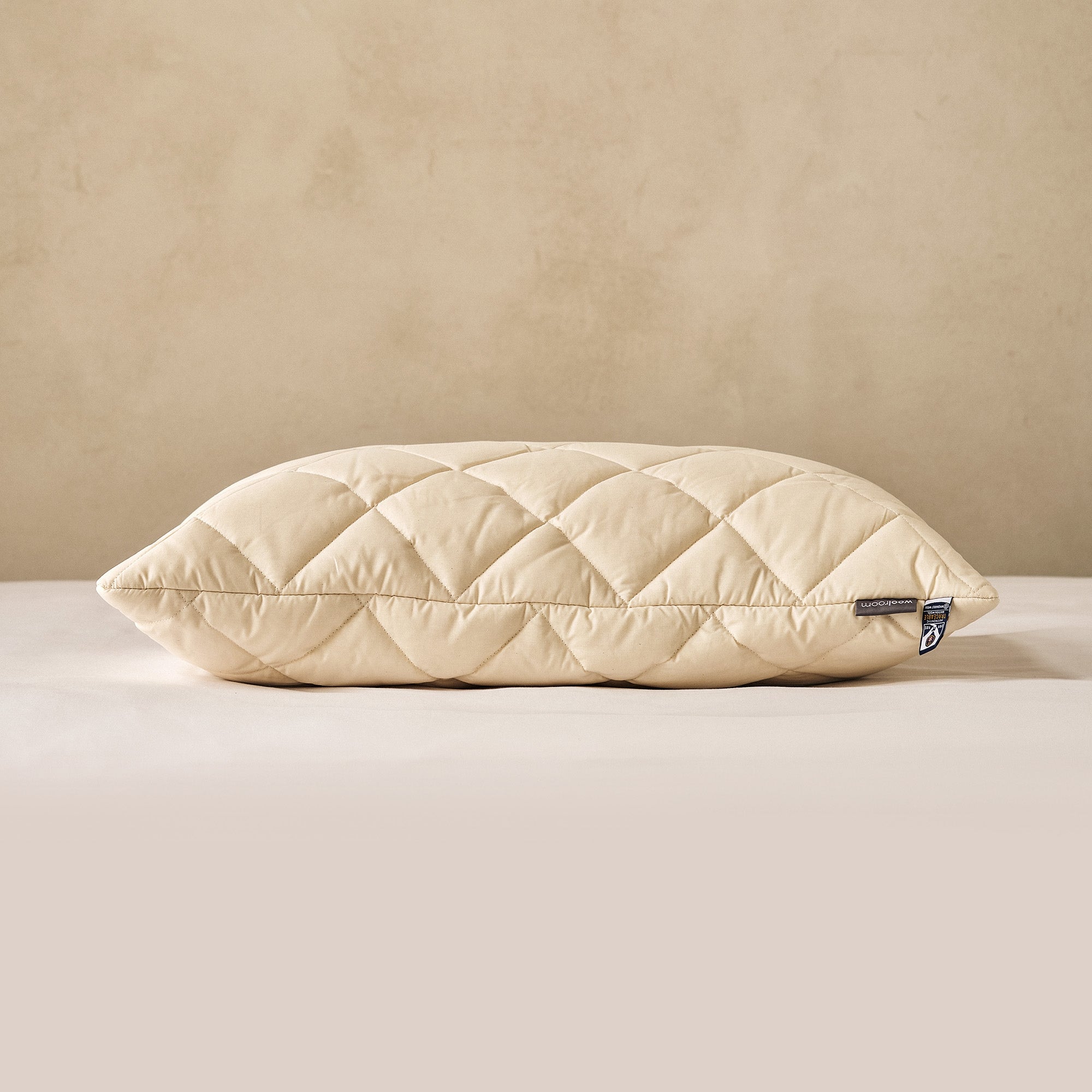
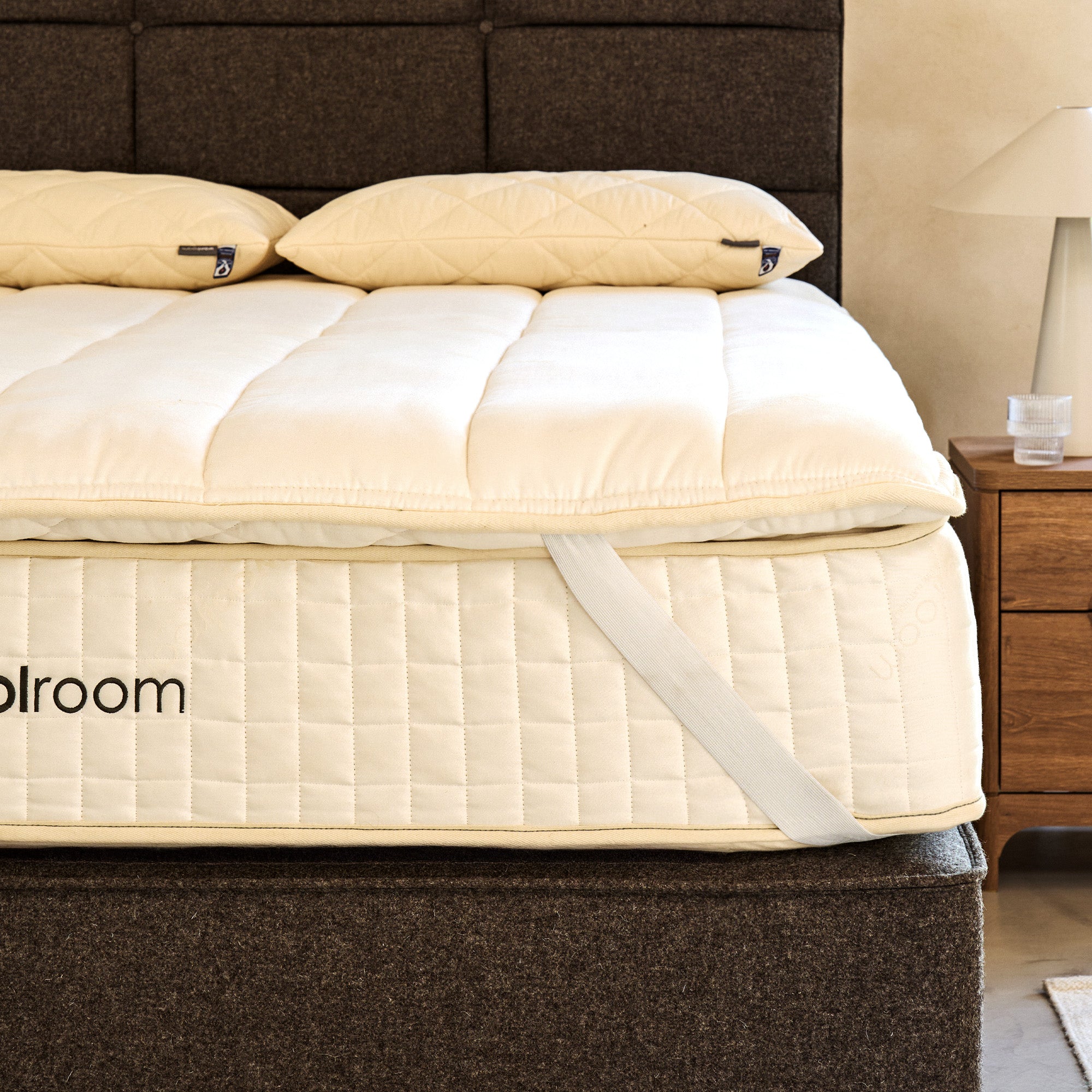
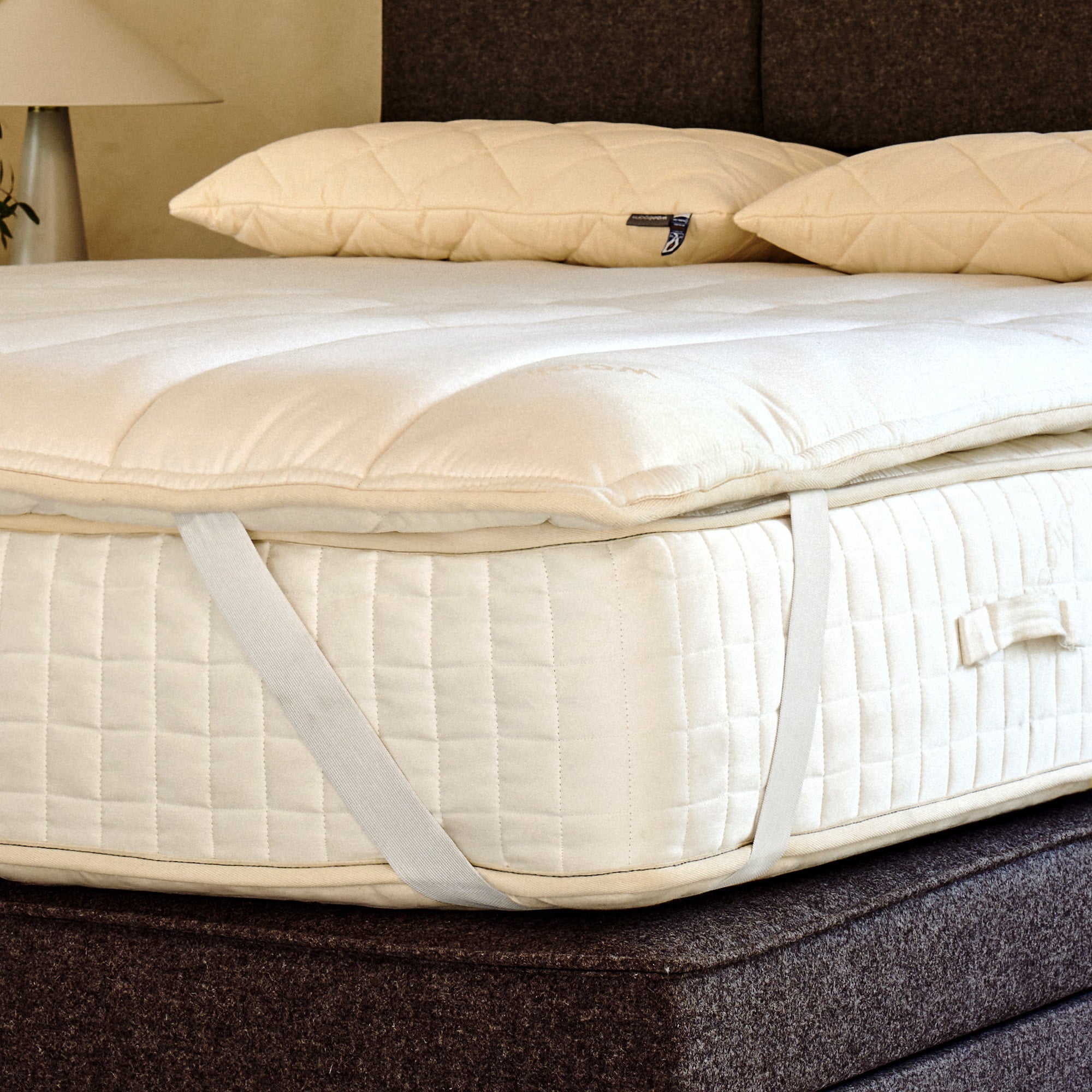
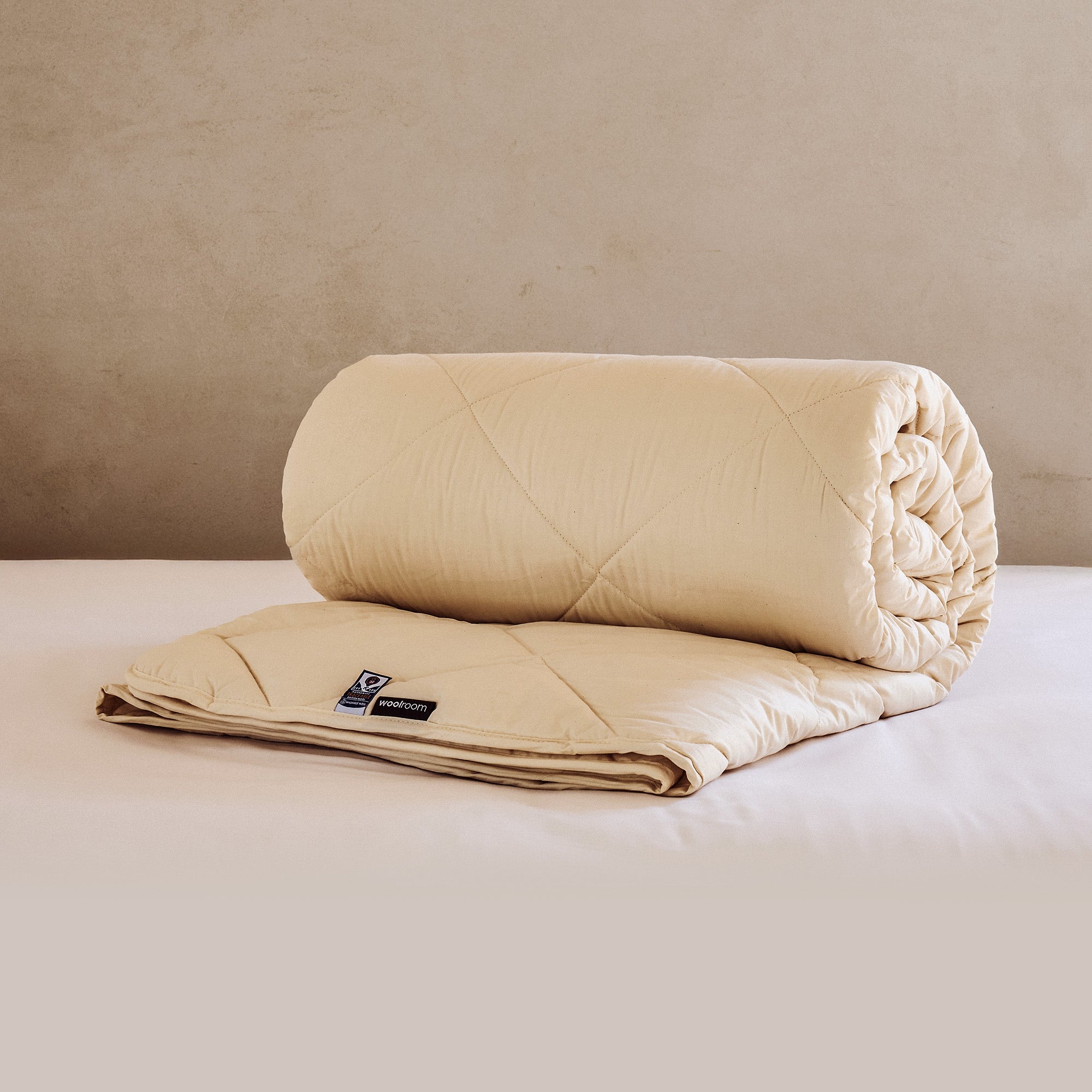
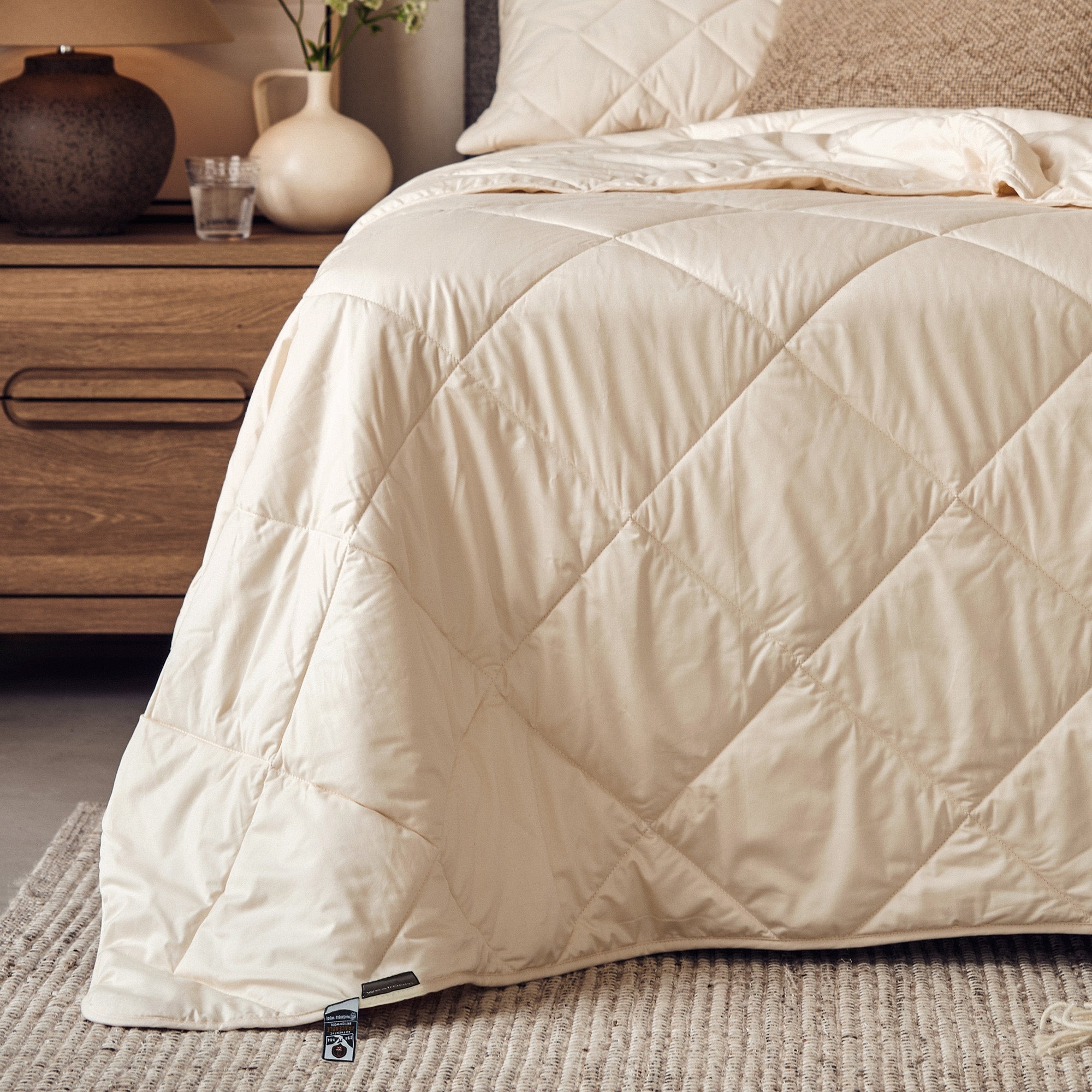
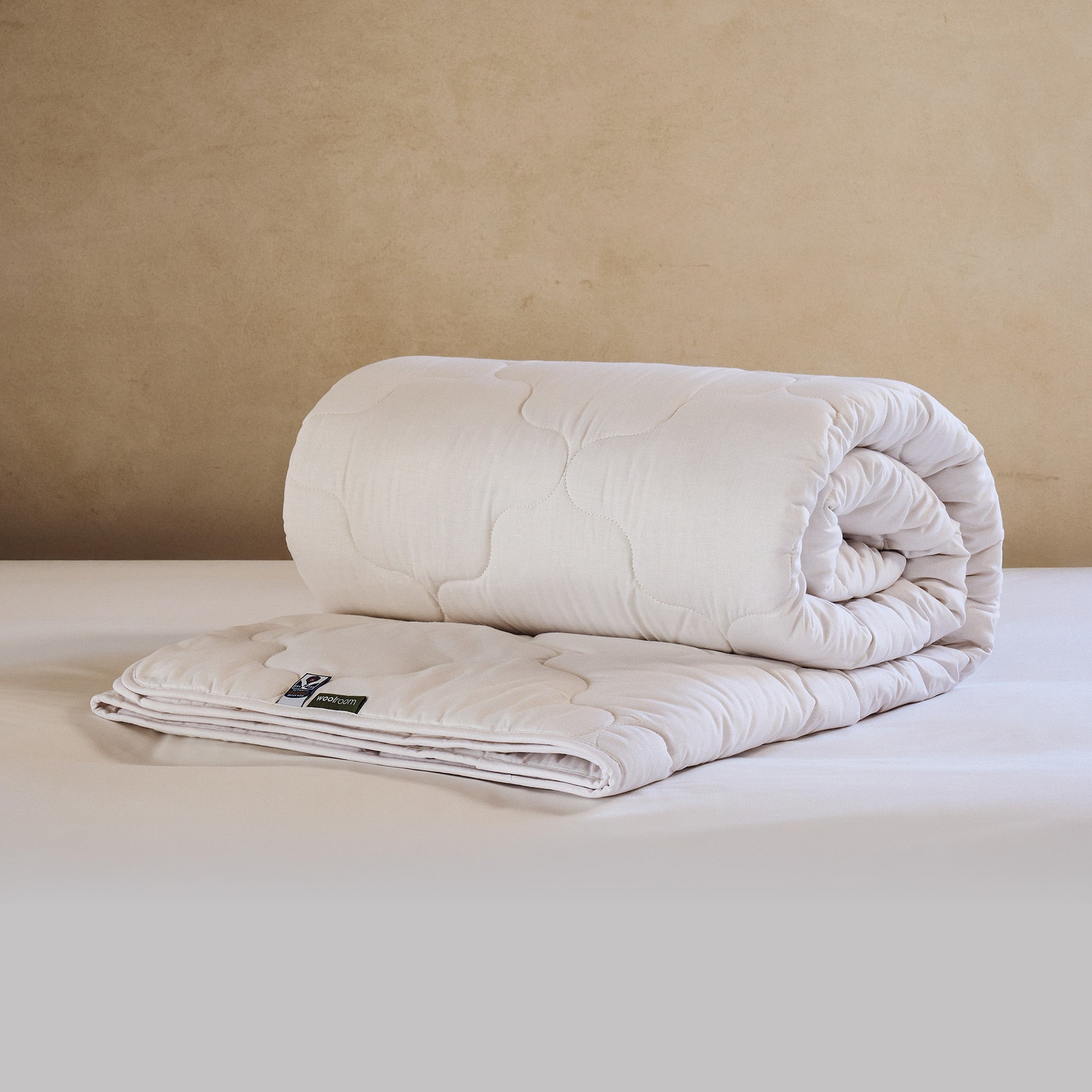
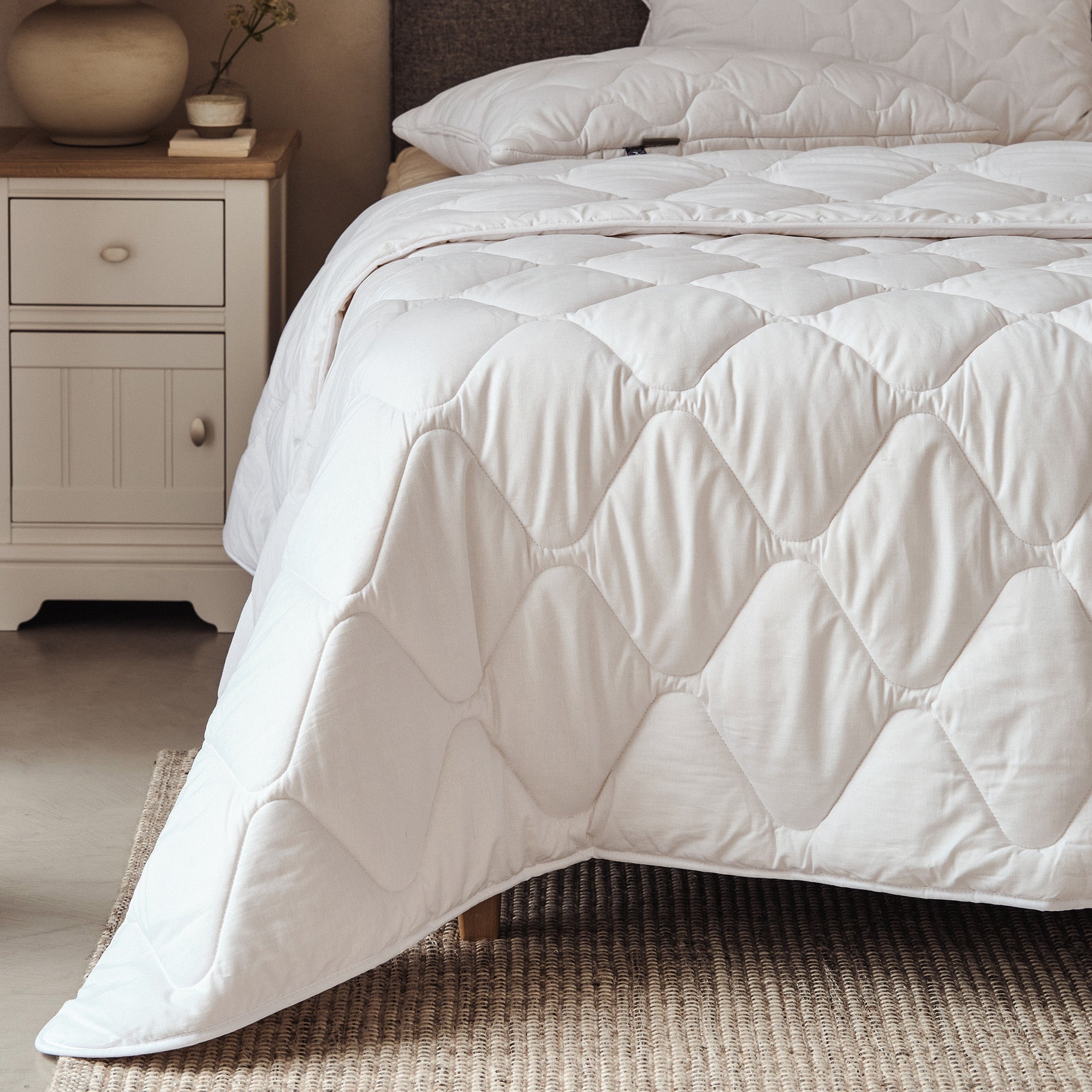
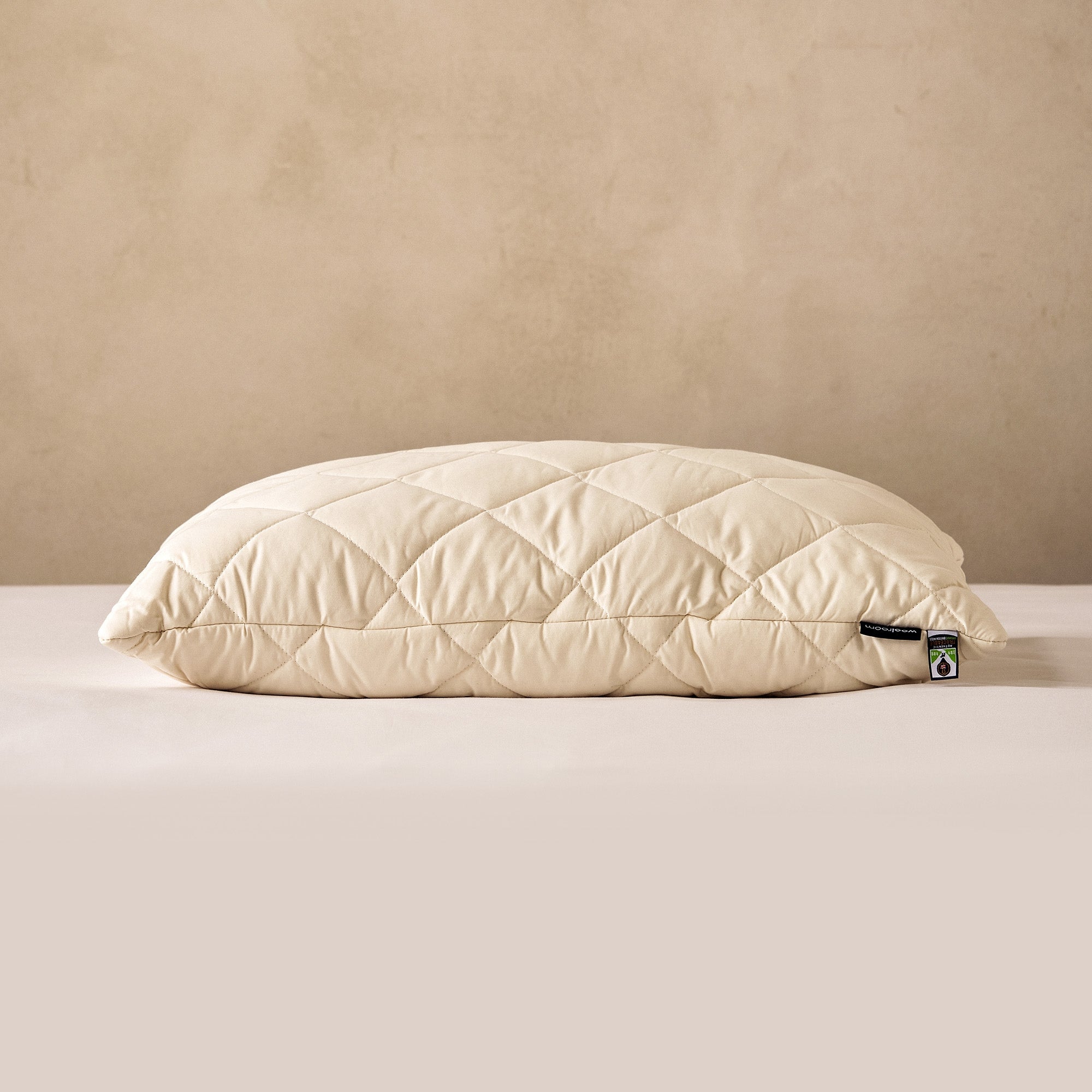
Woolroom sources every fiber it uses through British Wool. We buy graded, tested lots at auction every two weeks, and every farm that contributed to those lots is added to our traceability database. That rhythm keeps our wool current rather than sitting in long-term storage, and it means the list of farms behind our duvets, pillows and mattresses keeps growing.
- Selected, not simply available. Because British Wool grades by hand and tests independently for micron, color and dry yield, we can buy against measured technical data rather than description. The wool in your duvet was chosen for bedding.
- Year-round comfort. Thermoregulation and moisture management, not just insulation—so the same duvet works in February and July.
- Longevity. Resilient fibers that recover from compression night after night, which is what a mattress filling has to do for years.
- Provenance you can check. Wool ID® means every Woolroom product carries a lot number and QR code on its care label. Scan it and you can read about the farms, farmers and flocks behind your wool—Cracrop Farm in Cumbria, Boundary Farm in Rutland, Manor Farm in Dorset, Llanfechan in Wales, and a growing list of others.
- Certified, not just claimed. We hold the Authentic Traceable British Wool certification, alongside Authentic Traceable Organic British Wool for our organic washable collection.
- A fairer deal for farmers. Traceable wool earns a premium above standard auction prices, and that value returns to British Wool's farmer members.
The world's best wool for bedding creates the most comfortable, resilient, naturally breathable place to sleep. With its climate, its landscapes, its 60-plus breeds and generations of grading expertise behind it, British wool is exceptionally well placed to do exactly that—and it's the only wool we use.
Frequently Asked Questions
What is the best wool for bedding?
British wool, because bedding needs more than softness. Crimp gives it spring, resilience lets it recover from nightly compression, loft creates insulation and its hygroscopic fibers manage moisture. Britain's breed diversity means wool can be graded and selected specifically for those properties.
Is British wool better than Merino?
For bedding, yes. Merino's exceptional fineness makes it the best choice for clothing worn against the skin, but a mattress filling needs resilience, body and recovery under compression. British wool spans the full range of fiber characteristics, so it can be matched to the job.
Does wool bedding make you too hot?
No. Wool is thermoregulating, not just insulating. The crimp in wool fibers traps air for warmth when needed, but its ability to absorb and release moisture helps as you warm up. That's why wool bedding works year round.
Is British wool itchy in a duvet or mattress?
Prickle is a next-to-skin issue. Inside a duvet or mattress, the wool sits behind a casing and never touches your skin directly, so you won't feel itchy.
How does wool manage moisture?
Wool is hygroscopic—its fibers absorb water vapor from the surrounding air and release it again, helping regulate humidity in the bed.
Can you trace where the wool in Woolroom bedding came from?
Yes. Every product carries a lot number and QR code, and our Wool ID® system connects it to the named British farms that contributed the fleece.