Key Takeaways
- A mattress protector acts as a thin, hygienic barrier that shields your mattress from spills, allergens and bacteria without meaningfully changing how it feels.
- A mattress pad adds a subtle layer of softness and breathability on top of an already comfortable mattress.
- A mattress topper is the thickest option and is designed to significantly change the feel of your mattress—ideal if it's too firm or causing discomfort.
- Natural materials like wool outperform synthetics in breathability, moisture wicking, temperature regulation and durability.
- You can layer a protector with a pad or topper to combine hygiene and comfort benefits.
- Wool bedding from Woolroom is OEKO-TEX Standard 100 certified, Allergy UK approved, and made with fully traceable British wool.
Fitted sheet aside, there are several bedding accessories specifically designed to go right over an existing mattress. Mattress pads, toppers and protectors all serve different purposes—and if you’re sleeping on a mattress alone, understanding the differences can help you make a smarter, more comfortable choice.
In this guide, we’re breaking down exactly what sets these mattress covers apart and when one may work better than another. Just like bedding in general, quality varies significantly—and much of that comes down to materials. We cover that too.
What is a Mattress Protector?
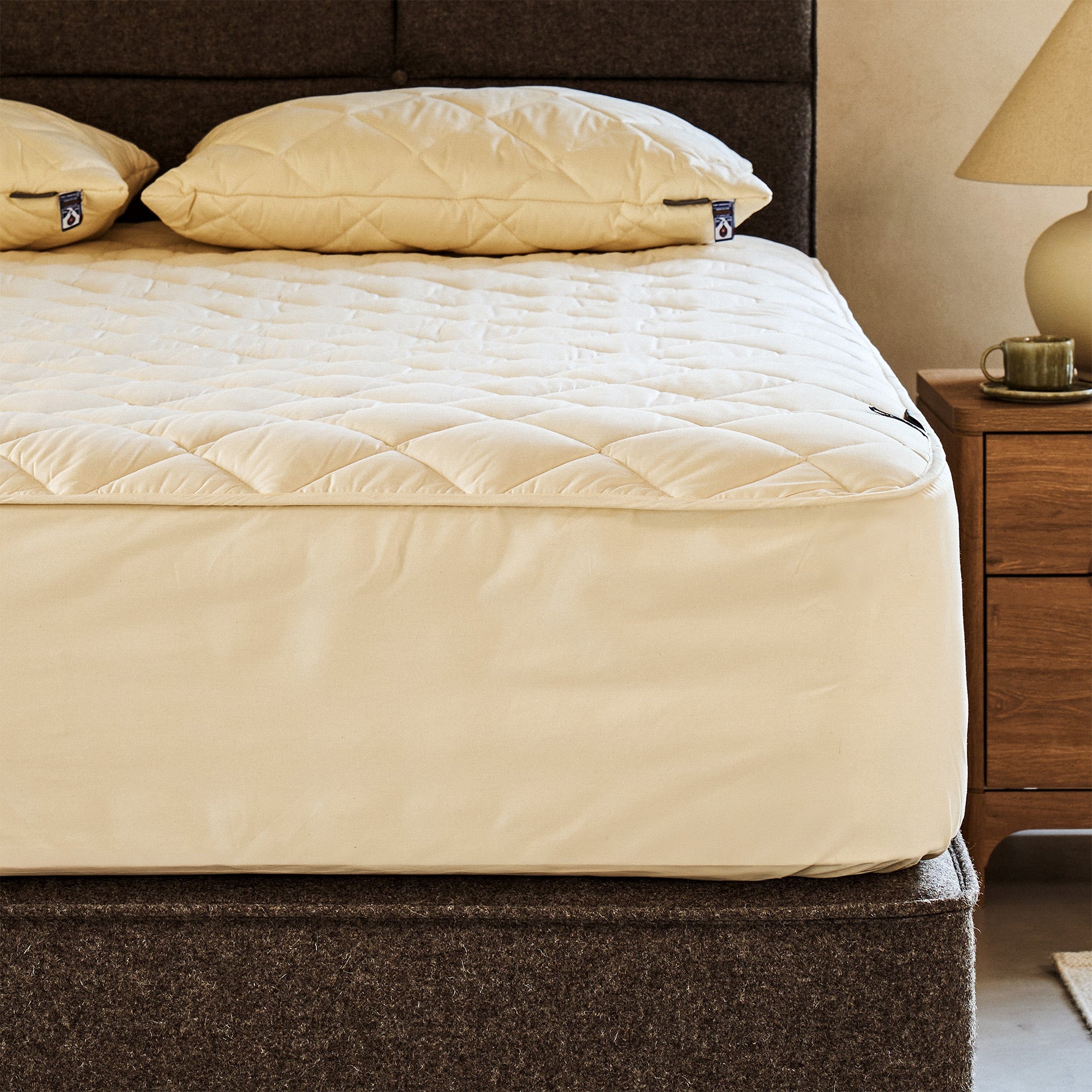
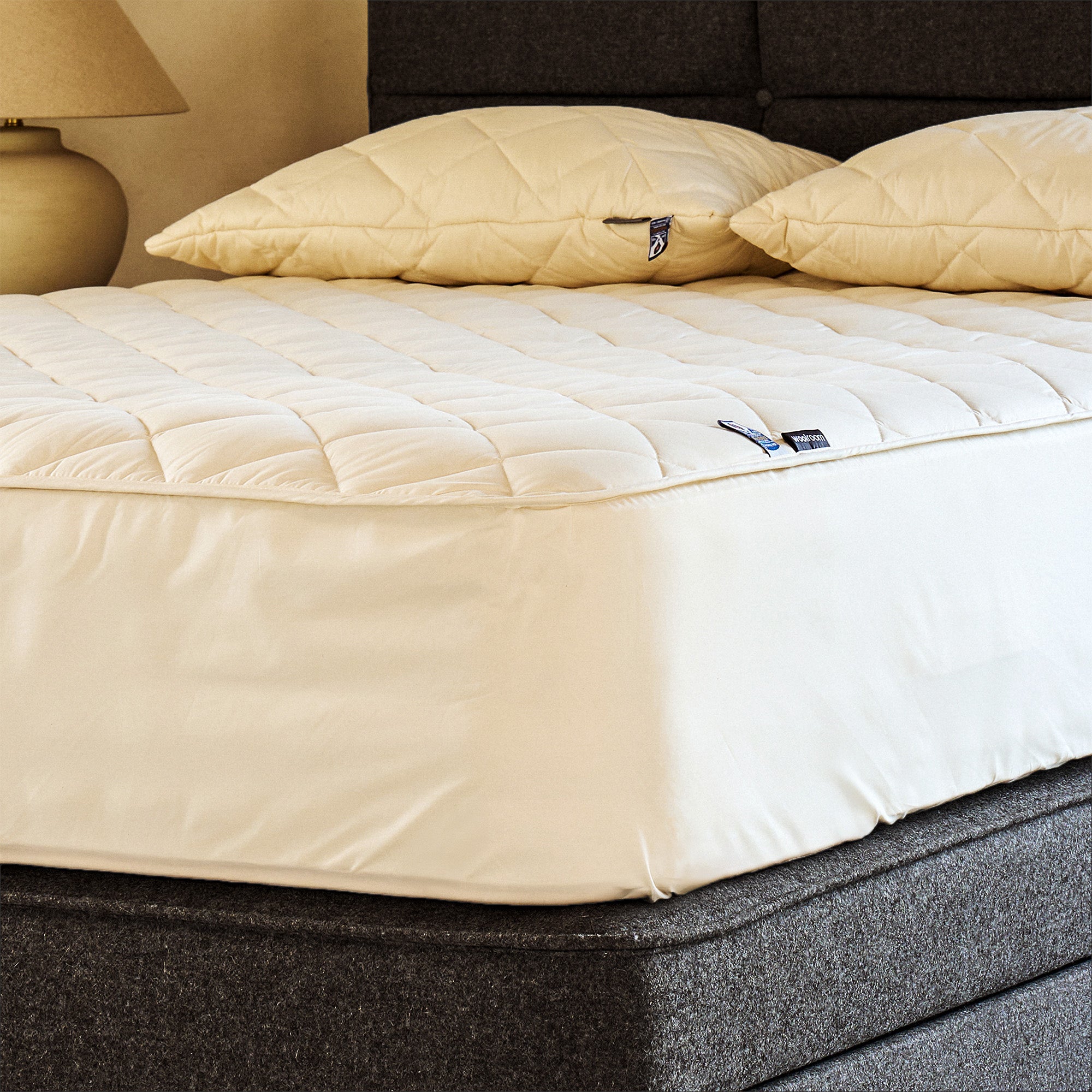
A mattress protector is exactly what it sounds like. It’s a thin cover designed as a protective layer, and its entire purpose is to keep the mattress safe from spills, sweat, skin oils, bacteria, liquids, dust mites, allergens and just about anything else that might otherwise make its way into the surface layers. To do that, they often resemble a fitted sheet with an elastic edge. They fit snugly to keep your mattress pristine, but they’re thin enough that any comfort change is minimal at best.
Mattress protectors are often used in beds with young children who are still mastering accident-free nights. In those instances, these protectors may include a waterproofing element. People with allergies and those who share their bed with pets often use protectors to limit allergens. Materials like wool create inhospitable conditions for dust mites, fungus and mold, which are leading triggers for bedroom allergies. It makes for a cleaner sleep environment.
In some cases, using a mattress protector is a condition of a mattress’ warranty.

What is a Mattress Pad?
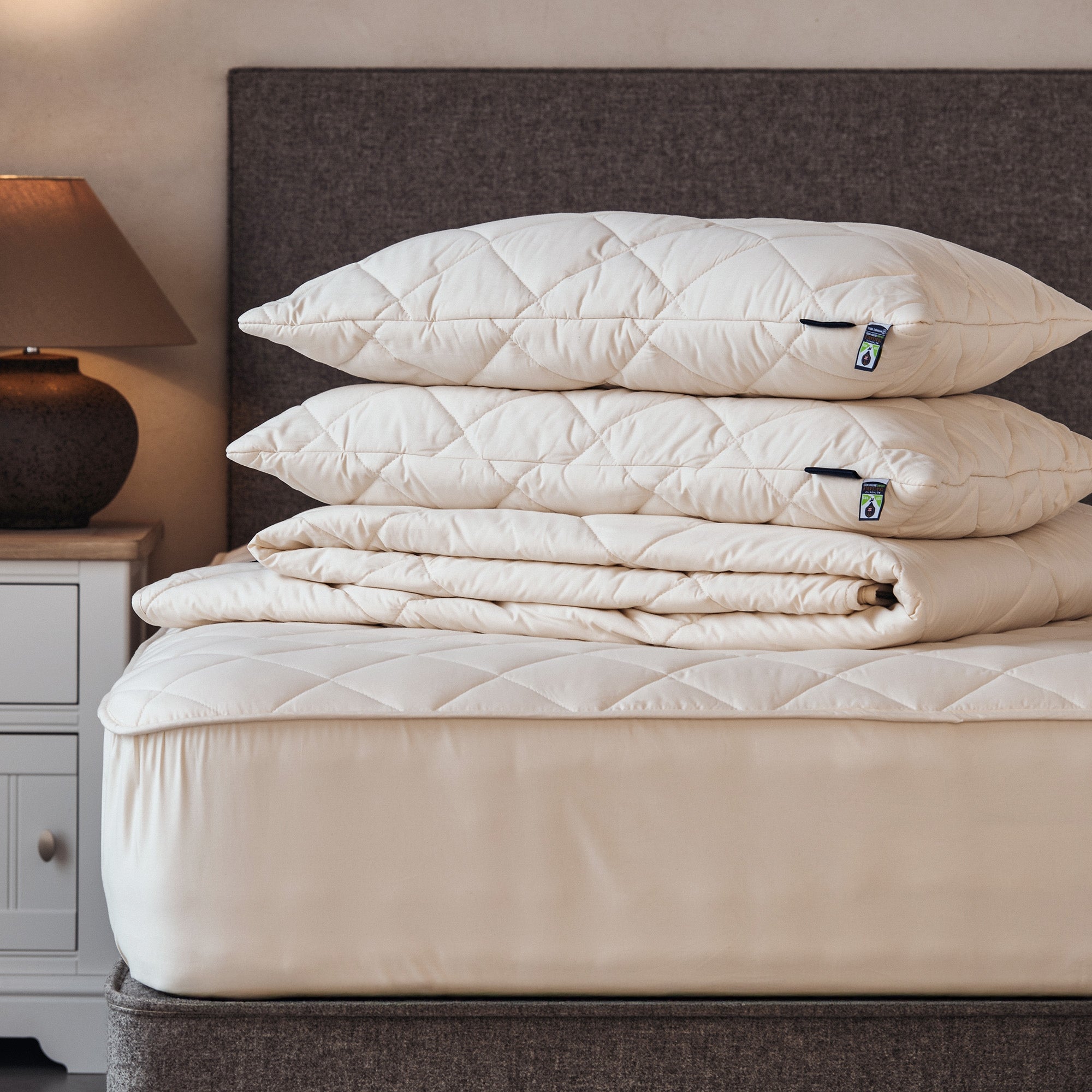
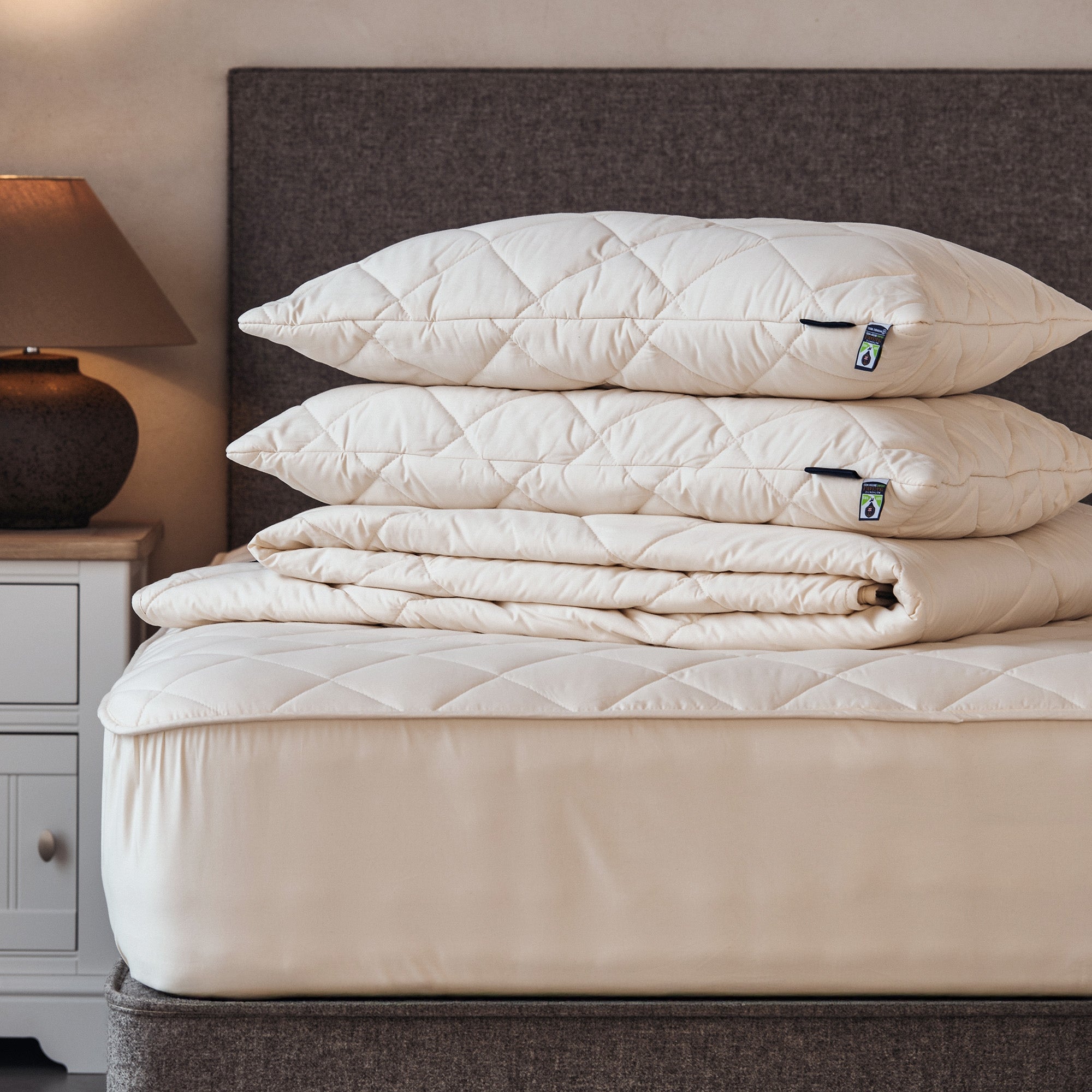
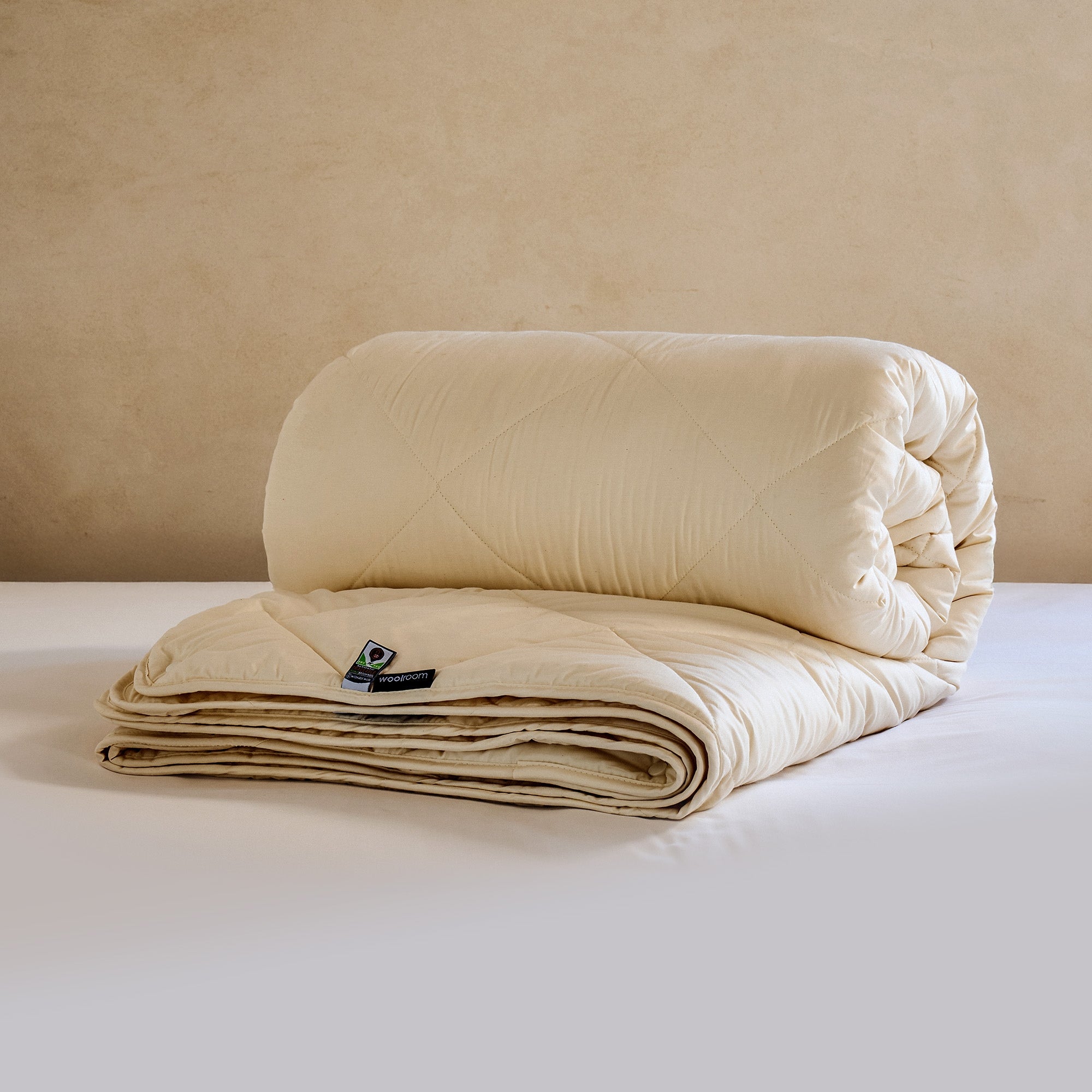
A mattress pad is similar to a mattress protector in that both help keep a mattress clean. But mattress pads are primarily designed to add a subtle yet discernible change in comfort—usually more softness—which is why they’re a little thicker on top. They sit atop an existing mattress and are secured either with elastic corner straps or with an elasticized skirt, just like a fitted sheet.
Depending on their materials, mattress pads can also offer additional benefits. A wool mattress pad adds a layer of gentle cushioning, protection against allergens, and temperature regulation. As a fiber, wool is breathable and moisture wicking, so it maintains a stable microclimate for more comfortable, restorative sleep.
Aside from wool, mattress pads may be filled with cotton or synthetic materials. That changes their scope of benefits. Cotton can add softness and breathability, while synthetic materials like memory foam may offer mild pressure relief or motion isolation.
What is a Mattress Topper?
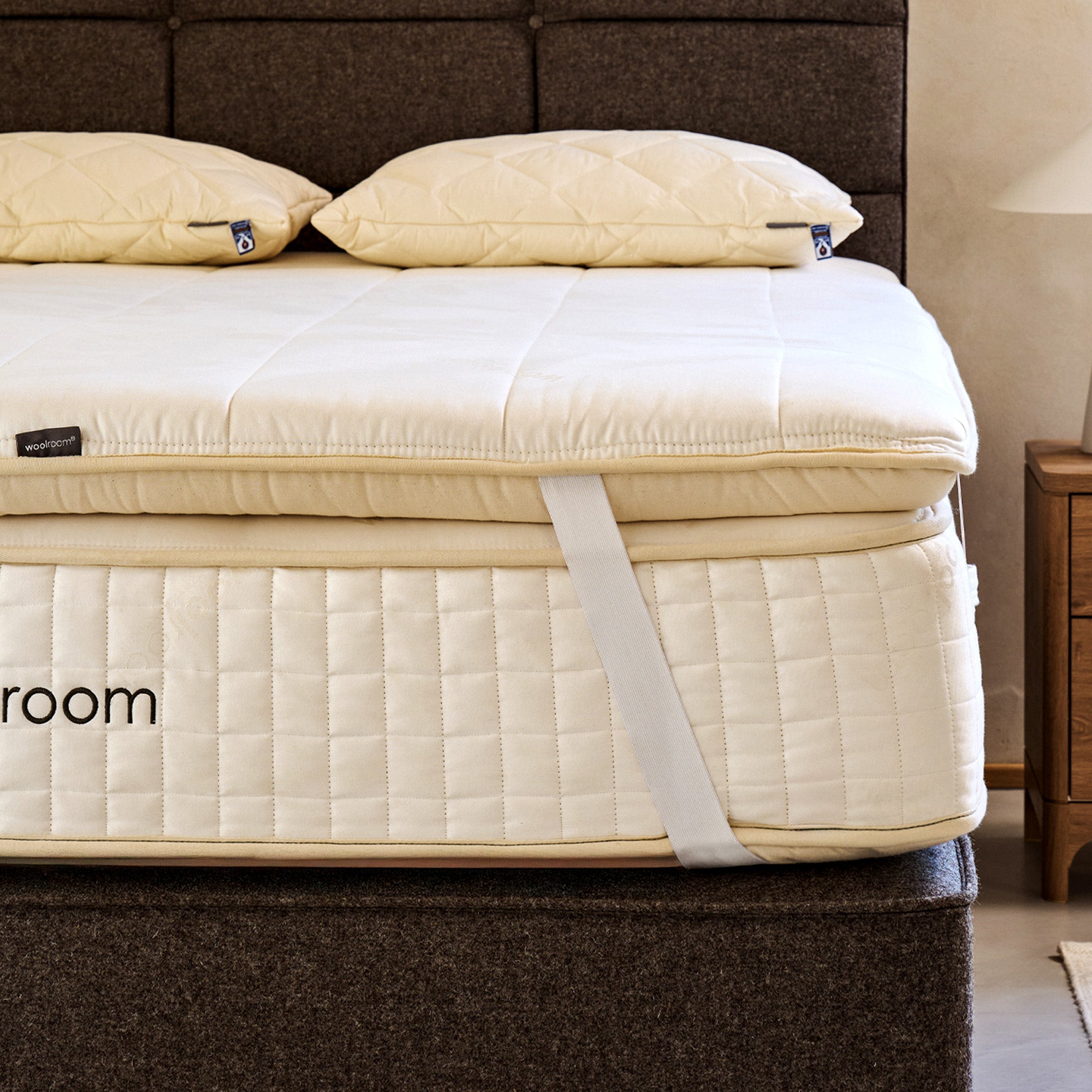
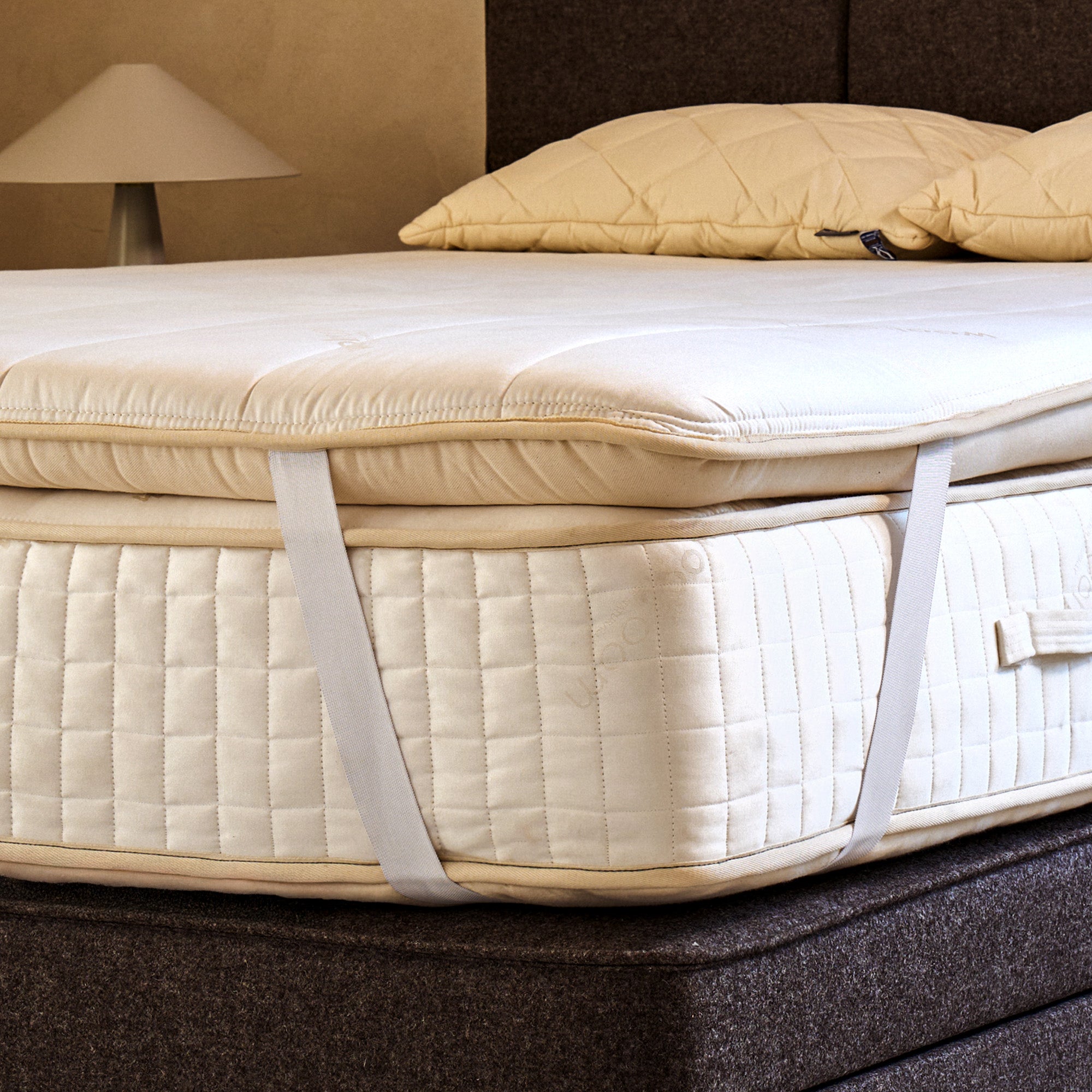
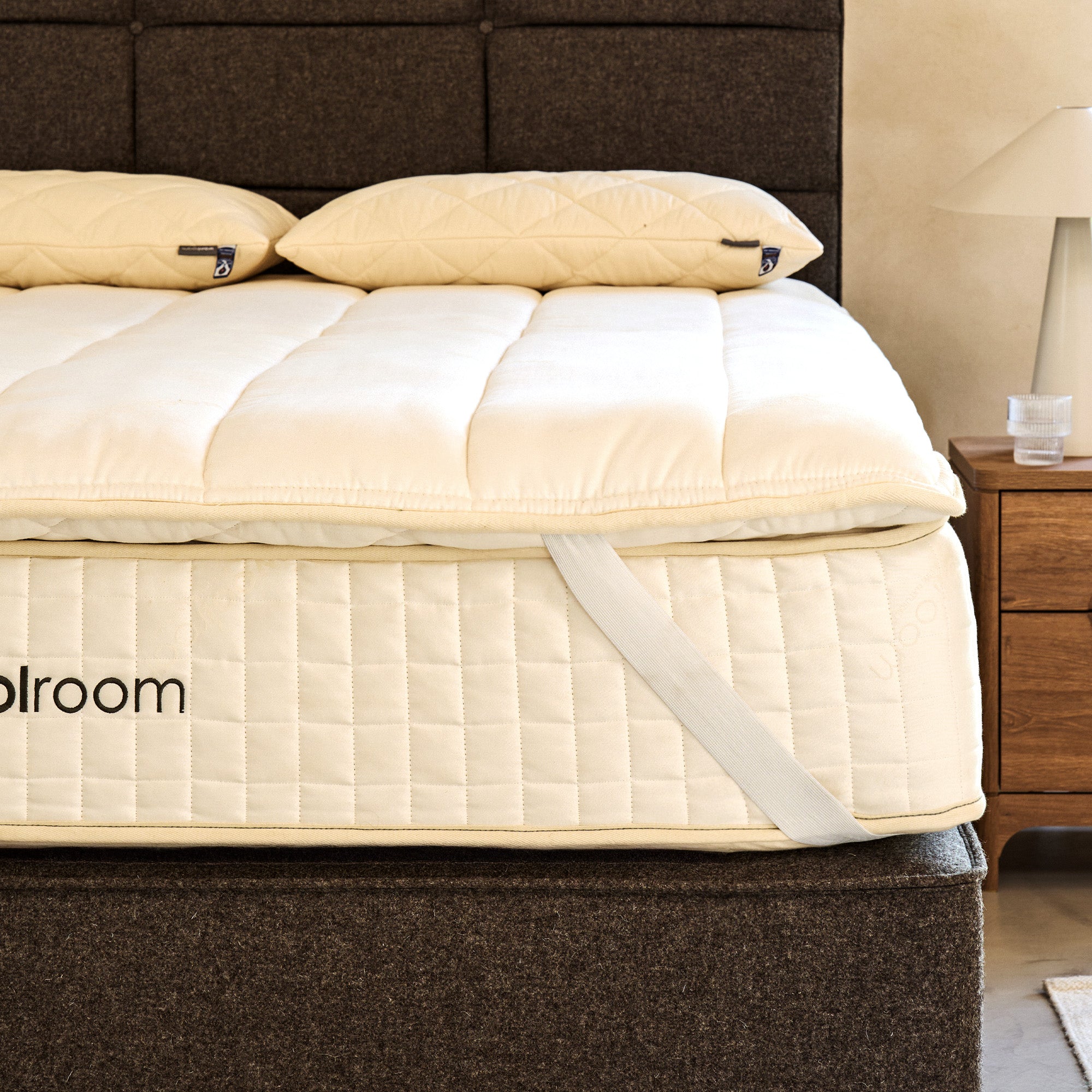
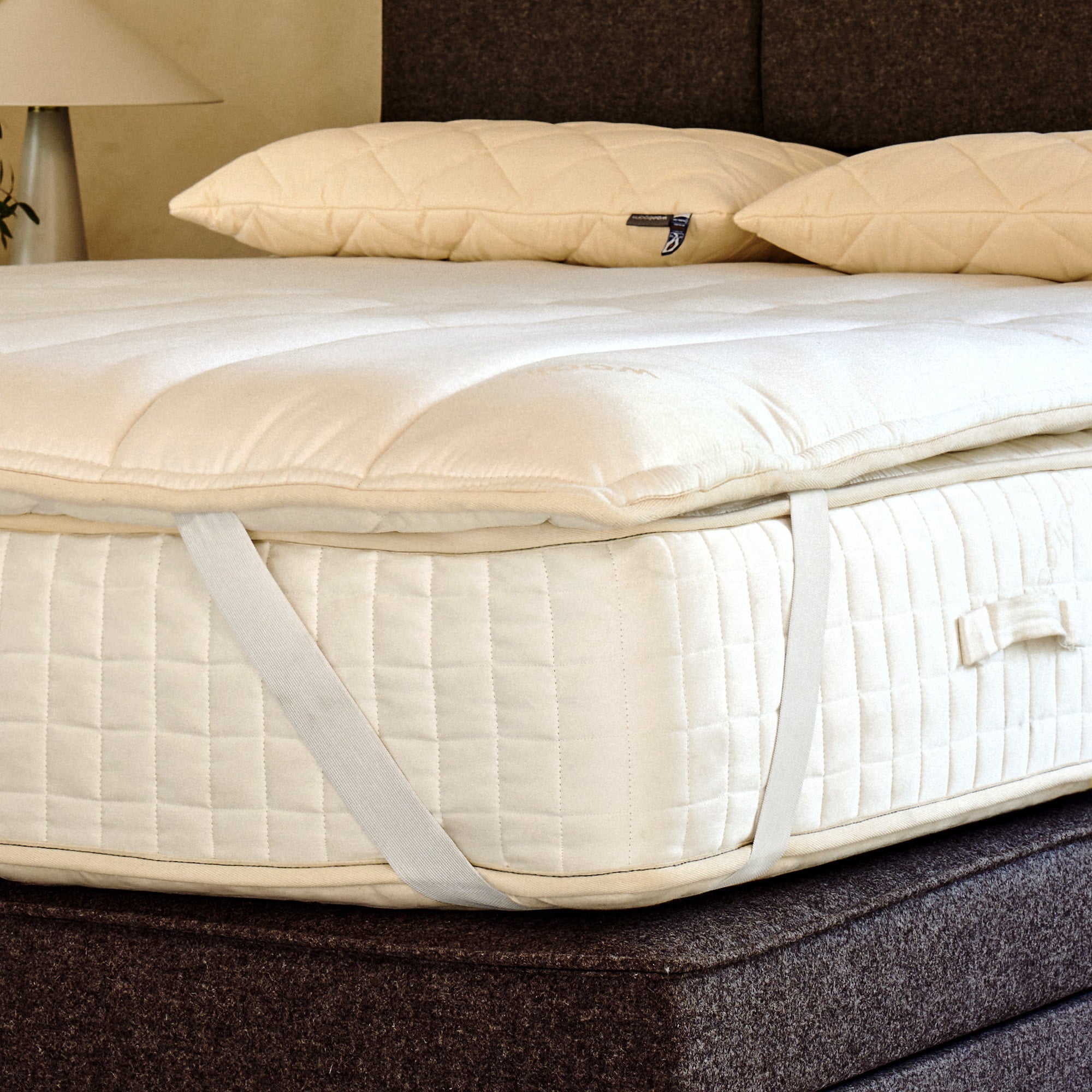
A mattress topper is the thickest layer you can add to a mattress. That’s intentional, since the whole idea of a topper is to change the feel of your mattress. Toppers range in size from an inch to four inches or more, and they’re usually anchored in place with thick corner straps.
Like quilted mattress pads, mattress toppers are constructed with a range of materials. Natural materials include wool, latex, and down, while synthetic versions are made with memory foam or polyester down alternatives.
Mattress toppers have a dramatic effect on how a bed feels. Depending on their construction, they might add contouring to ease joint pain, softness to an overly-firm mattress, temperature regulation to a mattress that holds heat and moisture, or warmth if you’re a chronically cold sleeper. They’re especially popular as an alternative to replacing an existing mattress. While a topper isn’t a solution if your mattress is sagging excessively or otherwise compromising support, it works well to change comfort or add targeted benefits.
Mattress Pad vs Topper vs Protector - At a Glance
Mattress pads, toppers and protectors serve different purposes. Here’s a quick look at what differentiates these sleep accessories.
| Mattress Protector | Mattress Pad | Mattress Topper | |
|---|---|---|---|
| Thickness | Thin, like a fitted sheet | Mildly padded | 1–4+ inches |
| Primary Purpose | Protects against spills, allergens, body oils | Adds subtle softness and breathability | Significantly changes mattress feel |
| Comfort Impact | Minimal to none | Light but noticeable softness | Major change to firmness |
| Best For | Kids, pets, allergy sufferers, warranty requirements | Mattresses that are comfortable but need a small comfort boost | Mattresses that are too firm, too soft, or sleeping hot |
| Common Materials | Vinyl, polyurethane, cotton, wool | Polyester, cotton, wool | Memory foam, latex, wool, down |
When to Choose a Mattress Protector, Pad or Topper
Understanding the differences is one thing. Figuring out which one best meets your needs is another.
Choose a mattress protector if:
- You want to protect your mattress against spills or allergens.
- You want a hygienic barrier for a cleaner sleep space.
- You sleep with kids or pets.
Choose a mattress pad if:
- Your mattress is supportive, but it could use a touch of extra softness.
- You want to improve airflow and boost temperature regulation, while also wicking moisture.
- You want a washable layer between you and your mattress.
Choose a mattress topper if:
- Your mattress is too firm or uncomfortable.
- You wake up with aches and pains or overheating issues.
- You want to simulate the feel of a new mattress—without actually replacing yours.
Can You Combine Mattress Protectors, Pads and Toppers?
If you like the idea of a mattress protector but you want the benefits of a topper, good news. Combining these sleep accessories is an excellent way to enjoy the best of both worlds. The key is strategic layering to ensure you’re maximizing benefits without overdoing it.
Mattress Protector + Topper
If the goal is to keep your existing mattress clean and boost its comfort level, the smartest pairing is a protector and a topper.
Mattress Protector + Pad
This combination works well if you aren’t looking for a dramatic change in how your mattress feels. The protector keeps your mattress pristine, while the pad adds a touch of softness and its own mattress-protecting benefits.
If you’re opting for wool protectors and pads, there’s an added bonus to doubling up. They offer functional overlap, meaning more temperature regulation and moisture management.

What Materials Should You Look For?
The benefits of these sleep accessories are directly related to the materials with which they’re made. This is worth understanding, because some materials can have disadvantages.
Common Materials for Mattress Protectors
Waterproof mattress protectors are made with a vinyl or polyurethane membrane, but they can add a distinctly “plastic” feeling to a mattress. Worse, they often make a crinkling sound as you move around. These and other synthetic materials, like polyester, are also a problem from an environmental perspective. Plus, they’re known for trapping heat.
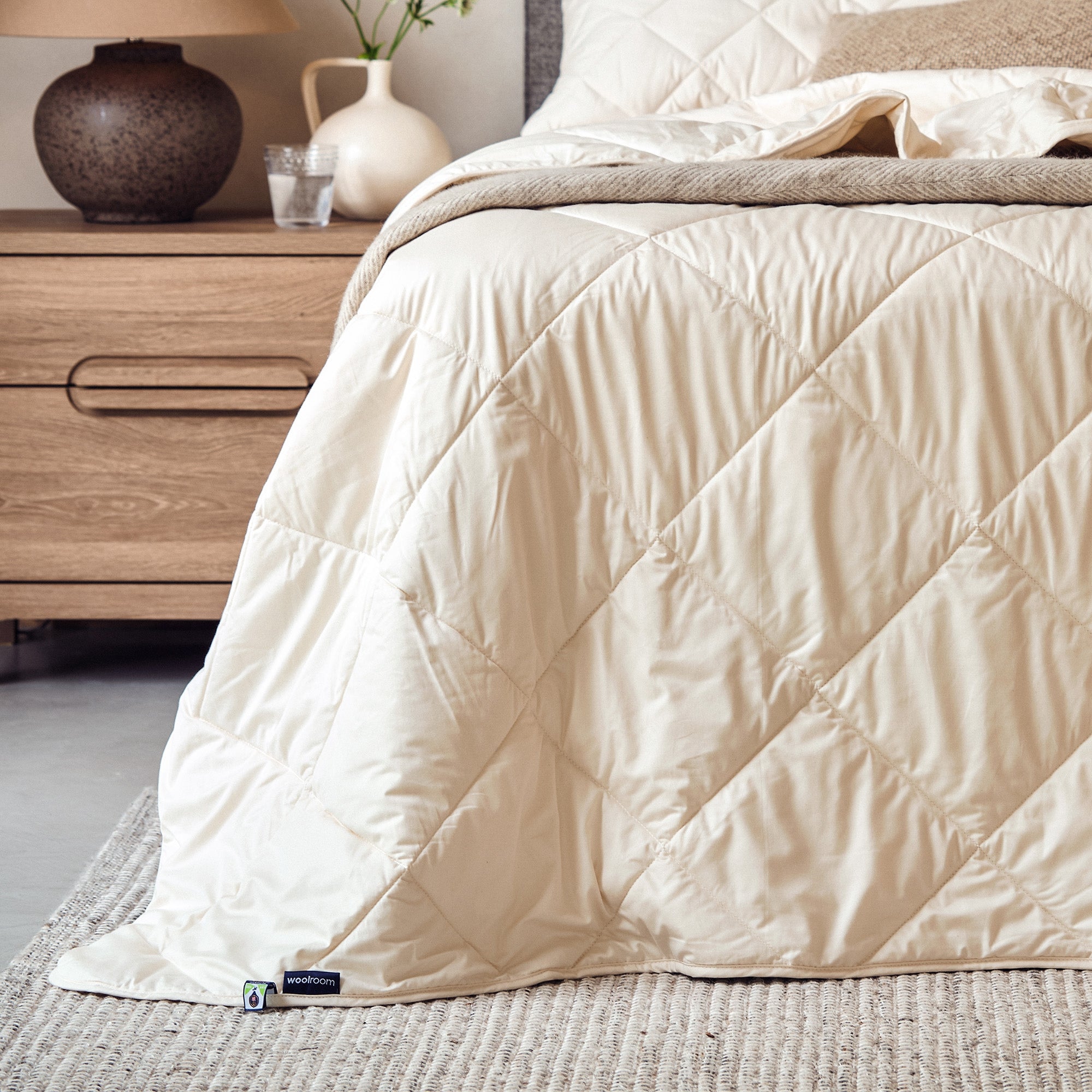
For a more natural approach to mattress protection, consider natural materials. Organic cotton and wool add a layer between you and your mattress. Wool in particular is an effective deterrent to dust mites and other common allergens. Woolroom’s natural wool mattress protectors are Allergy UK approved—they’ve been fully tested and certified as the only natural hypoallergenic mattress covers on the market. Plus, they’re fully washable for easy care.
Common Materials for Mattress Pads
Mattress pads come in natural and synthetic options. Most commonly, it’s a polyester fill designed for a touch of softness. Be mindful that polyester traps heat and it compacts over time. The soft feel you enjoyed in the first few weeks won’t be the same for long.
Wool and cotton, on the other hand, add softness without compromising airflow. Actually, they boost breathability and wool in particular is moisture wicking and temperature regulating. That’s in addition to its hypoallergenic benefits. Wool fibers are incredibly resilient as well. They have a crimped structure, like a tiny spring, and they bounce back into shape effectively again and again. That’s why high-quality wool sleep accessories far outperform their synthetic counterparts.
Common Materials for Mattress Toppers
As the tallest of the three, mattress toppers are made with more materials. Latex, memory foam, and wool are common.
While memory foam sounds good in theory, this petroleum-based material is notorious for trapping heat. Even gel-infused versions only delay heat retention—they don’t stop it completely. If you’re considering memory foam for its contouring benefits, be mindful about accidentally making yourself too warm.
Latex has similar pressure-relieving benefits, but it stays temperature neutral. It’s also incredibly resilient, so it has a much longer performance life than memory foam.
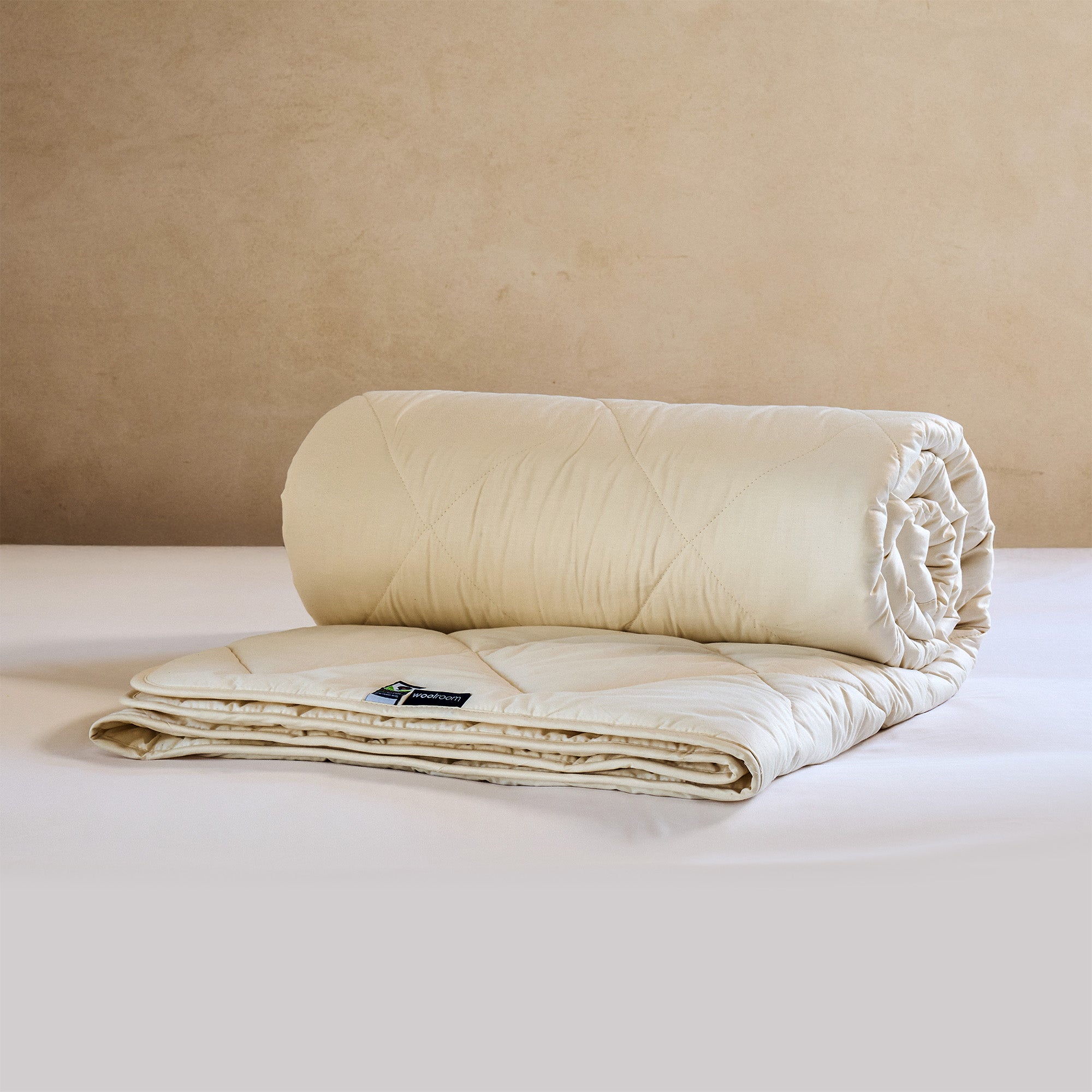
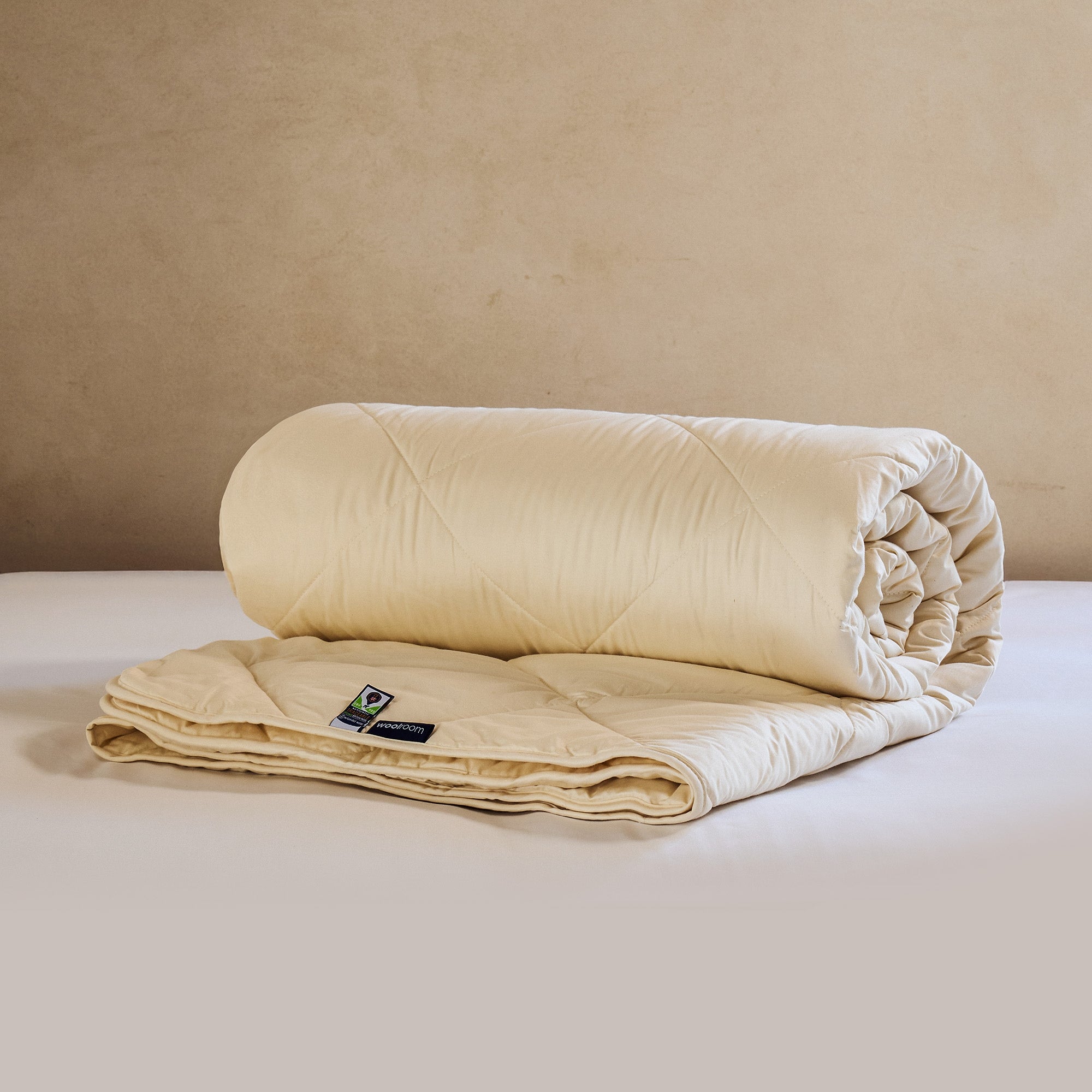
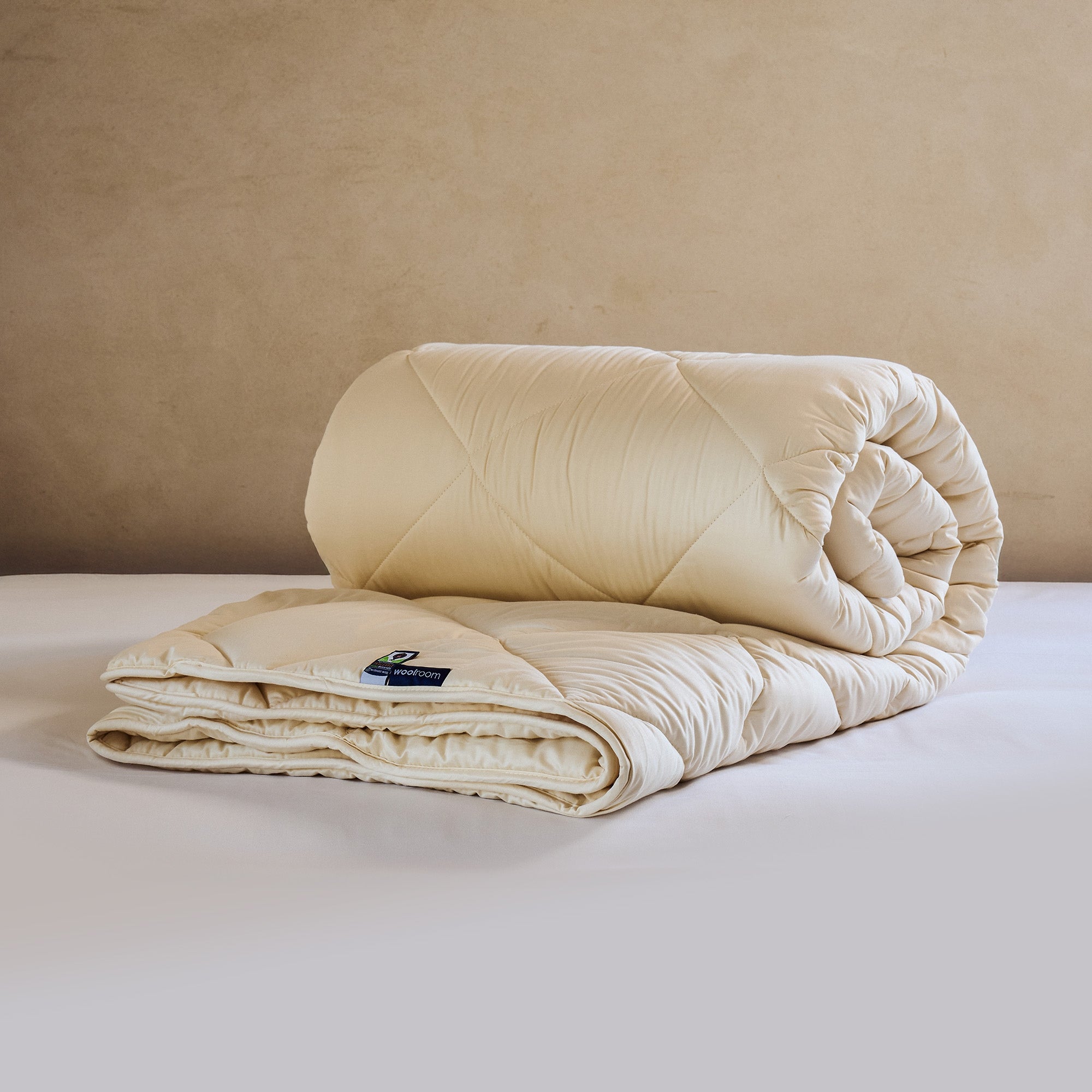
And then there’s wool, with all of its sleep-friendly benefits. Woolroom’s Wooly Mattress Topper is three to four inches of traceable organic British wool paired with a micro-coil layer designed for targeted pressure point relief. It’s made without any synthetic materials or adhesives, which means no off-gassing. Our Latex Wooly Topper adds a core of buoyant Talalay latex to the design for adaptive cushioning and a medium-soft feel that translates to plush comfort without feeling like you’re sinking in quicksand.

Why Choose Woolroom’s Wool Bedding?
If you’re leaning toward a wool protector, pad, or topper, we get it. Wool supports a stable microclimate, and it’s been proven to support deeper, more restorative sleep. But that doesn’t mean all wool bedding is equal.
Woolroom stands out from, er, the flock. Our 100% British wool is both ethical and fully traceable, and we’re very proud to partner with English farms that are committed to the five freedoms in the UK Animal Welfare Act of 2006. Our Wool ID® program shows you the people, places, and animals behind our products—just scan the QR code on our labels.
We don’t use synthetic materials or chemical additives in our bedding products, and they’re naturally antimicrobial. We’re the first and only wool bedding retailer to hold the OEKO-TEX Standard 100, and our farms and production facilities have earned GOTS (Global Organic Textile Standard) certification.
The Bottom Line on Mattress Protectors, Pads and Toppers
When it comes to mattress pads vs. toppers vs. protectors, the right choice comes down to what you actually need from your bed. If protection is the priority, a mattress protector does the job without disrupting your sleep surface. If your mattress is comfortable but could use a little more softness or breathability, a mattress pad is an easy upgrade. And if you're waking up stiff, overheated or just dreading bedtime, a mattress topper can transform how your bed feels—without the cost of replacing it entirely.
For any of these, materials matter more than most people realize. Synthetic fills may seem appealing upfront, but they tend to trap heat, compact quickly and fall short on longevity. Wool, on the hand, is breathable, moisture-wicking, naturally hypoallergenic and remarkably durable. Whether you choose a protector, pad, topper or a smart combination of all three, Woolroom's wool bedding is designed to work with your body—not against it—for deeper, more restorative sleep night after night.
FAQs
What is a mattress topper?
It’s a thick comfort layer—typically one to four inches—that sits on top of your existing mattress to change how it feels. Depending on the material, a topper can add softness, pressure relief, support or temperature regulation without the cost of replacing your mattress entirely.
Mattress pad vs mattress topper, which is better?
Neither is inherently better. It just depends on what your mattress needs. A pad delivers a subtle boost in softness and breathability while keeping your mattress clean. A topper is for a more significant comfort overhaul, especially if your mattress is too firm, causing aches or sleeping hot. If you only need a minor upgrade, start with a pad. If you need a real change, go with a topper.
Can a mattress pad replace a protector?
Not reliably. While a mattress pad does add a layer between you and your mattress, most aren't designed to block moisture or allergens the way a dedicated protector is. For full protection against spills, dust mites or pet dander, a mattress protector is the better sleep accessory.
Do I need a mattress pad and protector?
It depends on your goals. If you want a cleaner sleep surface and a touch more comfort, pairing the two makes sense—the protector handles hygiene while the pad handles feel. Wool versions of both are particularly effective layered together, since they share functional benefits like temperature regulation and moisture management.
What’s the best type of mattress topper for hot sleepers?
Wool is ideal for hot sleepers. Unlike memory foam, which traps body heat, wool is naturally breathable and moisture-wicking. It actively maintains a stable sleep temperature throughout the night.
Mattress pad vs mattress protector vs mattress topper, what’s the difference?
A mattress protector is a thin, hygienic barrier designed to shield your mattress from spills, allergens and bacteria. A mattress pad adds a subtle layer of softness and breathability on top of an already comfortable mattress. A mattress topper is the thickest option, built to substantially change how your mattress feels.