Key Takeaways
- Memory foam toppers soften and contour, providing deep pressure relief and motion isolation, but they often trap heat and can feel restrictive for some sleepers.
- Wool toppers regulate temperature and moisture. They improve airflow, reduce overheating, and add gentle cushioning without changing mattress support dramatically.
- Feel and sleep temperature are the biggest differences. Memory foam creates a sink-in “hug,” while wool offers a lifted, responsive feel with better breathability.
- Wool toppers tend to last longer. Wool maintains loft and comfort over time, while many foam toppers compress or degrade more quickly.
Mattress toppers can go a long way to improve comfort and temperature regulation on an existing mattress. But to ensure you aren’t simply stacking a mattress that sleeps hot with a topper that sleeps hots, a little consumer education is in order. Memory foam is one of the most common materials for a topper, but that doesn’t mean it’s the best option. It’s not as ubiquitous, but a high-quality wool topper tends to be the better choice, and it’s all thanks to the innate characteristics of the humble wool fiber. Unlike petroleum-based memory foam, wool naturally regulates temperature, wicks moisture, and breathes to support a stable, comfortable microclimate—exactly what you need for a better night’s sleep.
In this wool vs memory foam topper comparison guide, we’re walking through all the details you need to make the best decision for your bedroom.
Quick Answer
If you sleep hot, care about natural materials, or want to improve comfort without trapping heat, a wool mattress topper is usually the better choice. Memory foam can provide deeper contouring and pressure relief, but it retains heat, off-gasses synthetic chemicals, and breaks down faster. Wool toppers regulate temperature, wick moisture, breathe naturally, and offer long-term durability. That makes them a smarter upgrade for most sleepers, especially if you’re sensitive to heat or materials.

What is a Memory Foam Mattress Topper
A memory foam topper is a layer of high-density polyurethane foam that goes right on top of your current mattress. As a material, memory foam responds to heat and pressure, slowly conforming the curves of the body for a hugged sensation with no gaps between you and the material.
On the plus side, memory foam does a good job of distributing body weight, which takes pressure off sensitive spots like the shoulders, hips, and lower back. Because it’s so dense, memory foam also dampens the transfer of movement. That can help reduce nighttime disruptions if you share your bed with a restless sleeper. On the other hand, its slow-moving nature can make it difficult to easily change positions. That’s not ideal if you’re a combination sleeper.
Since memory foam contours so closely to the body, one of its biggest drawbacks is heat retention. The material is dense, so it lacks breathability, and it doesn’t wick moisture. As body temperature fluctuates during sleep, memory foam heat and sweat close to the body. More often than not, that leads to overheating and disrupted sleep.
The other issue for some people is that memory foam is a synthetic material. It’s chemically produced and poses environmental concerns. But beyond that, it means off-gassing is common. What’s more, research shows that volatile organic compounds (VOCs) continue to be released long after the odor itself dissipates.
What is a Wool Mattress Topper?
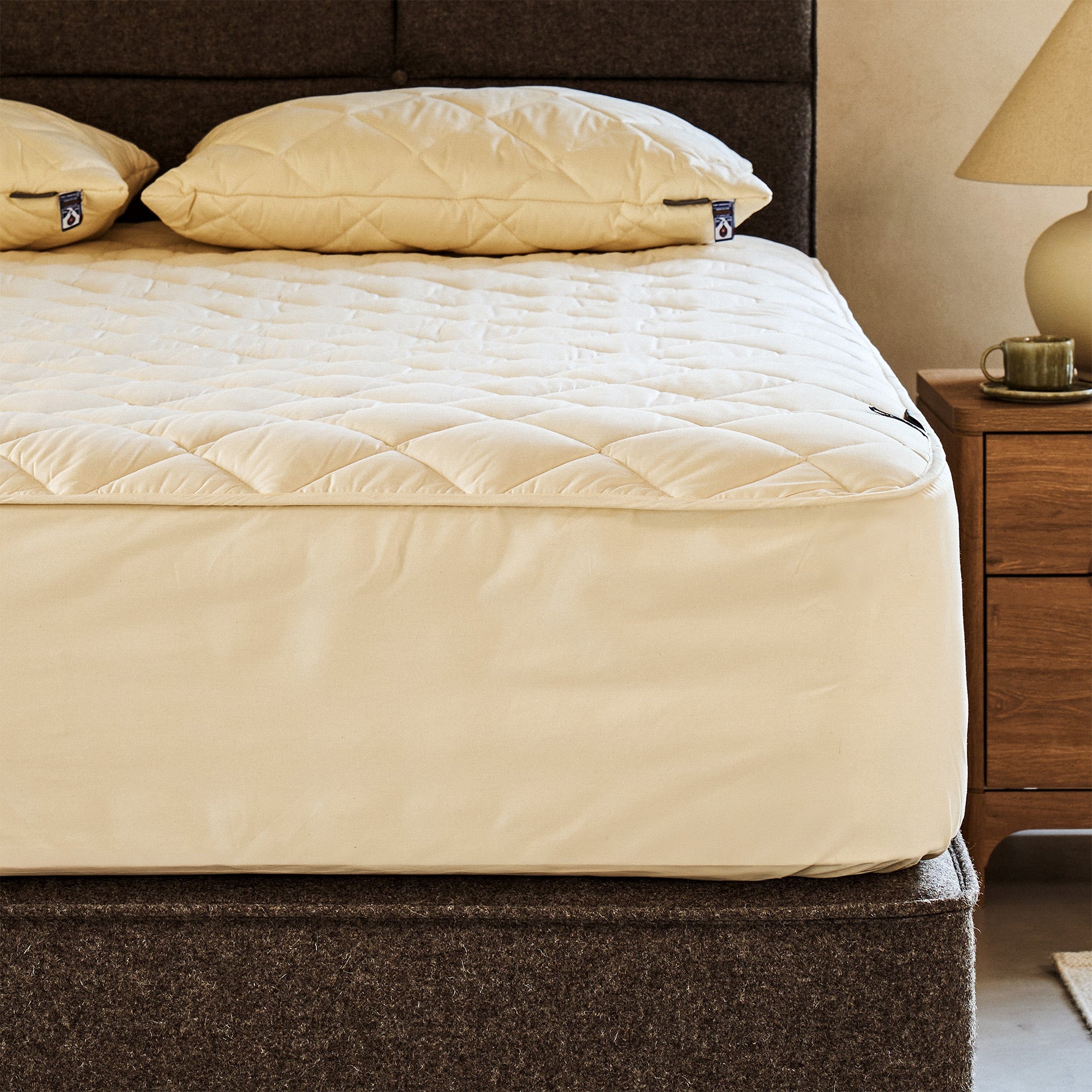
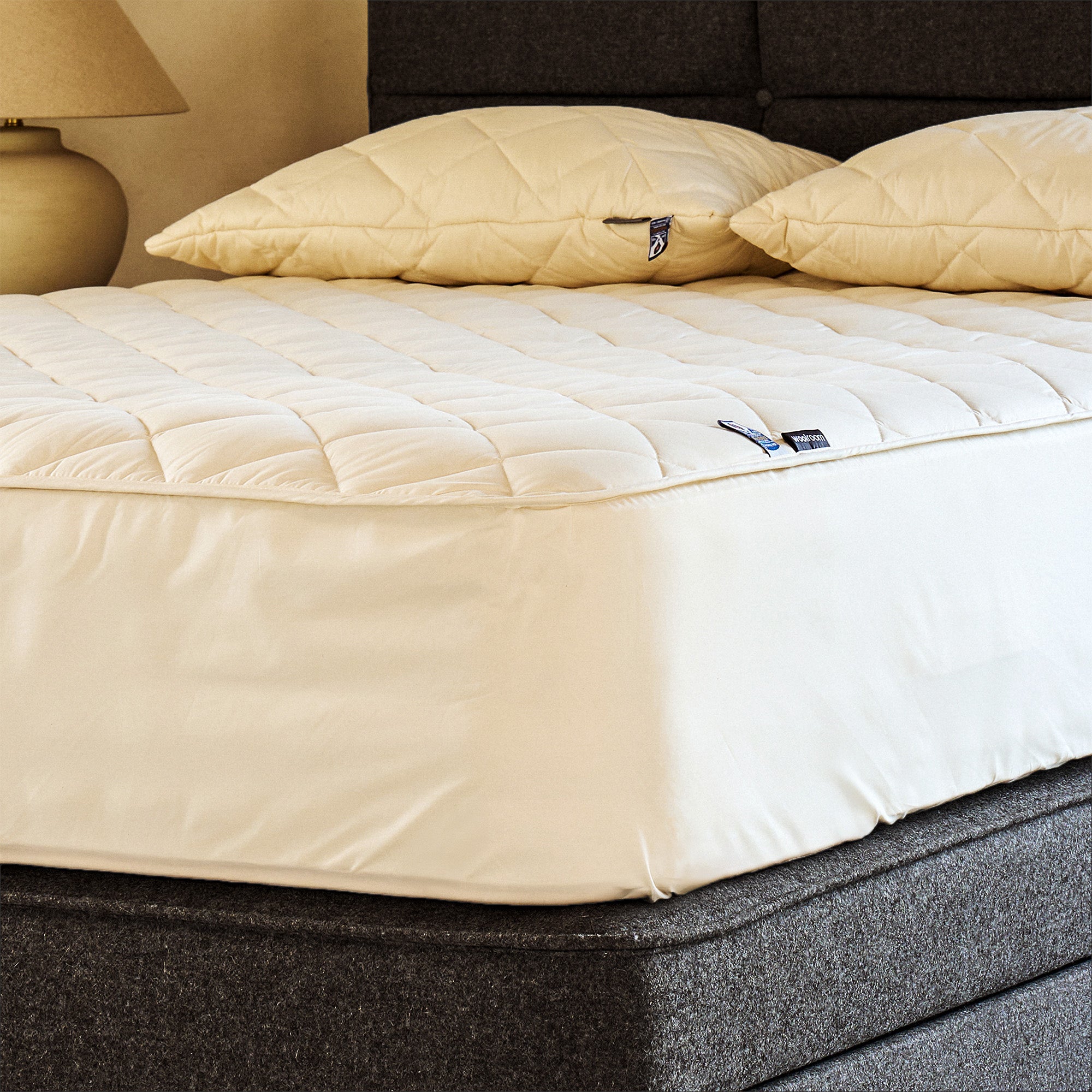
In design, a wool mattress topper is just like a memory foam topper. It’s a removable layer designed to go over an existing mattress to change how it feels, and often, how well it regulates temperature. Wool mattress toppers don’t have a significant impact on firmness, but they can seriously upgrade the overall sleep climate. That’s mostly because wool fibers are naturally suited to supporting sleep—they’re breathable, temperature regulating and moisture wicking, which is why they can be used comfortably year-round in all kinds of climates and why they work so well if overheating while you sleep is an issue.
Wool fibers are naturally coiled, so they spring back into following the release of pressure. In a topper, that structure offers adaptive support for tension relief in those pressure-prone areas—the hips, shoulders, and lower back.
Unlike memory foam, wool is naturally derived, naturally hypoallergenic, and naturally resistant to common allergens and irritants, like dust mites. And when your wool topper comes from Woolroom, it’s also incredibly eco-friendly. Wool is recyclable, biodegradable, and impressively durable, so it performs better for longer than memory foam, which degrades much faster. Plus, our natural wool toppers and mattresses are made without synthetic foams, glues/adhesives, petrochemicals, and chemical flame retardants, so they’re a safe option for people with sensitivities.
Still, wool mattress toppers may not be right for everyone. Wool doesn’t contour as deeply as memory foam, so it doesn’t have the same “sink-in” feel. Wool toppers also tend to cost more upfront, and the fill can compress over time, requiring occasional fluffing or rotation to maintain even loft.
Wool vs Memory Foam Topper
Feature |
Wool Topper |
Memory Foam Topper |
|---|---|---|
Comfort/Feel |
Plush, breathable cushioning; naturally springy and supportive |
Deep contouring “hug” feel; cradles body and adapts to shape |
Temperature Regulation |
Excellent – wool wicks moisture and allows airflow; ideal for hot sleepers |
Poor to moderate – traps heat unless infused with cooling tech |
Support & Pressure Relief |
Gentle pressure relief; good for even weight distribution, not deep sink |
Superior pressure relief; especially effective for side sleepers |
Motion Isolation |
Moderate – absorbs some movement naturally but not as isolating as foam |
High – excellent for couples; isolates movement very well |
Durability |
Long-lasting (5–10 years); wool resists compression with proper care |
Varies by density; lower quality foams may sag after 2–3 years |
Eco & Health Credentials |
Natural, renewable, biodegradable; often free from synthetics or chemicals |
Synthetic; may off-gas VOCs; less eco-friendly without certifications |
Typical Cost |
Moderate to high – reflects quality of wool and natural sourcing |
Budget to mid-range – wide price range depending on foam density |
Temperature and Comfort
The biggest difference between memory foam and wool mattress toppers isn’t how they feel. It’s how they regulate temperature. Memory foam traps heat, creating a warmer, often muggy microclimate close to the body.
Wool, on the other hand, helps regulate both heat and moisture. Wool fibers release excess warmth and wick moisture efficiently, which supports a drier, more stable sleep environment and that’s true year-round.
Wool is often praised for its cozy feel. In cooler weather, the tiny air pockets created by the coiled structure of individual wool fibers help retain warmth. As body temperature rises, those same fibers release heat and absorb moisture—up to 30% of their own weight—without feeling heavy or damp. That moisture is then released into the surrounding air, helping you stay comfortable and dry through the night.
Support, Pressure Relief, and Feel
The comfort difference between memory foam and wool really comes down to personal preference. Some people really like memory foam’s signature close contouring and deep sink, and pressure relief is one of the benefits of this material because of that cradling effect. It can be especially beneficial for side sleepers or those trying to noticeably soften a mattress that feels too firm.
Wool’s support is different. Instead of sinking, wool fibers are gently cushioning and impressively resilient. They respond to movement, springing back into place, which contributes to a more lifted, buoyant sensation. That makes wool toppers a good fit for sleepers who are generally satisfied with their mattress but want to improve comfort, breathability, and temperature regulation instead of dramatically changing firmness.
Health, Eco, & Materials
When it comes to materials, sustainability, and health considerations, the difference between memory foam and wool is stark.
Memory foam is derived from petroleum-based chemicals and manufactured using synthetic compounds. During production and after unboxing, polyfoam can emit volatile organic compounds (VOCs), a process known as off-gassing. These emissions are typically strongest when the product is new and declines over time, but let’s be clear—you’re exposed to it in your bedroom. Certain VOCs and foam-related chemicals, including isocyanates used during manufacturing, have been associated with health issues like respiratory irritation, headaches, dizziness, skin and eye irritation, and allergic responses—particularly in people who are sensitive to chemicals or already prone to allergies.
Some manufacturers try to reduce customer exposure by recommending an airing-out period or by using foam curing techniques. But the materials themselves remain synthetic. For sleepers who prioritize natural materials or want to minimize chemical exposure in the bedroom, this can be a major drawback.
Wool mattress toppers take a very different approach. Wool itself is natural and renewable fiber that’s inherently hypoallergenic. High-quality wool toppers, like those here at Woolroom, are generally made with traceable wool sources and certified to meet strict standards for chemical safety, animal welfare, and environmental responsibility. Because wool has no need for synthetic foams, adhesives, or chemical flame retardants, it’s considered a cleaner, more eco-conscious option—especially for people with sensitivities or those looking to reduce their exposure to man-made materials while they sleep.

Durability, Maintenance, & Value
Durability isn’t a given for memory foam toppers. Details like foam density and construction quality play a key role in performance and longevity. Lower-density foams are more likely to sag or develop body impressions, simply from nightly use. It’s a bit of a catch-22. Memory foam responds to heat and pressure, but that’s what contributes to the material’s breakdown. Higher-density foams can last longer, but that tends to come with a higher price tag and you’re still facing the same issue.
Durability is one of the hallmarks of wool. That spring-like structure means wool fibers are naturally resilient, maintaining loft and support over time. With minimal care—fluffing and regular rotation—wool toppers can perform exceptionally well for many years. And while they often have a higher upfront cost, the long-term value is strong because they perform consistently without degrading quickly.
Mattress Topper Buying Guide & Decision Criteria
Choosing between a wool mattress topper and one made with memory foam often comes down to personal sleep needs and preferences. Since both materials solve different problems, it can be helpful to ask yourself, how different do I need my bed to be? That’s the best way to get a topper that does what you need it to do.
What to Look For in Wool Mattress Toppers
A good place to start is with fill weight and loft. That’s what dictates cushioning and temperature regulation. Too little wool fill could feel negligible, while too much can raise mattress height more than you want.
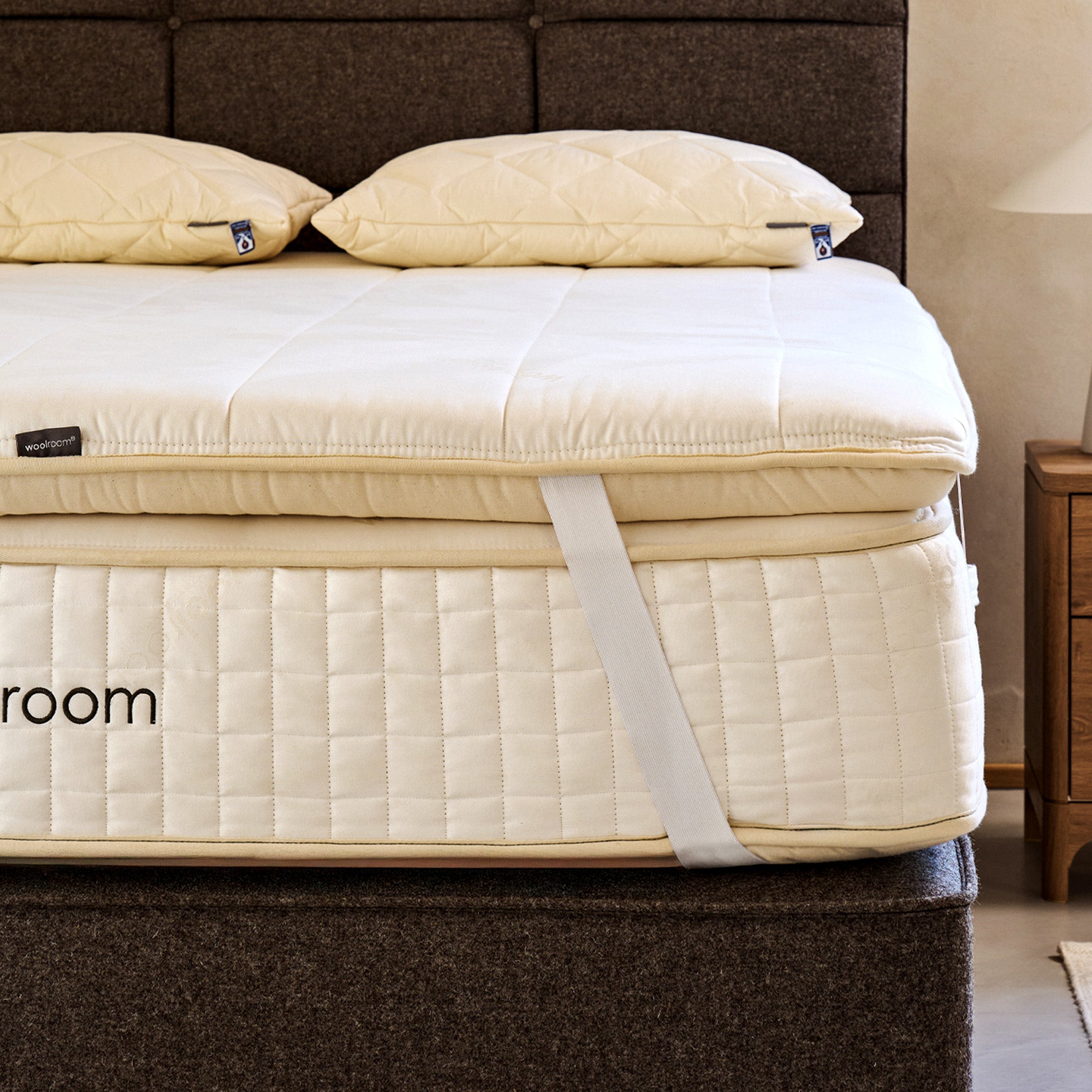
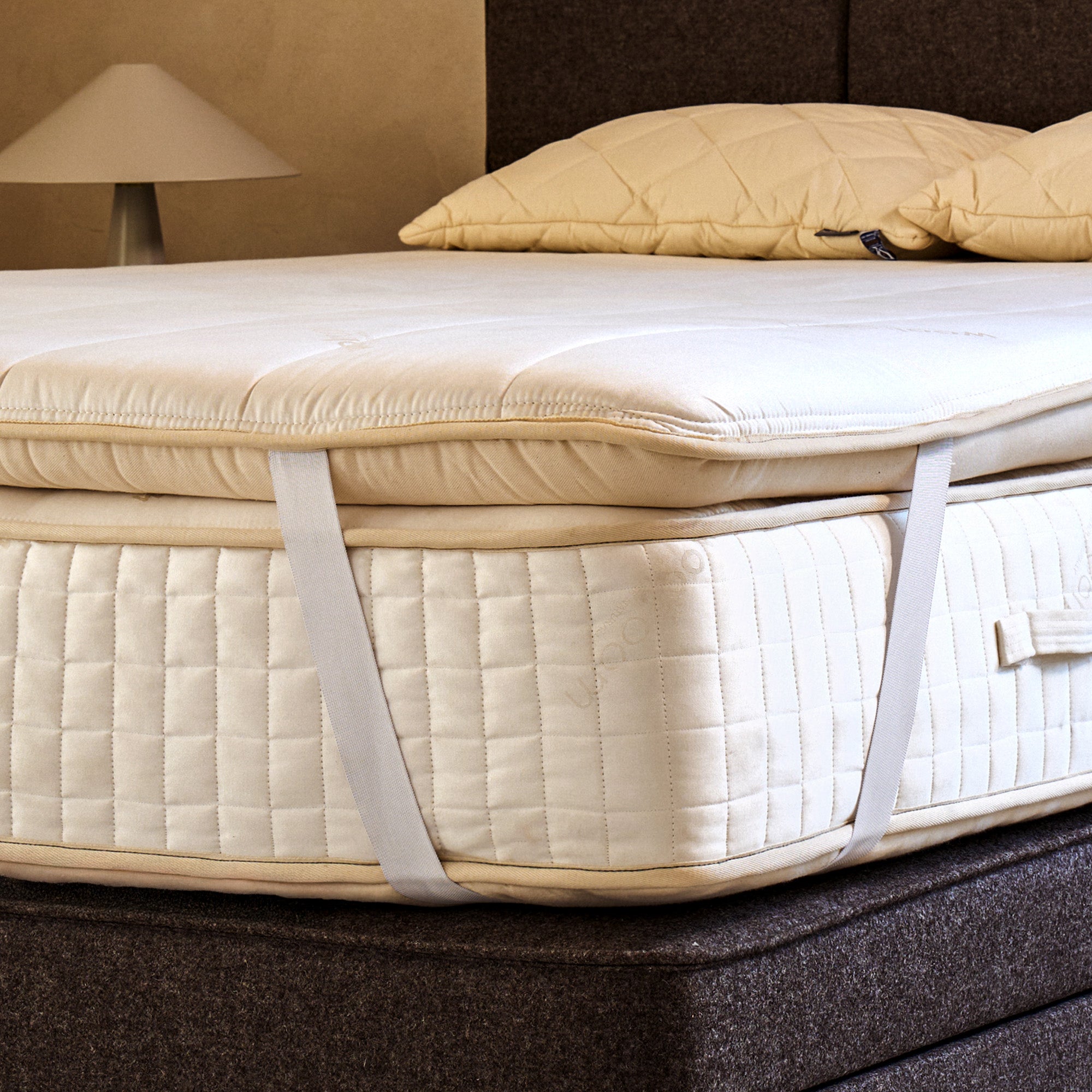
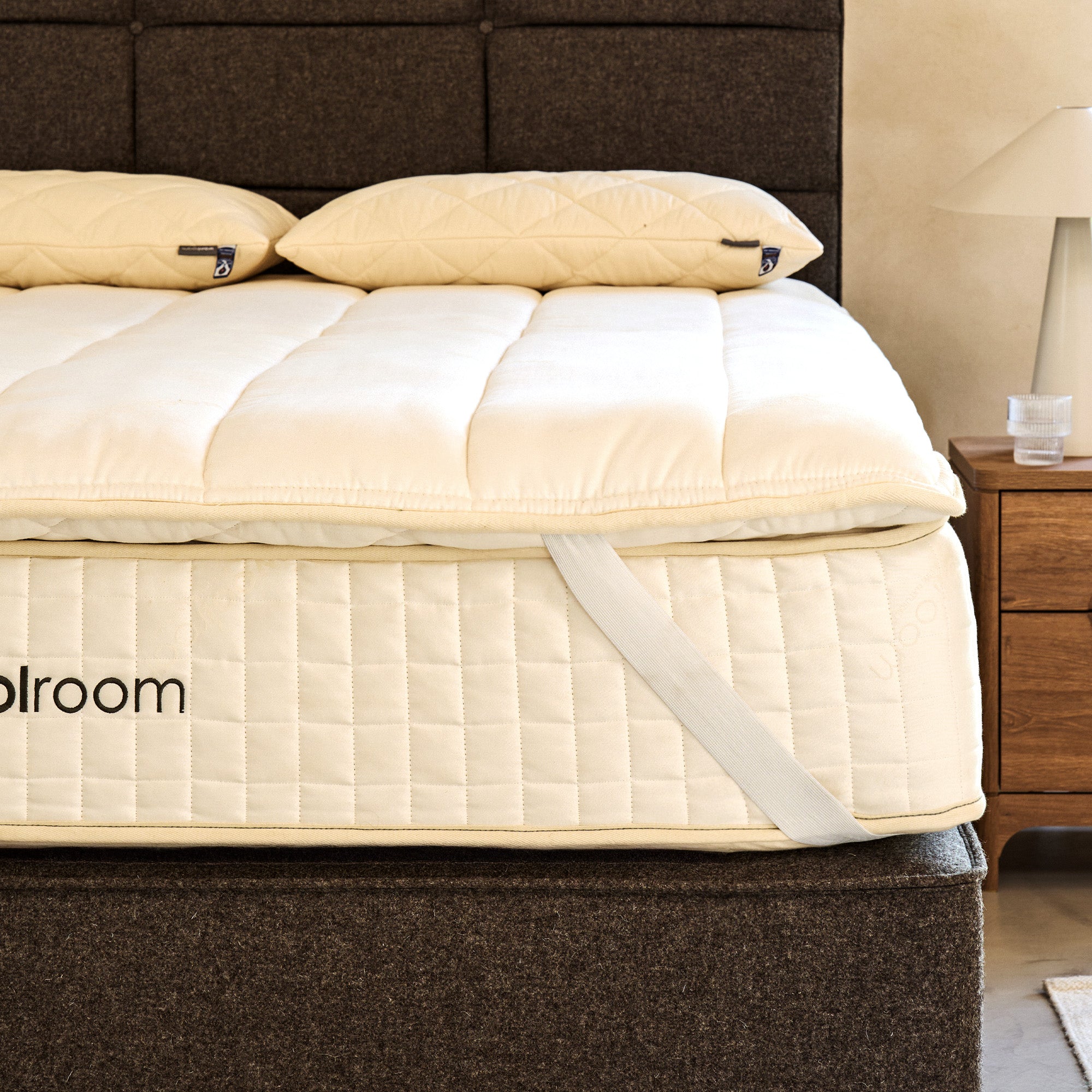
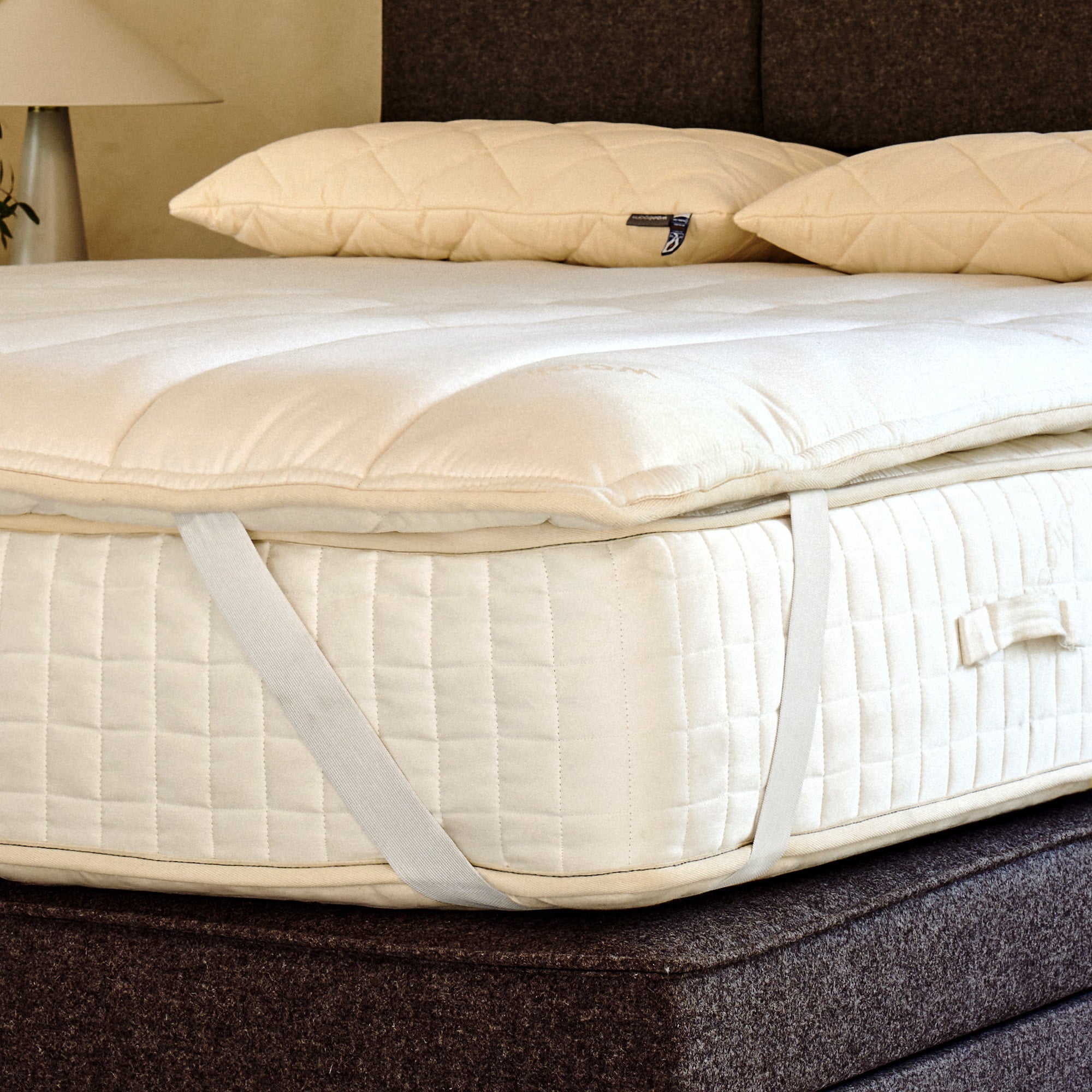
Check the cover fabric, too. Breathable cotton—especially percale or other tightly woven natural fabrics—helps maximize airflow and moisture regulation. Then, consider the topper’s construction. Since a secure fit is important, check to see whether it’s fitted with corner straps or a skirt. Make sure to choose a topper that’s designed for your mattress size and depth as well.
Keep in mind that not all wool toppers are created equal. If sustainability and ethical practices are important to you, look for relevant certifications and sourcing transparency. Finally, consider thickness carefully. Remember that wool toppers are meant to enhance comfort and sleep climate, not dramatically change mattress firmness.
What to Look For in Memory Foam Mattress Toppers
If you’re going with memory foam, pay attention to foam density. It’s one of the most important indicators of durability and performance, and higher-density foams tend to outperform lower-density foams.
Thickness and feel are also important. A very thick memory foam topper can significantly change how a mattress feels—sometimes to the point that it mimics a new mattress altogether. Cooling features such as gel infusions or open-cell foam structures may help reduce heat buildup, but that’s really only an initial benefit. Consider it moderate, short-term relief, not lasting cooling throughout the night.
Consider the topper cover, too. Breathable fabrics and removable, washable covers can improve comfort and hygiene. Secure attachments, meanwhile, help prevent shifting during the night.
Why Woolroom’s Offer is a Strong Choice
If you’re leaning towards wool, Woolroom’s toppers tick all the boxes for comfort, temperature regulation, sustainability, and ethical considerations. All of our bedding products are made with 100% British wool. It comes directly from handpicked farms that meet the five freedoms outlined in the UK Animal Welfare Act of 2006. Meanwhile, our Wool ID® program ensures full transparency from the sheep to your bed.
To avoid the greenwashing that’s common in this category, Woolroom also relies on independent third-party certifications to verify quality, safety, and sustainability. Our products and production facilities meet Global Organic Textile Standard (GOTS) requirements, are certified OEKO-TEX® Standard 100, and carry the Shepherd’s Crook mark for authentic traceable British wool. Plus, our natural wool bedding also holds the Allergy UK Seal of Approval and is Woolmark certified.
All of this helps ensure Woolroom’s toppers deliver breathable, temperature-regulating comfort without synthetic foams, chemical treatments, or flame retardants—making them a durable, eco-conscious choice designed to perform night after night.
Woolroom’s natural wool toppers are best suited for:
- Sleepers who run hot or experience night sweats
- People sensitive to synthetic foams, odors, or chemical finishes
- Buyers who prioritize sustainability, traceability, and certified materials
- Anyone looking to enhance comfort without compromising airflow or support
Final Verdict: Wool vs. Memory Foam Mattress Toppers
If cooler sleep, breathability, and natural materials are high on your priority list, a wool mattress topper from Woolroom is a thoughtful upgrade. It’s true that memory foam can deliver deep contouring and pressure relief, but it comes with trade-offs in heat retention, chemical exposure, and long-term durability. Wool offers a different kind of comfort—one that supports temperature balance, moisture control, and responsiveness without relying on synthetic foams.
For sleepers who run warm, have sensitivities, or simply want a cleaner, more sustainable sleep surface, Woolroom’s wool mattress toppers are a well-rounded alternative that enhances comfort while preserving airflow and long-term performance.

Frequently Asked Questions
What’s the difference between wool and memory foam mattress toppers?
Wool mattress toppers are made from natural fibers that regulate temperature and moisture. Memory foam toppers are synthetic and designed to contour closely to the body for pressure relief.
Which mattress topper is better for hot sleepers?
Wool. Wool naturally allows airflow, releases excess heat, and wicks moisture, helping hot sleepers stay cooler and drier through the night.
Do foam mattress toppers trap heat?
Yes. Traditional memory foam in particular tends to retain heat due to its dense structure, which can create a warmer sleep environment—especially for people who already sleep hot.
Are wool toppers natural and sustainable?
Yes. Wool is a renewable, biodegradable material. Wool mattress toppers from Woolroom are produced without synthetic foams or chemical flame retardants. They’re also ethically sourced and fully traceable, making them a more sustainable, mindful bedding option.
Which topper offers better pressure relief?
Memory foam provides deeper contouring and cradles pressure points more dramatically. Wool has gentler, more balanced cushioning with natural responsiveness instead of deep sinkage.
How thick should a mattress topper be?
Most toppers work best at 2–4 inches thick. Memory foam often needs to be a little thicker to noticeably change mattress feel, while wool can enhance comfort and temperature regulation with less loft.
Which mattress topper lasts longer?
With proper care, wool mattress toppers typically last longer than memory foam, which can compress and break down more quickly—especially when exposed to heat.
Can wool feel as supportive as memory foam?
Not in the same way. Memory foam molds closely to the body, while wool provides supportive cushioning with natural resilience and bounce instead of a sink-in feel.
Which type of mattress topper costs more?
Wool toppers usually have a higher upfront cost, but their durability, breathability, and long lifespan often make them a better long-term value.