Pillow Buying Guides


The Ultimate Pillow Buying Guide: Your Path to Better Sleep
It’s well known that we spend a third of our lives with our heads resting on a pillow. Yet, it’s often the most overlooked component of a healthy sleep environment. A pillow isn’t just a soft place to lay your head after a long, hard day – it’s a vital orthopedic tool.
The Science of Sleep Quality
Think of your pillow as the bridge between your head and your mattress. If that ‘bridge’ is wobbly, the rest of your sleep will be, too. A great pillow has two main jobs to do while you’re snoozing in dreamland.
1. Spinal Alignment – Keeping Your Body in Neural
Your neck is home to a complex system of muscles and nerves. When you sleep, those muscles want to completely relax, but they can only do that if your neck is perfectly straight.

- The ‘Too High’ Problem: If your pillow is too thick, it pushes your chin toward your chest. It’s like walking around all day looking at your feet - eventually, your neck is going to protest with a tension headache.
- The ‘Too Low’ Problem: If your pillow is too flat, your head tilts backward. This stretches the front of your neck and can actually make it harder to breathe clearly, leading to more restless tossing and turning.
- The ‘Just Right’ Feel: When your pillow is the perfect height, your spine is in a straight, neutral line. Your muscles finally get the ‘all-clear’ to relax, which is the key to waking up without that morning stiffness.
2. Thermal Regulation – Managing Your ‘Personal Climate’
Did you know your head is like a radiator? It’s the primary way your body dumps heat to help you fall into a deep sleep.
- The Heat Trap: Many modern pillows (especially those made of foam or polyester) act like a thermal flask. They trap the heat your head is trying to release. When you get too hot, your brain nudges you out of deep, regenerative REM sleep just enough to make you move or flip the pillow. You might not even remember doing it, but it ruins the quality of your rest.
- The Humidity Factor: We all lose a little moisture through our skin at night. If your pillow can’t ‘breathe,’ that moisture stays trapped against your skin, making you feel clammy and overheated.
- The Natural Solution: This is where natural fibers like wool really shine. They don't just sit there - they actively move heat and moisture away from your face. It keeps you at a steady, comfortable temperature all night, so you stay in those deep, restorative sleep stages longer.
What are the Different Types of Pillows?
Understanding the pillow shapes available and what’s inside of them are you first steps to a better night’s sleep.
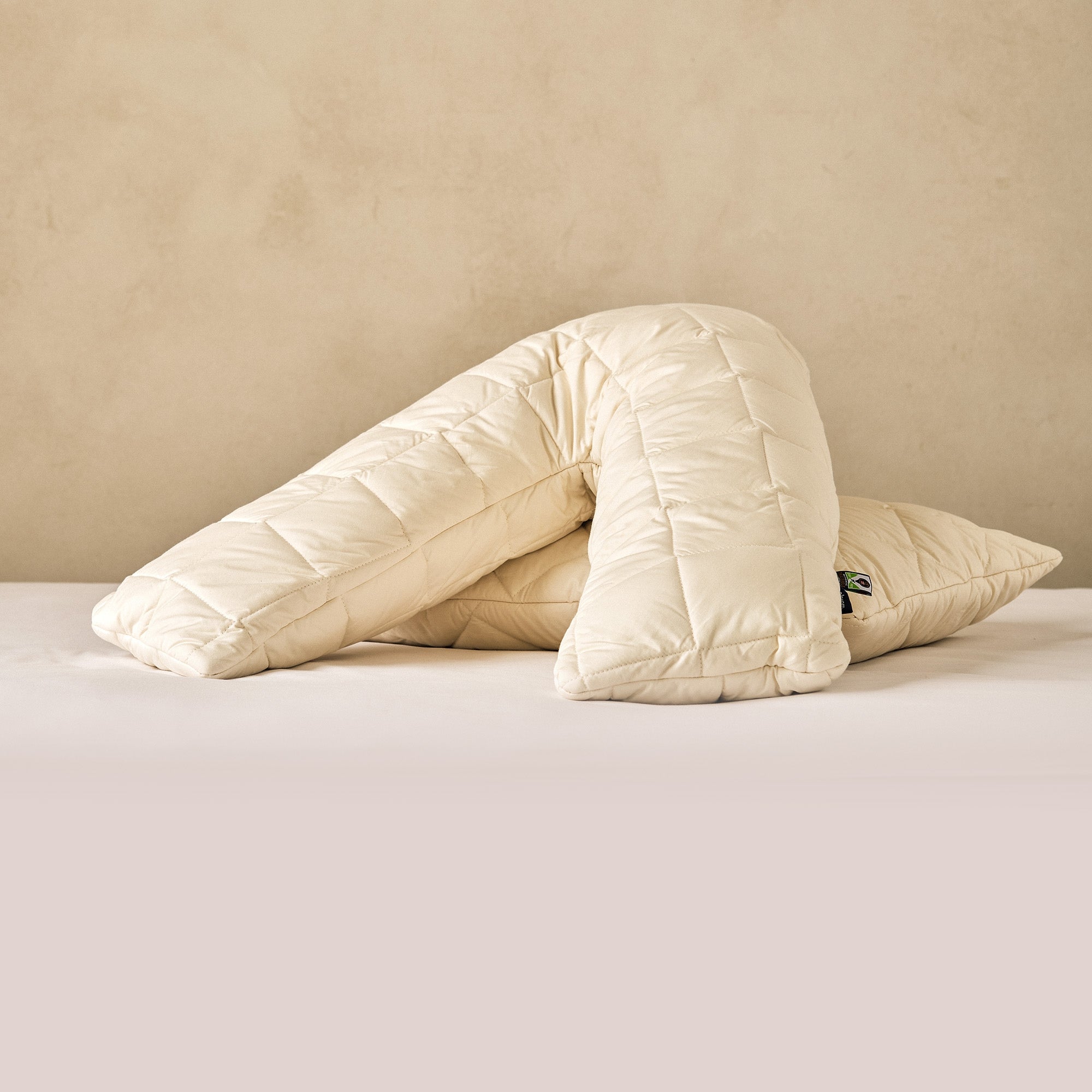
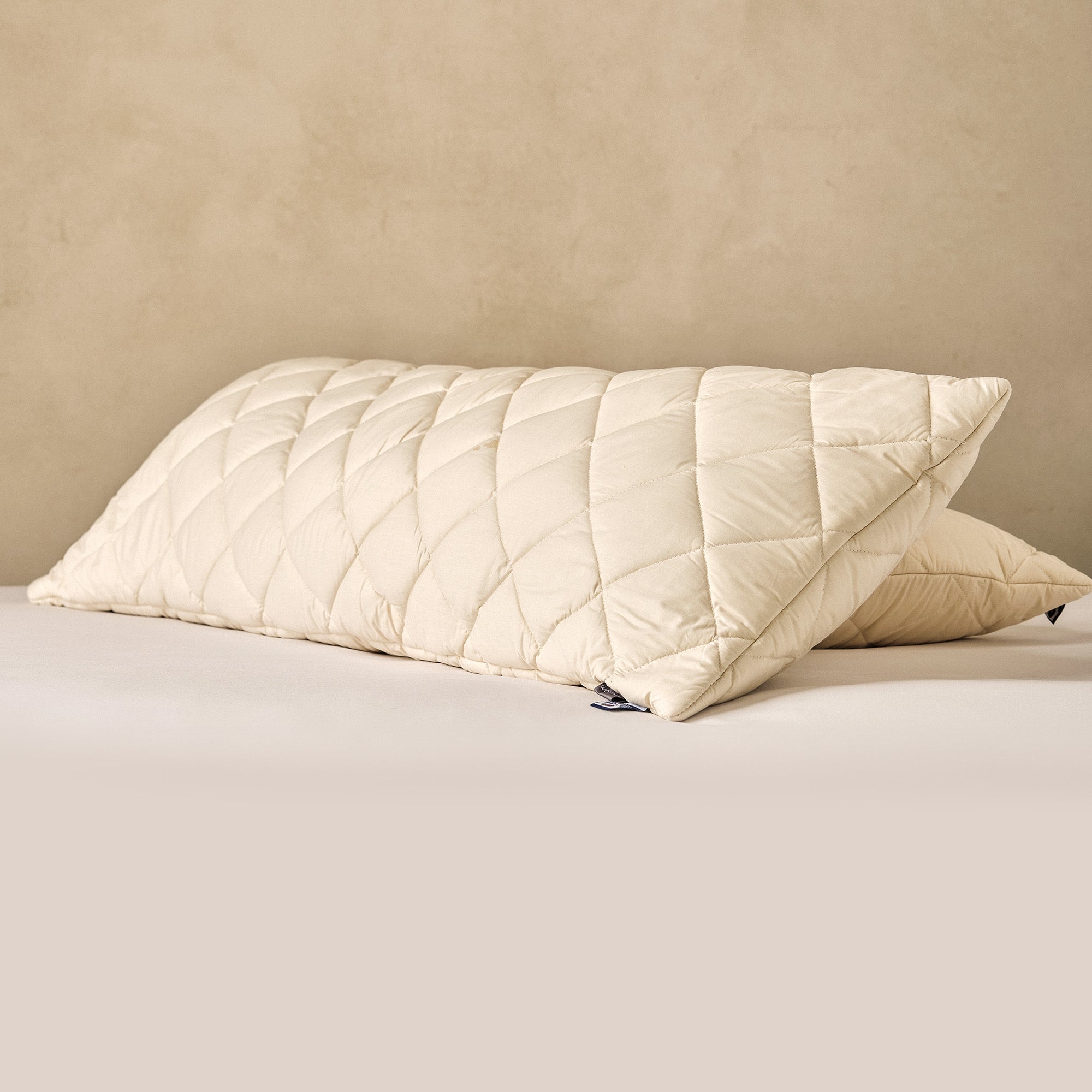
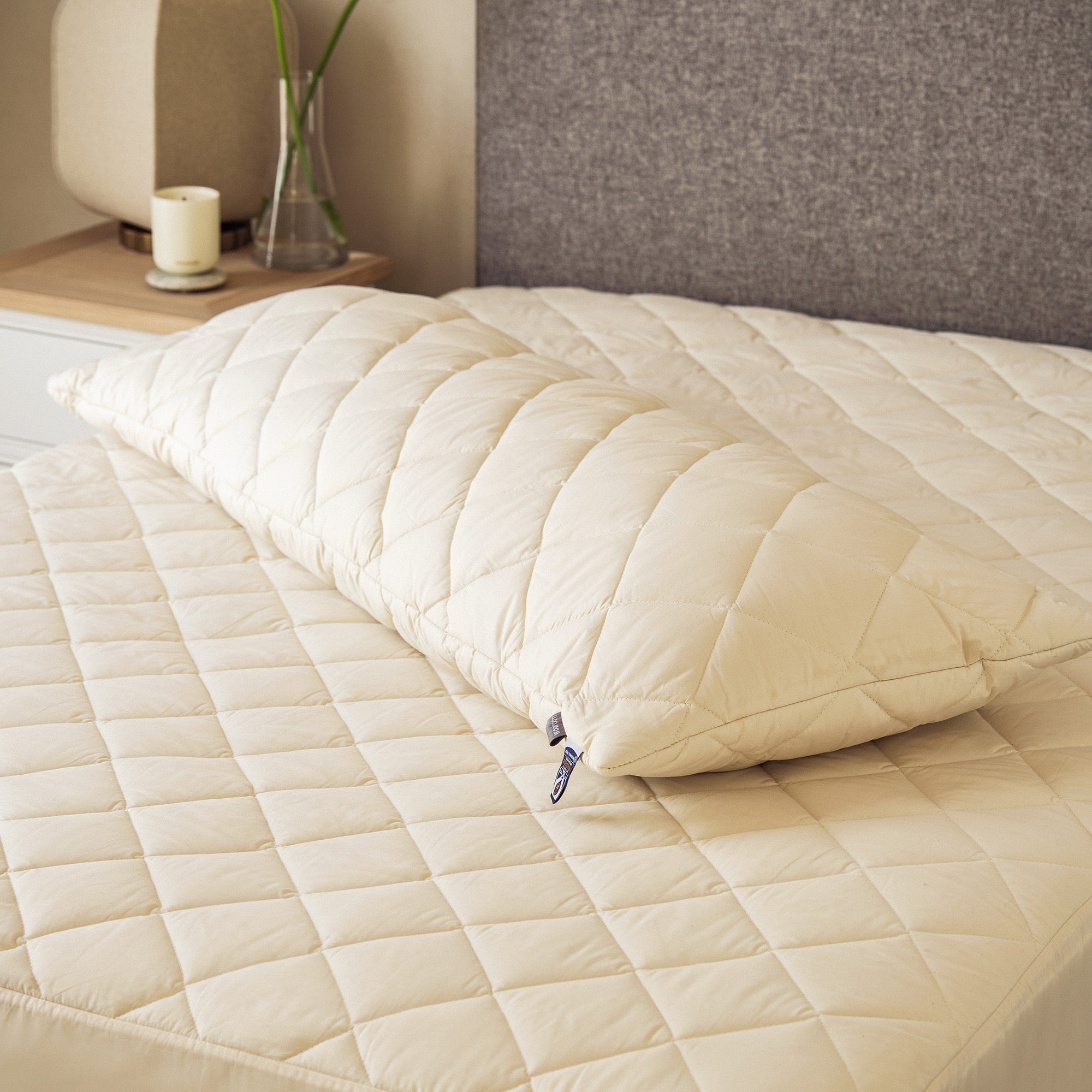
The most common pillow shapes are standard, V-shaped and body.


What are Pillows Usually Filled With?
You’ll find them filled with:
- Synthetics: cheaper pillows tend to be filled with polyester, which tends to trap heat and flattens quickly.
- Feather/Down: very soft and very squishy, it often lacks the structural support needed for good neck alignment.
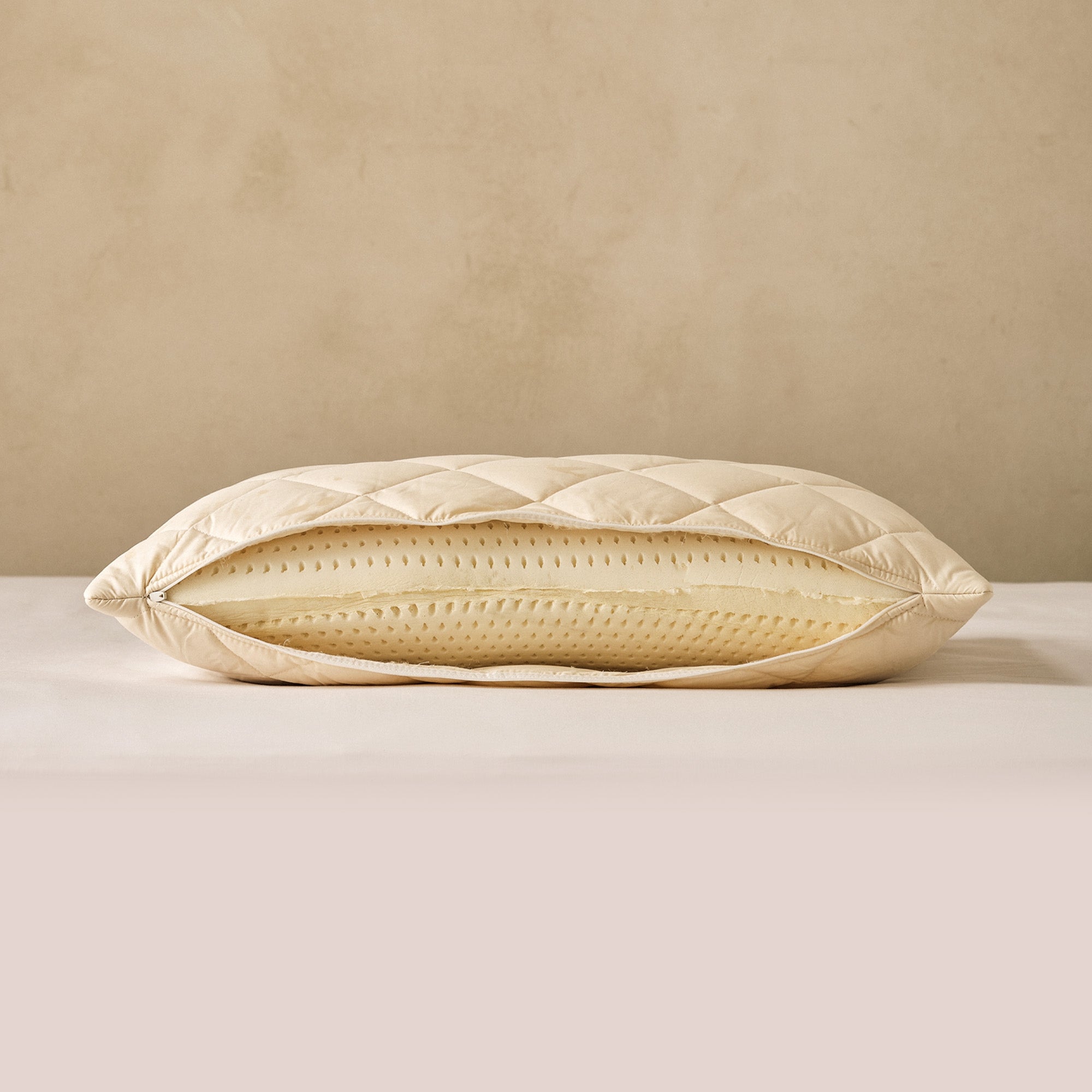
- Natural latex: buoyant and springy, natural latex offers excellent pressure relief without the ‘sinking’ feeling of foam.
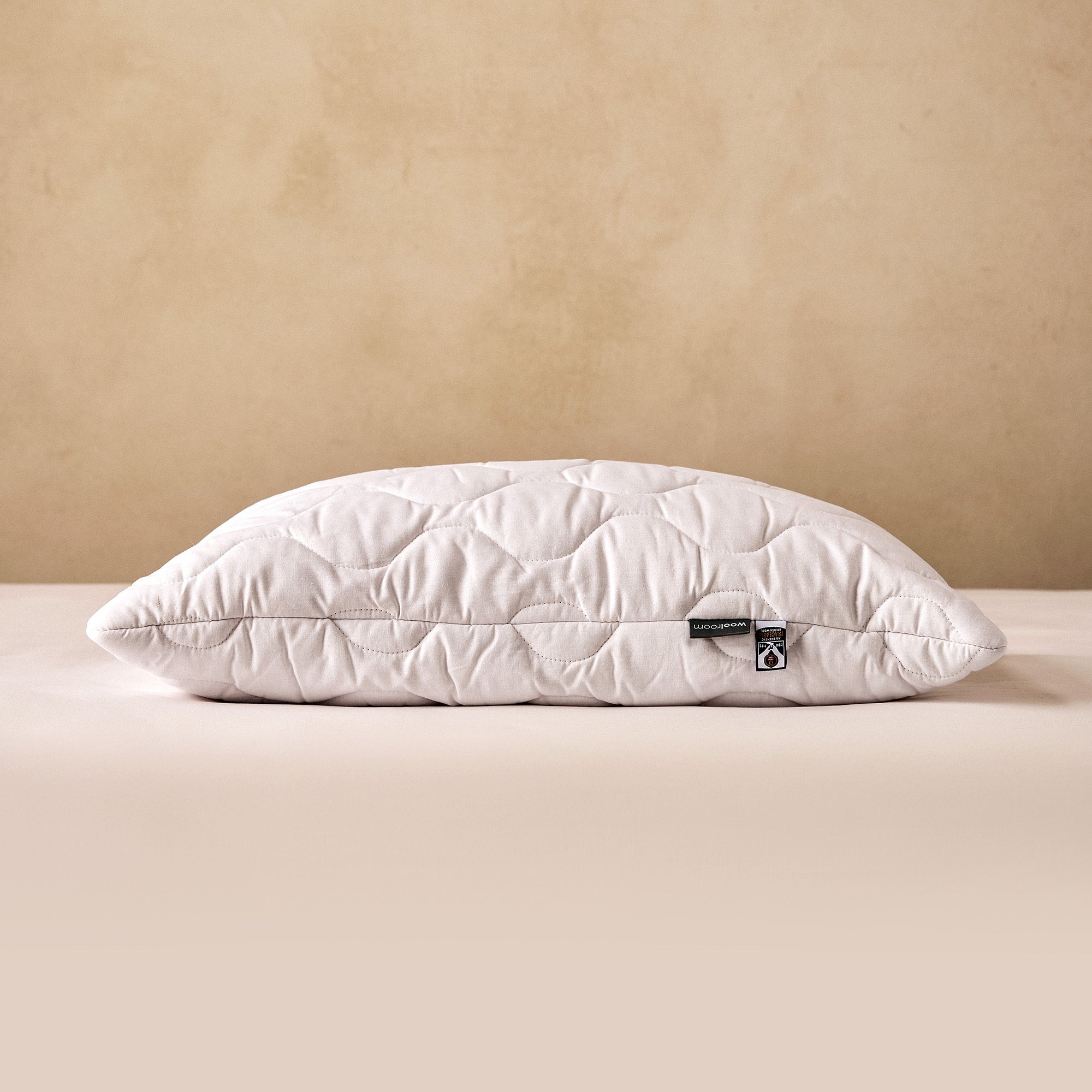
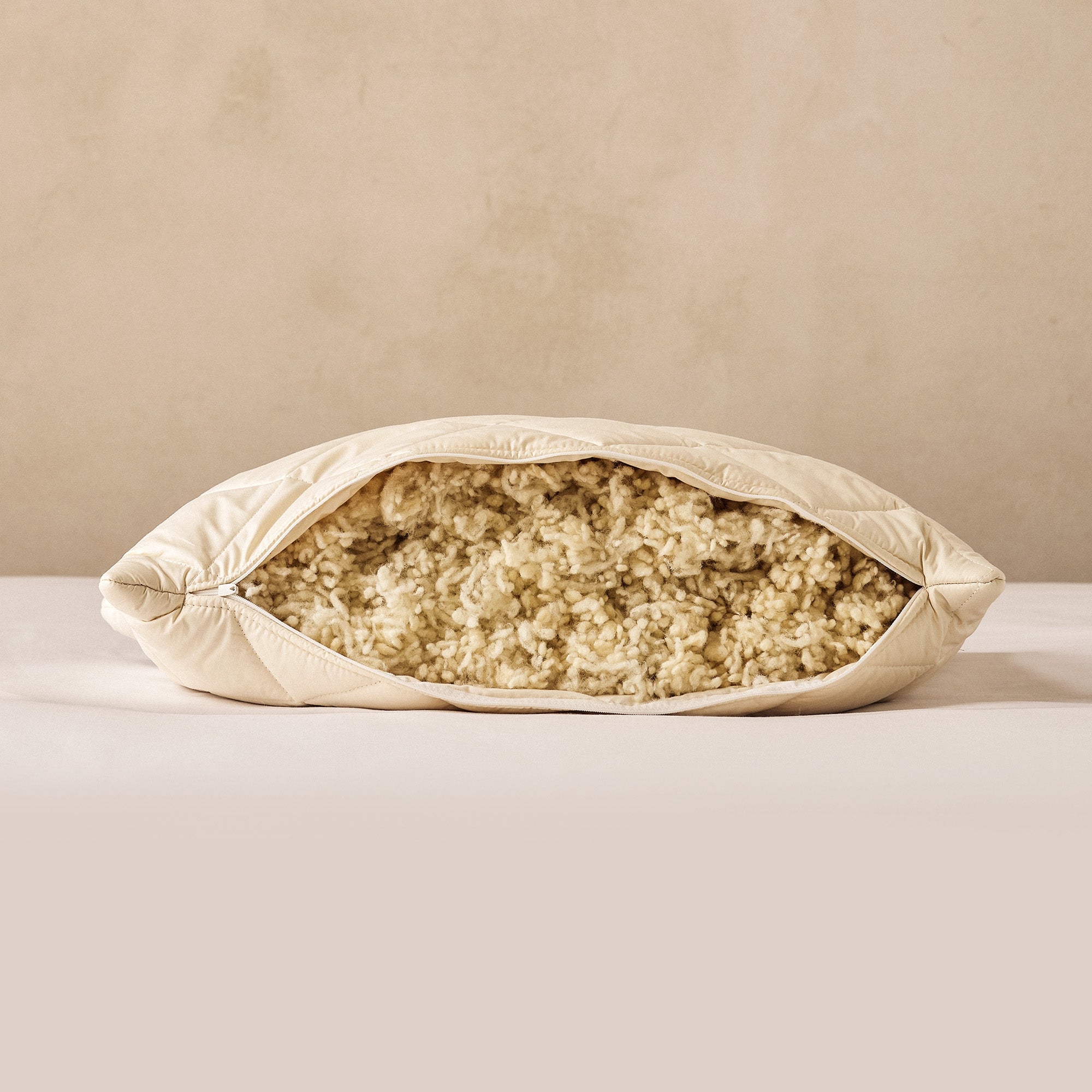
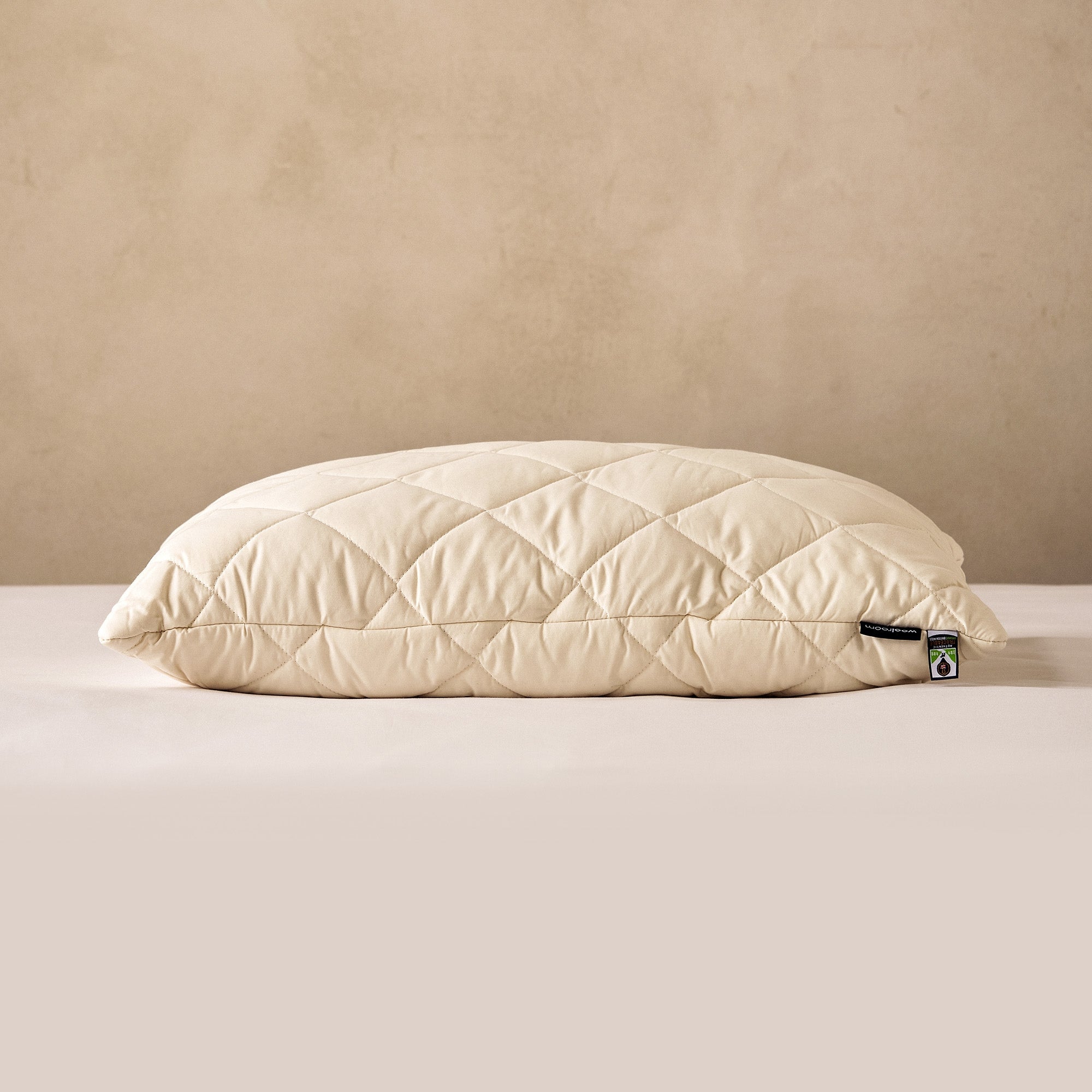
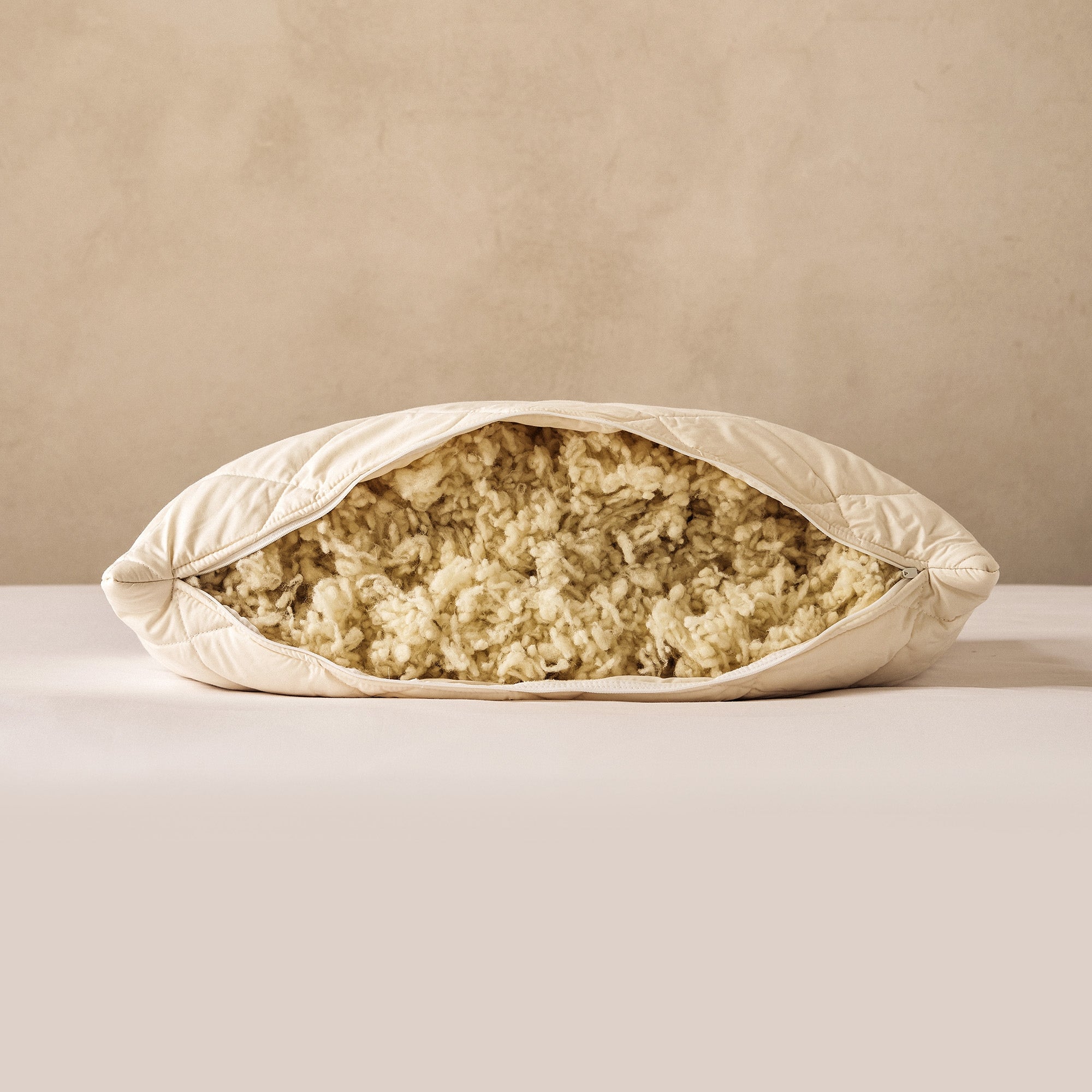
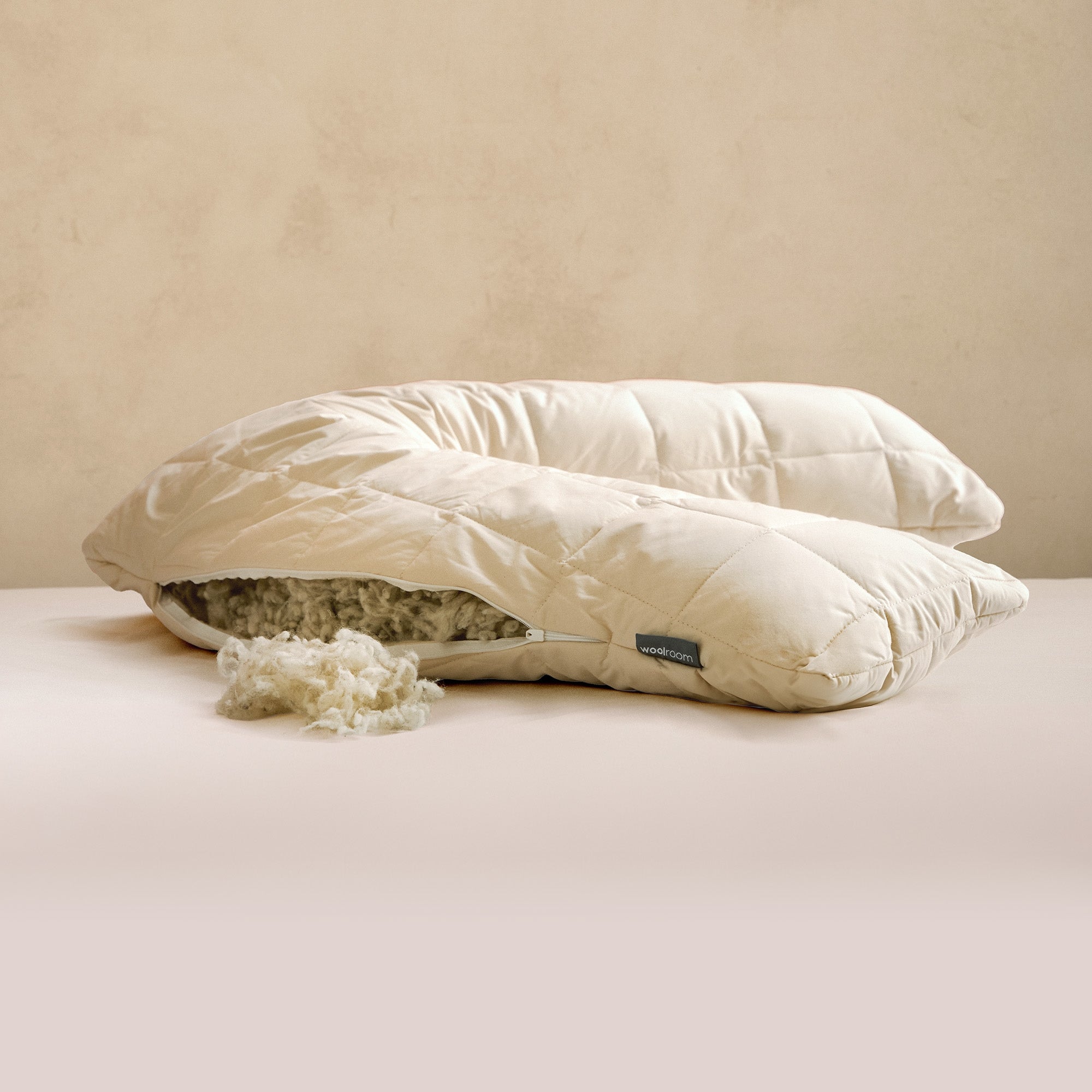
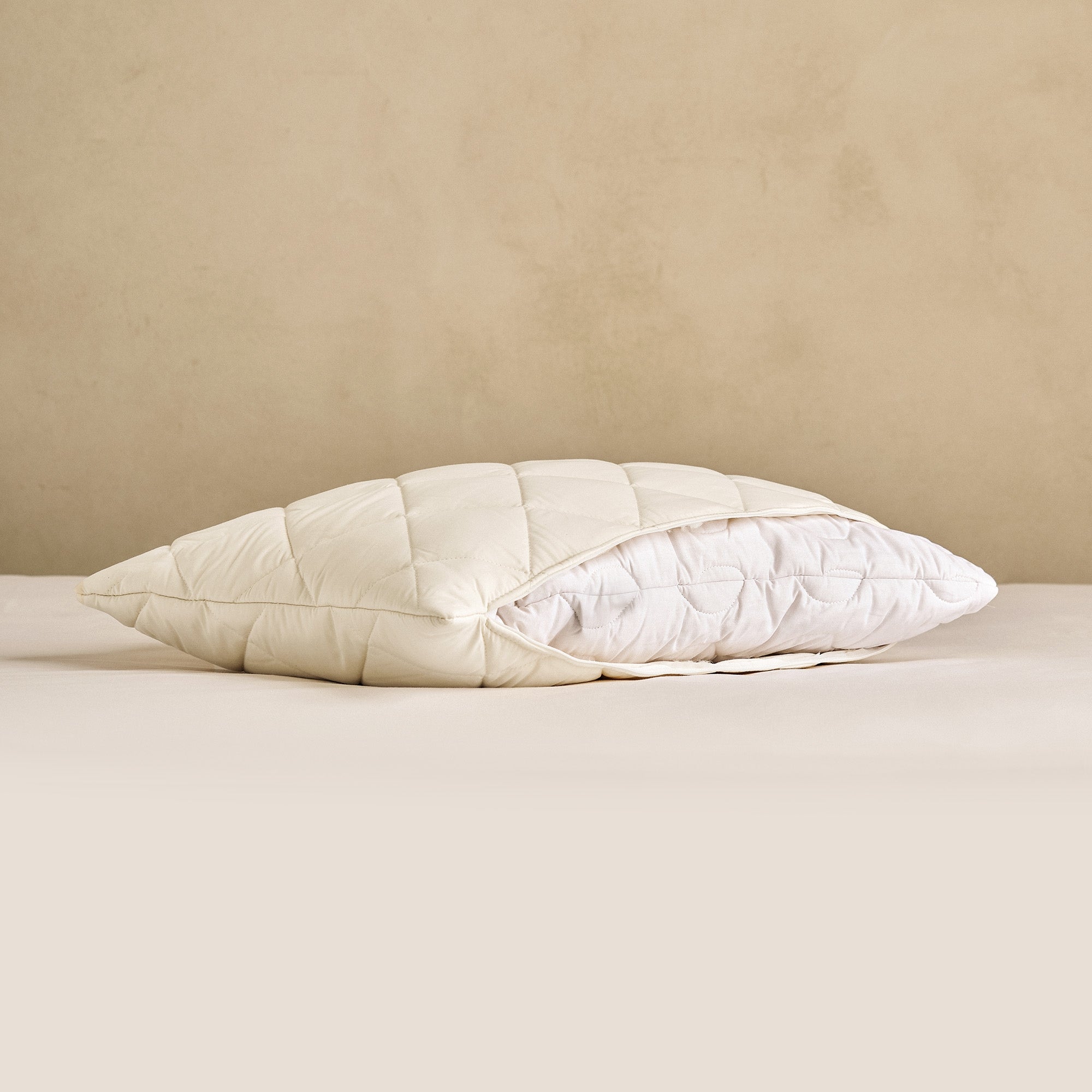
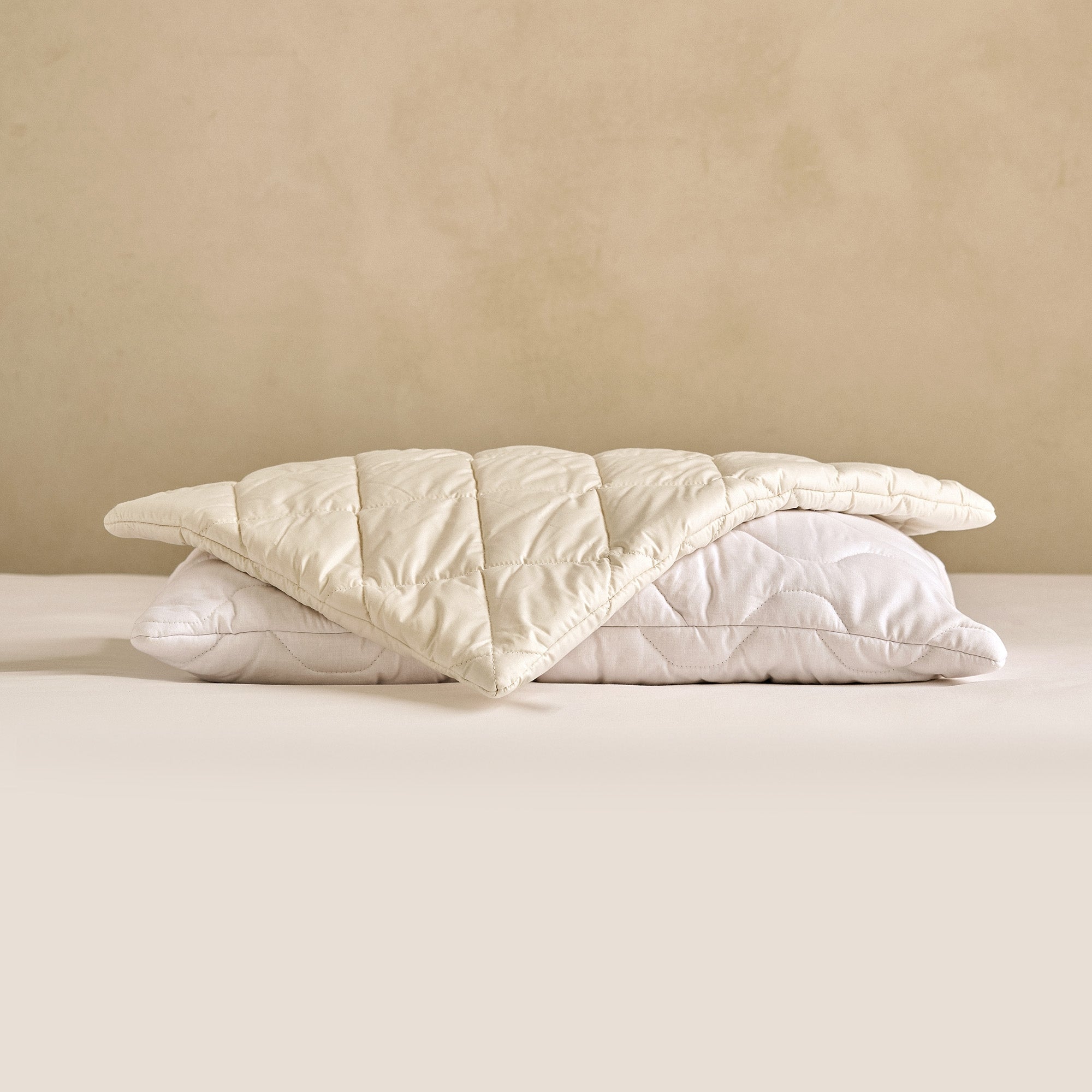
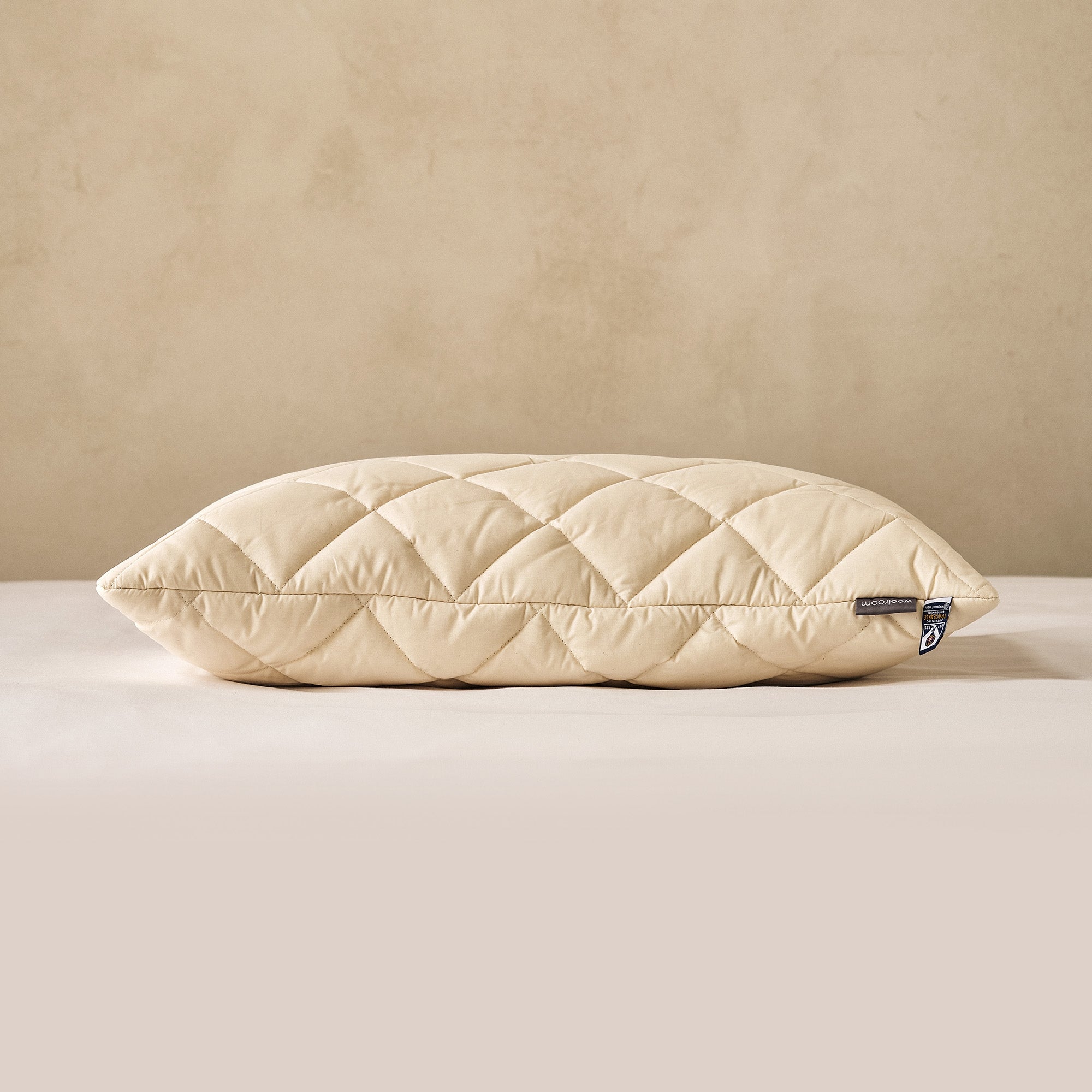
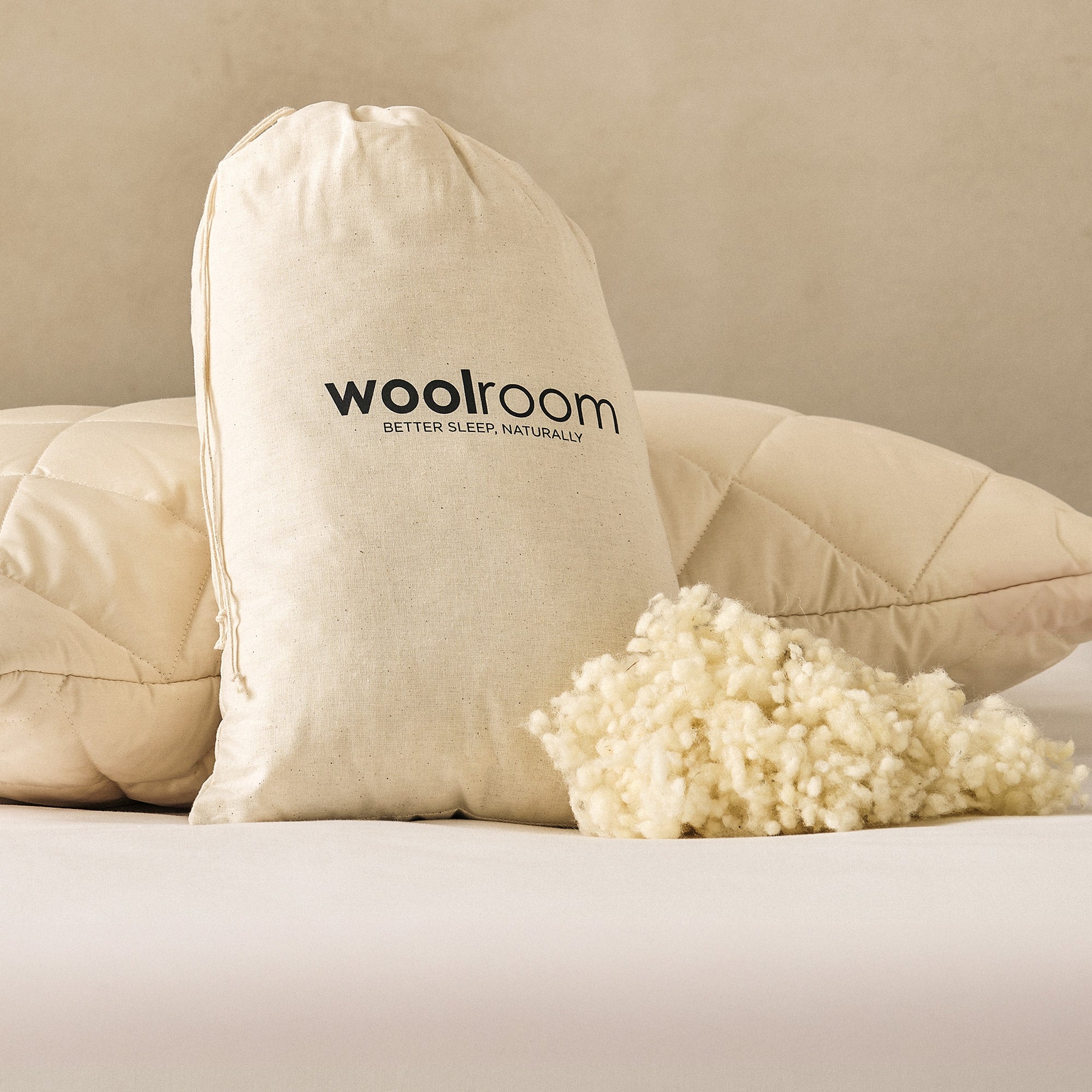
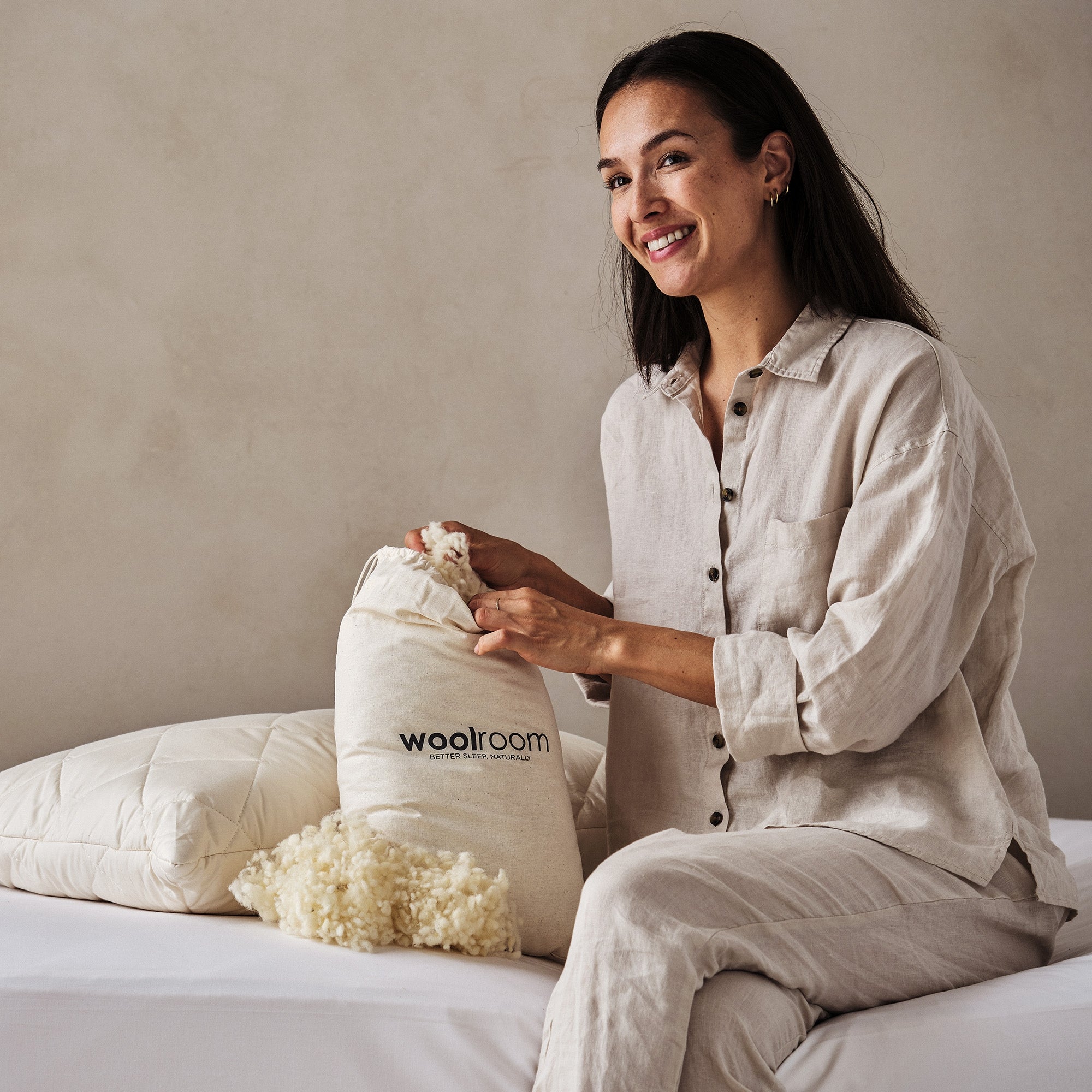
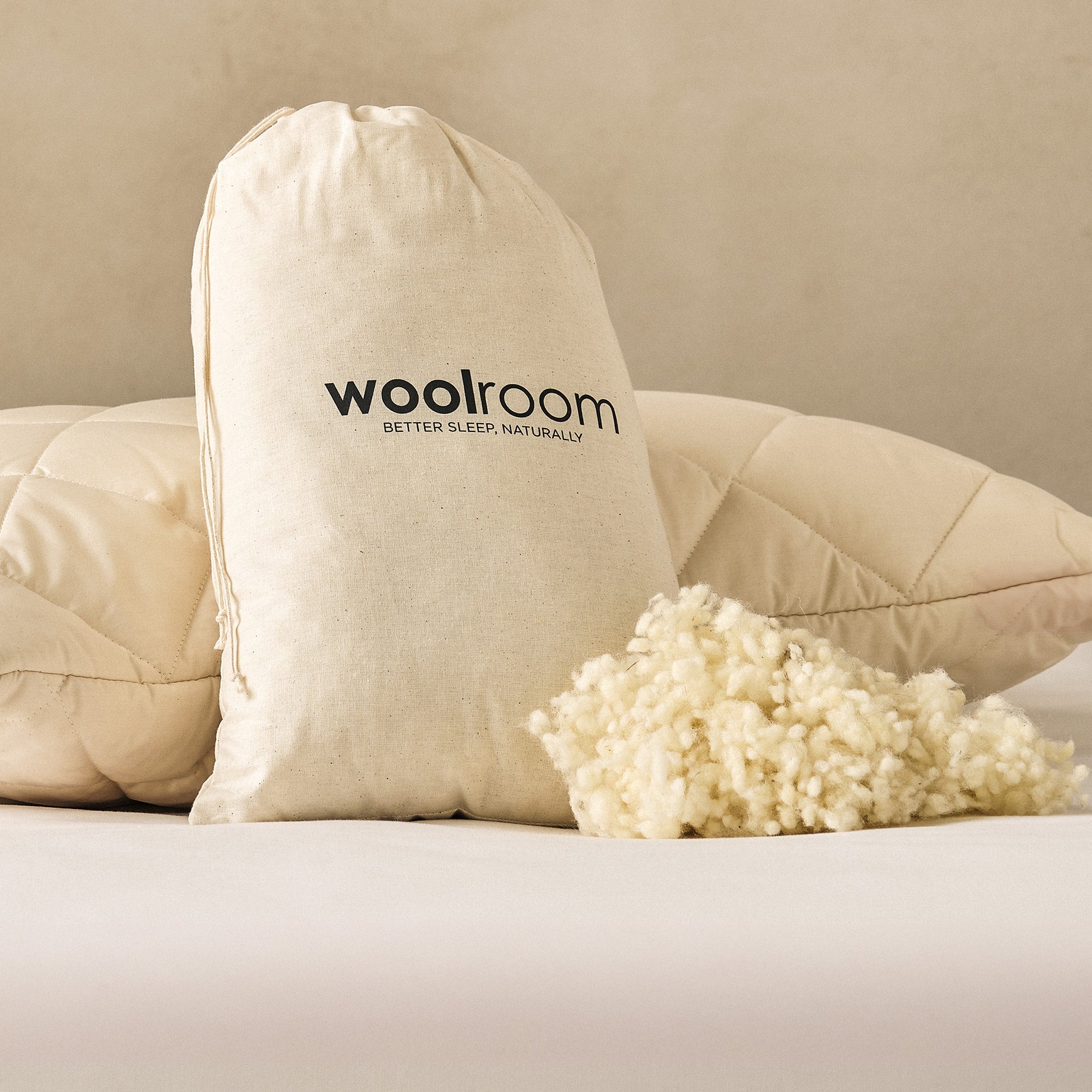
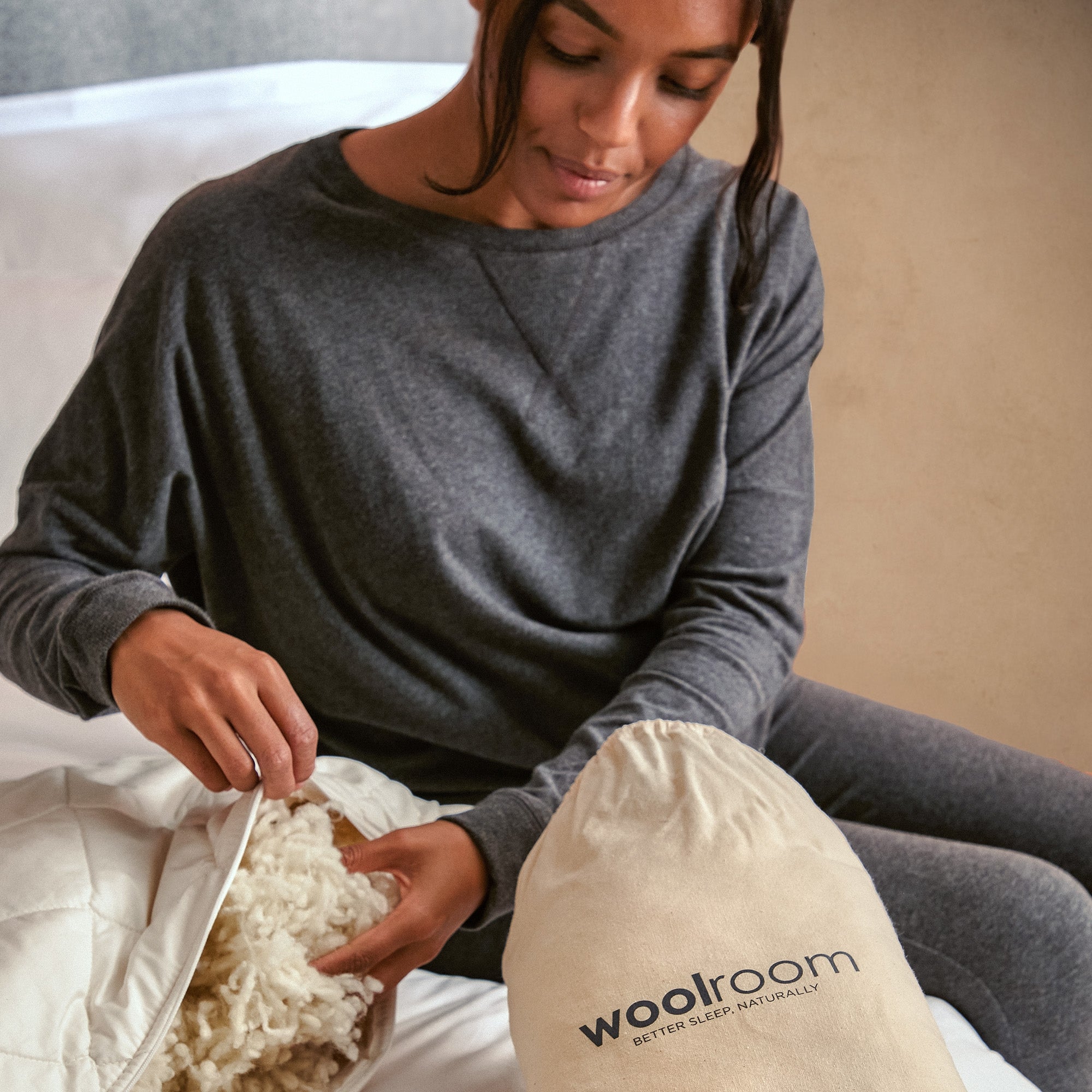
- Wool: nature’s miracle material, it regulates temperature, wicks moisture and offers adjustable support – thanks to its crimped construction, it doesn’t lose its spring.

What Do You Need To Consider When Buying a Pillow?
- Sleeping Position: Your sleeping position is one of the key factors, as this determines how much support you’ll need and where you’ll need it.
- Neck and Back Pain: If you wake up with aches, you need a material with ‘push-back.’ Unlike down, which collapses when you lie down, materials like wool and natural latex are resilient. They hold their shape throughout the night, so your muscles don't have to do the work.
- Night Sweats and Hot Flashes: If you find yourself flipping to the ‘cool side’ of the pillow, avoid synthetics. Wool’s ability to manage humidity means it can keep you significantly cooler and drier than polyester or foam.
- Allergies and Sensitive Skin: Stuffy noses and itchy eyes are often caused by dust mites. These microscopic pests thrive in the damp environment of synthetic pillows. Choosing a breathable, dry material like wool makes your pillow an inhospitable environment for them.
- Pregnancy and Joint Support: When your body is changing, a standard pillow might not be enough. This is where specialised support, like a Body Pillow or V-Shaped pillow, can help distribute weight and take the pressure off your hips and lower back.


Which Pillow is Best for Your Sleeping Position?

What’s the Best Pillow for Side Sleepers?
Side sleepers have the largest gap to fill between their ear and the mattress.
- The Need: A high-loft, supportive pillow that prevents the head from dipping down toward the shoulder.
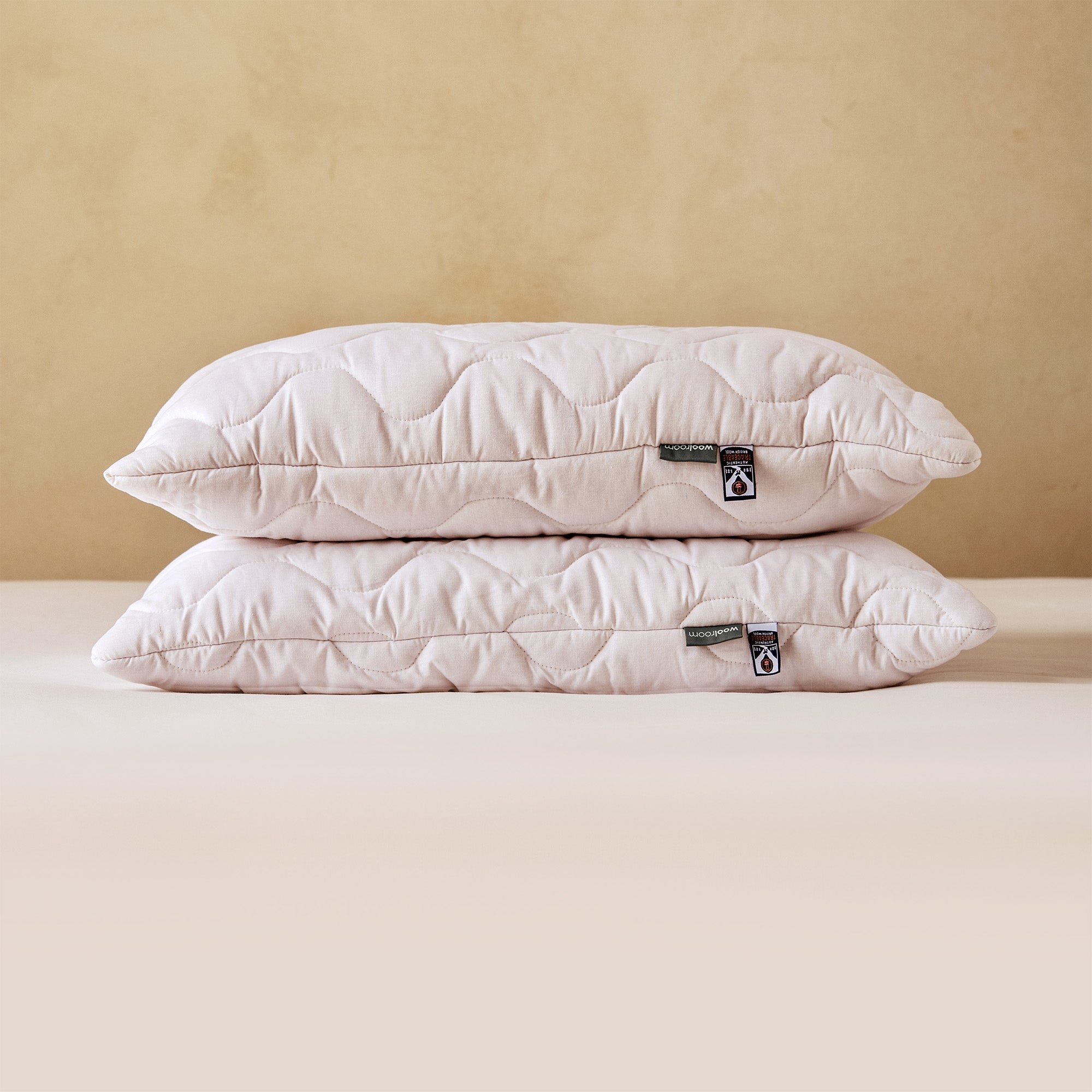
- Woolroom’s Recommended Solution: Because our Deluxe and Organic Washable pillows are adjustable, side sleepers can keep the wool at full capacity for maximum height and firm support.
The Natural Latex Pillow is ideal for side sleepers who want a ‘no sink’ experience. The buoyant latex core provides instant, high-level support that holds its height all night.
We’d also recommended the Washable Wool Body Pillow. Hugging the body pillow and placing it between your knees keeps your hips square, which prevents lower back pain and keeps you entire spin aligned – from top to bottom.

What’s the Best Pillow for Back Sleepers?
Back sleepers need their head to be cradled without being pushed too far forward.
- The Need: Medium loft and medium support to maintain the natural "S" curve of the spine.
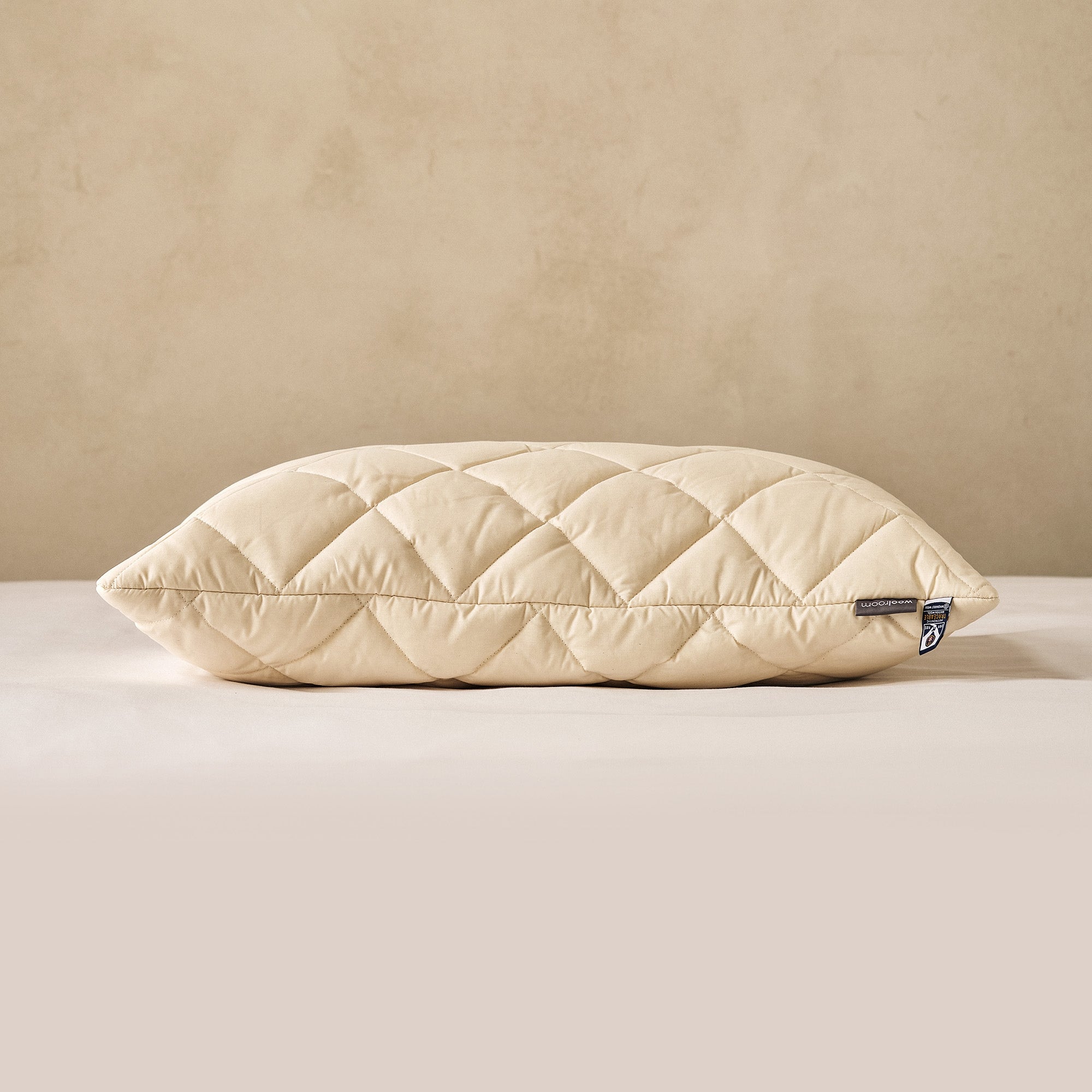
- Woolroom’s Recommended Solution: Our standard Classic Pillow is arguably our best match for the ‘average’ back sleeper. Its fixed fill is designed to provide that perfect middle-ground height that supports the neck without over-extending it.
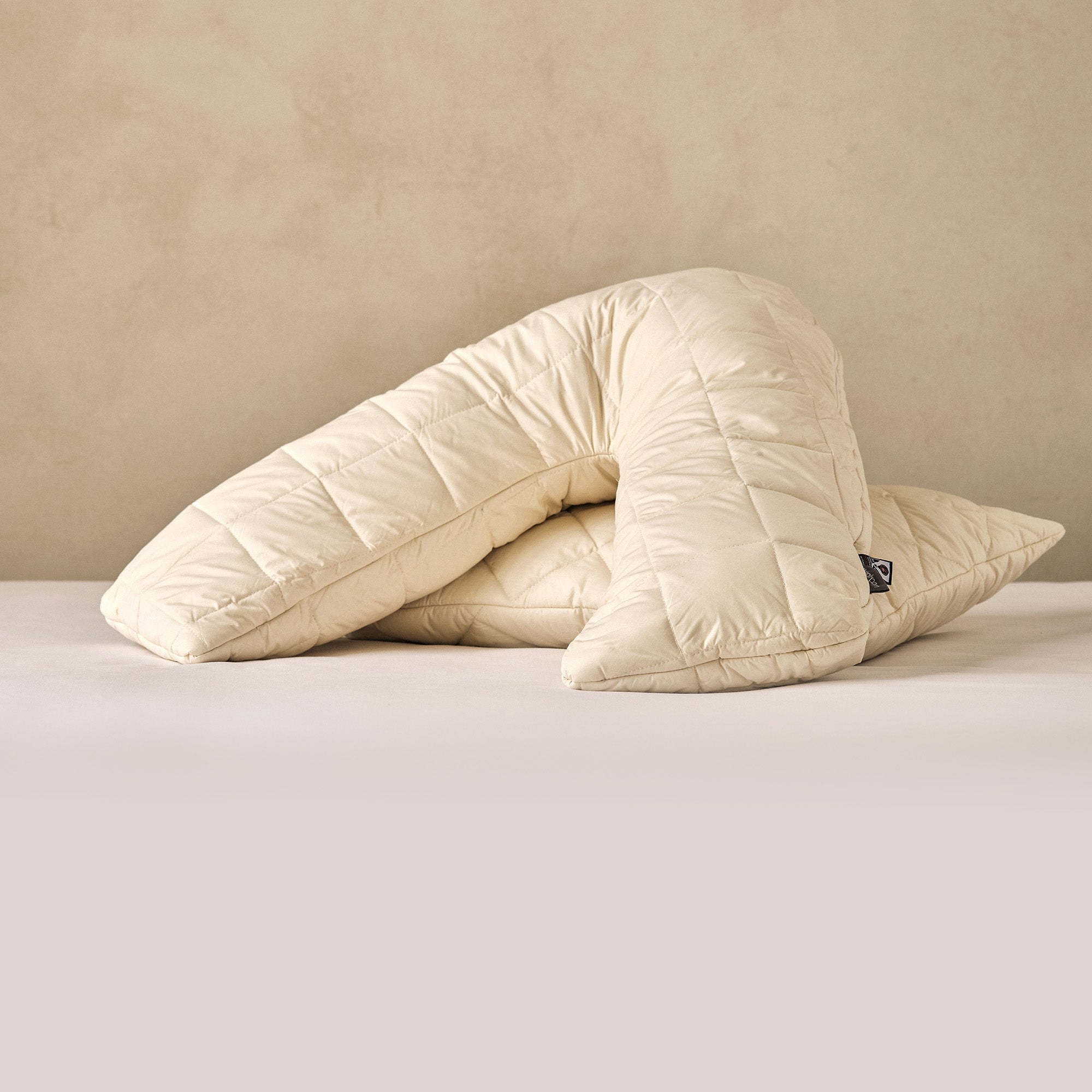
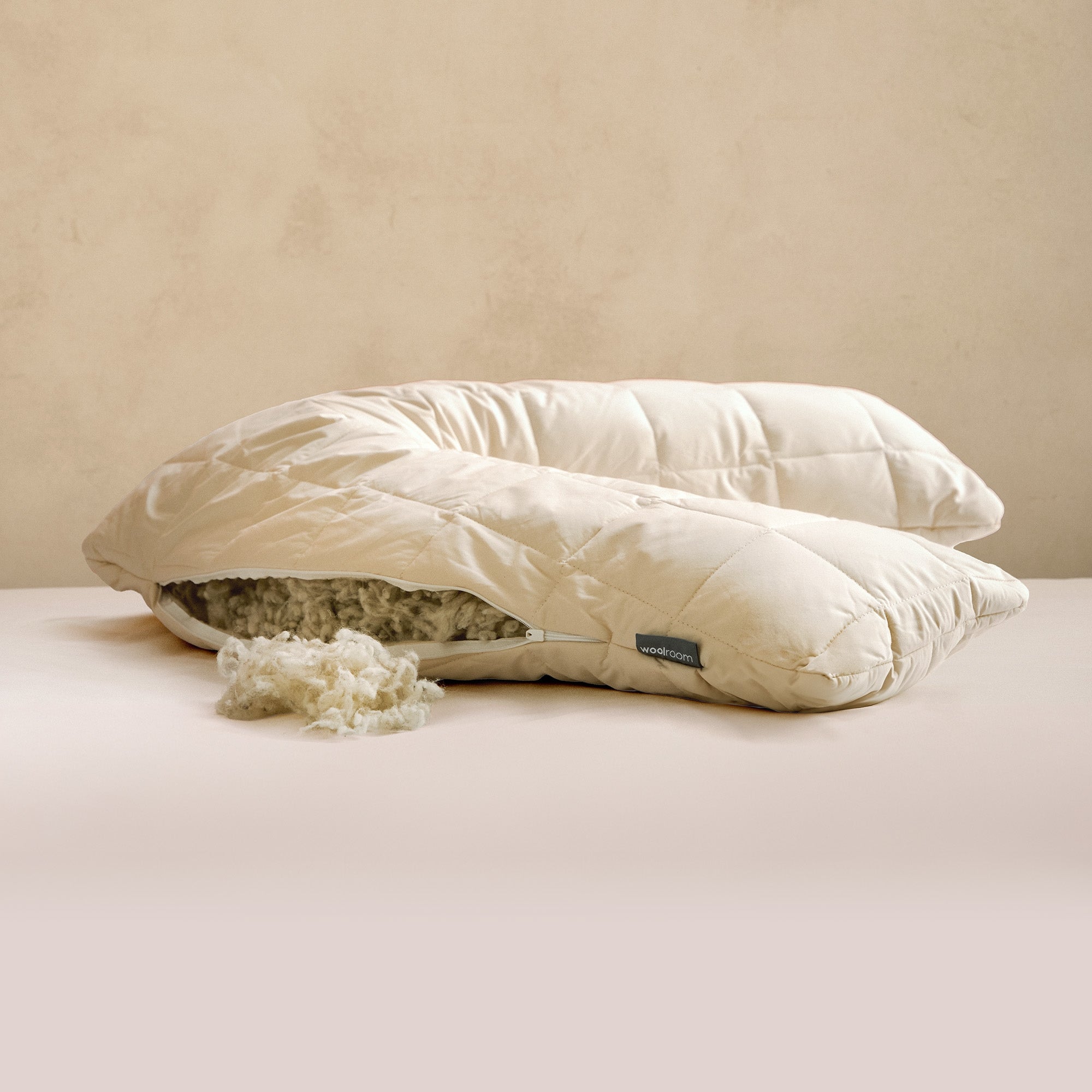
The V-shaped options from our Deluxe and Organic Washable ranges are also great. Many back sleepers find the ‘wings’ of the V-shape provide excellent lateral support, preventing the head from rolling to the side during the night.

What’s the Best Pillow for Stomach Sleepers?
Stomach sleepers are most at risk of neck strain because their head is turned to the side.
- The Need: A very low-profile, soft pillow to keep the neck as flat as possible.
- Woolroom’s Recommended Solution: Our adjustable Deluxe and Organic Washable standard pillow ranges are perfect here - you can remove a significant amount of the natural British wool filling to create a slim, breathable base.
What If You Need Specialist Support?
What if a traditional pillow shape isn’t enough? Sometimes, your sleep quality is impacted by more than just your sleep position. That’s where our specialist pillows come in:
- For Pregnancy and Hip Pain: Our Body Pillow provides full-length support. It acts as a comfortable buffer that supports the weight of a growing bump and keeps the hips properly aligned. This makes it a favorite for expectant mothers.
- For Nursing and Sitting Up: The V-Shaped Pillow is designed to nest the sleeper. Whether you’re nursing, recovering from an injury, or simply love reading in bed, it provides targeted support to your neck and shoulders that a rectangular pillow can’t match.
- For Maximum Pressure Relief: Do you suffer from chronic neck pain? The Natural Latex Pillow is our recommendation. It offers the pressure-relieving benefits of foam but with the breathability of wool, ensuring you don’t wake up with a stiff neck or a hot head.
Quick Guide: Finding the Right Pillow for You
| Sleeping Position / Need | Your Primary Requirement | Woolroom’s Recommended Solution | Specialist Alternatives |
|---|---|---|---|
| Side Sleepers | High Loft: To fill the gap between your ear and shoulder. | Deluxe or Organic Washable (kept at full capacity) | Natural Latex (no-sink support) or Body Pillow (hip alignment) |
| Back Sleepers | Medium Loft: To maintain the natural 'S' curve of your spine. | Standard Classic (perfect fixed-fill height) | V-Shaped Pillow (prevents head rolling) |
| Stomach Sleepers | Low Loft: A slim profile to prevent neck strain. | Deluxe or Organic Washable (with wool removed) | N/A (low loft is essential) |
| Pregnancy / Hip Pain | Full-Body Alignment: To support the bump and square the hips. | Washable Wool Body Pillow | V-Shaped Pillow (for back support) |
| Nursing / Sitting Up | Targeted Cradling: Support for the neck, back, and shoulders. | V-Shaped Wool Pillow | Body Pillow (as a bolster) |
| Chronic Neck Pain | Pressure Relief: Support that won't lose its shape or overheat. | Natural Latex Pillow | Deluxe Washable (adjustable to your pain points) |
Why Should I Buy a Wool Pillow from Woolroom?
-

Wool Regulates Body Temperature
When you lay your head down, wool gets to work in making sure your temperature is consistent. It’s the only fiber that can absorb moisture and release it into the air – ideal if you struggle with night sweats or hot flashes.
-

Wool is Naturally Hypoallergenic
Dust mites and mold thrive in hot and damp conditions. When it releases the moisture it absorbs from your head as you sleep, it creates a hostile environment that stops allergens and irritants from growing. Our wool pillows have been given the Allergy UK Seal of Approval too.
-

Wool is Super Strong
Wool’s fibers are naturally crimped. This means they act like a tiny spring. You can sleep on a pillow filled with natural wool night after night, year after year. Unlike a synthetic or feather and down pillow, it won’t lose its loft after a couple of months. In a world of fast homewares, our products are made to last.
-

Wool is Sustainable
We only use 100% British wool (the best kind!). It’s sourced from sheep raised on a diet of water, grass, sunshine and fresh air, at ethical farms that meet the Five Freedoms outlined the Animal Welfare Act 2006. With our pioneering Wool ID® program, you can trace the wool in your pillow back to the farm it came from.
-

Try Wool, Risk-Free
Wool will change the way you sleep for the better, but don’t take our word for it. With our 30 Night Sleep Trials, you can try one of our wool pillows – if you don’t love it, you can return it for a full refund. No questions asked.


Wool vs Feather and Down vs Synthetic Pillow Fillings
| Feature | British Wool | Feather & Down | Synthetics (Polyester) |
|---|---|---|---|
| Temperature Control | Superior (Active) | Poor (Insulates) | Poor (Traps Heat) |
| Support Feel | Resilient / Springy | Sinks / Collapses | Flattens over time |
| Allergy Friendly | Yes (Naturally) | No (Attracts Mites) | No |
| Sustainability | 100% Biodegradable – decomposes in 6–12 months | 100% Biodegradable – decomposes in 1–5 years | No – plastic-based; takes between 200 and 500 years to decompose |
| Typical Pillow Lifespan | 3–5+ Years | 1–3 Years | 6–12 Months |
Find your perfect partner for a better, healthier nights’ sleep. Shop our full range of wool pillows today!
FAQs
-
Classic Wool Pillow
Regular price $110.00Sale price $110.00 Regular priceUnit price per($110.00)MULTIBUY OFFER - SAVE AN EXTRA 15% OFF -
Deluxe Washable Wool Pillow
Regular price $150.00Sale price $150.00 Regular priceUnit price per($150.00)MULTIBUY OFFER - SAVE AN EXTRA 15% OFF -
Organic Washable Wool Pillow
Regular price $200.00Sale price $200.00 Regular priceUnit price per($200.00)MULTIBUY OFFER - SAVE AN EXTRA 15% OFF -
V-Shaped Washable Wool Pillow
Regular price $220.00Sale price $220.00 Regular priceUnit price per($220.00) -
Organic V-Shaped Washable Wool Pillow
Regular price $250.00Sale price $250.00 Regular priceUnit price per($250.00) -
Washable Wool Body Pillow
Regular price $320.00Sale price $320.00 Regular priceUnit price per($320.00)MOST POPULAR -
Deluxe Washable Pillow Protector
Regular price $90.00Sale price $90.00 Regular priceUnit price per($90.00) -
Deluxe Outer Pillow Cover
Regular price $90.00Sale price $90.00 Regular priceUnit price per($90.00) -
Organic Washable Wool Pillow Cover
Regular price $130.00Sale price $130.00 Regular priceUnit price per($130.00) -
Natural Latex Pillow with Wool Cover
Regular price $200.00Sale price $200.00 Regular priceUnit price per($200.00)MULTIBUY OFFER - SAVE AN EXTRA 15% OFF -
Extra Wool for Deluxe Pillows
Regular price $60.00Sale price $60.00 Regular priceUnit price per($60.00) -
Organic Extra Wool for Organic Pillows
Regular price $75.00Sale price $75.00 Regular priceUnit price per($75.00)

Looking For More Buying Guides?
Check out a selection of other buying guides via the link below.